


French Porcelain Planters
French porcelain planters are decorative vessels for greenery that bring nineteenth-century Continental elegance to a room.
French Porcelain Planters
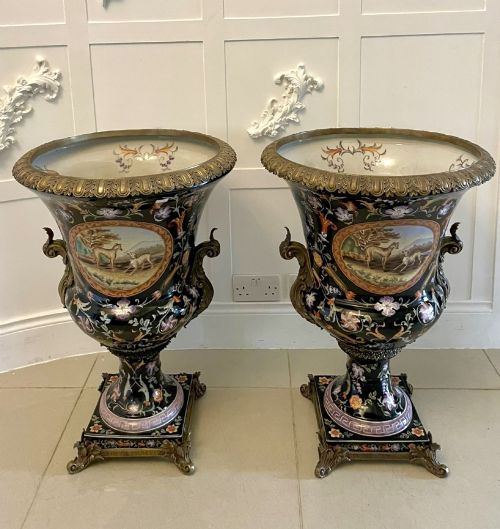
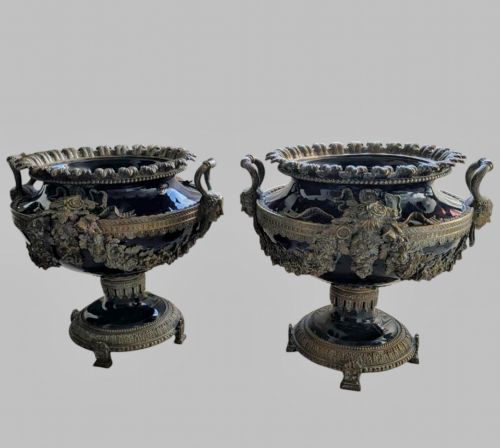
When searching for french porcelain planters, collectors encounter nineteenth-century vessels designed to hold plants and flowers within formal interiors. The forms on this page include freestanding jardinière stands, table urns, cache-pots, and wine coolers adapted for floral display.
The material combinations span porcelain bodies paired with ormolu, brass, gilt bronze, and wood such as kingwood, walnut, and ebonised timber. Styles lean heavily towards Napoleon III, French Rococo Revival, Louis XV Revival, and Neoclassical designs.
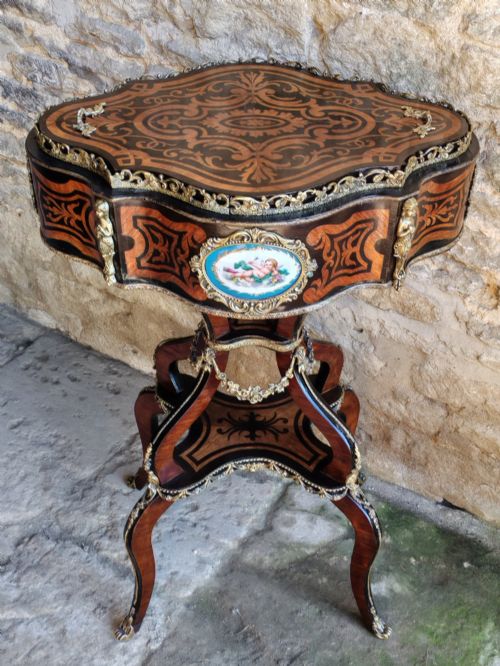
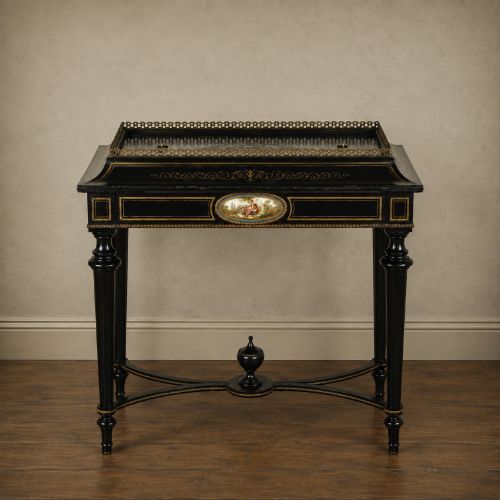
Most examples date from the Victorian era and the mid-to-late nineteenth century, reflecting the period taste for hand-painted ceramics and rich metal mounts. Pieces range from simple ceramic pots to elaborate multi-tiered jardinière tables with inset porcelain plaques.
What varies in quality
Quality in these objects rests upon the crispness of the bronze or ormolu casting and the fineness of the hand-painted porcelain decoration. Finer stands exhibit precise joinery in timbers like kingwood alongside well-modelled mounts that fit the ceramic body snugly.
The depth of the hand painting and the complexity of the ceramic form separate standard production pieces from ambitious studio or factory output. Integration between the wooden stand, metal mounts, and porcelain insert dictates the overall success of the piece.
Materials recorded on this site span porcelain, ormolu, enamel, brass, gilt bronze, kingwood, walnut, and ebonised wood.
Samson·Vion and Baury·Sevres
The French Porcelain Planters Glossary
- Jardiniere
- A decorative pot or stand for holding plants or flowers. These vessels form the central category of items found in this selection.
- Ormolu
- Gilt bronze mounts applied to furniture and ceramics. This technique provides decorative metallic highlights to porcelain bodies.
- Cache-pot
- An ornamental pot used to conceal an ordinary flowerpot. They share the decorative function of larger jardinières.
- Kingwood
- A dense, richly figured wood utilised in nineteenth-century cabinetmaking. It frequently frames porcelain plaques on jardinière stands.
- Campana vase
- A bell-shaped vessel derived from classical antiquity. Examples in this category combine ceramic bodies with classical proportions.
French Porcelain Planters: Frequently Asked Questions
What is a French porcelain planter?
A French porcelain planter is a nineteenth-century decorative vessel designed to hold indoor plants or floral arrangements. They frequently incorporate glazed or painted ceramic bodies housed within metal mounts or wooden stands.
These pieces served as interior ornaments in formal rooms, combining horticulture with decorative arts. They appear as table urns, freestanding stands, and cache-pots.
How were jardiniere stands used?
Jardiniere stands functioned as elevated pedestals for holding heavy ceramic planters filled with growing plants or cut flowers. Their raised height protected furniture surfaces from moisture and displayed botanical arrangements at eye level.
Many featured waterproof liners or metal inserts to contain water and soil. They stood in drawing rooms, conservatories, and hallways during the nineteenth century.
How do I identify Napoleon III pieces?
Napoleon III pieces date from the mid-to-late nineteenth century and often feature eclectic revivals of earlier French styles. They utilise dark woods, ebonised finishes, and contrasting porcelain plaques.
Ormolu mounts and dense decorative details characterise this period. The influence of Louis XV and Neoclassical motifs appears frequently across these designs.