
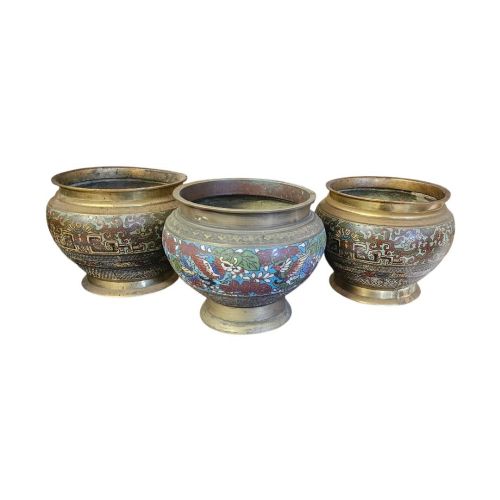
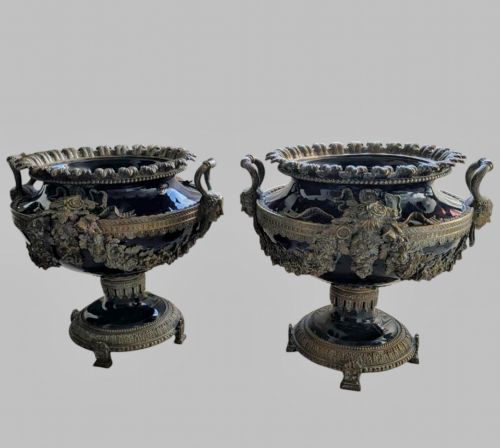


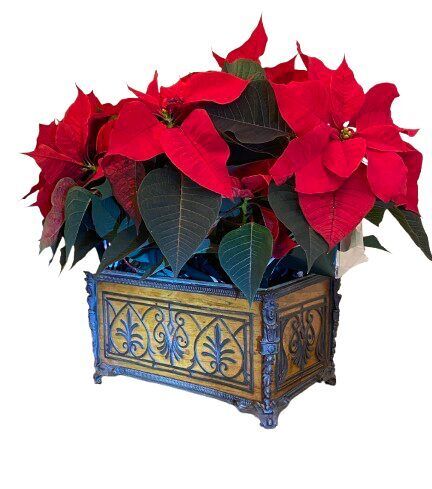


Gilt Bronze Jardiniere
These gilt bronze jardinieres bring opulent plant displays indoors through cast metal mounts and glazed or wooden bodies.
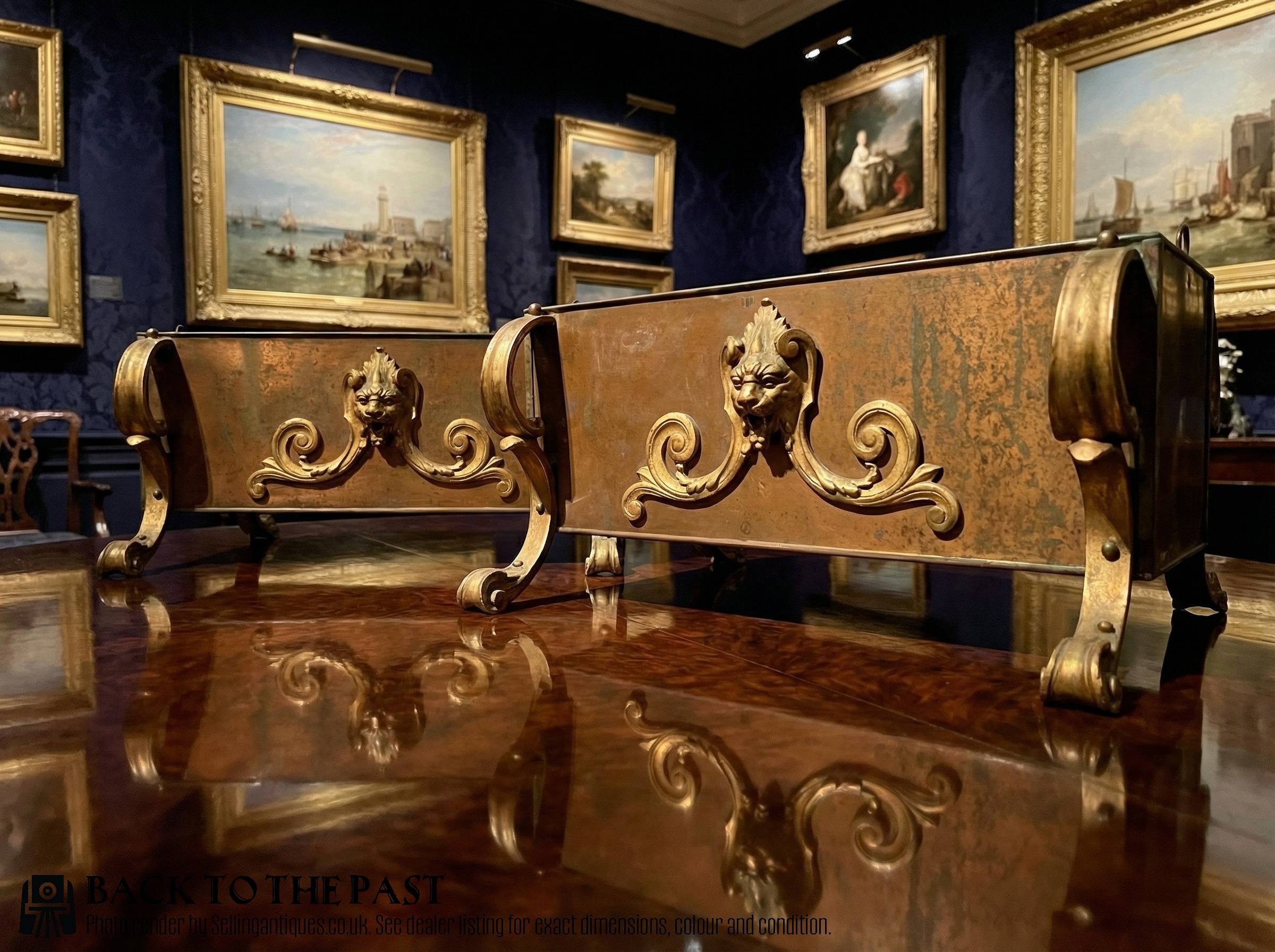
Gilt Bronze Jardiniere
A gilt bronze jardiniere serves as an ornate vessel for indoor plants, combining functional planting liners with decorative metalwork. You will frequently encounter French examples from the nineteenth century featuring styles such as Louis XV Revival, French Empire, and Napoleon III.
The forms range from table-top planters and freestanding jardiniere stands to combined display cabinets and wine coolers. Many pieces integrate timber bodies in kingwood, burr walnut, mahogany, or ebonised wood alongside ceramic elements.
Origins heavily lean towards French workshops, though Chinese bronze champleve enamel and Japanese style Samson Imari pieces also appear. These planters elevate indoor greenery into centrepieces suitable for formal reception rooms.
How they were made
Makers constructed the primary bodies from dense hardwoods like kingwood and mahogany, often applying marquetry or parquetry veneers. Metal components utilise cast bronze, ormolu, and gilt metal shaped into scrolling mounts, handles, and feet.
Many incorporate porcelain plaques, ceramic panels, or cut glass liners secured within the metal framework. Champleve and cloisonne enamelling techniques decorate Asian bronze examples using coloured glass pastes fired within partitioned metal cells.
Lion mounts guard several botanical vessels, keeping stern watch over domestic ferns.
What varies in quality
The crispness and depth of the metal chasing on the bronze mounts dictate the visual success of the piece. Finer examples display sharp definition in foliage, scrolls, and figural details without the smoothing typical of secondary castings.
The choice of timber veneer and precision of marquetry inlay distinguish standard production from superior craftsmanship. Heavy foundational framing and substantial weight in the metal elements signal robust construction in larger stands and tables.
The Gilt Bronze Jardiniere Glossary
- Ormolu
- Gilt bronze created by applying a finely ground high-carat goldmercury amalgam to a bronze base and heating it. This technique produced a durable, rich golden surface finish on nineteenth-century mounts.
- Jardiniere
- A decorative ornamental pot or stand designed to hold growing plants or floral arrangements. They appear as table vessels, floor-standing pedestals, or integrated furniture pieces.
- Kingwood
- A dense, richly grained tropical timber featuring dark violet-brown hues with lighter golden stripes. Cabinetmakers prized it for high-end French veneer work during the nineteenth century.
- Champleve
- An enamelling technique where artisans gouge troughs into a metal surface to receive vitreous enamel before firing. The remaining metal walls form thin borders between the coloured glass sections.
- Athenienne
- A tripod-supported ritual tripod or decorative stand adapted into a neoclassical planter or wash-stand form during the nineteenth century. These vessels typically copy ancient Greek or Roman bronze designs.
- Marquetry
- The art of applying thin decorative wood veneers to a structural carcase to form geometric patterns or pictorial designs. Makers utilised contrasting timber tones to create ornate surface decoration.
Gilt Bronze Jardiniere: Frequently Asked Questions
How do I care for a gilt bronze jardiniere?
Dust metal mounts gently with a soft dry cloth and avoid harsh chemical polishes that strip the gilding. Protect timber and ceramic sections from direct moisture by using removable waterproof inner liners.
Keep pieces away from direct heat sources to prevent timber warping and veneer cracking. Regular gentle maintenance preserves the original golden lustre of the bronze.
Were these designed for real plants?
Most antique jardinieres included metal or ceramic liners specifically intended to hold soil and potted plants. However, the moisture could damage delicate wood veneers if water leaked through the liner.
To protect the antique structure, many owners place potted plants inside separate plastic containers before setting them into the jardiniere vessel. This allows easy watering without exposing the historical fabric to standing water.
How can I tell French Revival styles apart?
Louis XV Revival pieces feature asymmetrical scrolling, naturalistic floral motifs, and curvaceous outlines typical of eighteenth-century rococo design. Napoleon III and later nineteenth-century items often blend multiple historical influences with heavier proportions and abundant ormolu mounts.
Examining the underlying timber construction and mounting techniques helps clarify the exact period of manufacture. French workshops frequently combined traditional cabinetmaking methods with updated revival aesthetics.
What is the difference between a jardiniere and a planter?
The terms are often used interchangeably in the antiques trade to describe decorative plant vessels. A jardiniere traditionally denotes a more ornate, decorative container meant for display in formal rooms.
Planters can encompass simpler utilitarian forms, whereas items designated as jardiniere stands or tables incorporate integrated furniture bases. Both serve the primary function of displaying indoor greenery.