

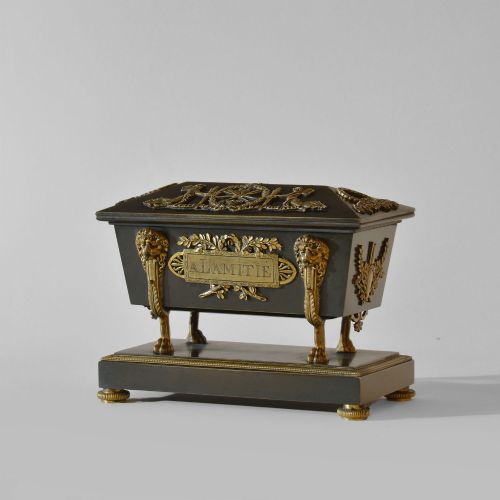
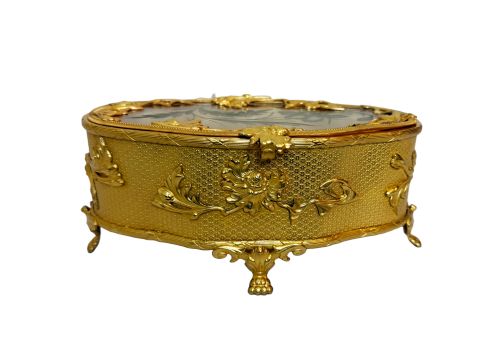
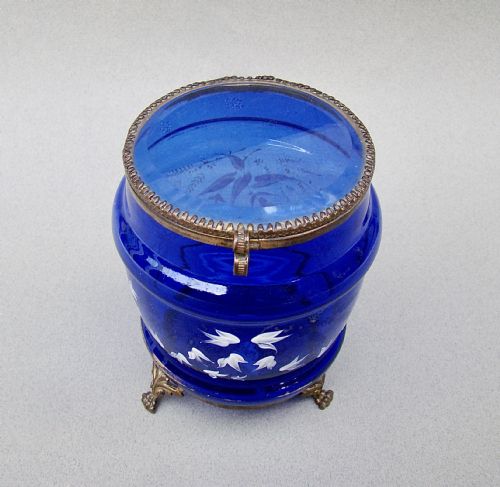
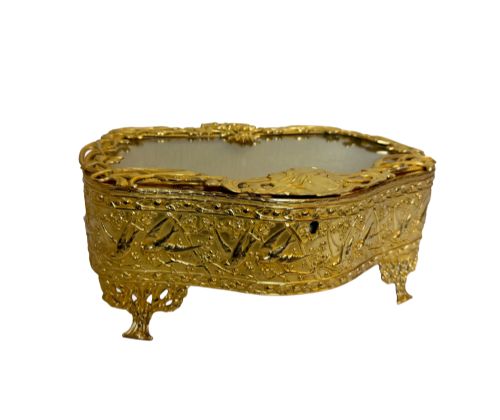
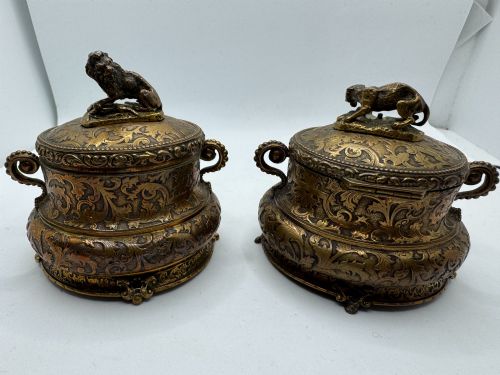


Gilt Bronze Casket
A gilt bronze casket is a substantial container for keepsakes, combining cast metalwork with glass, porcelain or stone.
Gilt Bronze Casket
A gilt bronze casket serves as a small decorative container for jewellery, letters, or trinkets, built to sit upon a dressing table or parlour desk. The search for a gilt bronze casket brings up nineteenth-century creations, predominantly French in origin, spanning domestic jewellery boxes to larger table cabinets.
The objects take many forms, including jewellery caskets, trinket boxes, stationery boxes, and perfume caskets. Most examples meet on this page hail from the nineteenth century, encompassing Victorian, Second Empire, Napoleon III, and Art Nouveau periods.
Makers and workshops utilised diverse materials alongside metal frames, pairing bronze with Sevres porcelain, Limoges miniatures, Baccarat glass, onyx, malachite, and agate. These receptacles range from simple glass and metal frames to elaborate miniature coaches and architectural table cabinets.
Materials and Construction
The primary metal structure relies on cast bronze, brass, or ormolu, which is gilded to achieve a bright, reflective surface. Frames are assembled to secure glazed panels, porcelain plaques, or stone inserts with precise mechanical joints and screws.
Decorative inserts incorporate varied artisan techniques, such as hand-painted porcelain panels, champleve enamel, cut crystal, and inset semi-precious stones like malachite and agate. Silk linings frequently finish the interior, while chased or engraved detailing enhances the exterior metalwork.
Gilt Bronze Casket Retail Price Guide 2026
Typical asking prices for gilt bronze casket among the pieces listed under this phrase on Sellingantiques today, from the lower quarter to the upper quarter. They describe what is for sale here now, not the wider market.
Listings demonstrate that nineteenth-century gilt bronze caskets frequently incorporate French porcelain, Bohemian glass, and Austrian stone panels.
Distinctions in Quality
Quality rests in the crispness of the bronze casting and the depth of the chasing, where sharper, more detailed ornamentation distinguishes superior pieces from softer, mass-produced castings. The weight of the metal and the solidity of the hinges and locking mechanisms also signal higher workshop standards.
The choice of secondary materials defines the tier of the object, with hand-painted porcelain plaques, heavy cut crystal, and panels of solid malachite or agate indicating significant input from skilled specialists. Integrated maker signatures, such as those by Tahan, elevate the standing of a piece within the hierarchy of nineteenth-century luxury goods.
Tahan
The Gilt Bronze Casket Glossary
- Ormolu
- Gilt bronze produced by applying a finely ground high-carat gold-mercury amalgam to a bronze object, then heating to drive off the mercury. This historical technique yields a durable, deep golden lustre.
- Champleve
- An enamelling technique where troughs or cells are carved into the surface of the metal and filled with vitreous enamel paste before firing. It creates vibrant patterns alongside the gilt metal frame.
- Sevres
- Porcelain produced by the French national manufactory, identifiable by painted decoration and fine glazes. These plaques are frequently mounted into the lids and sides of caskets.
- Palais Royal
- A style and origin associated with luxury goods sold in the shops surrounding the Palais Royal in Paris during the nineteenth century. These items often include novelty trinket boxes and optical novelties.
- Pietra dura
- An artistic technique using cut and fitted finely sliced coloured stones to create pictorial or geometric inlay. It appears on the lids of select nineteenth-century Italian and French caskets.
Gilt Bronze Casket: Frequently Asked Questions
What were gilt bronze caskets used for?
These containers held precious personal items such as rings, necklaces, letters, and small keepsakes on dressing tables or writing desks. Wealthy Victorians utilised them to display imported porcelain and gemstones.
Over time, their function shifted from utilitarian storage to decorative display objects in nineteenth-century drawing rooms. They served as tangible markers of taste and refinement for the household.
How do I date a gilt bronze casket?
Dating relies on stylistic markers such as the flowing vegetal lines of Art Nouveau or the classical symmetry of the Napoleon III period. Material combinations, including specific styles of Sevres porcelain or cut glass, also point to specific decades.
Maker marks stamped onto the bronze frame or lock plate provide a reliable chronological anchor. Construction methods, such as the type of screw and hinge assembly, help distinguish mid-century items from later productions.
How should I clean the gilt metal?
Dust the exterior gently with a soft, dry brush to prevent dirt accumulation within the chased recesses of the bronze. Avoid chemical cleaning agents and polishes that strip the original gilding.
Moisture can damage interior silk linings and compromise glued stone or glass panels. Professional conservation advice is recommended if deeper cleaning becomes necessary.
Are interior linings original?
Many caskets retain their original silk, velvet, or satin linings, which show signs of age consistent with nineteenth-century use. Fading and wear on the fabric are normal characteristics of surviving examples.
Replacements do occur to restore damaged interiors for contemporary display purposes. Examining the stitching and fabric type helps determine whether the lining matches the period of the metal frame.