




Gillows Rosewood Furniture
Gillows rosewood furniture brings together the refined cabinet-making of Lancaster and London with the rich, dark tones of exotic timber.
Gillows Rosewood Furniture
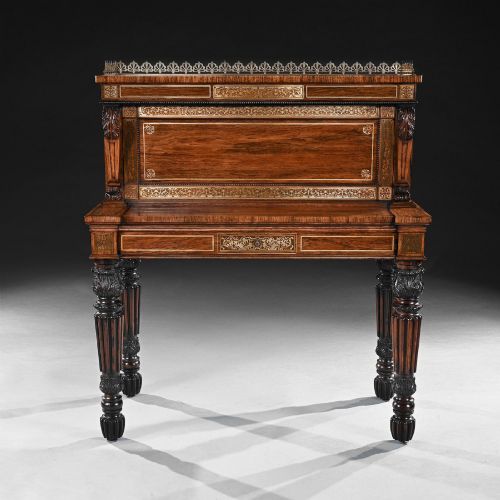
When you search for gillows rosewood furniture, you encounter sophisticated nineteenth-century pieces spanning the Regency, George IV, William IV, and Victorian periods. The items available include writing tables, occasional tables, side tables, whatnots, music stands, bookcases, pedestals, plant stands, and chiffonier sideboards.
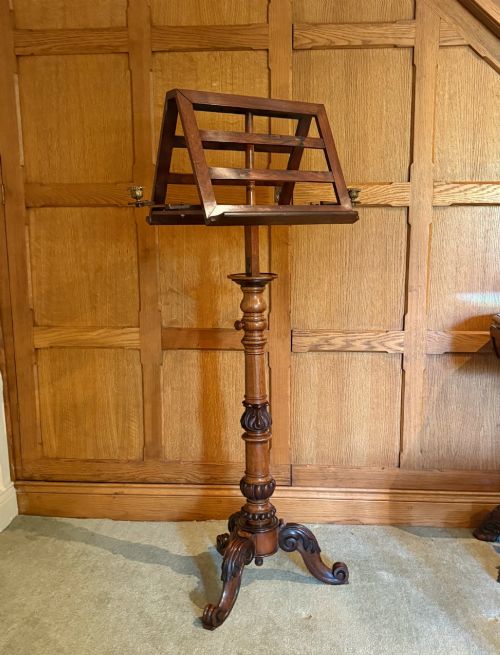
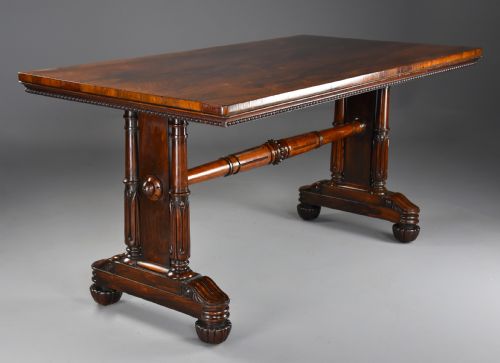
You are most likely to meet Regency and William IV examples, often featuring attributed workshop connections to Gillows of Lancaster and Oxford Street. These forms range from games and work tables to duet music stands and libraries tables, showing the versatility of the maker.
The objects combine practical utility with high social standing, serving domestic functions in libraries, drawing rooms, and studies. Their design reflects the changing domestic requirements of the nineteenth century while maintaining strict structural discipline.
How they were made
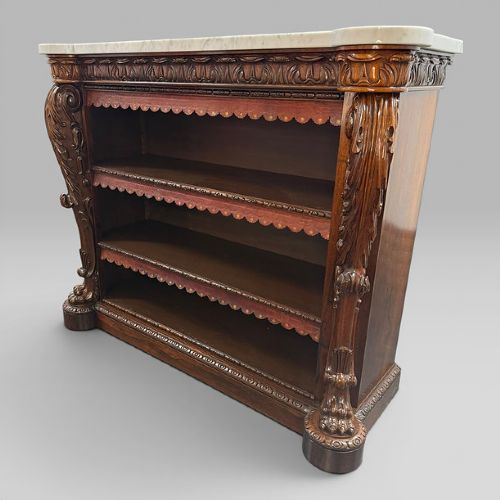
Makers utilised dense rosewood timber, frequently figured for visual depth, alongside secondary woods like mahogany. Construction often incorporated brass inlay, gilt brass mounts, and occasionally marble tops.
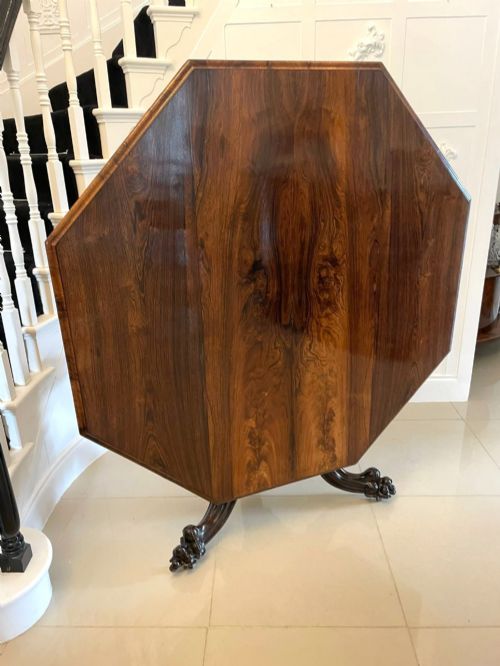
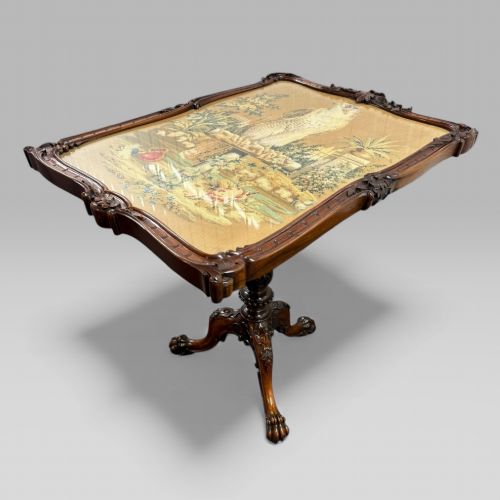
Surfaces were adapted for varied uses through leather inserts for writing, glass panels, and textile linings within sewing and work tables. Turning, carving, and tripod bases established the structural support for tilt-top tables and stands.
Gillows Rosewood Furniture Retail Price Guide 2026
Typical asking prices for gillows rosewood furniture among the pieces listed under this phrase on Sellingantiques today, from the lower quarter to the upper quarter. They describe what is for sale here now, not the wider market.
Listings feature nineteenth-century periods including Regency, George IV, William IV, and Victorian eras.
What varies in quality
The distinction between ordinary and superior pieces rests on the crispness of the carving, the precision of the brass inlay, and the figuring of the rosewood veneer. Workshops like Gillows achieved success through restrained proportion and meticulous attention to internal mechanics, such as mahogany-lined drawers.
Pieces bearing direct workshop attribution or specific workshop signatures display a higher grade of design integration, where secondary timbers and decorative hardware match the quality of the primary show-wood.
Gillows of Lancaster·Gillows Oxford Street Workshop
The Gillows Rosewood Furniture Glossary
- Rosewood
- A heavy, durable timber prized for its dark grain and rich colour, widely used in high-status nineteenth-century cabinet-making.
- Whatnot
- A set of open shelves for displaying or holding small objects, books, or reading materials, often fitted with a drawer.
- Canterbury
- A low stand with partitioned sections for holding sheet music, folios, or books, frequently mounted on castors.
- Chiffonier
- A small sideboard or low cabinet, sometimes featuring enclosed cupboards and upper shelving for display or storage.
- Tilt-top table
- A table with a mechanism allowing the top to pivot to a vertical position when not in use.
Gillows Rosewood Furniture: Frequently Asked Questions
How do I identify Gillows furniture?
Identification relies on documented characteristics, timber selection, and construction methods associated with the Lancaster and London workshops. Many pieces carry specific structural habits or stylistic markers that link them to the firm.
While some bear stamped names or workshop signatures, others require careful comparison of proportion, brasswork, and secondary wood choices with authenticated pieces.
What periods do these pieces date from?
The items generally date from the nineteenth century, encompassing the Regency, George IV, William IV, and early Victorian eras. Styles shift from the classical restraint of the early decades to heavier, carved forms.
Each period introduces distinct decorative vocabularies, from brass inlay to elaborate rosewood carving and marble integration.
How were work tables used?
Work tables served as multi-purpose furniture for ladies, accommodating sewing, needlework, and writing tasks. They frequently incorporated internal compartments, silk bags, and specialised writing slopes.
Their versatile design allowed them to function as games tables or small occasional tables in drawing rooms and boudoirs.
Can I use a rosewood library table daily?
These tables were built for sustained domestic use, utilising robust timbers and sound joinery that withstand careful everyday interaction. Leather writing surfaces and solid rosewood frames offer practical durability.
Care should be taken to protect the polished rosewood finish from excessive moisture, direct sunlight, and heat to preserve the timber grain.