


Gilded Twin Handled Vase
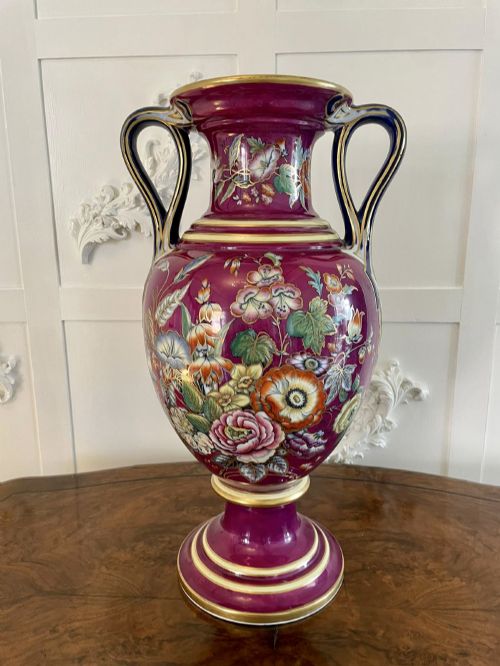
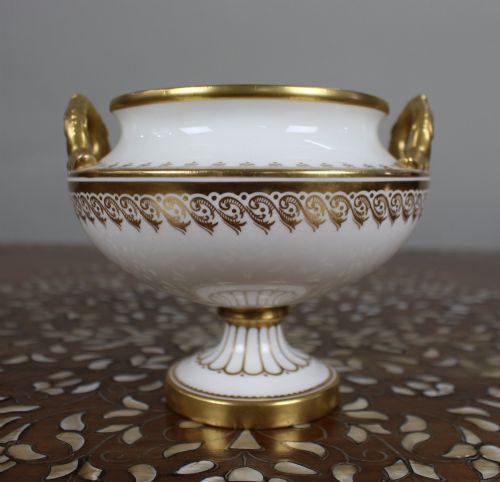
These gilded twin handled vase examples bring nineteenth-century ceramic splendour to a room, offering classical symmetry and rich metallic surface detail.
Gilded Twin Handled Vase
When you search for a gilded twin handled vase, you encounter ornate vessels created in porcelain, bone china, and earthenware during the nineteenth and early twentieth centuries. These decorative objects draw upon historical styles such as Victorian, Edwardian, and Neoclassical design traditions.
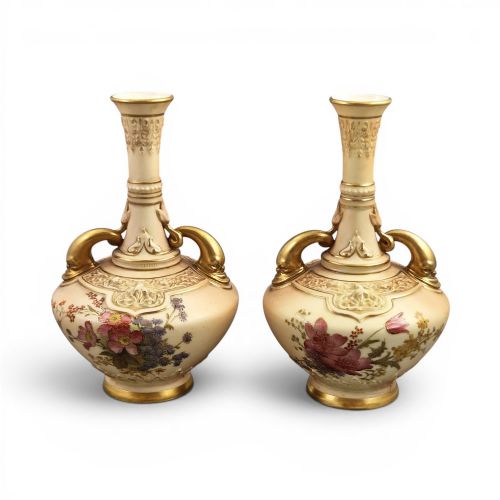
The most common examples on this page are porcelain and bone china vases originating from English factories like Royal Worcester and Derby, alongside continental European pieces. Many feature symmetrical handles shaped as dolphins or scrolls, reflecting the enduring influence of classical urn forms.
How they were made
Potters shaped fine porcelain, ironstone, and earthenware bodies before applying intricate hand-painted floral or figural decoration in enamel colours. Artisans then added gold leaf, gilding, and liquid gold highlights to accentuate handles, rims, and borders.
Many ceramic pieces underwent multiple kiln firings to set the underglaze painting, enamel pigments, and final gold details. Metal elements, where present, relied on bronze casting and finishing techniques to achieve distinct sculptural forms.
Several Victorian pieces feature delightful dolphin-shaped handles that bravely attempt to swim across the side of a porcelain urn.
What varies in quality
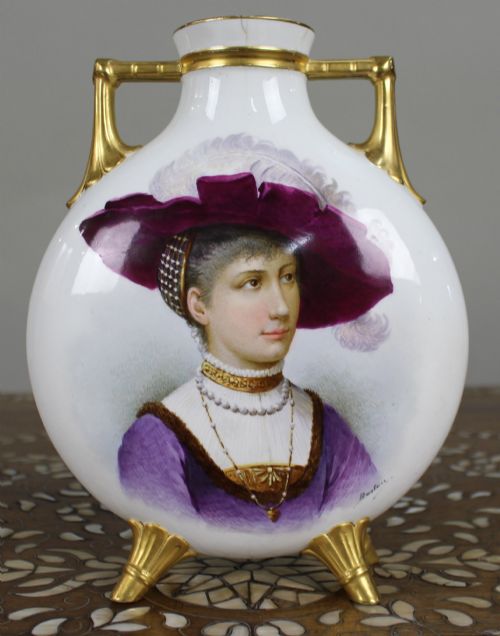
The skill of the hand-painted decoration largely determines the distinction between standard production and exceptional examples. Signed works by noted artists demonstrate superior brushwork and artistic ambition compared to mass-produced transfer-printed items.
The crispness of the moulding and the preservation of the delicate gold leaf ornamentation dictate the overall desirability of each piece. Heavier, more substantial porcelain bodies and well-preserved gilding without excessive rubbing represent the upper tier of quality.
Royal Worcester·Royal Crown Derby·Coalport·Minton·Derby Porcelain
The Gilded Twin Handled Vase Glossary
- Blush ivory
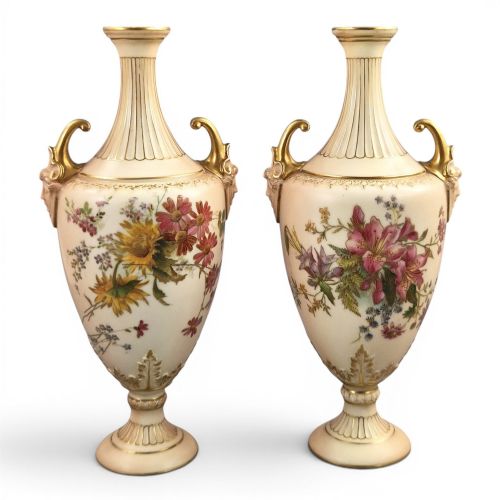
- A matte cream-coloured porcelain finish developed by Royal Worcester in the late nineteenth century. It provides a soft background for delicate hand-painted floral motifs.
- Imari
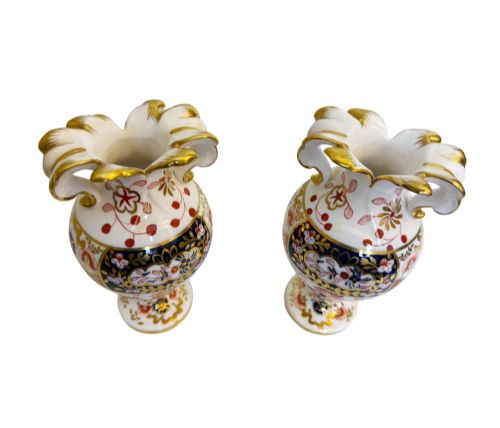
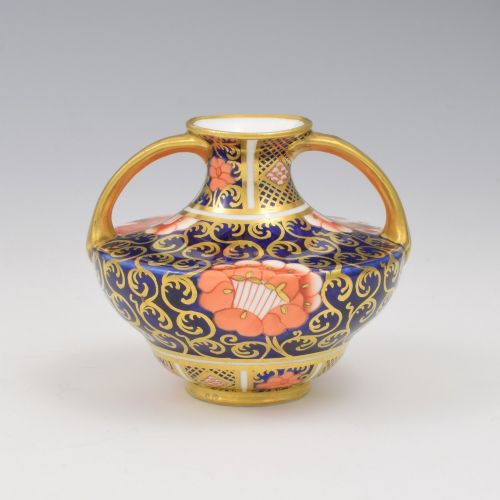
- A decorative style inspired by Japanese export porcelain featuring deep cobalt blue, iron red, and abundant gilt highlights. English potteries frequently adopted this palette during the Victorian period.
- Porcelaneous
- A ceramic material sharing qualities with both porcelain and stoneware. It offers high durability while retaining a fine-grained, vitrified body suitable for intricate vessel shapes.
- Potpourri
- A decorative vase or urn featuring a pierced cover designed to diffuse dried scented petals into a room. These vessels often incorporate elaborate twin handles and painted scenes.
- Moon flask
- A flattened circular vessel with a short neck and two small side handles, standing on a distinct base. This ancient Chinese form influenced nineteenth-century European ceramic makers.
Gilded Twin Handled Vase: Frequently Asked Questions
How were gilded twin handled vases used?
These decorative vessels served primarily as mantelpiece ornaments, centrepieces, and drawing-room displays during the Victorian and Edwardian periods. Wealthy households placed them on tables and pedestals simply to showcase taste and artistic patronage.
Some specialised forms, such as potpourri jars, functioned to hold dried scented flowers that refreshed the air in formal reception rooms. Few were intended for holding fresh water and cut blooms due to their delicate painted surfaces and gold leaf.
How do I tell Victorian vases apart from Edwardian ones?
Victorian examples often display heavier gilding, deep colour grounds like cranberry glass or rich pink, and more formal Neoclassical or Aesthetic Movement motifs. The forms tend toward heavy classical urns and bold floral arrangements.
Edwardian pieces frequently transition towards softer blush ivory grounds, pastel enamel palettes, and flowing Art Nouveau lines. Maker marks and registration numbers stamped on the base also help narrow down the exact production decade.
Are these vases fragile?
The ceramic body of nineteenth-century porcelain and bone china is relatively robust, but the surface decoration demands careful handling. Hand-painted enamels and delicate gold leaf can wear away over time if subjected to harsh cleaning.
Protruding handles and narrow stems represent vulnerable points that require secure placement away from heavy foot traffic. Dusting them gently with a dry, soft brush is sufficient for routine maintenance.
What does a signed vase mean?
A signature on a painted ceramic surface indicates that a recognised factory artist executed the pictorial decoration by hand rather than relying on standard transfer prints. Master painters often initialled or signed their work near the base of the scene.
Signed pieces by notable porcelain artists generally command greater attention from collectors and historians. These signatures provide direct insight into the individual craftsmanship behind the object.