



Gilded Triptych Mirror
A gilded triptych mirror brings three-panel symmetry and light to a room, drawing the eye across its carved wooden frame.
Gilded Triptych Mirror
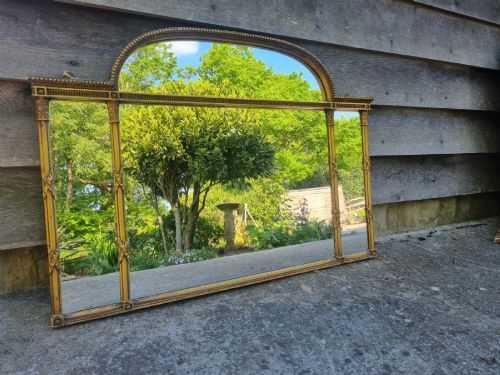
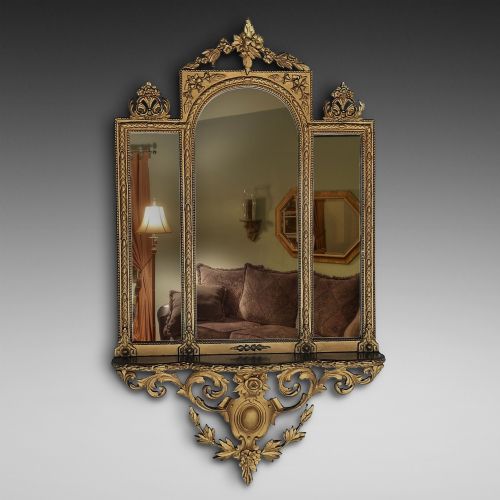
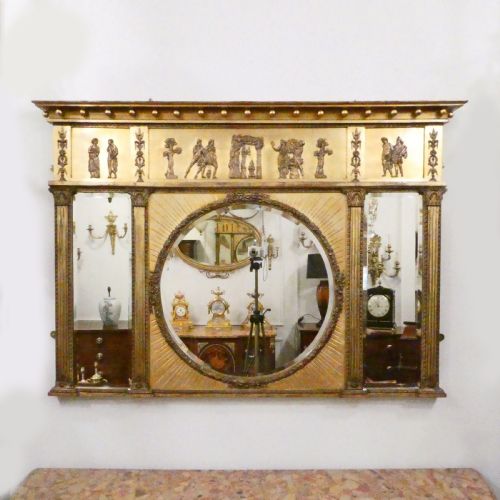
A gilded triptych mirror is a three-panel looking glass designed primarily as an overmantel or wall mirror, appearing predominantly in Regency and nineteenth-century forms. These pieces often feature architectural divisions or flanking columns that split the glass into a principal central mirror accompanied by two narrower side sections.
The versions most commonly met on this page date from the nineteenth century, including Regency, late Georgian, and Victorian interpretations. Makers often ornamented these frames with acanthus decoration, gilded bronze, or whimsical touches such as Ho Ho birds and squirrel details.
How they were made
Makers constructed the foundational frames from wood, applying layers of gesso and composition ornaments before finishing the surfaces with gold leaf or gilding. This technique allowed artisans to sculpt intricate motifs like acanthus leaves and classical columns onto the timber substrate.
Mirrors incorporated segmented mirror glass fitted into three distinct panels within a single frame, sometimes complemented by ebonised wood or white painted details.
Listings feature nineteenth-century and Regency periods alongside Victorian examples, utilising giltwood, gesso, and ebonised wood across overmantel and wall mirror forms.
What varies in quality
The distinction between standard examples and finer pieces rests on the depth of the carving and the crispness of the composition ornament. Superior frames display sharply defined acanthus foliage and balanced proportions across the three glass panels.
Material application also dictates quality, as genuine gold leaf surfaces age with a warmer lustre compared to simpler metallic paints, and the retention of original figural carvings like birds or squirrels elevates the piece.
The Gilded Triptych Mirror Glossary
- Giltwood
- Timber that has been coated in gold leaf. This material provides the primary shimmering surface for nineteenth-century frames.
- Triptych
- A piece divided into three sections. In mirror design, this refers to a single frame housing three separate glass plates.
- Gesso
- A plaster-like mixture applied to wood frames to create a smooth surface for gilding. Artisans mould this substance into relief decorations.
- Composition
- A moulded mixture of whiting, resin, and oil pressed into ornament shapes. It hardens on the wooden frame to simulate carved wood details.
- Overmantel
- A large mirror designed to sit directly above a fireplace mantelpiece. These horizontal formats frequently utilise the triptych division.
Gilded Triptych Mirror: Frequently Asked Questions
Where should I hang a triptych mirror?
These mirrors traditionally occupy the wall space directly above a fireplace mantelpiece, where their horizontal three-panel format reflects light across the room.
They also function effectively on principal living room walls as standalone focal points that visually expand the interior space.
How do I identify a Regency mirror?
Regency pieces often incorporate classical architectural elements such as columns, acanthus decoration, and symmetrical gilded frames dating from the early nineteenth century.
Many examples also feature stepped cornices or friezes above the glass panels, distinguishing them from later Victorian revivals.
Are these mirrors heavy to hang?
Nineteenth-century timber frames combined with glass panels and gesso ornamentation create substantial weight that requires secure wall fixings.
Proper installation involves anchoring directly into structural wall supports to safely bear the load of the gilded wood.