
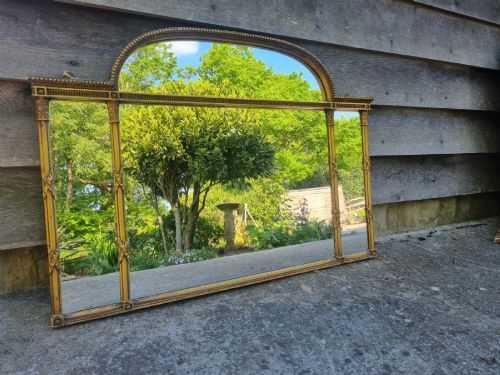

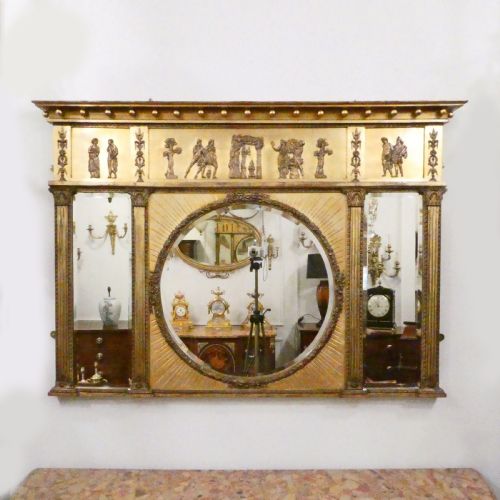


Regency Gilded Triptych Mirror
A regency gilded triptych mirror brings architectural presence and reflected light to a room through its classic three-part plate and gilded frame.
Regency Gilded Triptych Mirror
When you search for a regency gilded triptych mirror, you encounter horizontal wall and overmantel looking glasses designed to sit above a fireplace or along a principal drawing room wall. These pieces date principally from the nineteenth century, including the Regency period itself alongside later nineteenth century revivals from around eighteen eighty.
The format is characterised by a tripartite glass division, splitting the main reflecting surface into three distinct vertical sections. They appear in forms ranging from grand overmantels with acanthus decorated columns to neat-sized painted and gilded wall hanging variants.
The underlying woodwork manifests in giltwood, ebonised wood, and white painted surfaces finished with gold leaf and gesso. The stylistic vocabulary draws heavily on classical Regency and late Georgian traditions, creating an expansive horizontal landscape orientation.
Materials and construction
The construction of a regency gilded triptych mirror relies on traditional timber framing overlaid with gesso and gold leaf. Artisans carved intricate details directly into the wood or moulded them in gesso before applying the gilding.
The glass is divided into three separate panels, often set between engaged columns or pilasters. Secondary woods support the heavy frame behind the gilt surface, while the overall aesthetic balances structural weight with refined neoclassical detail.
Every triptych mirror secretly serves as a polite three-way conversation monitor for anyone sitting opposite the fireplace.
Judging quality
Quality in a regency gilded triptych mirror rests upon the crispness of the carved or moulded ornament and the depth of the gilding. Crisp acanthus foliage and well-defined architectural columns distinguish superior examples from softer, more derivative nineteenth century revivals.
The integration of the tripartite glass plates and the integrity of the original giltwood surface determine the visual harmony of the piece. Proportion and scale dictate how successfully the architectural elements command a room.
The Regency Gilded Triptych Mirror Glossary
- Triptych
- A mirror plate divided into three distinct vertical sections within a single overarching frame. This layout widens the field of reflected light across a wall.
- Giltwood
- Timber that has been coated with gold leaf applied over a prepared gesso ground. It provides the characteristic luminous surface of Regency frames.
- Gesso
- A plaster mixture applied to wood frames to create a smooth surface for gilding and low relief carving. It allows for sharp architectural moulding details.
- Overmantel
- A large horizontal mirror specifically designed to hang on the wall directly above a fireplace mantelpiece. These pieces anchor the domestic interior.
- Acanthus
- A classical leaf ornamentation carved into wood or modelled in gesso along columns and frames. It references ancient Greek and Roman architecture.
Regency Gilded Triptych Mirror: Frequently Asked Questions
Where should I hang a triptych mirror?
These horizontal mirrors find their traditional home above a living room fireplace mantelpiece, where their length matches the hearth below. They also suit expansive dining room walls to draw light across the space.
Ensure the wall structure can support the substantial weight of the timber and glass frame. Positioning the glass opposite a window maximises the reflected light in the room.
How do I identify a genuine Regency piece?
Examine the construction methods, the composition of the gesso and gold leaf, and the style of the classical mouldings. True Regency examples date from the early nineteenth century.
Later nineteenth century revivals share similar visual characteristics but often show different secondary woods and frame construction techniques upon closer inspection.
What maintenance do giltwood frames need?
Giltwood surfaces require gentle dusting with a soft, dry brush to prevent the accumulation of dirt within the carved details. Avoid liquid cleaners and modern chemicals which damage fragile gold leaf.
Keep the mirrors away from direct sources of heat and damp environments to protect the underlying gesso and timber frame from cracking.
Why are the glass plates divided?
The triptych division reflects historical plate glass manufacturing limitations, where large flawless sheets of mirror glass were difficult to produce. Dividing the plate into three sections allowed makers to create grand horizontal wall mirrors.
Over time, this tripartite format evolved into a distinct aesthetic style that defines Regency interior decoration.