
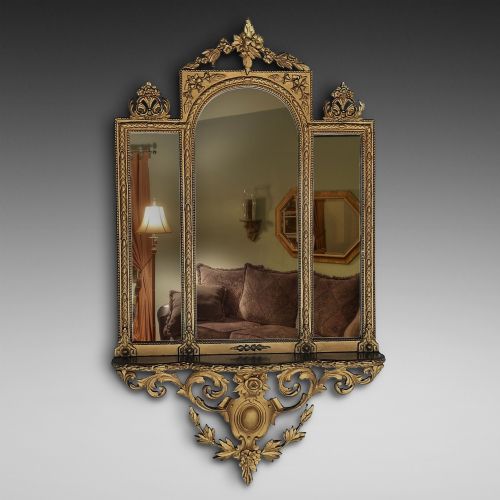
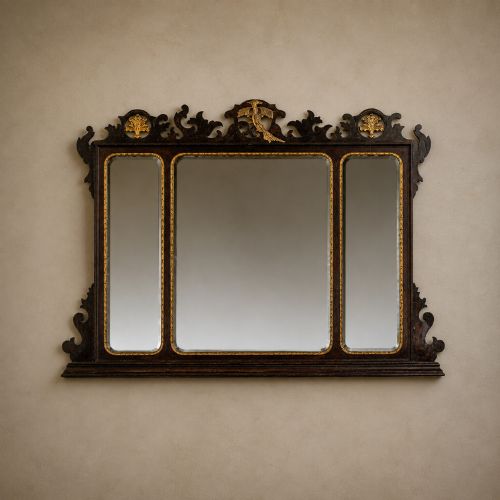
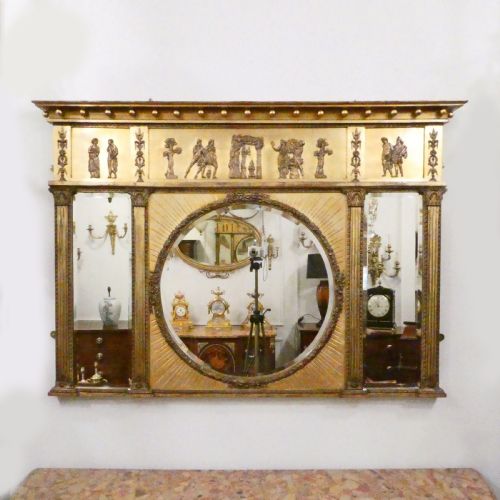


Three Panel Gilt Mirror
A three panel gilt mirror brings architectural presence and reflected light to a room, dominated by nineteenth century overmantel and wall mirror forms.
Three Panel Gilt Mirror
A three panel gilt mirror is typically encountered as a wide overmantel or wall mirror designed to hang above a fireplace or along a principal wall. These rectangular pieces divide the reflective surface across three distinct plates, a layout established in the Regency and Victorian eras.
The selection ranges from large overmantel mirrors with mahogany and ebonised frames to neat triptych dressing table mirrors and wall hanging formats. Revival styles such as Chippendale and Rococo appear alongside classical Regency designs, incorporating ornamental details like Ho-Ho birds and acanthus foliage.
How they were made
Frames combine traditional timber foundations such as mahogany, walnut, or ebonised wood with applied decorative elements of gesso and composition over carved wood. Gilding is applied using gold leaf or metal leaf finishes, sometimes paired with white painted or parcel gilt surfaces.
Mirror glass is set into multiple plates within a shared frame structure, secured by internal rebates and backing boards. Architectural surrounds utilise decorative mouldings, classical columns, and carved crestings executed in wood or moulded composition.
Listings span the nineteenth century through to the early twentieth century, incorporating Victorian, Regency, and Edwardian production dates.
What varies in quality
The crispness of the carved or moulded ornament defines the visual standard, distinguishing sharply rendered acanthus leaves and bird crestings from softer, less detailed composition work. Hand-carved timber elements demonstrate superior craftsmanship compared to mass-produced decorative mouldings.
The integrity of the gilding and the preservation of the original mirror plates determine the overall standard of a piece. Original tripartite glass plates with appropriate ageing exhibit a depth of reflection that replacement glass lacks.
The Three Panel Gilt Mirror Glossary
- Overmantel mirror
- A wide mirror designed specifically to be hung on the wall directly above a fireplace mantelpiece. These pieces often feature landscape orientations to span the width of the hearth below.
- Triptych
- A mirror divided into three separate panels or plates set within a single unified frame. The central plate is frequently wider than the flanking sections.
- Gesso
- A plaster-like mixture applied to wooden frame substrates to provide a smooth surface for gilding. It accepts deep relief moulding for decorative motifs.
- Composition
- A mouldable mixture of whiting, resin, glue, and oil pressed into ornaments for picture and mirror frames. It allows intricate decorative details to be replicated.
- Parcel gilt
- A finish where parts of the object are gilded with gold leaf while other areas show painted or polished wood surfaces. This technique highlights specific architectural details.
Three Panel Gilt Mirror: Frequently Asked Questions
Where should I hang a three panel gilt mirror?
These mirrors are traditionally positioned above a fireplace mantelpiece where their horizontal proportions balance the hearth. They also function effectively on principal living room walls to amplify natural light.
Ensure the wall construction supports the considerable weight of timber and glass, anchoring securely into studs or masonry.
How do I identify a Regency period mirror?
Regency pieces often display classical architectural motifs such as reeded columns, ball-detail cornices, and clean rectangular proportions. The frames are typically gilded wood or plaster over timber.
Look for construction methods appropriate to the early nineteenth century, including older backboards and traditional fixings.
What is the difference between wall and overmantel mirrors?
Overmantel mirrors are proportioned specifically for the horizontal space above a fireplace, whereas general wall mirrors are designed for various wall locations throughout a room. Both formats utilise the three panel configuration to spread reflected light.
Overmantels frequently incorporate heavier crestings or framing suited to anchor the visual weight of a hearth.
How should I clean a gilt frame?
Dust giltwood and gesso frames gently with a soft, dry brush to prevent damage to the delicate metallic leaf. Avoid liquid cleaners and chemical sprays which can strip or dissolve historical gilding.
Glass panels can be cleaned with standard glass cleaner applied to a cloth rather than sprayed directly onto the mirror plate.