







Gilded Satsuma Ceramic Urn
When you search for a gilded satsuma ceramic urn, you enter a world of finely painted earthenware carrying intricate gold leaf and enamel.
Gilded Satsuma Ceramic Urn
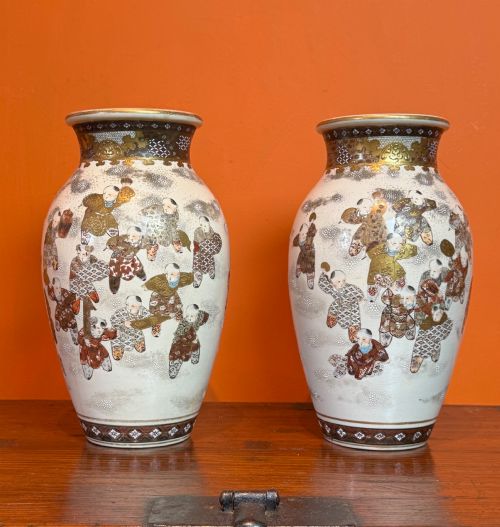
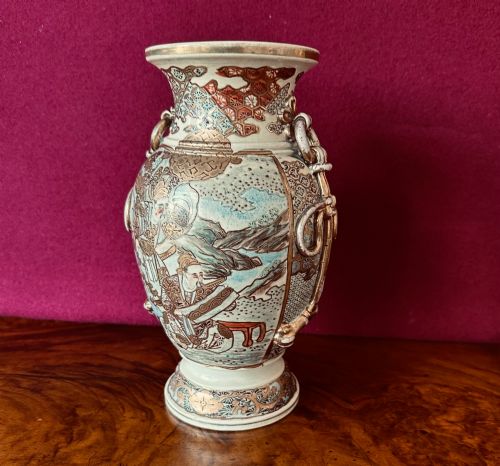
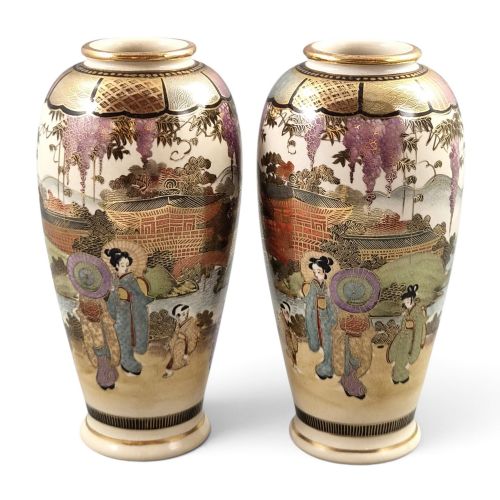
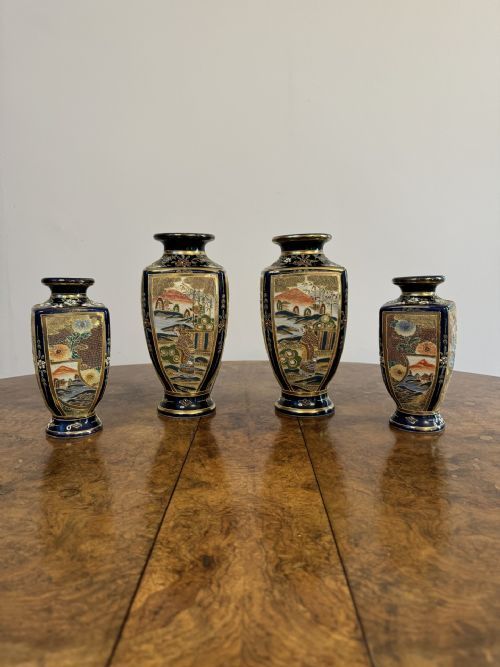
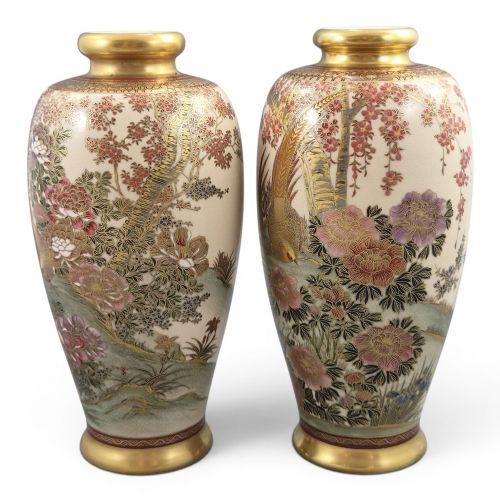
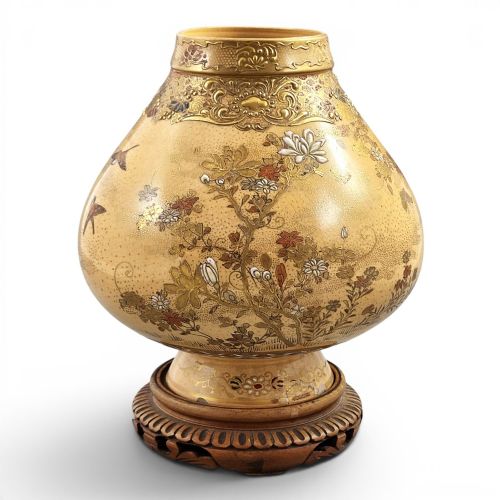
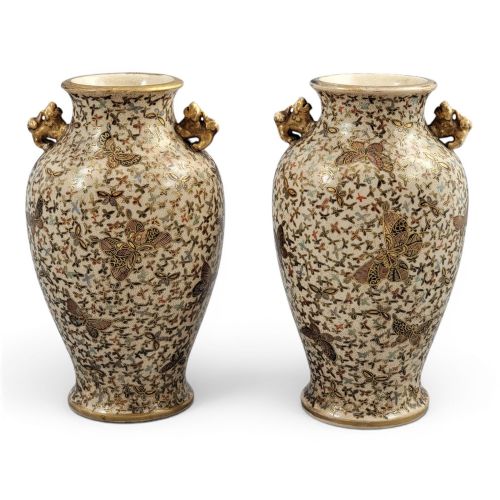
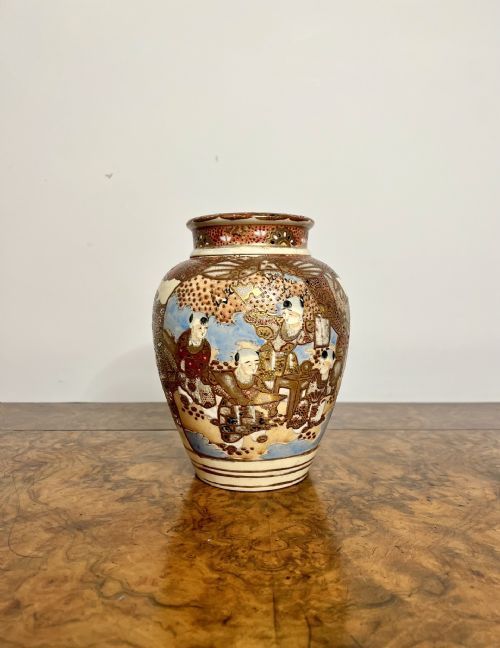
A gilded satsuma ceramic urn is a decorative earthenware vessel originating primarily from Japan during the Meiji, Taisho, and Showa periods. These pieces take various forms including jars, vases, koro, and garnitures, often detailed with figures, landscapes, or thousand butterflies motifs.
Most examples found in these listings date from the late nineteenth century through to the early decades of the twentieth century. They frequently feature traditional Japanese artistic subjects such as court figures, arhats, dragons, and Mount Fuji scenes.
Buyers encounter both single statement pieces and matched pairs, occasionally adapted into table lamps or fitted with covers. The earthenware body typically displays a characteristic crackle glaze overlaid with detailed enamel and heavy gold gilt work.
How they were made
Makers formed these pieces from earthenware clay before applying a pale, finely crackled glaze that served as the canvas for subsequent decoration. Artisans then built up designs using polychrome enamel pigments combined with extensive gold leaf and gilt work.
The application often incorporated moriage technique, where slip was piped onto the surface to create raised, textured details before the final gilding. Kiln firing fixed the enamels and gold onto the ceramic body, creating the durable metallic sheen characteristic of the ware.
Gilded Satsuma Ceramic Urn Retail Price Guide 2026
Typical asking prices for gilded satsuma ceramic urn among the pieces listed under this phrase on Sellingantiques today, from the lower quarter to the upper quarter. They describe what is for sale here now, not the wider market.
Listings feature earthenware forms ranging from compact miniature vases to monumental garnitures spanning the late nineteenth and early twentieth centuries.
What varies in quality
Quality depends heavily on the precision of the brushwork and the complexity of the pictorial scenes depicted on the ceramic body. Pieces featuring densely detailed panels of court figures or arhats require significant artisan skill compared to simpler landscape designs.
The application of the gold gilt and moriage relief work distinguishes standard production from exceptional exhibition pieces. Heavily gilt vessels with crisp enamelling and signed artist marks represent the higher tier of these ceramics.
Shozan·Manpei·Kinkōzan·Kinzan·Hotoda·Chosei·Shuzan·Seiko-en Chokei·Yamashu·Kizan·Tagawa·Tashiro·Hattori·Hayakawa
The Gilded Satsuma Ceramic Urn Glossary
- Satsuma
- A type of Japanese earthenware traditionally characterised by an ivory-coloured, crackle-glazed surface. It originated in Satsuma Province and became popular for export during the Meiji period.
- Moriage
- A ceramic technique involving the application of clay slip in dots or lines to build up raised patterns before firing and gilding. This creates a tactile, three-dimensional surface texture.
- Koro
- A traditional Japanese incense burner typically supported on three or more feet and fitted with a pierced cover. These often feature decorative handles and intricate enamel panels.
- Garniture
- A set of matching ceramic vases or jars designed to be displayed together on a mantelpiece or sideboard. They usually consist of three or more graduated pieces.
- Shimazu Mon
- The heraldic crest of the Shimazu clan, featuring a cross within a circle. It frequently appears on Satsuma ceramics produced in the domains associated with the clan.
Gilded Satsuma Ceramic Urn: Frequently Asked Questions
How should I display my urn?
These ceramic vessels suit prominent placement on sideboards, mantels, or tables where natural light catches the gold leaf and enamel details. Ensure they sit on stable surfaces away from heavy traffic areas to protect their delicate painted bodies.
Keep them out of direct sunlight to preserve the vibrancy of the polychrome enamels over time. Paired pieces look best arranged symmetrically to balance decorative schemes.
Can I use my urn for flowers?
Most antique Satsuma vessels are porous earthenware rather than vitrified stoneware or porcelain, meaning they do not hold water safely. Using them with liquid risks damaging the historic ceramic body and the interior glaze.
Display them dry as decorative art objects or utilise internal waterproof liners if floral arrangements are necessary. Protecting the historic fabric ensures the longevity of the piece.
How do I identify the period?
Dating relies on stylistic clues, artist signatures, and production characteristics associated with specific eras such as the Meiji or Showa periods. Earlier Meiji pieces often display finer hand-painted detail and heavier gilding compared to later twentieth-century output.
Examining the base for kiln marks, workshop stamps, or specific family crests helps narrow down the origin. Comparing the complexity of the moriage and the crackle glaze provides further chronological context.