

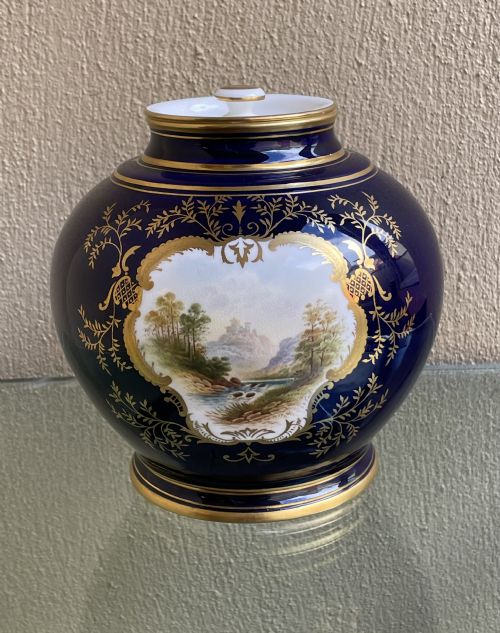


Gilded Porcelain Urn Jar
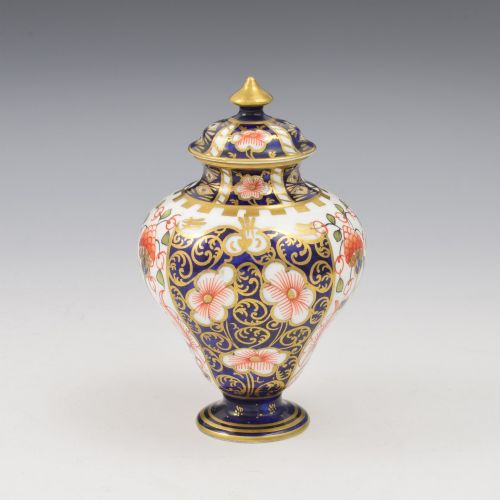
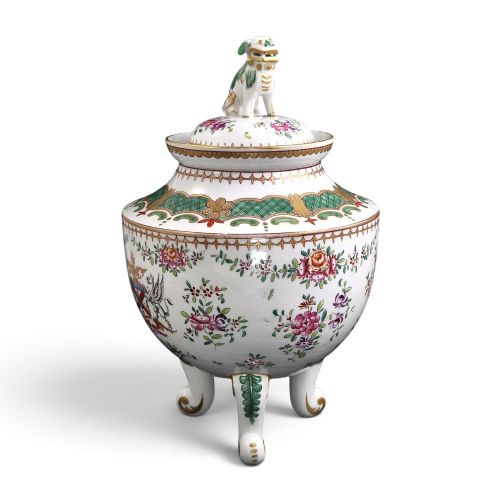
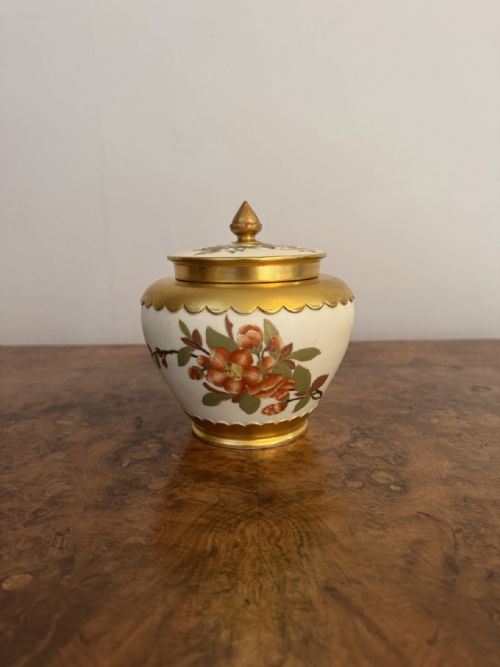
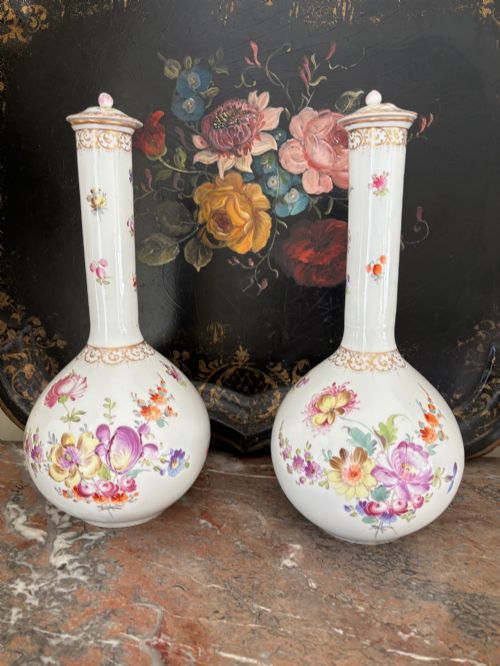
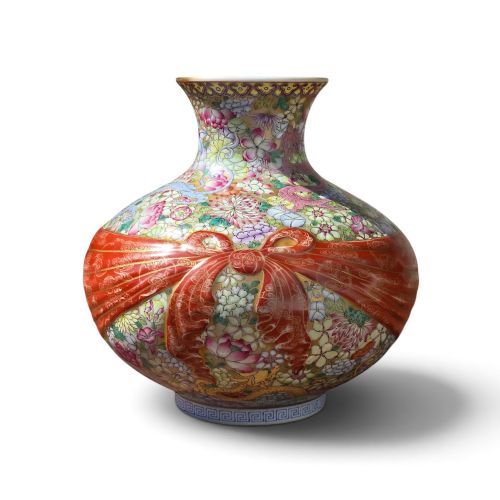
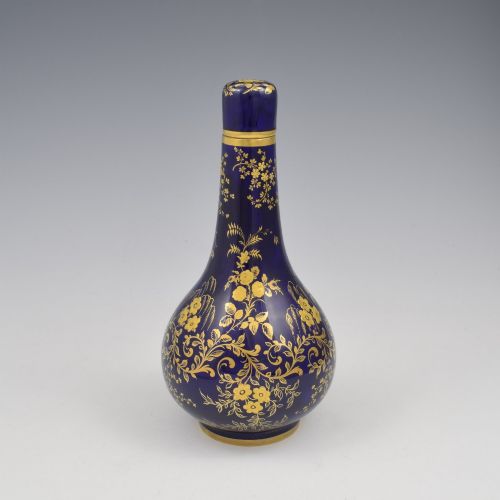
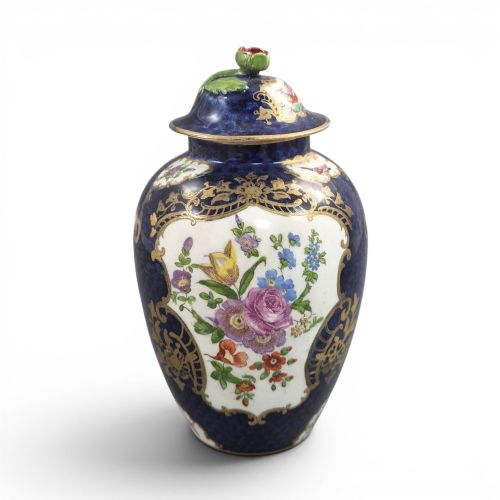
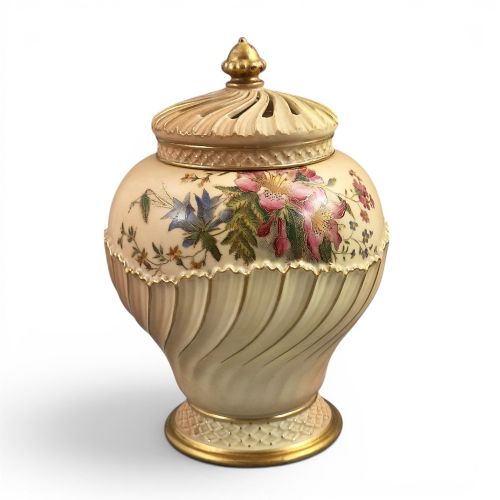
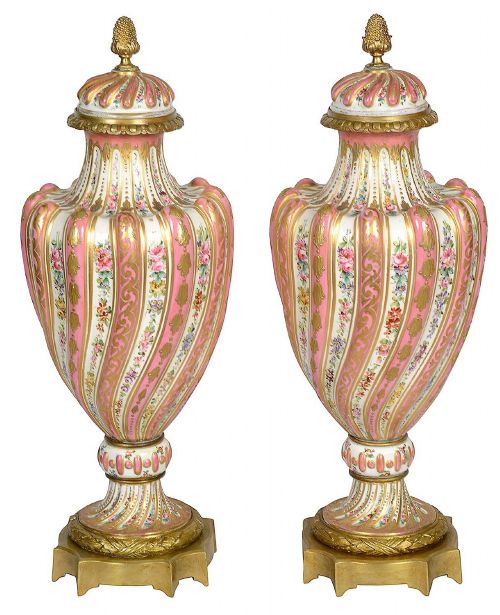
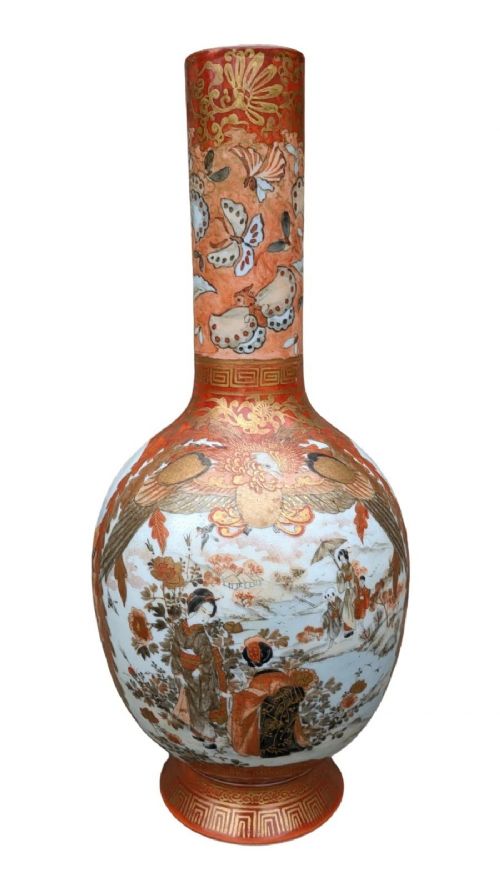
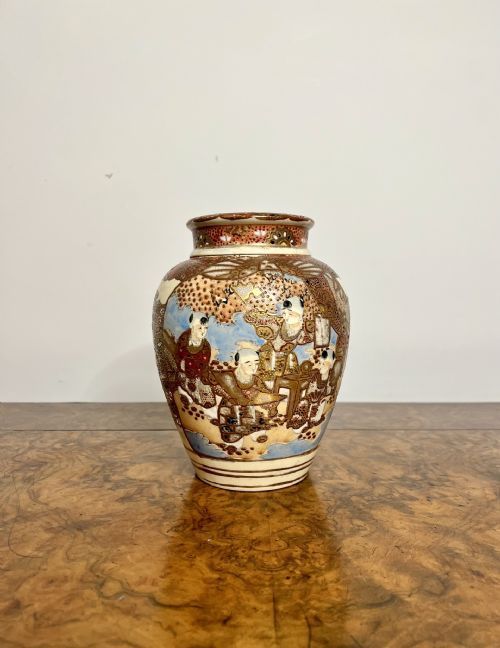
These pieces, found under gilded porcelain urn jar, combine ceramic body and metallic accent to hold potpourri, ginger or display.
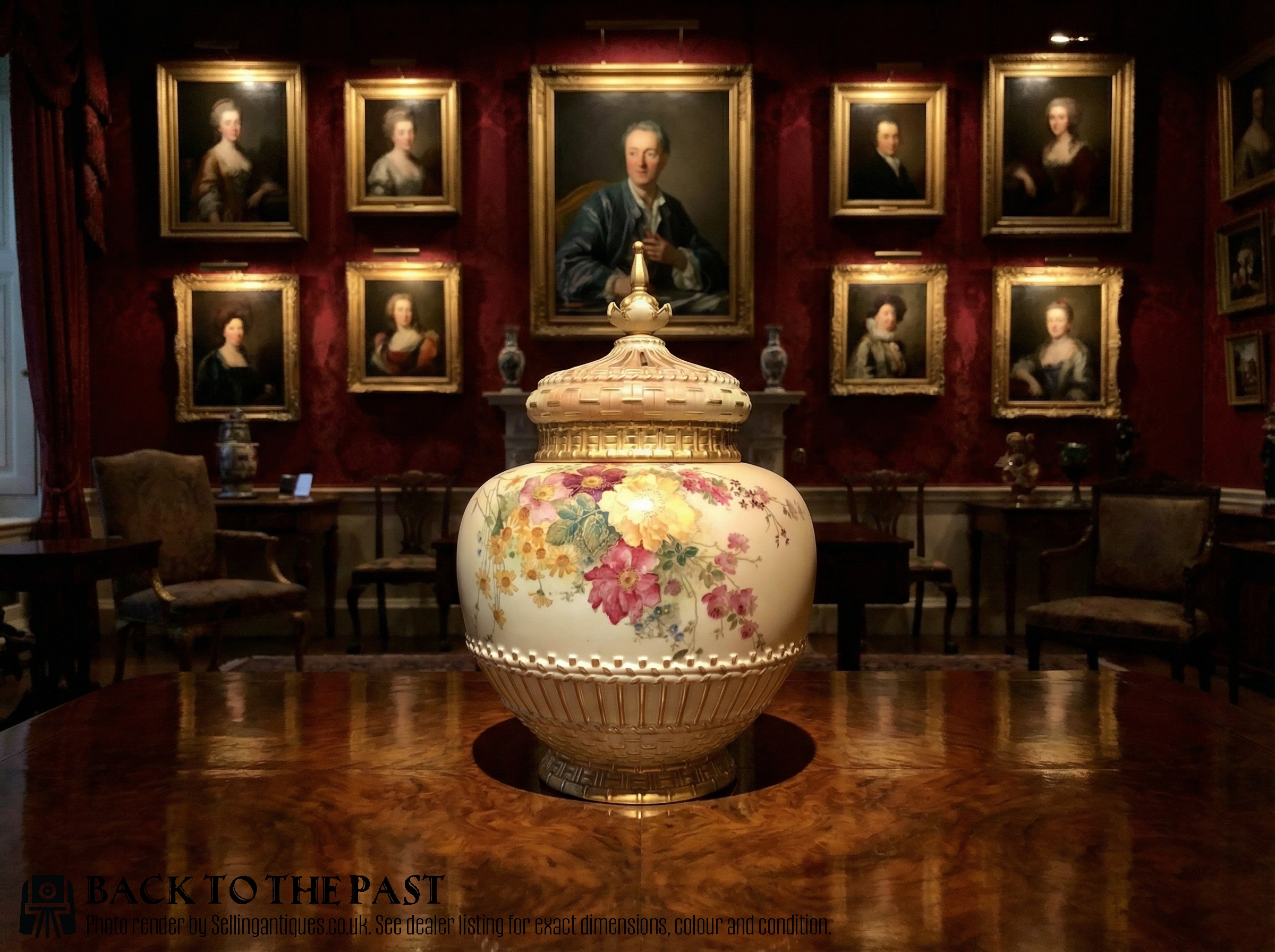
Gilded Porcelain Urn Jar
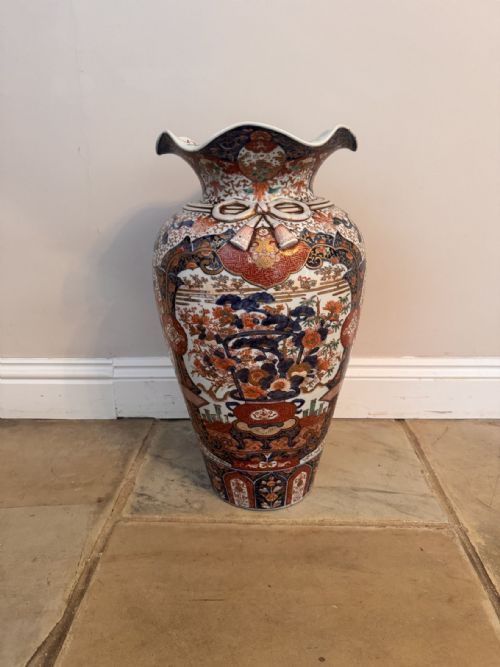
A gilded porcelain urn jar brings together ceramic vessels and metallic surface work across multiple centuries of manufacture. Buyers searching for a gilded porcelain urn jar encounter items spanning the nineteenth century through the mid twentieth century, with strong representation from Victorian and Edwardian periods alongside Japanese export wares.
The forms encompass lidded ginger jars, potpourri pots, apothecary vessels and covered floor vases. European factories such as Royal Worcester, Coalport, Dresden and Samson sit alongside Japanese Satsuma, Kutani and Imari workshops in this inventory.
Lidded examples dominate the selection, often pairing bulbous or baluster bodies with matched covers. These items function as mantel garnitures, table centrepieces or standalone decorative objects.
How They Were Made
The material foundation rests on hard-paste porcelain, earthenware or ironstone, shaped by throwing or moulding before kiln firing. Glaze layers provide the smooth ground, sometimes tinted in cobalt blue, blush ivory or scale blue.
Decoration relies on hand-painted floral motifs, figurative scenes, exotic birds and armorial crests applied over or under the glaze. Gold leaf, gilding and gilt accents are then added by hand, frequently fixed with a secondary low-temperature kiln firing.
Listings feature Japanese Imari, Satsuma and Kutani wares alongside European factories including Royal Worcester, Dresden and Vienna.
What Varies in Quality
The standard of painting sets the primary tier, moving from mass-produced transfer printing to intricate hand-painted brushwork by named artists. Precision in the gilding application, including burnished gold highlights rather than flat metallic paint, separates ordinary production from superior factory output.
Completeness of original matching covers and the crispness of moulded relief details determine the desirability of each vessel. Condition of the delicate gold leaf and enamel surface without excessive rubbing marks the distinction between well-preserved survivals and heavily handled pieces.
Royal Crown Derby·Samson Paris·Royal Worcester·Sitzendorf·Booths Silicon China·Coalport·Samuel Alcock and Co·Kinrin Workshop·Helena Wolfsohn Dresden·Royal Winton·Augustas Rex
The Gilded Porcelain Urn Jar Glossary
- Gilding
- The application of gold leaf or powdered gold onto the ceramic surface to create metallic highlights. This technique defines the bright borders and decorative motifs characteristic of these vessels.
- Potpourri jar
- A lidded vessel perforated to allow dried scented flowers to release fragrance into a room. These pieces combine decorative painting with functional pierced lids.
- Imari
- A style of Japanese export porcelain featuring deep cobalt blue and iron-red ironstone colours enhanced with gold. European factories frequently copied this palette.
- Hard-paste porcelain
- A durable ceramic composition fired at very high temperatures using kaolin and petuntse. It provides a vitreous, translucent body resistant to scratching.
- Garniture
- A set of three or more matching vases or jars designed to be displayed together on a mantelpiece or sideboard. They follow a graded scale of heights.
Gilded Porcelain Urn Jar: Frequently Asked Questions
What is a gilded porcelain urn jar used for?
These vessels served primarily as ornamental items, mantel garnitures or containers for dried herbs and potpourri. Wealthy households displayed them on side tables and mantelpieces to showcase painted artistry and gold decoration.
Covered forms kept aromatic contents contained until opened, while large floor standing versions occupied empty corners of formal reception rooms.
How do I date a nineteenth century piece?
Dating relies on factory bottom marks, registration numbers and stylistic indicators such as Victorian aesthetic movement borders or Rococo Revival moulding. Comparing the paste type and hand-painting style provides further chronological context.
Makers often changed their stamped or painted factory ciphers with successive royal patronage or partnership changes.
What is the difference between Satsuma and Imari wares?
Satsuma wares utilise an earthenware body covered with a finely crackled ivory glaze, decorated with detailed enamel pigments and raised gold. Imari wares use porcelain with a distinct palette dominated by cobalt blue, rust red and heavy gilding.
Both Japanese traditions were produced in large quantities for European export during the Meiji period.