


Pierced Lid Porcelain Vase
A pierced lid porcelain vase brings dried herbs and blooms into a room, offering both decorative form and functional scent dispersal through its perforated cover.
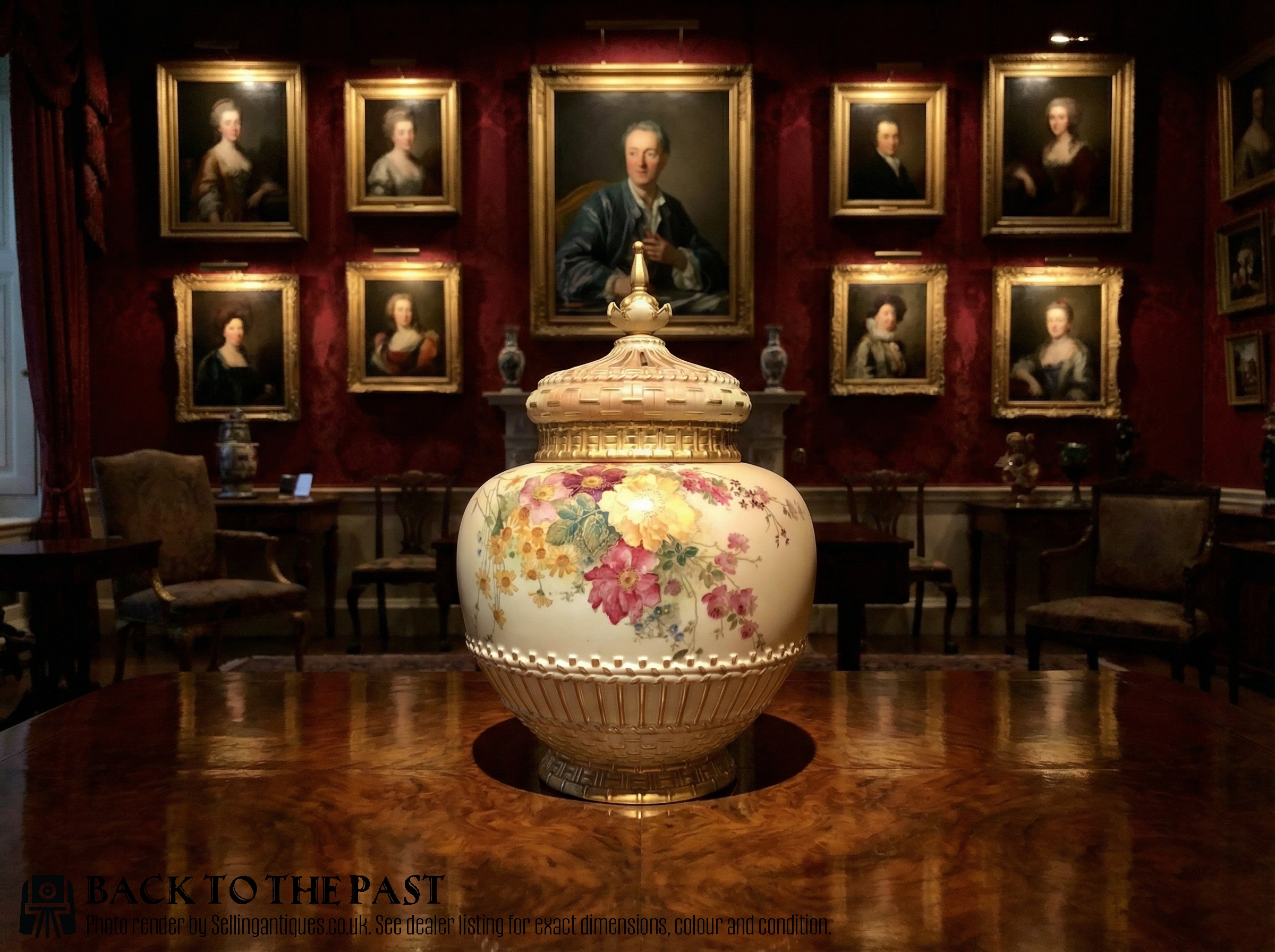
Pierced Lid Porcelain Vase
When you search for a pierced lid porcelain vase, you encounter decorative vessels, urns, and jars designed with perforated covers to release fragrance into domestic spaces. These pieces span centuries from the eighteenth century onwards, taking forms such as pot pourri jars, pommanders, and frill vases.
Makers and manufacturers represented in the inventory include Royal Worcester, Mason's, Chamberlain Worcester, Derby, Sitzendorf, and Herend. These range from pedestal vases with crown covers to paired decorative vessels finished in traditional styles.
How they were made
Makers utilised porcelain, ironstone, and bone china as the primary ceramic bodies for these vessels, shaping them into urns, jars, and vases. The lids required careful piercing before firing to ensure the clean apertures necessary for scent release.
Decoration relied on hand painting, enamel work, and the application of gold leaf and gilding to accentuate moulded details. Many items incorporate blush ivory grounds or Imari palettes applied over the ceramic body.
Listings feature porcelain, ironstone, and bone china pieces spanning the eighteenth century to the mid twentieth century.
What varies in quality
The refinement of the hand painting distinguishes standard production from exceptional artistry, particularly on pieces featuring botanical or fruit scenes signed by studio artists. Precision in the piercing of the lid and the crispness of moulded ornament also separate fine examples.
The application of gilding and gold leaf indicates the tier of the piece, with heavier, burnished gold work appearing on superior items. Integrity of the ceramic body and the matching of original covers to their bases govern the overall standard.
Derby·Chamberlain Worcester·Masons Ironstone·Sitzendorf·Royal Worcester·Herend
The Pierced Lid Porcelain Vase Glossary
- Pot pourri
- A mixture of dried plant materials used to fragrance a room, housed inside a vessel with a pierced lid to allow the scent to escape.
- Ironstone
- A dense, durable type of earthenware patented in the nineteenth century that mimics porcelain in strength and utility.
- Blush ivory
- A matte cream ceramic ground developed by manufacturers to create a soft backdrop for delicate floral or fruit painting.
- Gilding
- The application of gold leaf or gold powder to the surface of ceramics to highlight rims, handles, and moulded decoration.
- Frill
- A ruffled or fluted ceramic border applied as ornamentation around the edges of vases and urns.
Pierced Lid Porcelain Vase: Frequently Asked Questions
What is a pierced lid porcelain vase used for?
These vessels primarily function as containers for pot pourri, holding dried flowers and aromatic spices inside the body. The holes in the lid allow the fragrance to permeate the surrounding space while keeping the contents contained.
Historically, they served a dual purpose as decorative mantel ornaments and practical room deodorisers in period homes.
How do I clean a painted porcelain vase?
Dust the surface gently with a soft, dry brush to remove accumulated particles without disturbing delicate enamel or gilt work. Avoid using water or chemical cleaners, particularly on antique pieces with hand painted details that may be sensitive to moisture.
Take extra care around the pierced lid, as the thin ceramic edges of the perforations can be vulnerable to impact.
How can I tell the period of my vase?
Examine the base for maker marks, factory stamps, and registration numbers that correspond to known operating dates of potteries. The style of decoration, such as Rococo revival moulding or Edwardian blush ivory finishes, also points toward specific eras of production.
Ceramic body composition, from eighteenth century paste to later ironstone and bone china, offers further clues to age.
Are the lids on these vases original?
Check that the glaze, paste, and wear patterns on the lid match those found on the body of the vessel. Replacement lids often show slight discrepancies in colour or fit due to being manufactured at a different date.
Examining the interior rim of both lid and vase helps determine if they were fired and finished together.