
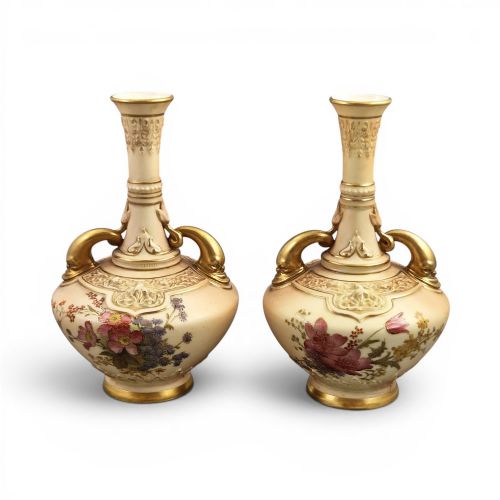
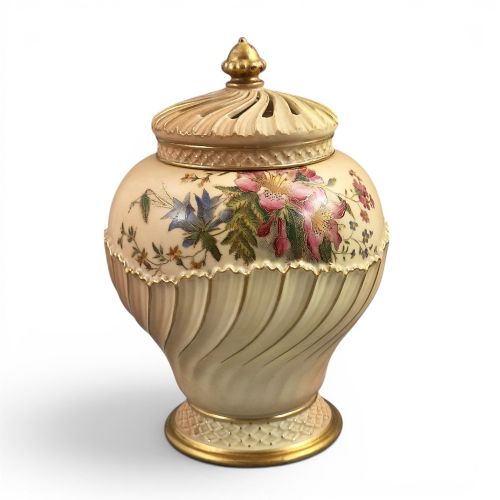
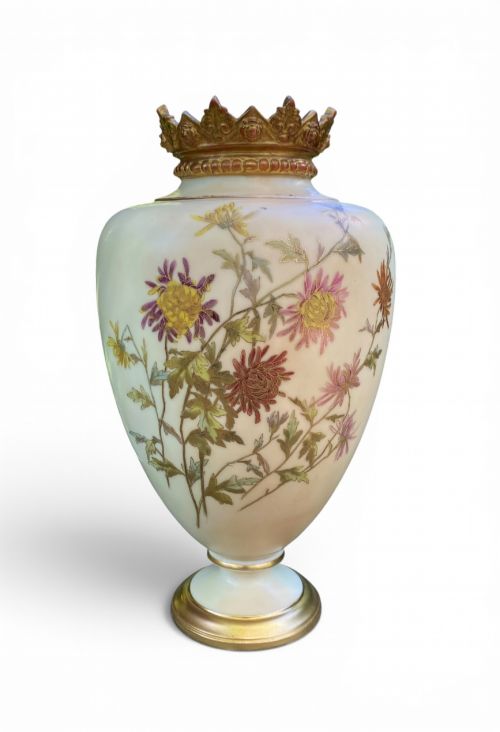


Royal Worcester Porcelain Vase
When you search for a royal worcester porcelain vase, you enter a tradition of painted ceramic artistry spanning the Victorian era through the mid-twentieth century.
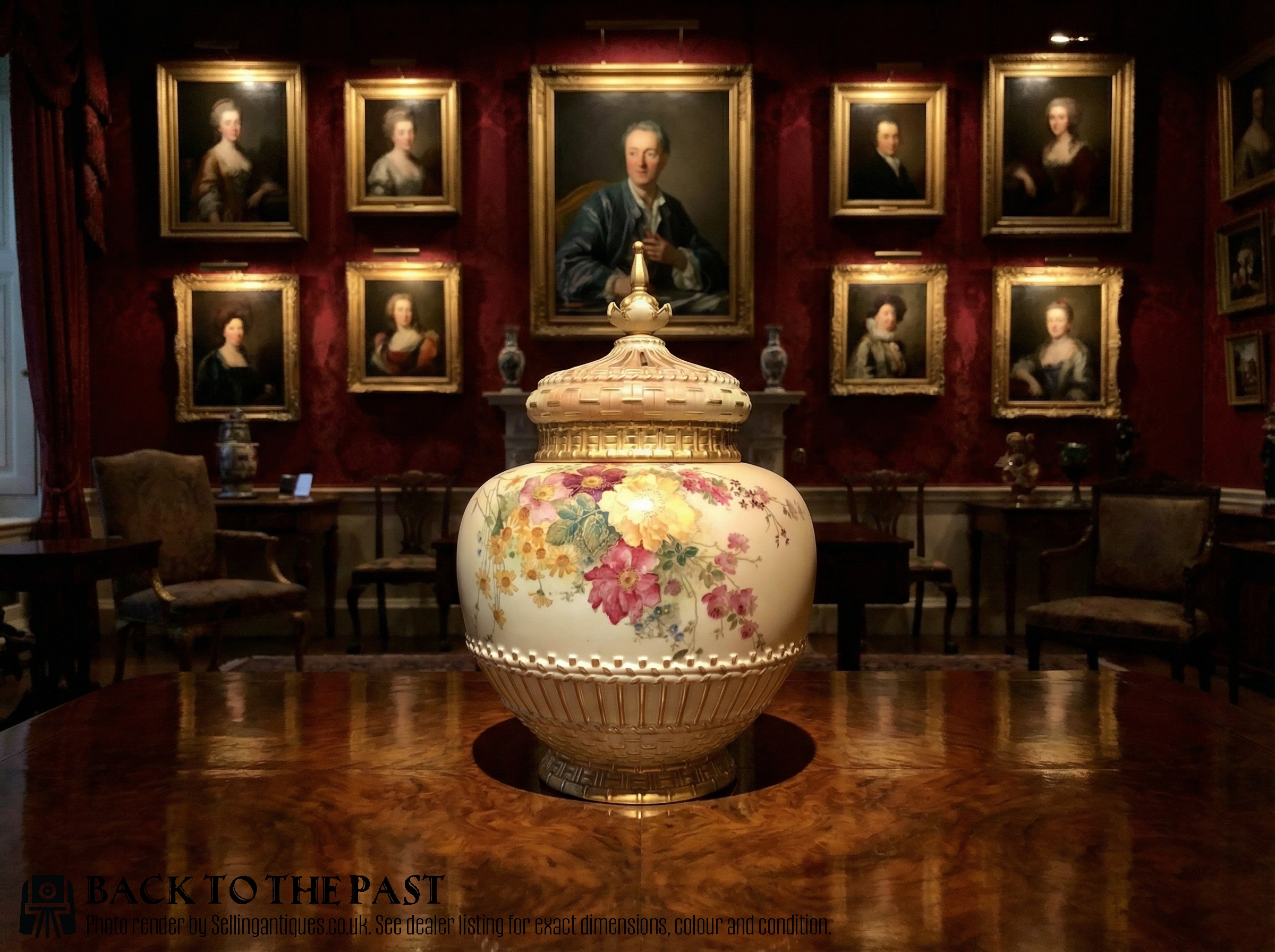
Royal Worcester Porcelain Vase
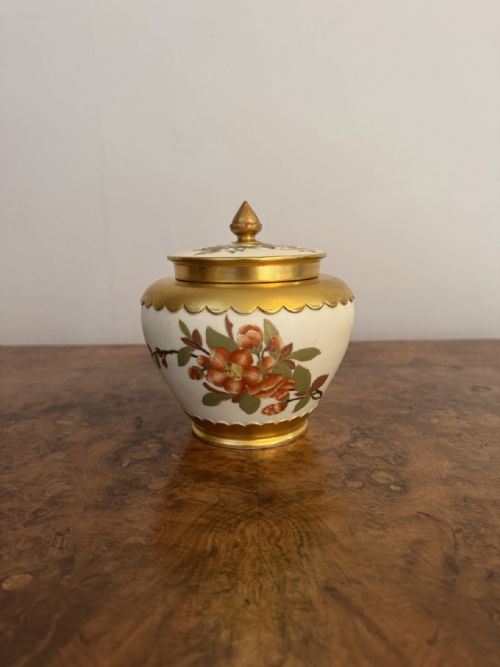
A royal worcester porcelain vase encompasses a wide variety of domestic decorative shapes, from standard ovoid vessels and ginger jars to lidded potpourri pots, ewers, and spill vases. The selection draws heavily upon nineteenth century production as well as Edwardian examples and mid-century items.
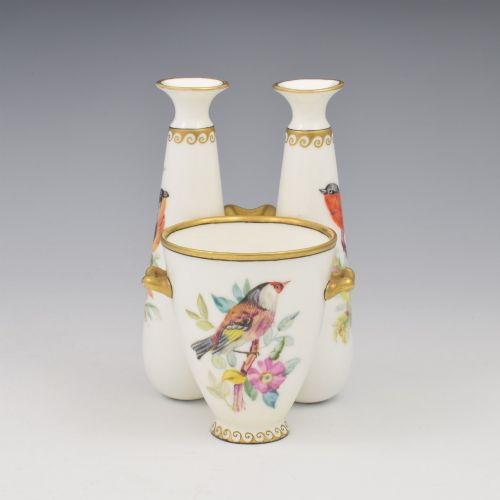
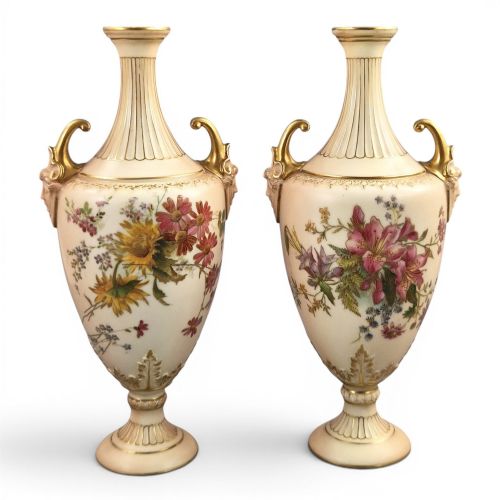
Buyers frequently encounter the iconic blush ivory ground, often paired with floral motifs, alongside later painted fruit studies and bird compositions. Pieces emerge from Victorian neo-classical and aesthetic movement styles, reflecting the changing tastes of English porcelain manufacture.
The objects range from miniature cabinet vessels to large exhibition pieces, occasionally featuring pierced handles or intricate reticulated patterns. Production spans multiple decades, capturing specific artistic periods from the late Victorian era up through the 1960s.
Materials and Techniques
The manufacture relies upon fine bone china and standard porcelain bodies, shaped into vessels, urns, and potpourri jars. Potters utilised specialised ceramic glazes to achieve the characteristic blush ivory background onto which artists painted their subjects.
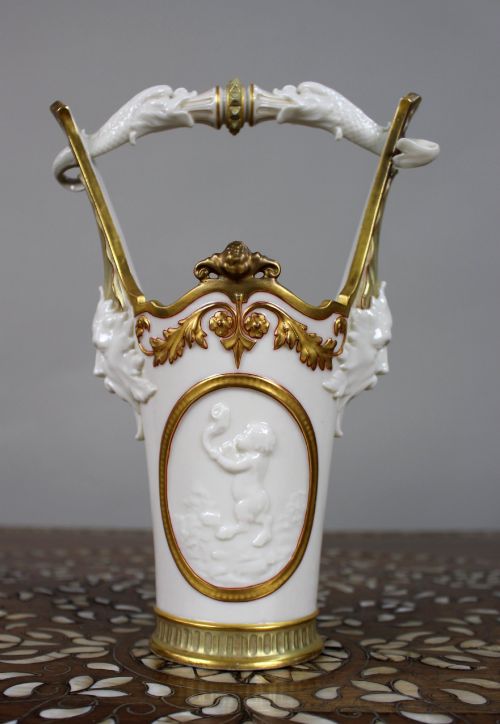
Decoration involved extensive hand-painting with enamel colours, complemented by gold leaf, gilding, and gilt accents applied to handles, rims, and bases. Skilled artisans also performed intricate reticulation, piercing the ceramic body while wet to create openwork patterns.
Some miniature vases measure barely the height of a teacup, yet carry fully detailed painted pheasants.
Factors of Distinction
Quality rests significantly upon the identity of the painter, with signed works by notable studio artists commanding greater recognition. The complexity and execution of the hand-painted subject matter - whether botanical studies, landscapes, birds, or highland cattle - separates standard production from exceptional pieces.
The presence of elaborate embellishments such as pierced gilt handles, reticulated panels, or sculptural elements like dolphin handles alters the character of a vessel. Preservation of the delicate enamel colours and the integrity of the original gilding remain central to the standing of any individual piece.
John Hopewell·Chivers·Walter Powell·Albert Shuck·James Stinton·H Davis·Ayrton·C Baldwyn·William Hawkins·John Smith·Freeman·William Ricketts·C.V. White·Arthur Lewis·HH Price·Harry Stinton·Jack Southall·Raymond Rushton·Hadleys·Harry Davis·Richard Sebright·Kitty Blake·Millie Hunt·George Owen·E.Townsend
The Royal Worcester Porcelain Vase Glossary
- Blush ivory
- A soft, matte cream-coloured ceramic glaze developed by the factory during the late nineteenth century. It served as a popular background for hand-painted floral decoration.
- Reticulation
- The technique of cutting or piercing geometric or lattice patterns into the unfired porcelain body. This requires considerable skill to prevent warping during firing.
- Potpourri jar
- A lidded vessel designed to hold dried scented plant materials, featuring pierced or perforated covers to release fragrance. These often appeared in matched pairs or sets.
- Ewer
- A large jug with a shaped spout and handle, derived from historical wine-serving vessels. In nineteenth-century ceramics, these functioned purely as decorative display items.
- Cabinet vase
- A small, highly detailed porcelain piece intended for close inspection within a display cabinet rather than general room decoration.
Royal Worcester Porcelain Vase: Frequently Asked Questions
How do I identify a blush ivory vase?
Blush ivory pieces feature a distinctive matte cream-coloured ground that lacks the bright starkness of standard white porcelain. They were produced in large numbers from the late Victorian period through the Edwardian era.
Factories often decorated these surfaces with soft-toned floral arrangements, complemented by subtle gilding along the rims and handles.
Who painted these porcelain pieces?
Many vessels were hand-painted by named studio artists who specialised in specific subjects such as birds, highland cattle, sheep, or fruit. Signatures or initials frequently appear near the lower edge of the painted scene.
Apprenticed painters developed distinct styles, making artist attribution a key part of studying these ceramics.
How should I display my porcelain vase?
These decorative items require stable placement away from direct sunlight to protect hand-painted enamel colours and gilt highlights. Cabinet display protects fragile handles and pierced elements from accidental knocks.
Dusting should be performed gently with a dry, soft cloth without chemical cleaning agents.