




Blush Ivory Pot Pourri
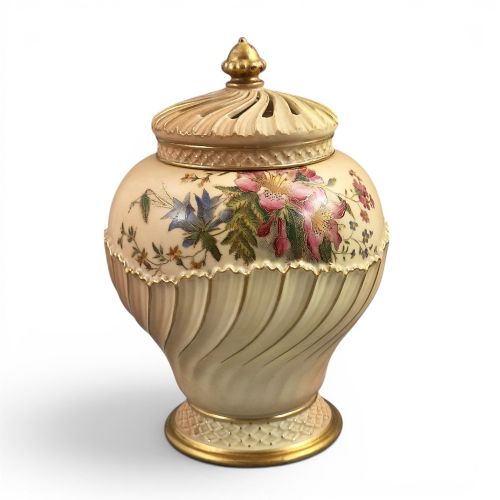
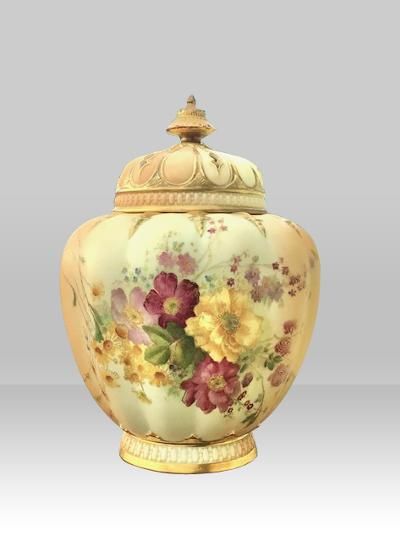
Blush ivory pot pourri pieces are glazed porcelain vessels designed to hold dried flowers, prized for their soft pastel grounds and delicate floral hand-painting.
Blush Ivory Pot Pourri
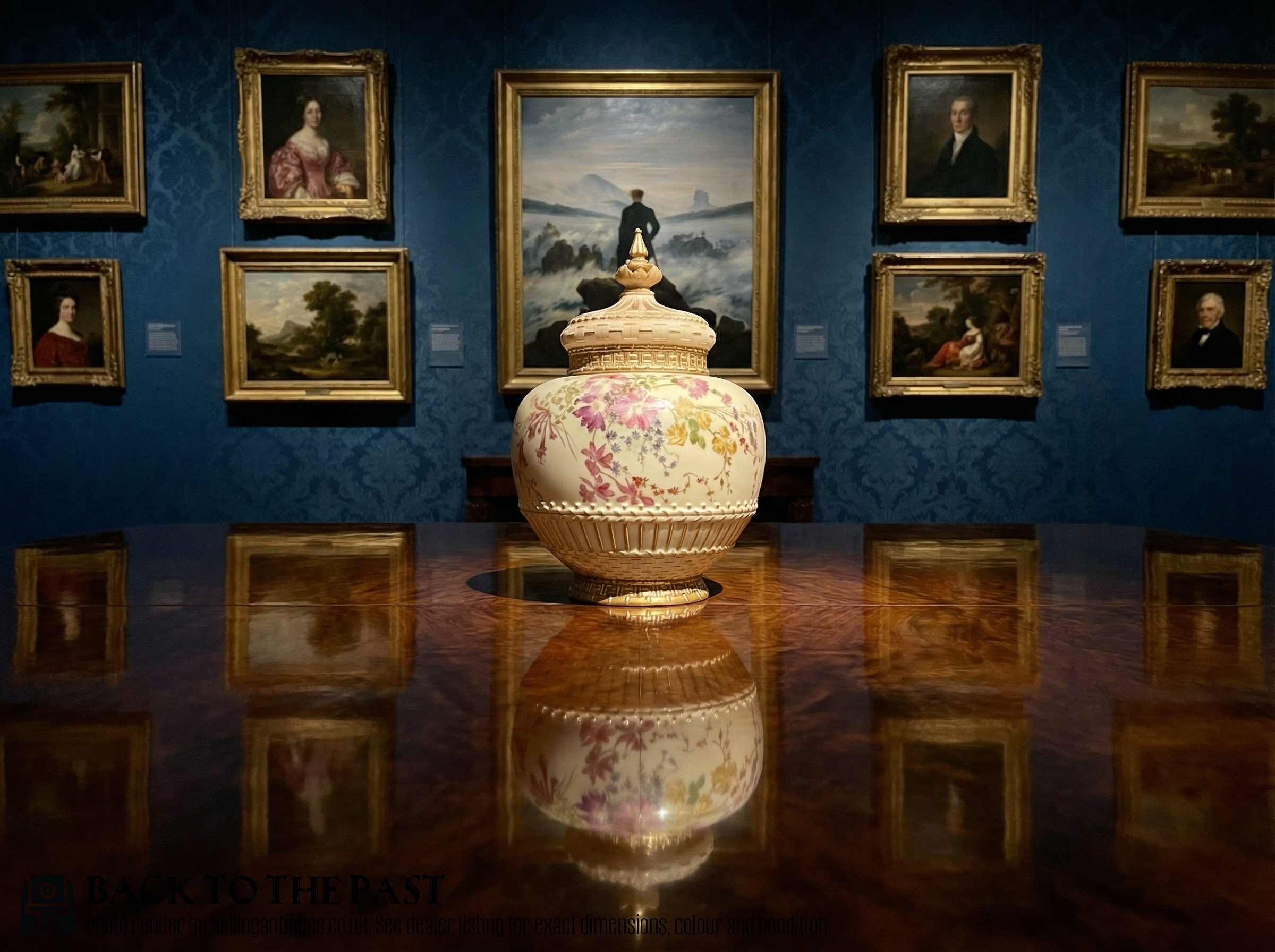
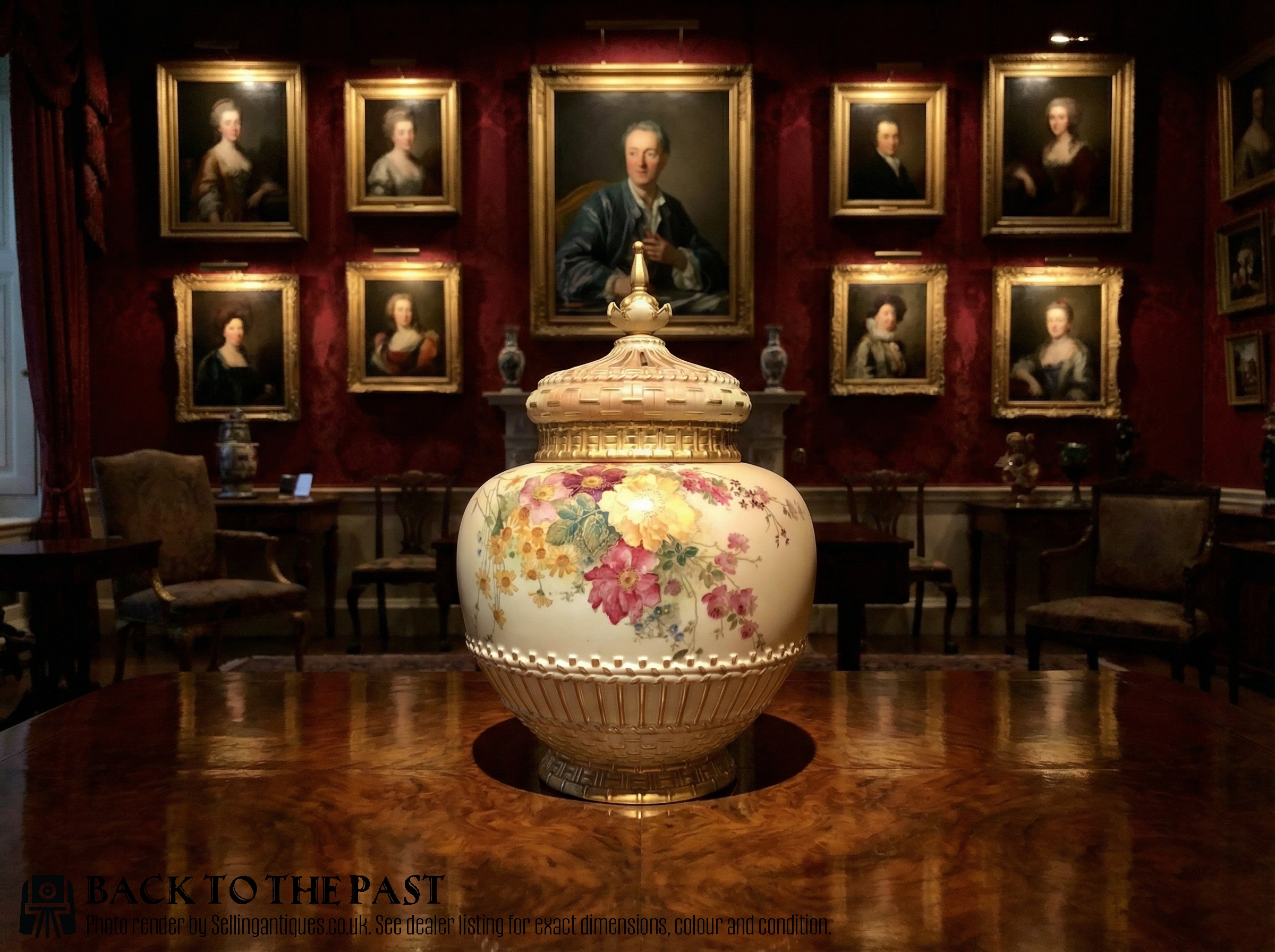
When you search for blush ivory pot pourri, you encounter ornamental porcelain jars, vases, and urns created primarily during the Edwardian period and around nineteen hundred. These pieces typically take the form of ovoid jars and pedestals complete with pierced crown covers designed to release scent.
The objects stem from major Worcester potteries, featuring delicate floral decoration applied by notable artists. You most frequently meet lidded jars and rose jars bearing soft ivory slips and gilt highlights.
How they were made
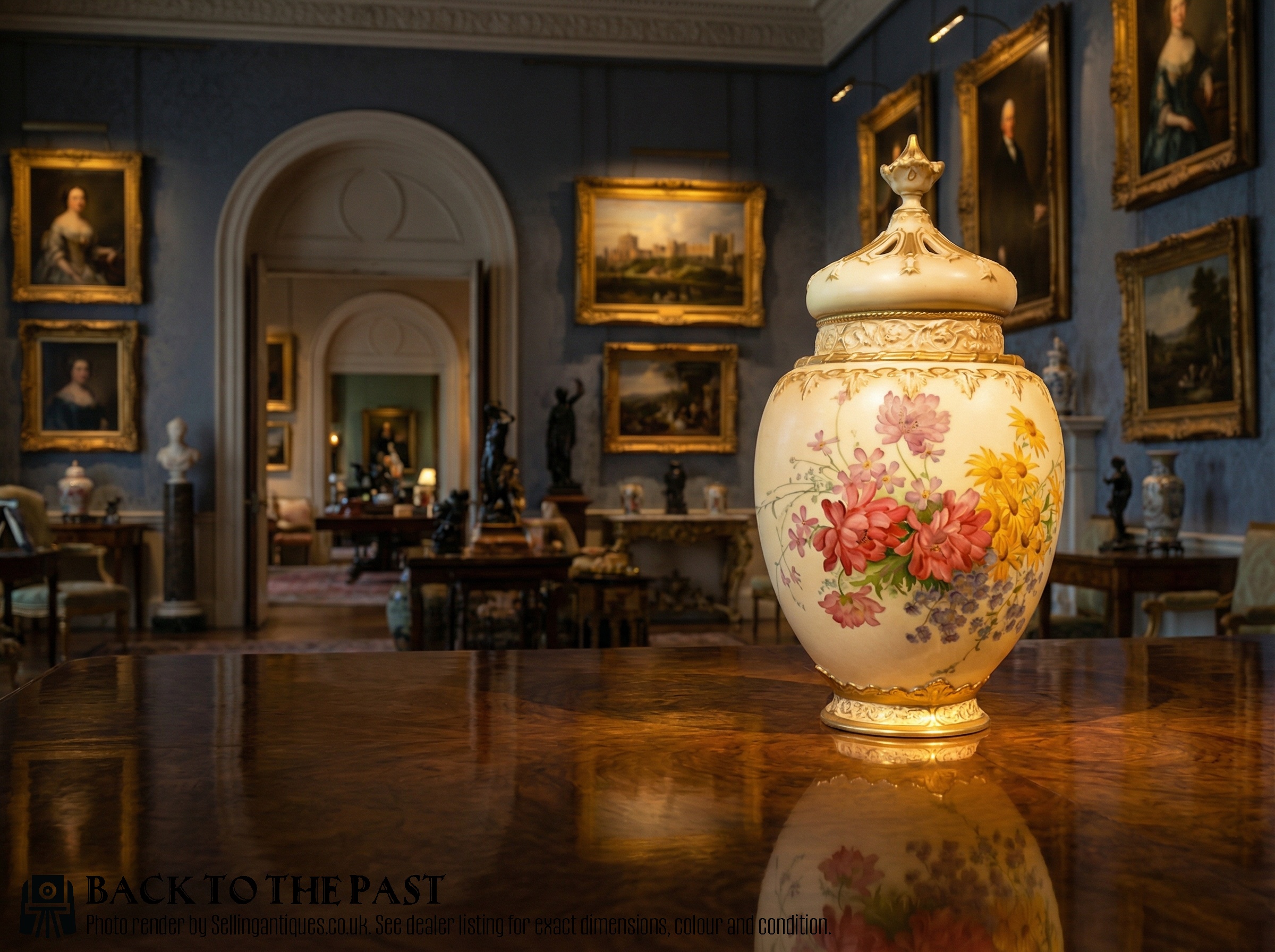
Makers applied a soft ivory ceramic body, then painted floral subjects in naturalistic enamels directly onto the warm ground. Gilding and gold leaf were brushed onto handles, rims, and pierced crown covers to frame the pastel body.
The porcelain was fired, glazed, and painted by hand, often utilising specific numbered shapes recorded in factory production ledgers. Artisans then layered enamel colours before finishing the details with fine gilding.
Blush Ivory Pot Pourri Retail Price Guide 2026
Typical asking prices for blush ivory pot pourri among the pieces listed under this phrase on Sellingantiques today, from the lower quarter to the upper quarter. They describe what is for sale here now, not the wider market.
Listings for blush ivory pot pourri span the Edwardian era and the year nineteen hundred, produced entirely in porcelain with enamel and gilt.
What varies in quality
Quality rests upon the delicacy of the enamel painting and the presence of named artistic signatures such as Stinton or Raby. Finely pierced crown covers and well-preserved gilding distinguish the superior examples from standard production items.
The scale of the ovoid body and whether the jar retains its matching cover alters the visual presence of the piece. Superior specimens demonstrate meticulous brushwork on the floral subjects and crisp definition in the porcelain moulding.
Royal Worcester·Locke And Co Worcester
The Blush Ivory Pot Pourri Glossary
- Blush ivory
- A soft, matte cream or ivory ceramic ground developed by Victorian and Edwardian potteries. It provides a pale backdrop for hand-painted floral enamels.
- Pot pourri
- A mixture of dried petals and spices placed in a container to perfume a room. The vessels designed for this purpose feature pierced covers to allow the scent to escape.
- Crown cover
- A pierced ceramic lid resembling an open crown. These tops sit atop the neck of pot pourri jars and vases.
- Ovoid
- Egg-shaped in profile. This rounded form provides a wide surface area for floral decoration on ceramic jars.
Blush Ivory Pot Pourri: Frequently Asked Questions
What is blush ivory porcelain?
Blush ivory is a specialised ceramic finish featuring a warm, matte cream tone that resembles ivory. Potteries developed this technique in the late nineteenth century to mimic natural materials.
The surface acts as a canvas for hand-painted floral compositions, often finished with subtle gilding along the edges and handles.
How do crown covers work?
Crown covers are pierced ceramic lids designed with open fretwork or apertures across the top. They sit securely on the neck of a pot pourri jar.
The openings allow aromatic scents from dried petals stored inside the vessel to circulate gently throughout a room.
Who painted these porcelain pieces?
Factory artists and specialist ceramic painters decorated these vessels by hand, frequently signing their work directly onto the porcelain body. Notable painters specialised in naturalistic floral studies and bird subjects.
Their signatures help identify the individual talent behind the painted decoration on Edwardian pieces.
How should I display them?
These decorative jars and vases suit prominent placement on mantelpieces, side tables, or cabinets where their soft pastel tones are visible. Keep them away from direct sunlight to protect the enamel colours.
Ensure lidded pieces rest safely on stable surfaces to protect the pierced crown covers from accidental knocks.