




Porcelain Pot Pourri Vase
A porcelain pot pourri vase brings scent and colour to a room, taking the form of lidded jars and urns designed to hold dried petals.
Porcelain Pot Pourri Vase
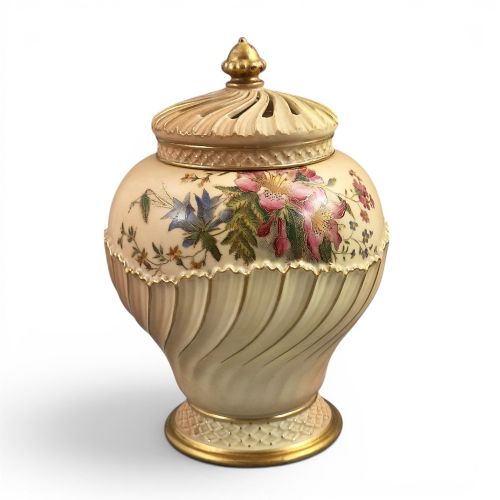
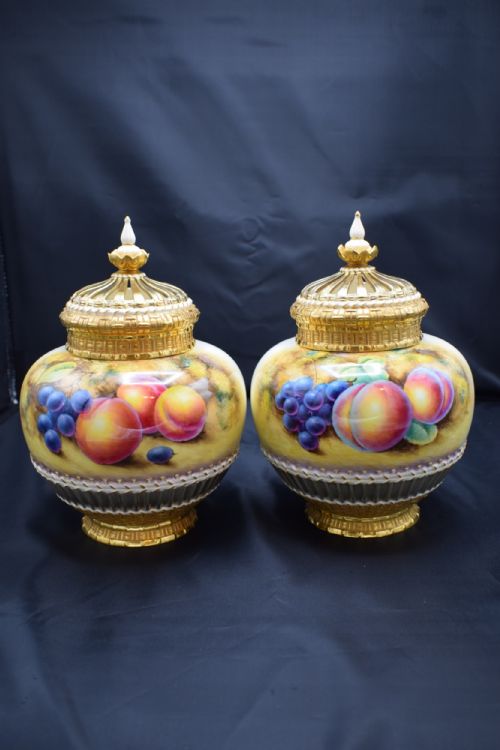
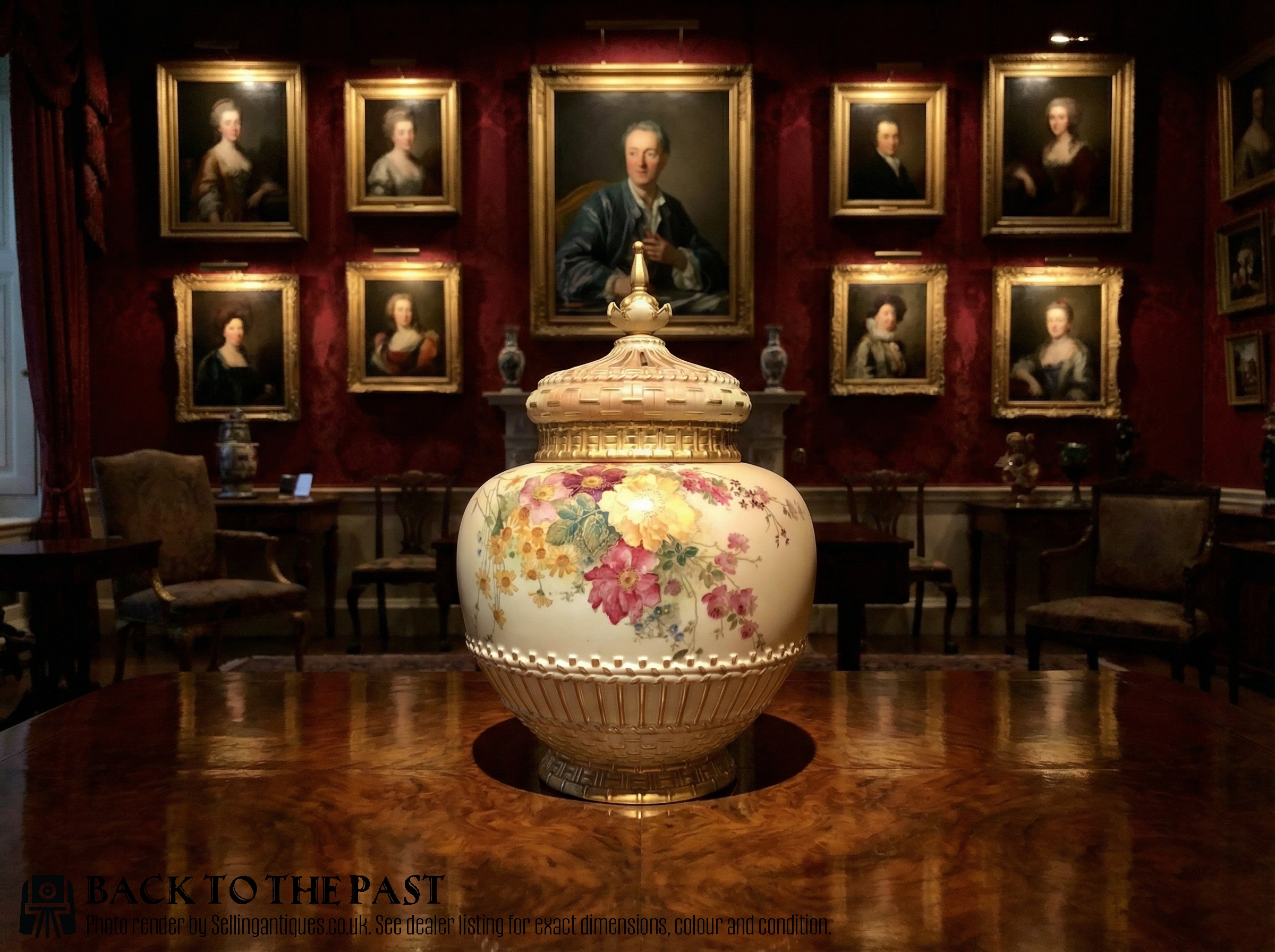
The pieces on this page lean heavily towards English porcelain, led by numerous examples from Royal Worcester in blush ivory, painted fruit and Hadley Ware styles. Alongside these English works sit nineteenth century French and German pieces mounted in ormolu and gilt bronze.
Forms range from compact jars with crown covers to large ovoid pedestal vases and three piece garnitures. Many pieces include inner lids beneath the pierced outer cover to seal the dried contents when scent control is needed.
How they were made
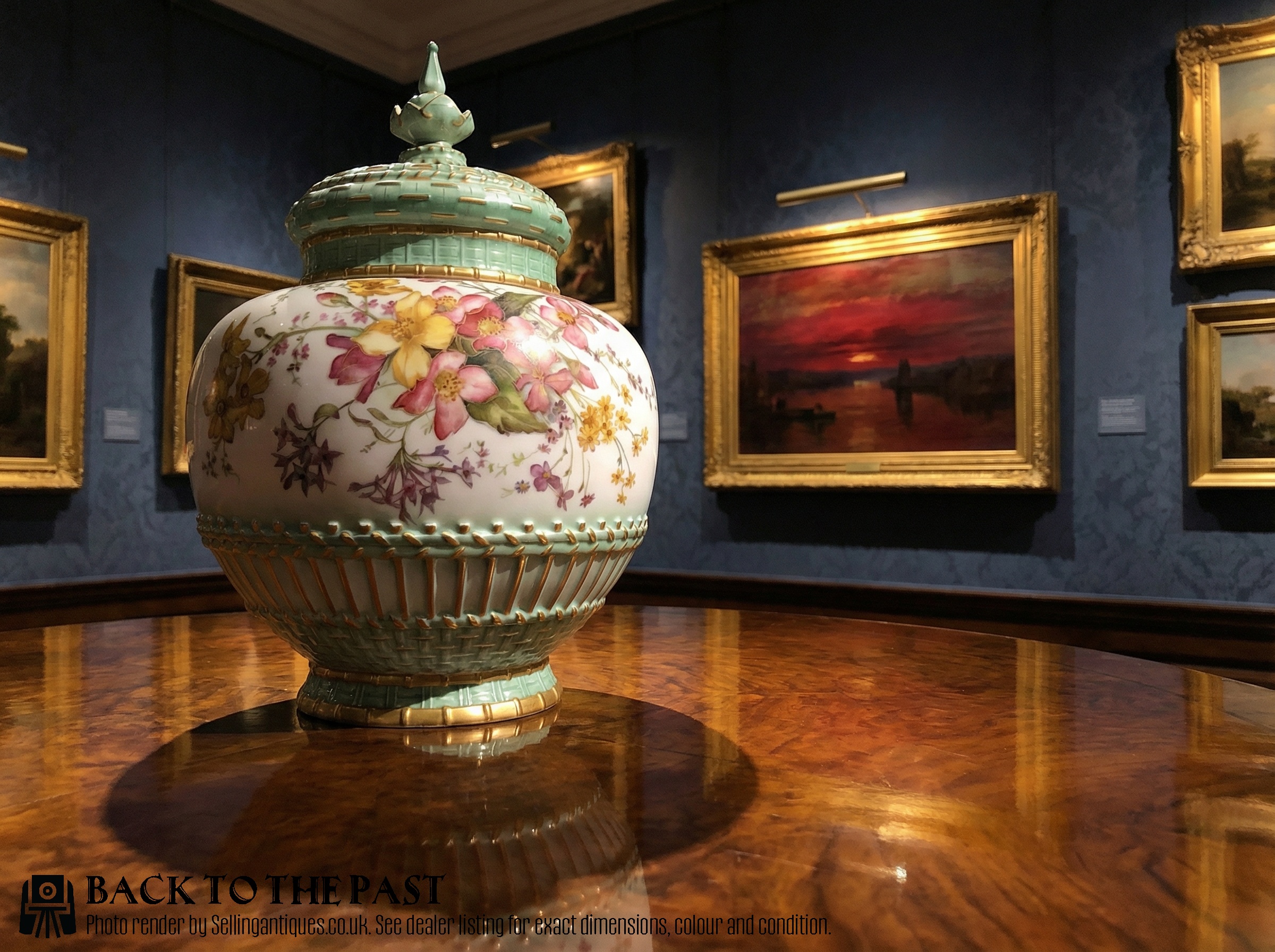
Potters shaped these vessels from ceramic and porcelain bodies, often employing mould casting for complex ovoid and urn profiles. Pierced covers required careful hand cutting of holes and slots before the clay dried, ensuring even shrinkage during firing.
Decoration relied on hand painting, gilding with gold leaf, and enamel work applied over glazes. Many nineteenth century continental pieces received cast ormolu and gilt bronze mounts, combining ceramic bodies with metal handles and bases.
Several Royal Worcester pieces feature hand painted fruit and flying swans, bringing miniature wildlife scenes to the mantelpiece.
What varies in quality
Quality rests in the precision of the piercing on the cover and the detail of the hand painted decoration on the porcelain body. Hand painted fruit, birds and landscape scenes by named artists separate standard production wares from finer studio output.
The integration of metal mounts also defines the tier of a piece, with finely chased ormolu mounts sitting above plain cast brass or simpler gilt finishes. Weight, crispness of moulding and balance in the lid and base assembly indicate the maker's original ambition.
Royal Worcester·Samuel Alcock·H and R Daniel·Flight and Barr·Crown Derby·Carl Thieme
The Porcelain Pot Pourri Vase Glossary
- Blush ivory
- A matte cream coloured porcelain ground popularised by Royal Worcester, often decorated with gilt and floral motifs. This finish gives nineteenth and twentieth century pieces a soft, warm appearance.
- Ormolu
- Gilt bronze mounts applied to ceramic bodies for handles, rims and bases. This French technique adds weight and decorative structure to porcelain vases.
- Imari
- A decorative style inspired by Japanese export wares, featuring iron red, cobalt blue and gold paint. Masons Ironstone and other factories utilised this palette on pot pourri vessels.
- Garniture
- A set of matching vases or urns, usually numbering three or more, designed to sit together on a mantelpiece. These sets typically include a central lidded vase flanked by smaller matching jars.
Porcelain Pot Pourri Vase: Frequently Asked Questions
How do I use a pot pourri vase?
Place dried scented petals inside the ceramic body and put the pierced cover back on top to let the fragrance diffuse naturally into the room. Many pieces include a solid inner lid that you can close when you want to contain the scent.
Keep the vessel away from direct sunlight and damp spots to preserve both the porcelain glaze and the dried botanicals inside.
How can I tell the period of a piece?
Look at the manufacturing style, the ceramic body and any factory marks stamped or painted on the base. Nineteenth century pieces often feature ornate hand painted scenes or ormolu mounts, while twentieth century items frequently display specific factory pattern codes and artist signatures.
Comparing the shape number and ground colour against known production periods helps narrow down the exact decade of manufacture.
What is blush ivory porcelain?
Blush ivory is a soft, matte cream coloured ceramic finish developed during the Victorian era and used extensively by makers such as Royal Worcester. The surface mimics ivory and provides a muted background for delicate hand painted flowers and gilt highlights.
This finish is characteristic of late nineteenth and early twentieth century English decorative ceramics.
Why do some vases have metal mounts?
Continental porcelain houses frequently added ormolu or gilt bronze mounts to enhance the decorative presence of lidded jars and urns. These metal additions provided sturdy bases, ornate handles and decorative rims that complemented the painted porcelain bodies.
French and German makers utilised this technique extensively during the nineteenth century.