




Edwardian Blush Ivory Jar
These edwardian blush ivory jar pieces bring soft pastel tones and delicate floral painting to any room, offering a distinct piece of early twentieth-century ceramic history.
Edwardian Blush Ivory Jar
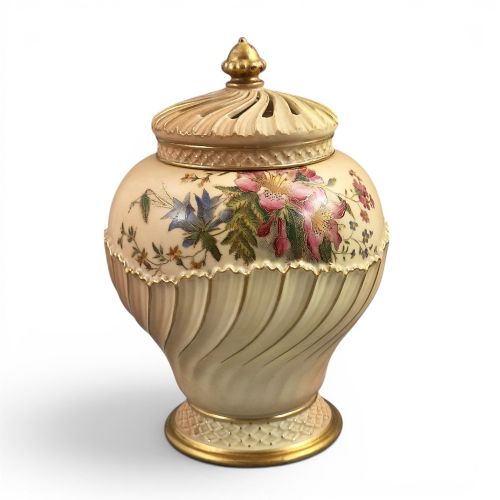
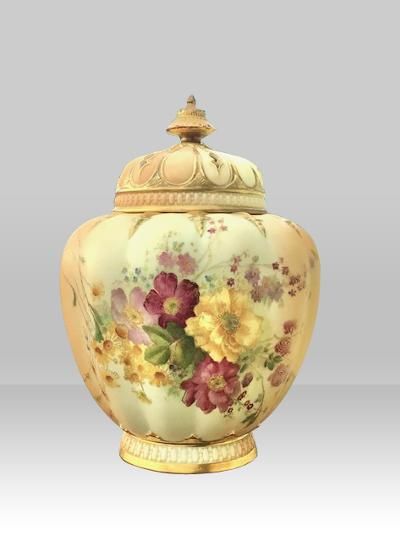
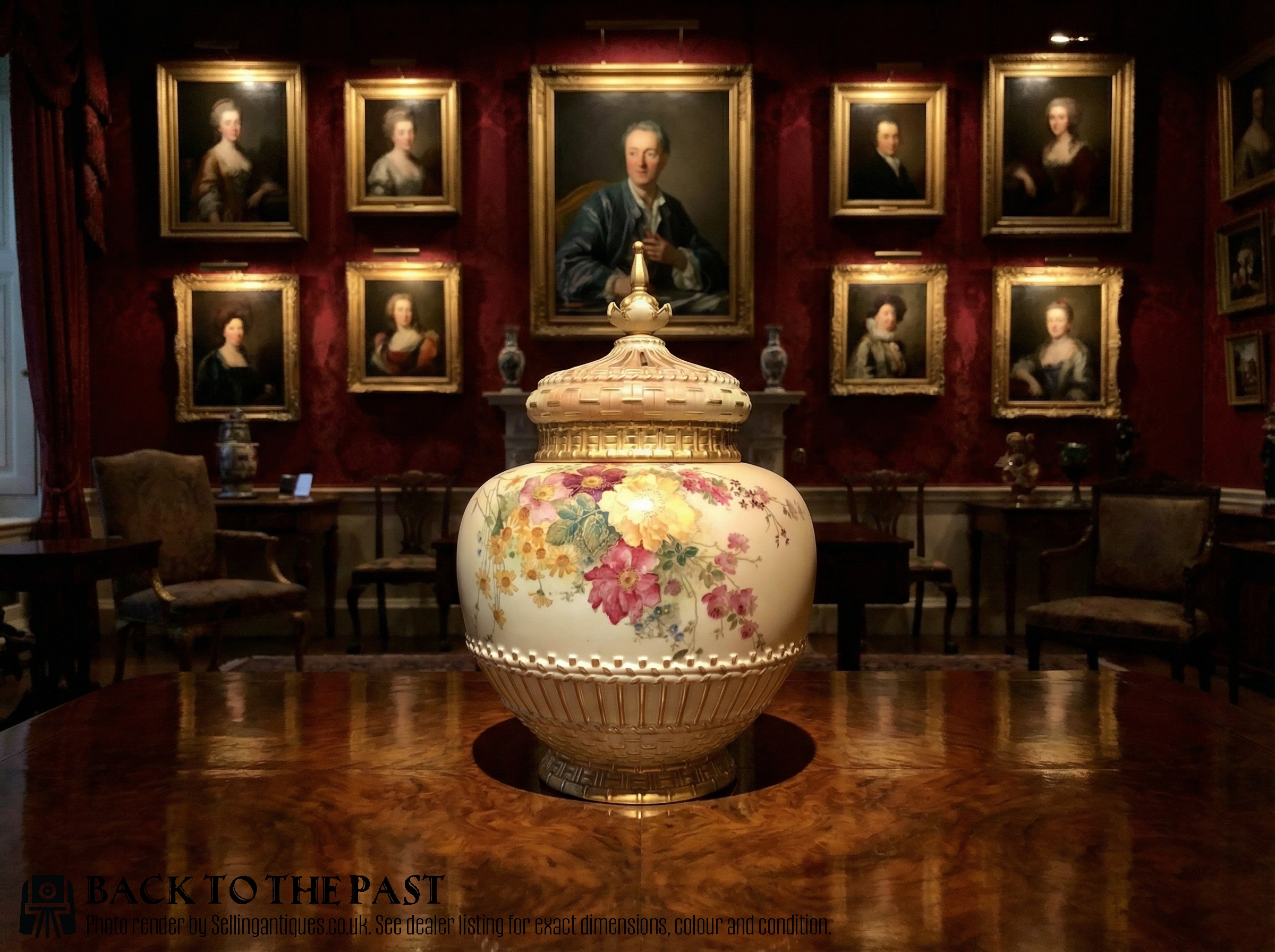
An edwardian blush ivory jar centres on decorative ceramic wares produced around the start of the twentieth century. These pieces primarily take the form of covered jars, pot-pourri vessels, and pedestal vases.
The objects displayed on this page frequently originate from the Edwardian period, spanning the years from nineteen hundred to nineteen twenty. Collectors encounter various forms such as urns, bow vases, and lidded pots.
Most items belong to the overarching Edwardian aesthetic, though Victorian stylistic influences occasionally appear in the forms and decorative motifs. These vessels serve primarily as decorative ornaments for mantelpieces and display cabinets.
Manufacturing and Materials
Makers utilised fine porcelain as the core body for each vessel, applying specialised tinted grounds to create the characteristic soft background. This pale base supports delicate hand-painted floral ornamentation.
Gilding and gold leaf highlights accent the rims, handles, and pierced covers of the jars. Enamel colours are layered onto the porcelain surface to render naturalistic floral studies.
Listings on this page span the Edwardian period, nineteen hundred, nineteen ten, and nineteen twenty, utilising porcelain, gilding, gold leaf, and enamel.
Assessing Quality
The refinement of the hand-painted decoration separates standard production pieces from finer examples. Artisans who painted natural subjects with precision achieved superior artistic outcomes.
The presence of matching original covers and complex vessel shapes, such as pedestal mounts or pierced pot-pourri lids, elevates the overall quality of a piece.
Royal Worcester·Jas Stinton·Stinton
The Edwardian Blush Ivory Jar Glossary
- Blush ivory
- A matte ceramic ground colour developed to imitate the tint of natural ivory, often shaded with soft pink and yellow tones. This surface forms the background for floral painting.
- Pot-pourri
- A lidded vessel featuring pierced or perforated openings designed to release the scent of dried flower petals placed inside. These containers often incorporate inner covers.
- Gilding
- The application of gold leaf or gold paint to ceramic surfaces to highlight decorative details and rims. This technique adds metallic contrast to the pastel background.
- Pedestal vase
- A vessel raised upon a distinct foot or column, elevating the main body above the surface. This form adds height and formality to decorative ceramic wares.
Edwardian Blush Ivory Jar: Frequently Asked Questions
What are edwardian blush ivory jar pieces?
These items are porcelain decorative vessels, including pot-pourri jars, urns, and vases produced during the early twentieth century. They feature soft tinted grounds and hand-painted floral designs.
Most examples date from the Edwardian era, reflecting the aesthetic preferences of British ceramic production at that time.
How were these jars used?
Vessels with pierced covers served to hold and release the scent of dried flower petals within domestic interiors. Other forms functioned purely as ornamental display pieces on mantelpieces.
Their decorative nature meant they were displayed prominently in reception rooms rather than used for daily practical tasks.
How do I identify the period?
Dating relies on maker marks stamped to the underside of the porcelain, alongside stylistic indicators specific to the Edwardian period. The combination of blush ivory grounds and gold gilding points directly to this era.
Consulting manufacturer records helps connect specific shape numbers and artist signatures to exact production years.
How do I care for my jar?
Keep porcelain vessels away from direct sunlight to preserve the delicate enamel colours and painted floral details. Dust the surface gently with a soft, dry cloth without using liquid cleaners.
Avoid placing pierced covers under heavy pressure, as the openwork ceramic sections require careful handling.