





Gilded Oriental Vase Pair
A gilded oriental vase pair brings together rich decorative painting and metallic accents from Asian and European traditions.
Gilded Oriental Vase Pair
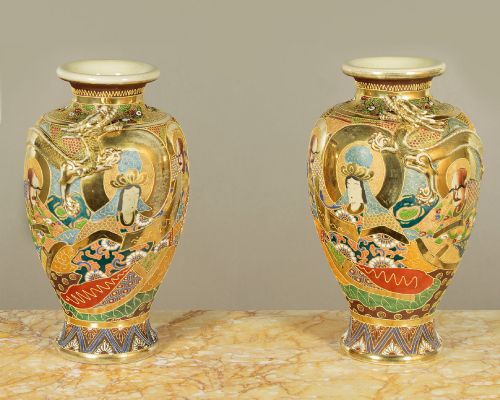
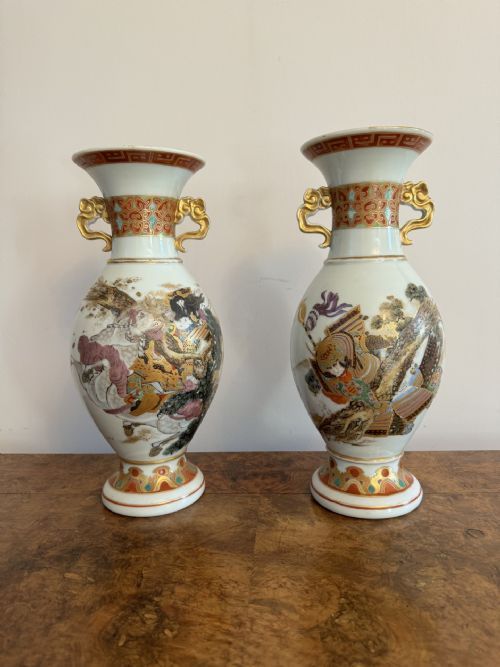
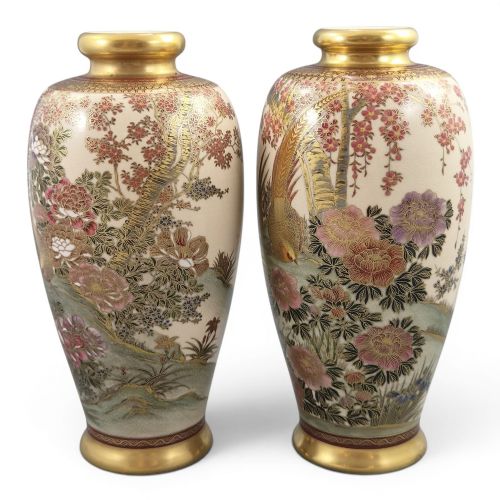
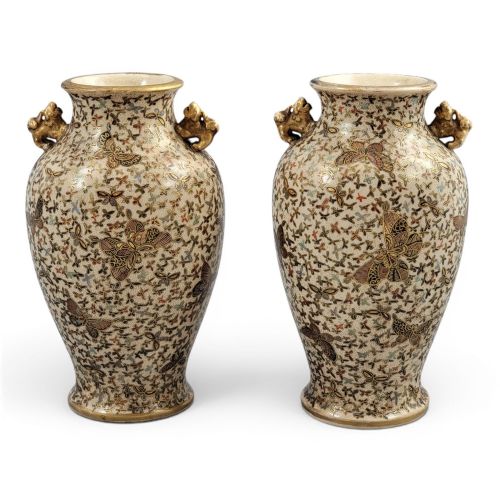
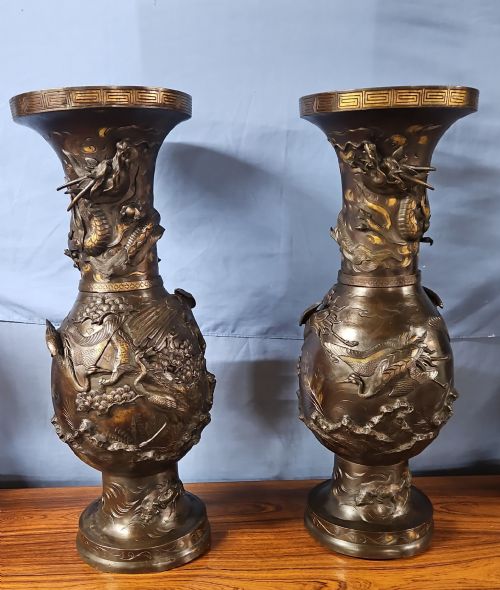
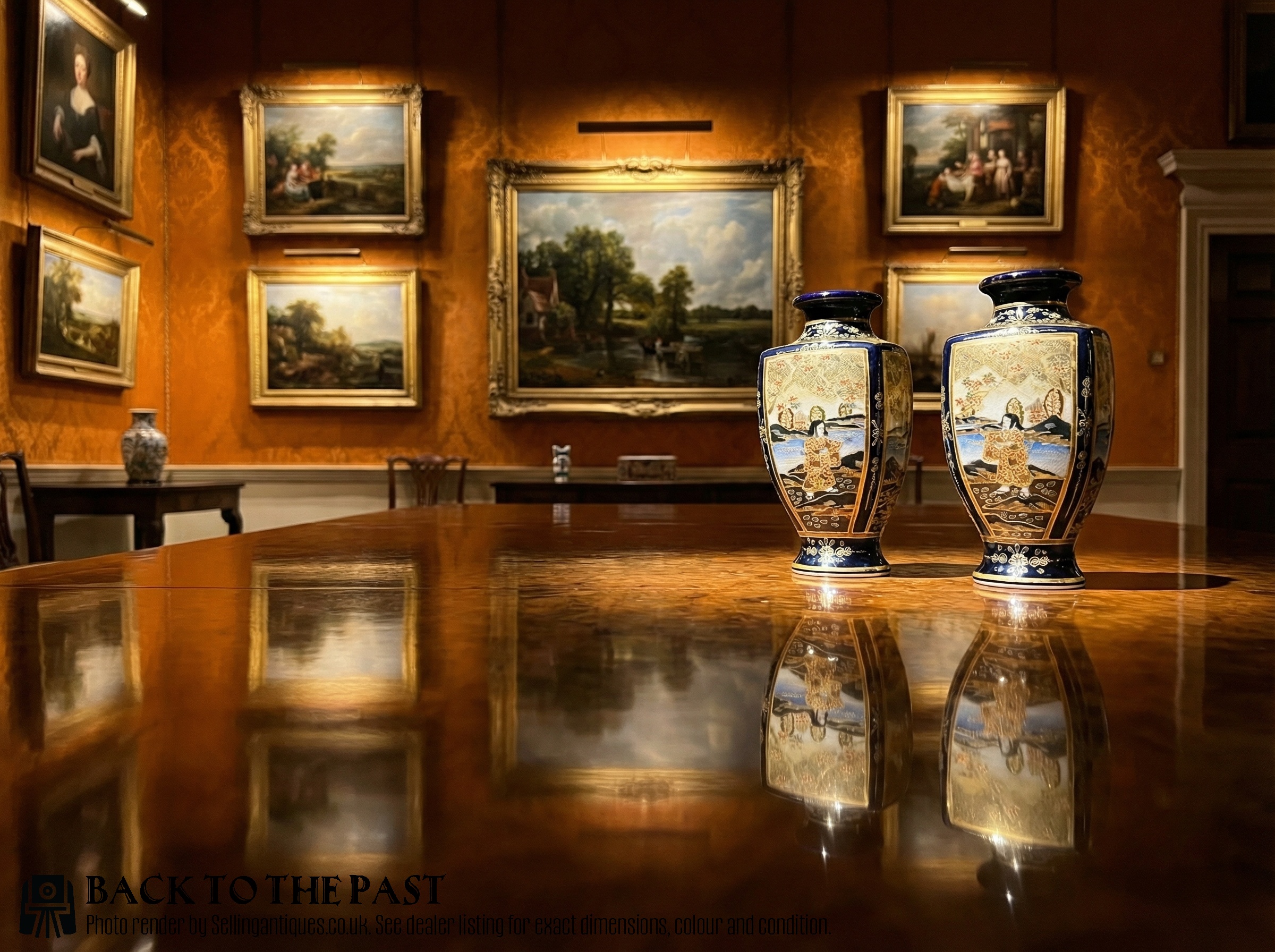
A gilded oriental vase pair consists of matching decorative vessels adorned with metallic leaf or painted gold highlights, drawing on traditions from China and Japan. Buyers searching for a gilded oriental vase pair encounter works originating from the 18th century through to the early 20th century, encompassing periods such as the Meiji era and Qing dynasty. The forms span from traditional baluster shapes and bottle-shaped vessels to large floor vases and adapted table lamps.
Japanese Satsuma earthenware and porcelain wares dominate these listings, alongside Chinese export porcelain and cloisonné pieces. Makers and studios like Kinkōzan, Manpei of Kobe, and Kato Sanhei produced elaborate painted panels depicting figures, landscapes, and traditional motifs. These paired objects were frequently created for export markets, satisfying Western demand for ornamental Far Eastern craftsmanship.
Materials and Construction
Potters shaped these vessels from ceramic bodies including earthenware, porcelain, and stoneware, while some examples utilise bronze or lacquered wood. Artisans applied hand-painted enamels and intricate gold leaf or gilt detailing, often building up raised designs through moriage techniques on Satsuma wares. Certain Chinese pieces combine metal wire cloisonné work with coloured enamels to form detailed surface patterns.
Firing took place in kilns designed to set delicate underglaze and overglaze pigments before final gilding was applied. Workshops utilised specialised stamps, signatures, or mon symbols on the base to denote the maker or producing kiln, such as the Shimazu family crest on Satsuma pottery.
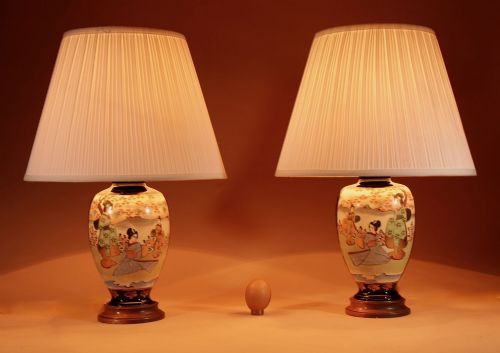
The object forms recorded on this page include baluster vases, ginger jars, bottle-shaped vessels, and lamps fitted with fabric shades.
Markers of Quality
The fineness of the hand-painted brushwork distinguishes superior examples from standard production pieces, particularly in the rendering of facial expressions and minute patterns on figures. The application of gold also varies, with heavier, more deliberate gilding and textured moriage work marking out exhibition-grade objects from simpler decorative items.
The integrity of the ceramic body and the preservation of the original enamels and gilding determine the overall standing of a pair. Signed pieces associated with notable Kyoto or Kobe workshops generally demonstrate superior potting standards and more intricate compositional planning.
Shozan·Manpei·Kinkōzan·Kinzan·Hododa·Kato Sanhei·Tashiro·Carlton Ware·Samson
The Gilded Oriental Vase Pair Glossary
- Satsuma
- Earthenware pottery originating from Satsuma Province in southern Japan, typically characterised by a ivory-crackled glaze decorated with polychrome enamels and heavy gilding. It became immensely popular during the Meiji period for export.
- Imari
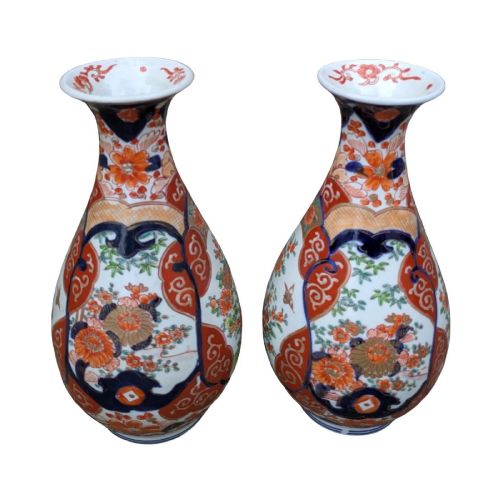
- A style of Japanese porcelain featuring a distinct palette of underglaze blue, iron red, and added gold, produced in Arita and shipped through the port of Imari. These designs often incorporate floral and brocade patterns.
- Cloisonné
- A metalwork technique where thin wire partitions are affixed to a base to form compartments, which are then filled with enamel paste and fired. Chinese examples show intricate multi-coloured patterns across the vessel surface.
- Moriage
- A ceramic decorating technique where slip is piped onto the surface of pottery to create raised dots and relief patterns before glazing and gilding. This method adds a tactile, three-dimensional quality to the vessel design.
- Mon
- A Japanese heraldic badge or crest used to identify families, clans, or prominent institutions. The Shimazu mon frequently appears on Satsuma wares produced by associated kilns.
Gilded Oriental Vase Pair: Frequently Asked Questions
What periods do these vases come from?
The available pieces primarily span the 19th and early 20th centuries, covering the Meiji period in Japan and the latter part of the Qing dynasty in China. Many examples date from the late 1800s to the 1930s.
Victorian and Edwardian imports from these decades reflect the widespread European taste for East Asian decorative arts during the height of the export trade.
How were these vases originally used?
These decorative objects were created principally as mantelpiece ornaments, garniture sets, and display pieces for affluent Victorian and Edwardian drawing rooms. Their scale and detailed painting were meant to catch the eye in formal interiors.
Some pieces have subsequently been converted into table lamps with fitted wiring and shades, adapting them for modern domestic illumination while retaining their original ceramic bodies.
How can I tell Satsuma from Imari?
Satsuma wares are earthenware with a characteristic creamy, crackled glaze that serves as a canvas for densely painted figures and heavy gold leaf. They feel porous and are traditionally opaque.
Imari pieces are made of hard porcelain with a resonant ring, painted in a strict palette of cobalt blue and iron red enhanced with gold, featuring geometric and floral motifs rather than crowded figural scenes.
What does a signature on the base indicate?
Signatures, studio marks, or painted mon symbols identify the workshop, artist, or kiln responsible for producing the ceramic vessel. Names such as Kinkozan or Hododa point to specific Meiji period manufacturing centres in Japan.
These marks help historians and collectors trace the origin of a piece, though some export items bore pseudo-marks or were produced by European factories copying Asian styles, such as Samson in France.