




Gilded Lacquered Serving Tray
These gilded lacquered serving trays combine dark polished surfaces with gold highlights, offering both functional service and striking display.
Gilded Lacquered Serving Tray
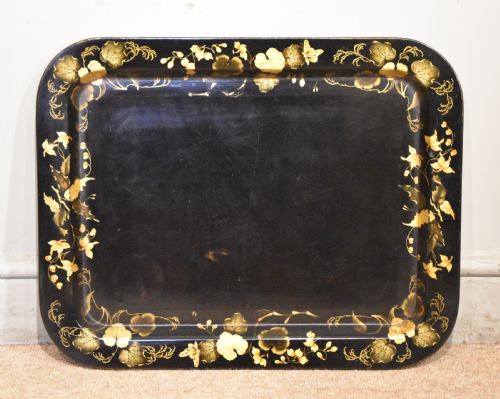
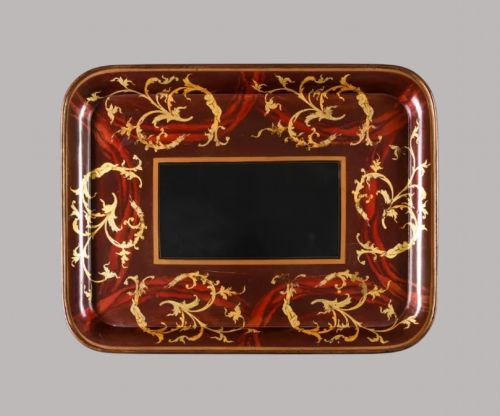
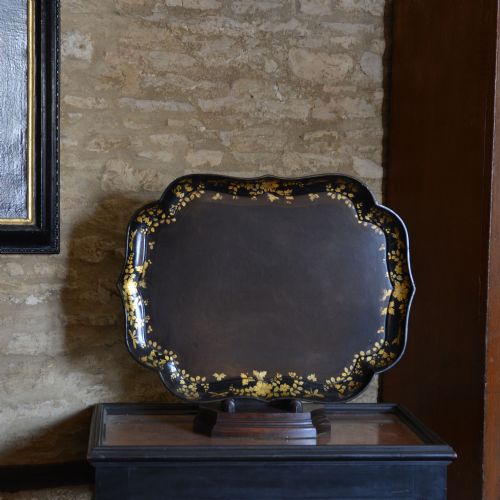
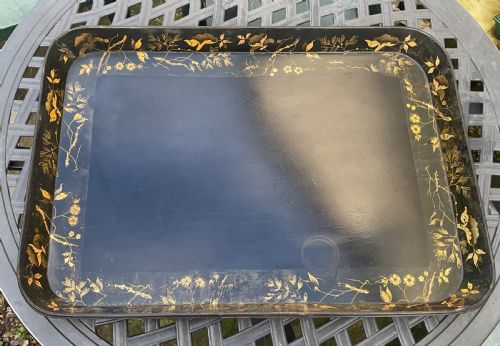
A gilded lacquered serving tray brings together durable papier-mâché or metal toleware with glossy dark finishes and metallic ornament. These pieces date principally from the Georgian, Regency, and Victorian eras, spanning the early to late nineteenth century.
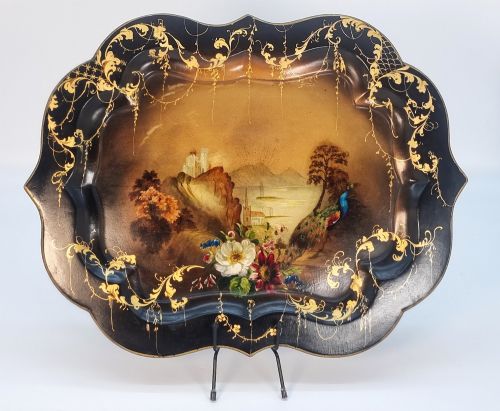
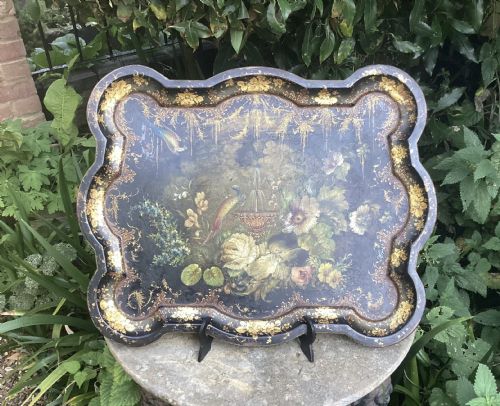
Most examples take a generous oval or kidney shape designed for carriage or display, while select pieces sit upon custom folding stands to function as side tables. Buyers encounter straightforward serving vessels alongside elaborate decorative specimens featuring painted landscapes and hunting scenes.
The aesthetic draws heavily on Regency and Victorian Chinoiserie traditions, often incorporating mother-of-pearl inlay alongside rich gilding. Surviving specimens range from compact domestic items to large proportions suitable for substantial interior focal points.
Construction and finish
Makers built the primary body using layers of paper pulp compressed and treated to form rigid papier-mâché, or shaped metal sheeting in the case of toleware. This base received multiple coats of dark lacquer to create a smooth, resilient ground.
Artisans applied gold leaf and hand-painted details directly onto the lacquered surface, sometimes building up borders with raised gilding. Mother-of-pearl elements were embedded within the finish to catch the light from differing angles.
Gilded Lacquered Serving Tray Retail Price Guide 2026
Typical asking prices for gilded lacquered serving tray among the pieces listed under this phrase on Sellingantiques today, from the lower quarter to the upper quarter. They describe what is for sale here now, not the wider market.
Current listings demonstrate materials spanning papier-mâché, toleware, lacquer, and gold leaf across the nineteenth century.
Distinction in execution
The division between standard production and superior work rests upon the crispness of the hand-painted ornament and the depth of the lacquer layers. Master workshops invested significant time in polishing the base to achieve a mirror-like smoothness before any gilding began.
Identifiable maker attribution elevates certain examples, particularly pieces bearing the signatures or stamps of established Birmingham manufacturers. The survival of original decoration and untouched gilt borders determines the desirability of surviving specimens.
Jennens & Bettridge·Clay
The Gilded Lacquered Serving Tray Glossary
- Papier-mâché
- A composite material formed from layers of paper pulp or paper sheets mixed with glue and pressed into a mould. It provides a lightweight yet remarkably strong foundation for lacquered serving trays.
- Toleware
- Painted or lacquered sheet metal items produced in imitation of fine Asian lacquerware. This metal substrate offers an alternative to papier-mâché on many nineteenth-century serving trays.
- Chinoiserie
- European artistic style reflecting Chinese motifs and decorative techniques. It appears frequently on nineteenth-century trays through stylized landscapes and figures.
- Gilding
- The application of gold leaf or gold powder to a surface. On these trays, it outlines borders and highlights central painted scenes.
- Mother-of-pearl
- Iridescent inner layer of certain mollusc shells used as inlay. Artisans cut thin pieces to embed within the lacquered decoration for added shimmer.
Gilded Lacquered Serving Tray: Frequently Asked Questions
Can I still use these trays for serving drinks?
While these pieces were originally created for domestic service, their age and delicate lacquered surfaces suggest careful treatment today. Many owners prefer to use them for display or tabletop organisation rather than active hospitality.
Moisture and heat can affect the historic lacquer and gold leaf. Placing items upon them with protective pads preserves the original nineteenth-century finish.
How do I mount a tray on a stand?
Trays intended to function as side tables often rest upon folding wooden stands designed specifically for their dimensions. Selecting a stable base ensures the weight distributes evenly across the frame.
Professional framing or support brackets keep the papier-mâché or toleware secure without causing stress to the historic material.
How do I clean a lacquered surface?
Maintenance requires only a soft, dry microfibre cloth to remove dust gently. Avoid water, alcohol, or modern chemical cleaning products entirely.
Harsh solvents strip the historic lacquer and damage the delicate gold leaf decoration. Gentle dusting maintains the natural sheen of the dark surface.
How can I tell a Regency tray from a Victorian one?
Regency examples often feature restrained classical motifs, geometric borders, and crisp black lacquer finishes. Victorian pieces frequently embrace elaborate Chinoiserie scenes and mother-of-pearl inlay.
Examination of the painted details and overall proportions helps clarify the period of manufacture. Documented maker marks also assist in confirming the exact era.