



Gilded Japanese Display Vases
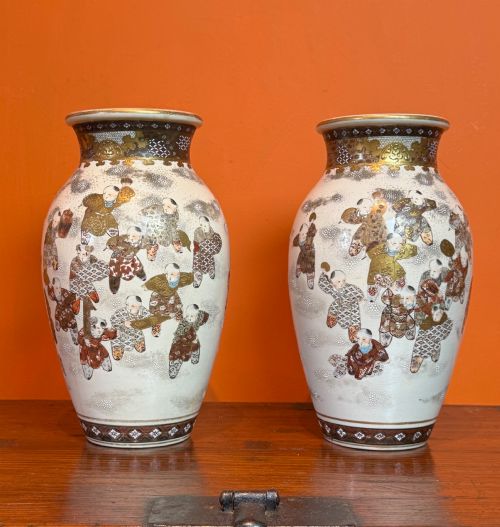
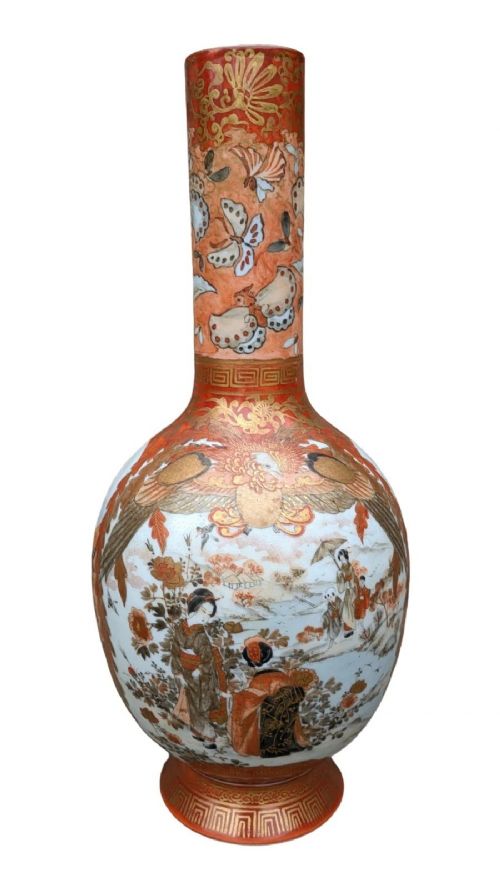
Gilded Japanese display vases bring ornate Meiji and Edo craftsmanship into a room.
Gilded Japanese Display Vases
Gilded Japanese display vases span multiple periods from the eighteenth century to the early twentieth century, including Victorian and Edwardian catalogued entries. The most common examples met here belong to the Meiji period, featuring intricate hand-painted designs enriched with heavy gilt.
Forms vary from large flare neck vessels and lidded jars to monumental Kyoto Satsuma pieces and Kutani chargers. Buyers encounter pairs and garnitures intended for prominent placement in a room, often decorated with court figures, landscapes, or traditional motifs.
Materials and methods
Potters shaped these vessels from earthenware and porcelain before applying detailed enamel paints and rich gold leaf or gilding. Techniques such as moriage built up raised relief patterns across the ceramic surface, creating tactile depth beneath the gold details.
Makers utilised cobalt grounds, intricate glazes, and precise hand-painting to ornament Satsuma, Kutani, and Imari works. Workshops applied gold gilt extensively to highlight figures, borders, and complex geometric panels.
Gilded Japanese Display Vases Retail Price Guide 2026
Typical asking prices for gilded japanese display vases among the pieces listed under this phrase on Sellingantiques today, from the lower quarter to the upper quarter. They describe what is for sale here now, not the wider market.
Listings feature works spanning the eighteenth, nineteenth, and early twentieth centuries, encompassing the Edo, Meiji, and Taisho periods.
Quality and execution
The distinction between standard decorative items and top-tier pieces rests on the precision of the hand-painting and the density of the gilding. Exhibition quality works display exceptional finesse in facial expressions, panel detailing, and signed marks from notable workshops.
Larger monumental pairs and garnitures require superior control during the firing and enamelling processes to maintain structural integrity and colour brilliance across multiple matching vessels.
Chosei Mark·Seiko-en Chokei·Hododa·Kinrin Workshop·Kinkozan
The Gilded Japanese Display Vases Glossary
- Satsuma
- Earthenware pottery originating from the Satsuma province, typically characterised by a fine crackle glaze and elaborate polychrome and gilt decoration. These pieces frequently depict historical figures, deities, and detailed landscapes.
- Kutani
- Japanese porcelain and pottery originating from Kaga province, known for bold colour palettes and rich pictorial designs. Gold gilding often complements the dominant iron-red and green enamel tones.
- Imari
- Japanese export porcelain decorated in underglaze blue, iron-red, and gold. These vessels display vibrant floral and geometric patterns developed during the Edo period.
- Moriage
- A decorative ceramic technique using piped clay to create raised relief designs before glazing and gilding. This method adds a distinct three-dimensional texture to figures and borders.
- Shimazu Mon
- The heraldic crest of the Shimazu clan, featuring a cross within a circle. This mark frequently appears on Satsuma wares associated with that ruling family.
Gilded Japanese Display Vases: Frequently Asked Questions
How do I identify a Satsuma vase?
Satsuma pieces typically feature a cream-coloured earthenware body covered in a fine network of crackled glaze. Artisans then applied dense enamel painting and heavy gold leaf over this surface.
Most examples date from the nineteenth century and display figures, floral panels, or religious motifs associated with the Meiji period.
What is the difference between Kutani and Imari?
Kutani wares often use earthy porcelain or pottery bases decorated with bold greens, reds, and extensive gold gilding. They frequently showcase figurative scenes or complex natural motifs.
Imari pieces rely on a distinct palette of underglaze cobalt blue, iron-red, and gold on porcelain. Their patterns lean towards symmetrical floral and brocade designs.
Where should I place a large display vase?
These substantial vessels function best on sturdy floor stands, low tables, or sideboards where their height and decoration can be appreciated. Pairs and garnitures look balanced when flanking a fireplace or anchoring a focal wall.
Ensure the placement protects the painted surfaces and gold leaf from direct physical contact and abrasive cleaning.
What does moriage mean on a vase?
Moriage describes a technique where liquid clay is piped onto the unglazed or glazed ceramic body to form raised patterns. Artisans then paint and gild over these elevated areas.
This creates a tactile, three-dimensional effect that catches the light across robes, borders, and floral elements.
How do I date an antique Japanese vase?
Dating relies on stylistic shifts, material composition, and any recorded signatures or seals on the base. Pieces from the Edo period differ significantly in palette and form from later Meiji and Taisho exports.
Makers' marks and workshop signatures provide the most reliable chronological indicators when cross-referenced with historical production periods.