



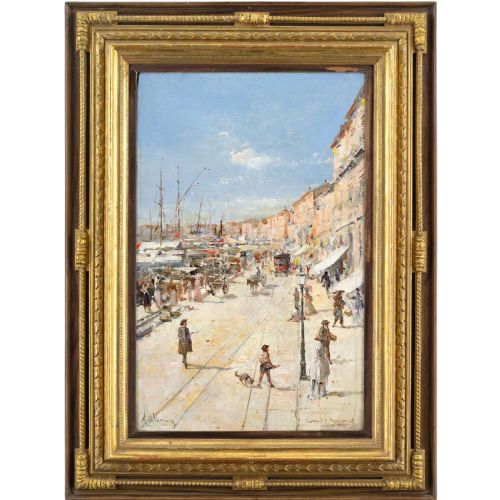
Gilded Framed Landscape Art
Gilded framed landscape art brings together natural scenery and ornate metallic surrounds, offering buyers historic oil paintings and watercolours designed to command a room.
Gilded Framed Landscape Art
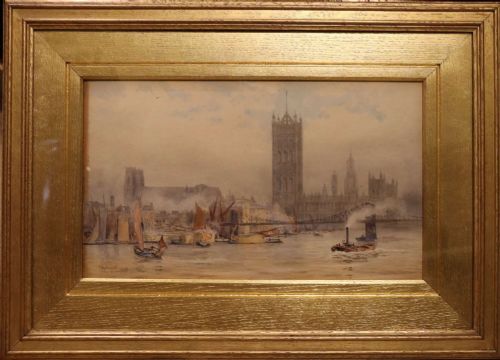
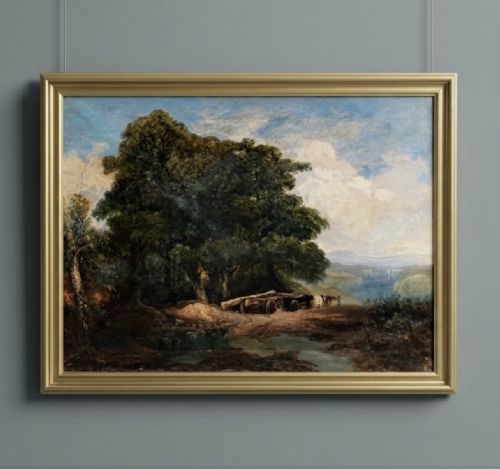
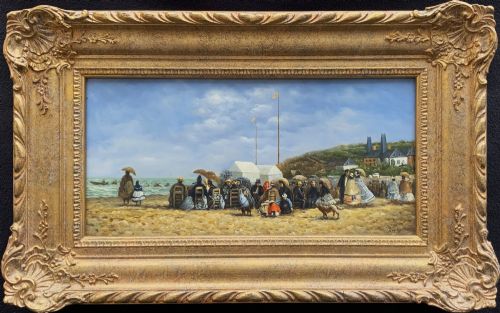
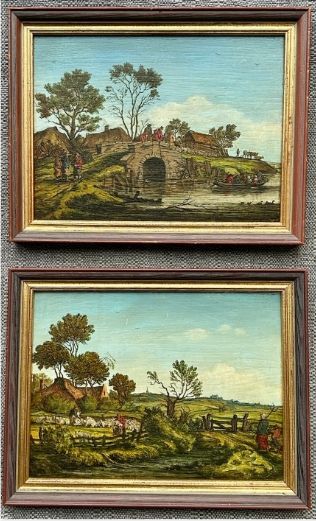
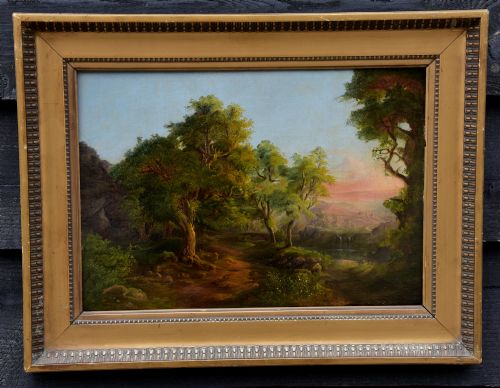
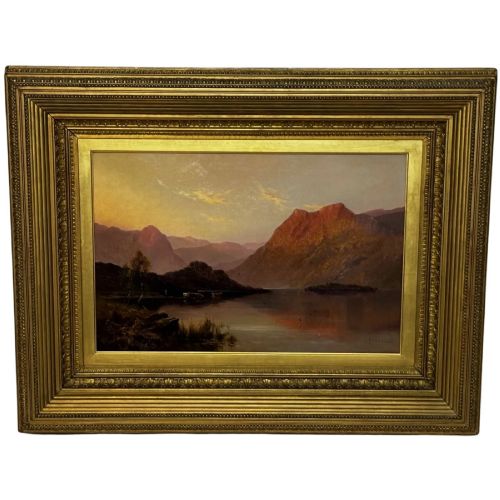
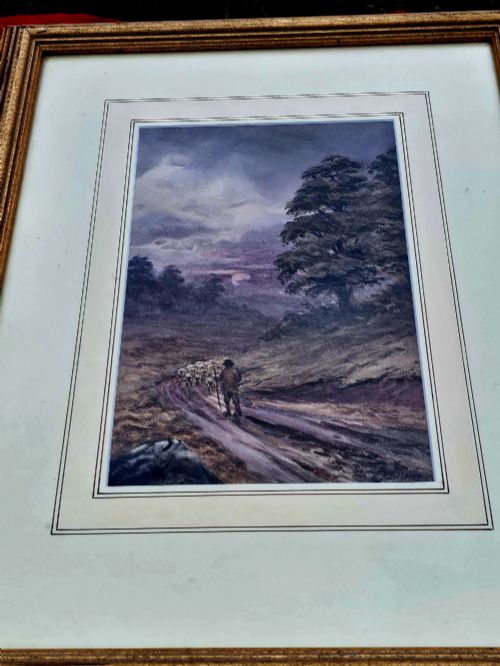
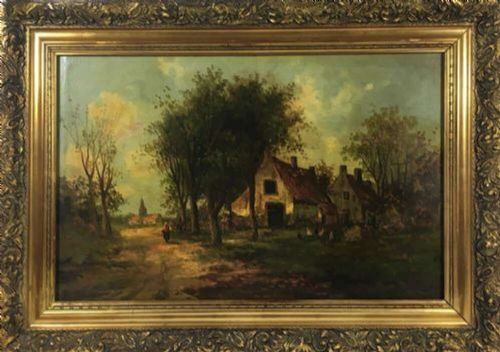
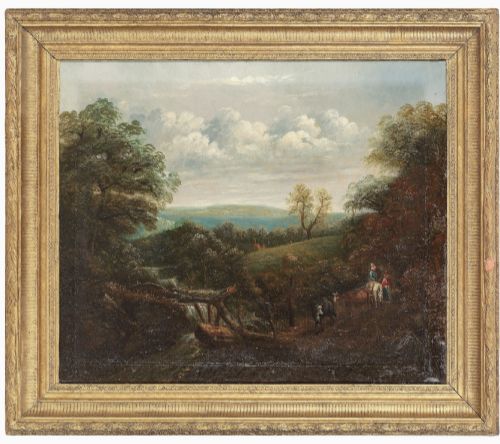
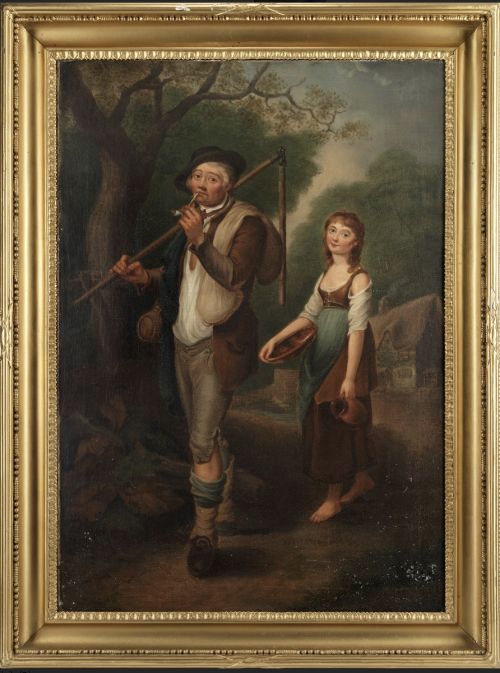
When buyers search for gilded framed landscape art, they encounter oil paintings, watercolours, and mixed media works depicting rural scenery, marine views, and townscapes set within decorative surrounds. These pieces span from the eighteenth century through the Victorian era into the twentieth century, reflecting romantic, impressionist, and classical traditions across British, French, Dutch, and Italian schools.
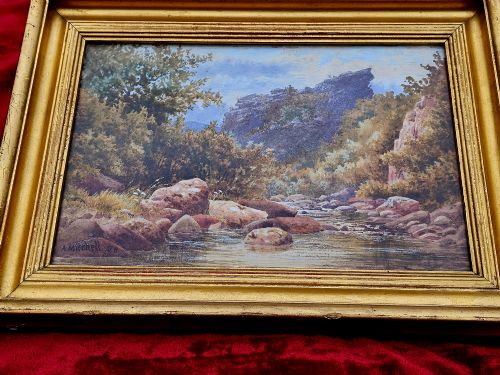
The most common examples on this page are nineteenth-century oil paintings on canvas or wood panels housed in giltwood frames. Subjects range from tranquil rivers and pastoral farmyards to Venetian canals and rugged woodlands, captured by both named artists and skilled regional schools.
How They Were Made
Artists painted primarily with oil on stretched canvas, wood panels, or card, though watercolours on paper also appear. Canvases and panels received layers of ground before the application of oil paint, allowing for fine detail in foliage, water, and figures.
The frames accompanying these artworks consist of wood bases shaped with moulded gesso, which were then coated in gold leaf or gilt paint to achieve a reflective, metallic surface that complemented the painted scene.
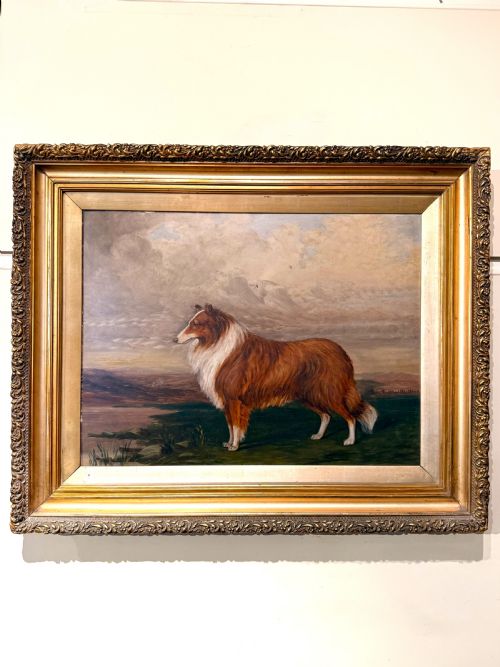
Canines frequently share the landscape with their human companions, appearing faithfully beside shepherds, figures at cottages, and travellers.
What Varies in Quality
The standard of a piece depends heavily on the dexterity of the brushwork and the depth of perspective achieved within the landscape. Superior works demonstrate confident handling of light and shadow, particularly in skies and water, whereas simpler or more primitive pieces rely on stiffer compositions.
Frame construction also distinguishes the selection, with hand-carved giltwood and intricate gesso mouldings representing a higher tier of craftsmanship compared to simpler or later replacement frames.
Richard Sebastian Bond·Clifford Hanney·Alfred Fontville de Breanski Jr·Augusto Alberici·Gabriel Mathieu·David Bates·Robert John Hammond·Alfred Pollentine·Jacob Philipp Hackert·Francis Moltino·Ernest Arthur Rowe·John Hodgson Lobley·Robert Watson·Charles Hunt·John Wilson Carmichael·George Wright·Adriana Verelst
The Gilded Framed Landscape Art Glossary
- Giltwood
- Wood that has been decorated with a thin layer of gold leaf or gold paint. This finish creates a bright, reflective border designed to catch ambient light in a room.
- Gesso
- A plaster mixture applied to wooden frame bases to create a smooth surface for moulding decorative reliefs. It allows artisans to carve intricate patterns before applying gold leaf.
- Oil on Canvas
- Pigments bound in an oil medium applied to a woven fabric stretched over a wooden frame. This combination allows for rich colour blending and long-term durability.
- Barbizon School
- A nineteenth-century French movement focused on realistic, atmospheric landscape painting en plein air. Painters from this group drew inspiration directly from rural forests and farmyards.
Gilded Framed Landscape Art: Frequently Asked Questions
What periods do these paintings come from?
The selection spans from the eighteenth century through the Victorian period and into the twentieth century. Examples include Georgian compositions, nineteenth-century romantic and impressionist works, and later twentieth-century interpretations.
Buyers will find that Victorian and nineteenth-century pieces form the largest portion of the available artwork, accompanied by select eighteenth-century grand tour pieces and twentieth-century urban scenes.
How should I hang a heavy gilt frame?
Gilded wood and gesso frames carry substantial weight due to their dense wooden bases and moulded plaster ornamentation. They require secure wall fixings screwed directly into structural studs or masonry.
Using heavy-duty picture hooks rated well above the weight of the artwork ensures the piece hangs safely without shifting or straining the wall.
What subjects are most common in these landscapes?
Rural woodlands, pastoral farmyards with figures and animals, and marine scenes dominate the available selection. Artists frequently depicted rivers, cottages, and domestic livestock within British and European settings.
Architectural views also appear, including Venetian canals, Mediterranean street scenes, and cityscapes featuring bridges and historic waterways.