



Nineteenth Century Pastoral Art
Nineteenth century pastoral art captures rural life through oil on canvas, delicate watercolours and silk works depicting farmyards, herdsmen and quiet countryside rivers.
Nineteenth Century Pastoral Art
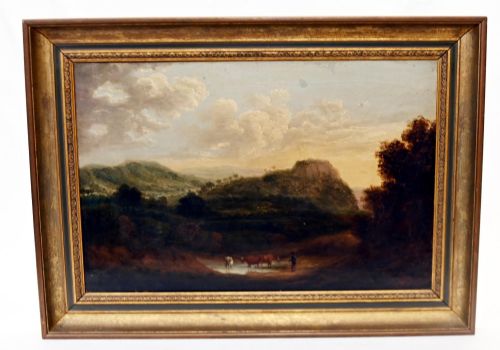
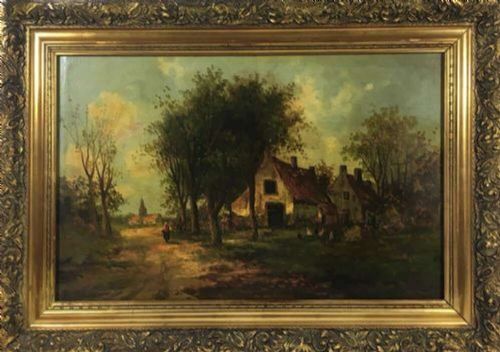
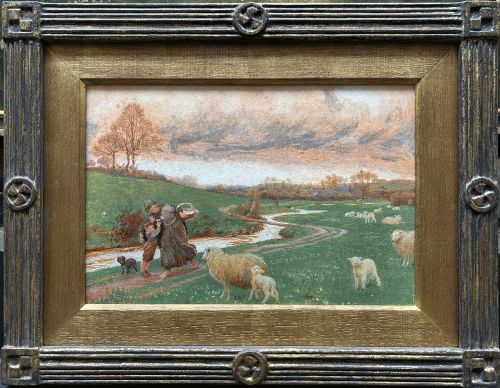
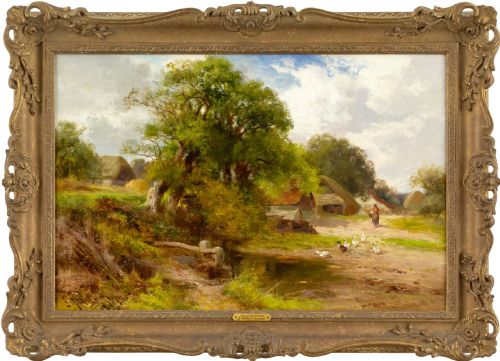
Nineteenth century pastoral art encompasses depictions of rural scenes, agricultural labour and tranquil countryside views created during the nineteenth century and the Regency period. These works focus on farmyard animals, river valleys, herdsmen with cattle or sheep, and harvesters at work in English, Welsh, Scottish and continental landscapes.
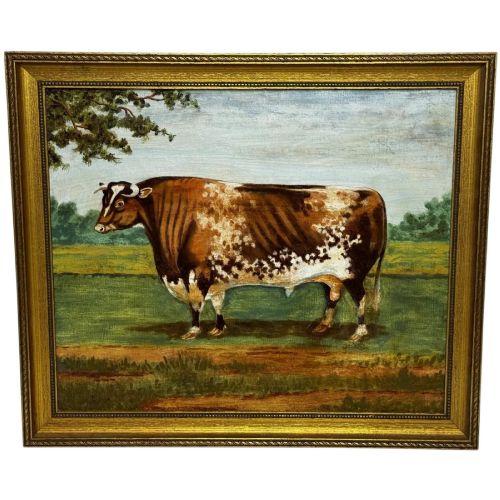
The most common formats encountered on this page are oil paintings on canvas and framed watercolours, alongside occasional textile art and decorative objects such as bellows. Subjects frequently highlight domestic livestock like prized shorthorns, bulls, sheep and ducks alongside human figures engaged in rural tasks.
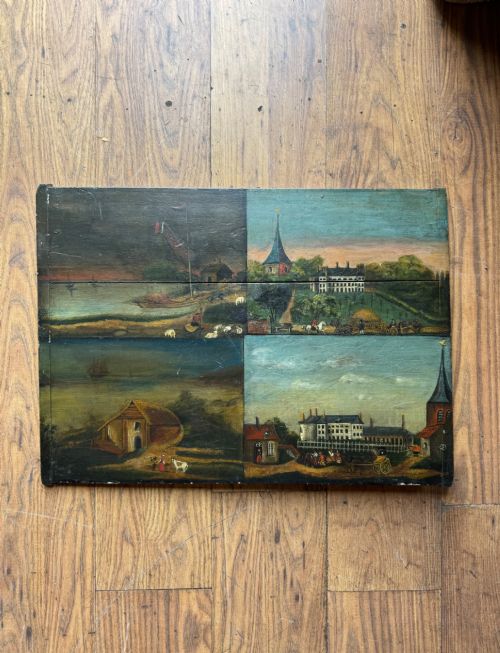
Pieces span various stylistic interpretations ranging from academic British and French school compositions to naive folk art and Barbizon school influences. Dating primarily from the Victorian era down to the early twentieth century, these works reflect a deep cultural attachment to the agrarian idyll.
Materials and Techniques
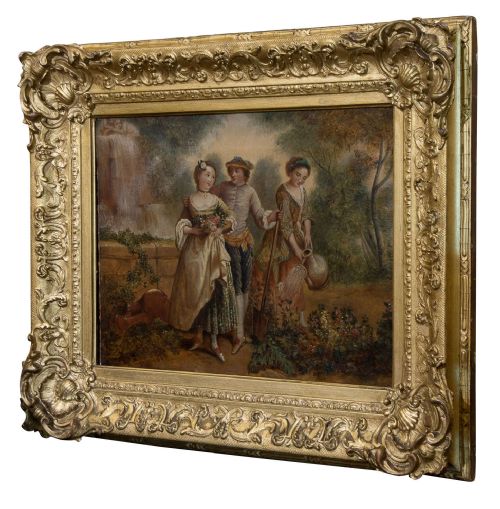
Paintings in this category rely predominantly on oil on canvas and watercolour on paper, framed with traditional wooden mouldings enriched by gesso and giltwood details. Textile art and silk needlework embroideries utilise fine threads to render pastoral subjects with textural depth, often housed within mezzotint frames.
Pigments were applied by artists working plein air or in studios to capture light on water, upland mountain passes and flat river estuaries. Wooden supports, canvas grounds and heavy gilt frames establish the physical structure typical of framing traditions from the Regency period through to the late Victorian decades.
Nineteenth Century Pastoral Art Retail Price Guide 2026
Typical asking prices for nineteenth century pastoral art among the pieces listed under this phrase on Sellingantiques today, from the lower quarter to the upper quarter. They describe what is for sale here now, not the wider market.
Regional British and continental scenes dominate, featuring Welsh mountain rivers, Sussex mills, and French farmyards.
Evaluating Quality in Pastoral Works
The distinction between ordinary and superior pieces rests on the artist's handling of light, atmospheric perspective and anatomical precision in rendering animals and human figures. Masterful brushwork in oil or deft control of wash in watercolour elevates a canvas from a generic countryside view to a compelling study of rural atmosphere.
Compositional balance and the preservation of original framing elements, such as period giltwood and gesso surrounds, influence the integrity of each piece. Finer works display meticulous attention to textural details in foliage, water and fabric, maintaining strong visual clarity across the pastoral subject matter.
John Horace Hooper·Frederick Walker·Johann Friedrich Voltz·Cornelius Pearson·Andre de Moller·Sidney Richard Percy·Robert John Hammond·Willem Anton Alexander Knip·Giulio Cecchini·Heinrich Harder·Arthur Winter Shaw·William Greaves·Claude Cardon·Arthur Walker Redgate·Henry John Kinnaird·William Lucas·Henry Birtles·Henry H Parker·Arthur Willett·Edmund George Warren·Frank Saltfleet·Louis Marie Dominique Robbe·Joseph Vickers de Ville·Harold Lawes·Etty Horton
The Nineteenth Century Pastoral Art Glossary
- Barbizon School
- A French movement of painters associated with real-life landscape and pastoral subjects, working closely from nature during the mid nineteenth century.
- Giltwood
- Wood that has been carved and coated with a thin layer of gold leaf or gold paint, frequently used for traditional picture frames.
- Gesso
- A plaster-like mixture applied to wood or canvas surfaces to prepare them for painting or to build up decorative relief on frames.
- Naive Folk Art
- Art produced by self-taught creators that prioritises direct expression and charm over strict adherence to academic perspective and proportion.
- Silk work
- Embroidery executed using silk threads on a fabric ground, popular for creating detailed pictures during the Regency and Victorian periods.
Nineteenth Century Pastoral Art: Frequently Asked Questions
What is nineteenth century pastoral art?
It is a genre of visual culture depicting rural scenes, farm animals, river landscapes and agricultural workers created during the nineteenth century. These artworks celebrate traditional country life and agrarian pursuits.
Creators ranged from academic painters to naive folk artists working across Britain, France, Germany and Wales.
How were these paintings displayed?
Paintings from this era were framed in timber mouldings finished with gesso and giltwood to complement domestic interiors. They hung in parlours and drawing rooms as windows onto tranquil rural vistas.
Many retain their original nineteenth century frames, which provide context regarding their period of creation and display history.
How do I identify a Victorian watercolour?
Victorian watercolours are typically executed on paper under glass, often bearing the artist's signature or studio inscriptions. They rely on transparent washes and fine brushwork to depict atmospheric effects.
Papers from this era frequently exhibit watermark evidence and mounting styles characteristic of nineteenth century framing practices.
What subjects are most common?
Common subjects include herdsmen tending cattle, sheep grazing by rivers, horses pulling carts and harvesters resting in countryside fields. Domestic livestock such as prized bulls and ducks also feature prominently.
These motifs reflect the nineteenth century fascination with rural stability and the natural beauty of the countryside.