



Gilded Frame Equestrian Art
Gilded frame equestrian art captures the majesty of horses and the vigour of the hunt through centuries of fine oil paintings and watercolours.
Gilded Frame Equestrian Art
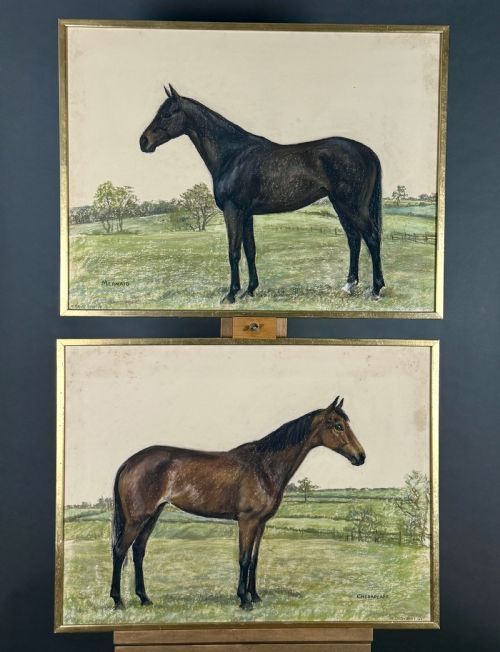
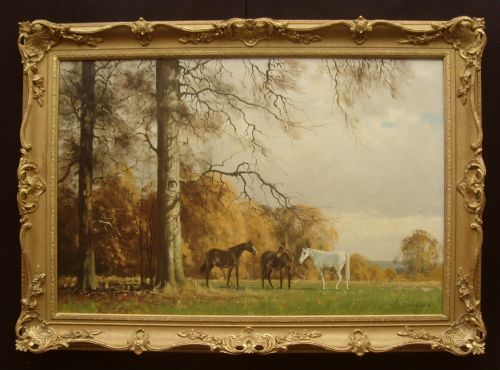
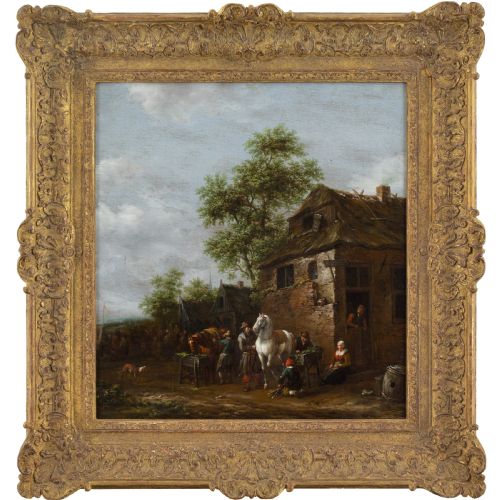
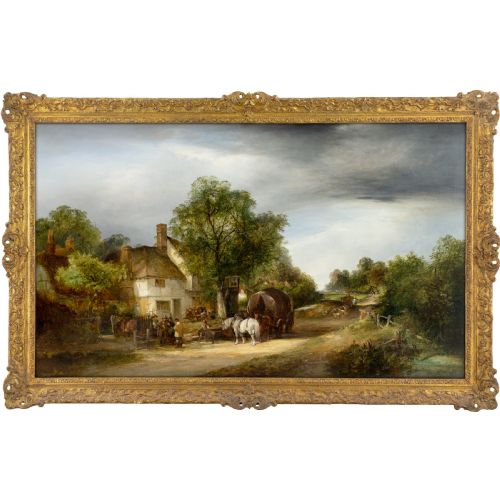
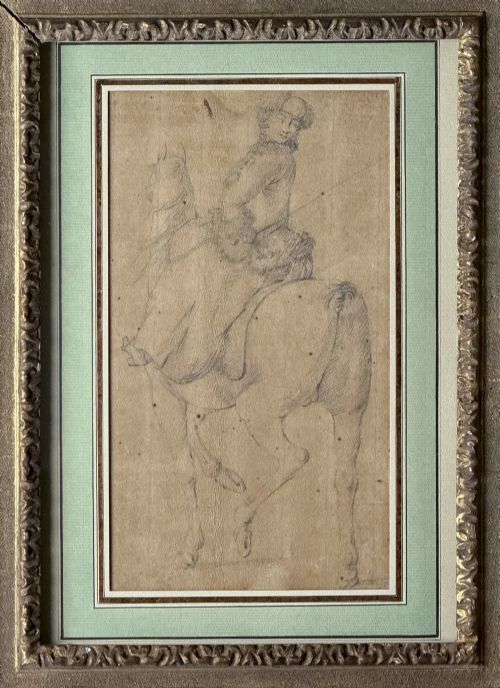
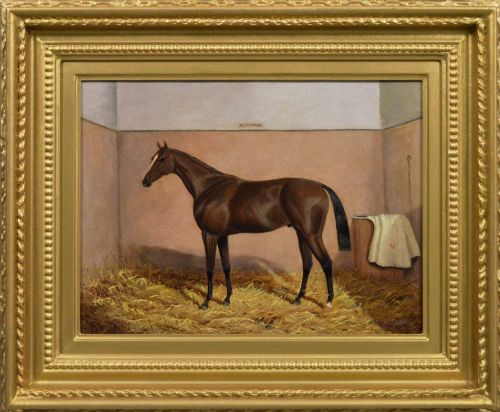
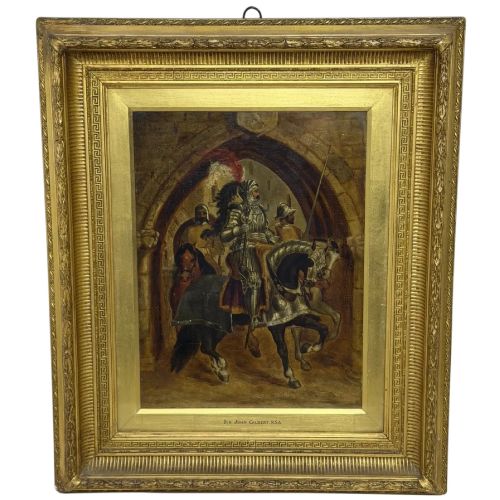
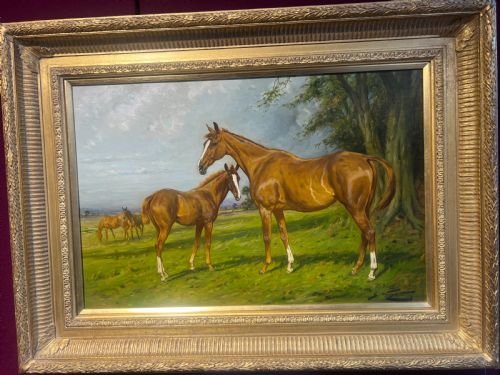
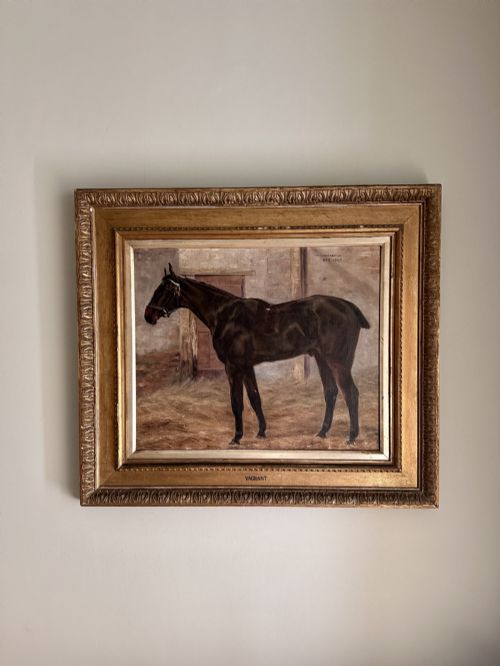
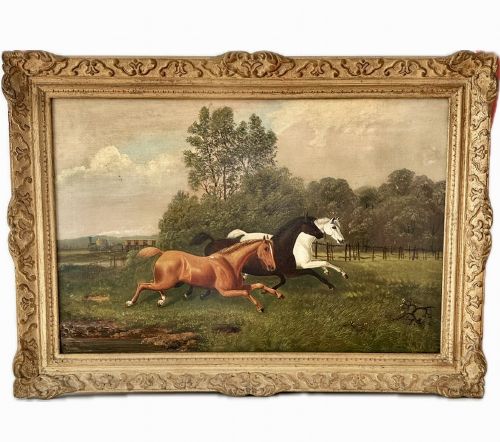
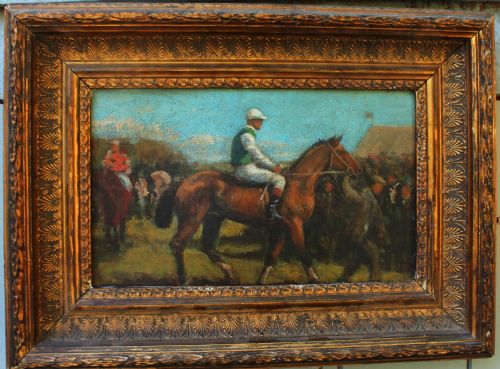
When you search for gilded frame equestrian art, you encounter oil paintings, watercolours and framed drawings dedicated to horses, racing and rural sports. These works span from the seventeenth century through to the Edwardian era, capturing everything from individual portraits of champion racehorses to bustling coaching scenes and cavalry skirmishes.
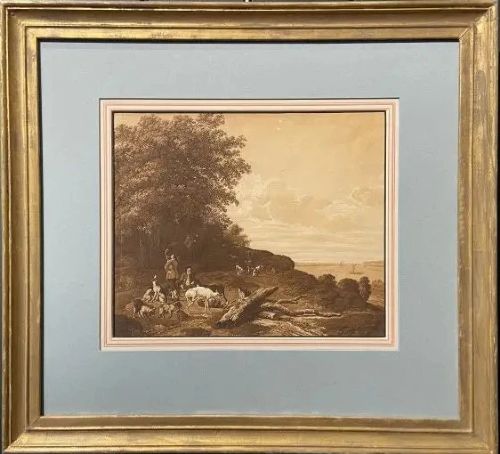
You are most likely to meet nineteenth-century Victorian pieces on this page, often rendered in oil on canvas and housed within ornate giltwood borders. These range from intimate studies of hunters in stableyards to grand landscapes depicting huntsmen and hounds across open countryside.
The subjects extend beyond single equine portraits to include farmyard groupings, racing paddocks and historical hunting parties. British and continental schools are well represented, offering a varied view of how artists across different periods recorded the partnership between human and horse.
Materials and technique
The foundation of these works is typically oil paint upon canvas or board, complemented by watercolours on paper and occasional needlepoint tapestries. Pigments are layered to render the sheen of a horse coat, the texture of tweed and the depth of woodland landscapes.
Surrounding these artworks are frames fashioned from wood and giltwood, sometimes featuring elaborate moulding, eglomise glass panels or deep gilding that catches the light. The combination of oil on canvas with heavy gilt frames defines the traditional presentation of equine subjects from the Victorian period.
Materials recorded across the selection include oil paint, canvas, wood, giltwood, glass, paper and needlepoint.
Assessing quality
Quality in these pieces rests upon the anatomical precision of the animals, the expressiveness of the brushwork and the harmony between the painting and its housing. Superior works capture the tension in a horse muscle or the atmosphere of a misty morning at the Newmarket racecourse with palpable fidelity.
The framing also plays a central role, as authentic period giltwood adds historical integrity to the artwork. Finer examples display meticulous attention to detail in both the central subject and the surrounding landscape, whereas lesser works rely on formulaic compositions and rigid linework.
Albert Clark·Sir John Gilbert·Johannes Lingelbach·George Wright·Fred Fitzpatrick·Edward Priestley·Alfred Munnings·Harry Freckleton·John Frederick Herring Jnr·Abraham Cooper·George E Sharpe·Edward Brice Stanley Montefiore·Edwin Frederic Holt·Alexander Maclean·Samuel Henry Alken·Snaffles·Isaac Cullin·Robert Cleminson·James Barenger·John Charles Maggs·Allan Gwynne-Jones·Godfrey Douglas Giles·Frank Dadd
The Gilded Frame Equestrian Art Glossary
- Giltwood
- Wood carved and coated with gold leaf or a gold-coloured metallic finish, commonly used for ornate antique picture frames. It provides a reflective border that enhances the warmth of oil paintings.
- Eglomise
- A technique where design and gilding are applied to the reverse side of glass. This creates a mirrored, glossy effect seen in specific decorative frames and historical reproductions.
- Equestrian art
- Depictions of horses in various settings, including racing, hunting, coaching and military scenes. It forms a distinct genre within sporting art, prized for its focus on animal anatomy.
- Oil on canvas
- Pigment mixed with drying oil applied to a stretched woven fabric support. This medium allows for rich blending of colours and tactile brushwork characteristic of nineteenth-century painting.
- Provenance
- The documented history of ownership of an artwork, tracing its path from the original commission to modern collections. Clear provenance adds historical context and authenticity to a piece.
Gilded Frame Equestrian Art: Frequently Asked Questions
What subjects appear in equestrian art?
These works depict racehorses, hunters, farm animals and coaching scenes alongside riders, hounds and stablehands. The imagery ranges from formal portraits of named champions to dynamic hunting parties and military skirmishes.
Many pieces place the animal within sweeping British or continental landscapes, capturing rural life and sporting traditions from past centuries.
How should I care for a giltwood frame?
Giltwood frames require gentle dusting with a soft, dry brush to prevent the accumulation of dirt within the carved details. Avoid using liquid cleaners, polishes or damp cloths, as moisture can damage the delicate gold leaf and underlying gesso.
Keep the artwork away from direct sunlight and fluctuating humidity to protect both the wooden frame and the canvas or paper within.
How do I identify a Victorian horse painting?
Victorian horse paintings often feature deep, rich oil palettes, realistic animal proportions and detailed background settings like paddocks, inns or rolling countryside. The brushwork typically shows a focus on the glossy sheen of the coat and the muscular form of hunters or carriage horses.
Signatures, dates and the construction of the canvas stretcher or giltwood frame can also help pinpoint the era of creation.
Where were these paintings originally displayed?
Historically, equestrian art hung in country houses, estate libraries, hunting lodges and coaching inns. Wealthy patrons commissioned portraits of their prize horses and hunting dogs to celebrate their rural pursuits and sporting triumphs.
Today, these works transition easily into both traditional period interiors and modern domestic spaces.