
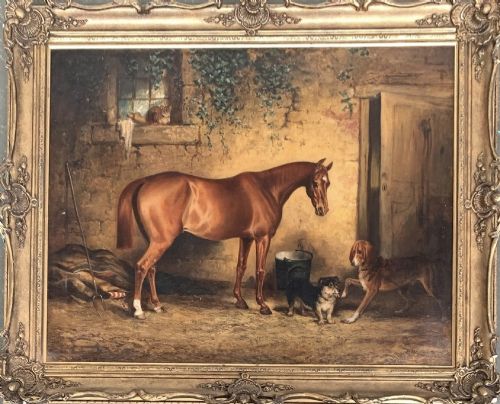


Horse and Dog Painting
Horse and dog painting brings together the stables and the field in oil on canvas, capturing Victorian rural life and sporting pursuits.
Horse and Dog Painting
A horse and dog painting depicts equine and canine subjects together within nineteenth-century British sporting art and Victorian rural realism. These works range from intimate equestrian portraits featuring hunters, ponies, and terriers to landscape genre scenes of farmworkers, plough teams, and hunting parties.
The most common examples on this page date from the Victorian period, spanning the mid to late nineteenth century alongside occasional twentieth-century compositions. The typical format utilises oil paint on canvas, frequently housed within original giltwood frames adorned with gold leaf.
How these oil paintings were produced
Artists applied oil paint to prepared canvas or wooden panels, building up layers to render the musculature of horses and the coats of hounds. This medium allowed painters to achieve deep tonal contrasts and rich textures across both animal subjects and landscape backgrounds.
Finished works were secured in wooden frames finished with giltwood and gold leaf, designed to complement the warm tones of the oil pigments and enhance the presence of the framed artwork.
A remarkably patient pony stands quietly while a young rider poses alongside an inquisitive hound in the Victorian countryside.
What separates the finest examples
Quality rests in the anatomical accuracy of the animals and the handling of light across the landscape or stable interior. The distinction between a standard record and a superior piece lies in the painter's ability to render the character and tension of both horse and hound.
Condition of the canvas and the preservation of the original giltwood frame also shape the standing of a piece. Works retaining their nineteenth-century frames without heavy restoration command closer attention from collectors.
Henry Barraud·C R Breytle·George E Sharpe·Edwin Frederic Holt·John Alfred Wheeler·Molly Maurice Latham·George Cole·Thomas Blinks·George Wright·William Eddowes Turner·W J Howden
The Horse and Dog Painting Glossary
- Oil on Canvas
- A painting technique where oil-based pigments are applied to a stretched woven fabric support. This method became standard for nineteenth-century British fine art.
- Giltwood Frame
- A wooden picture frame coated with gold leaf or gold paint. These ornate surrounds often date to the same Victorian era as the painting within.
- Victorian Equestrian Realism
- An art style focused on the lifelike portrayal of horses, riders, and associated animals during the reign of Queen Victoria. It combines accurate anatomy with detailed rural or sporting backdrops.
- Landscape Genre
- A style of painting depicting scenes from everyday life against a natural background. In these listings, such works typically feature farmworkers, plough teams, and working animals.
- Sporting Art
- A genre dedicated to depicting field sports, horses, hounds, and rural pastimes. It holds a significant place in nineteenth-century British painting traditions.
Horse and Dog Painting: Frequently Asked Questions
What subjects appear in horse and dog painting?
These works feature equine subjects alongside hounds, terriers, or farm dogs in various settings. Common motifs include hunters with their handlers, coaching scenes, and rural landscapes with plough teams.
Many compositions place the animals in British countryside settings, capturing the working relationship between humans, horses, and dogs during the nineteenth century.
How do I date a horse and dog painting?
Dating relies on stylistic clues, clothing of figures, artist signatures, and framing materials. The majority of these oil paintings date from the Victorian era, specifically between eighteen fifty and eighteen eighty.
Inscriptions on the reverse of the canvas or panel often provide further details regarding the sitter, location, or the year of creation.
Where were these paintings originally displayed?
Nineteenth-century sporting and genre paintings typically hung in country houses, estate offices, and gentleman's residences. They served as celebrations of prized hunters, working hounds, and rural estates.
Today, collectors place them in studies, libraries, and living spaces where traditional British equestrian art complements period interiors.
Are these paintings executed on canvas or panel?
The primary support recorded in these listings is canvas stretched over a wooden frame, though occasional examples utilise wooden panels. Oil paint serves as the exclusive medium across both supports.
Surviving works are frequently preserved within their period giltwood frames, which contribute to the overall presentation of the piece.