
Vintage Country House Painting
These vintage country house painting selections bring the lived-in warmth of historic domestic interiors straight to your walls.
Vintage Country House Painting
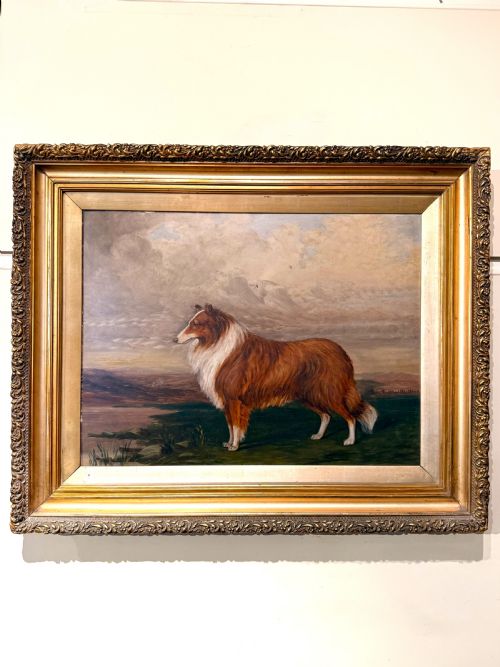
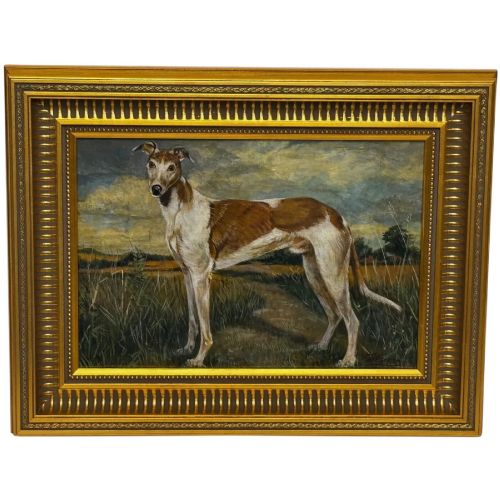
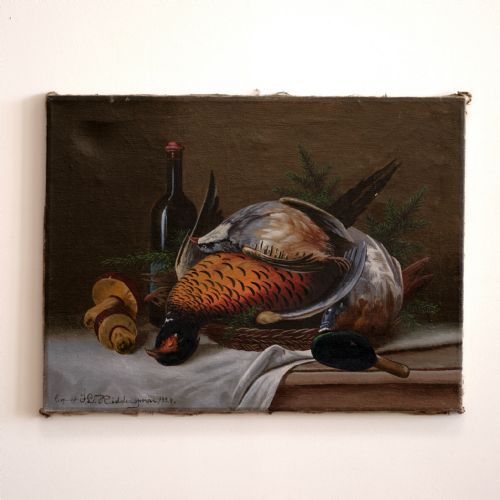
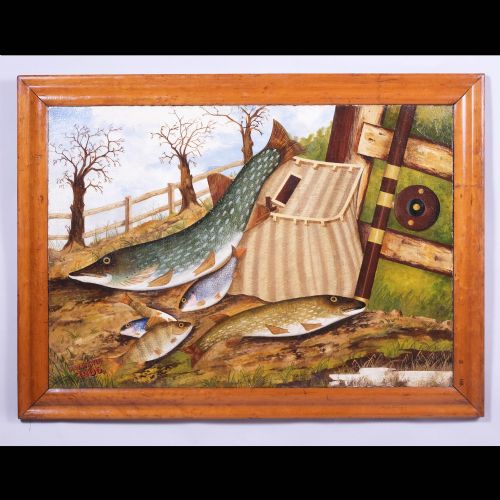
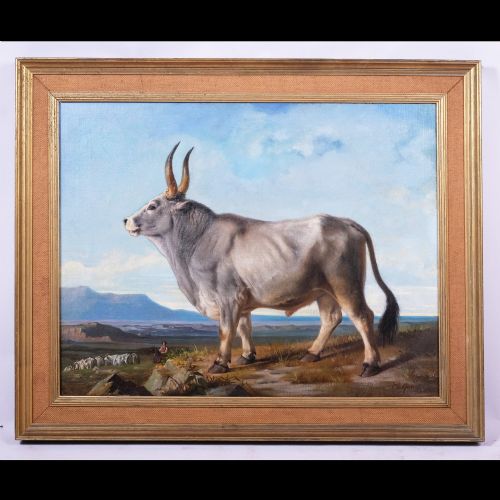
A vintage country house painting captures the domestic, rural and sporting life of the nineteenth and early twentieth centuries, often depicting animals, portraits and rural scenes. When exploring this selection, buyers most frequently encounter oil paintings on canvas and board, alongside watercolours and painted prints originating from English, French and Scottish schools.
The subjects range widely from sporting animal portraits and livestock studies to historic scenes and landscapes, reflecting the traditional tastes of historic estates. These works carry the patina of age, frequently housed in original frames that show the wear of generations.
Dating predominantly from the Victorian and Edwardian periods through to the early decades of the twentieth century, these artworks complement rustic farmhouse and English country interiors. They serve as focal points in reception rooms, hallways and kitchens, anchoring a room with a distinct sense of heritage.
How they were made
Artists of the period applied oil paint to stretched canvas or prepared wooden boards, building up rich layers of pigment to create depth and texture in portraits of animals and rural landscapes. Watercolours on paper offered a lighter medium, frequently employed for detailed studies of game birds and horses.
Canvases were mounted on wooden stretcher frames and secured within timber surrounds, sometimes finished with gesso and gilt details. The physical composition relies on durable traditional materials like pine, oak and birch for associated frames and supports, ensuring the survival of these works across centuries.
Listings feature oil paintings and watercolours rendered on canvas, board and paper, spanning the Georgian, Victorian and Edwardian periods.
What varies in quality
The capability of the artist defines the upper tier of the range, visible in the anatomical precision of animal portraits and the confident handling of light and shadow across the canvas. Lesser works display stiffer compositions and more formulaic brushwork typical of commercial or amateur output.
Condition and originality dictate the standing of a piece within its category, with untouched surfaces and original stretchers holding greater appeal. Surviving historic frames that complement the exact period of the artwork add considerably to the integrity of the piece.
George Rankin·C R Breytle·John Frederick Herring Snr·F.A. Clark·A M Gauci
The Vintage Country House Painting Glossary
- Oil paint
- A slow-drying paint made by combining pigment particles with a drying oil, most commonly linseed oil. This medium allows for rich blending and textured impasto work seen on canvas and board.
- Canvas
- A heavy woven fabric, usually linen or cotton, stretched tightly across a wooden frame to serve as a durable surface for oil paintings. It has been the primary support for fine art for centuries.
- Board
- A rigid flat panel, often wood or compressed pulp, used as an alternative to stretched canvas for smaller oil paintings. It offers a firm surface that resists punctures.
- Watercolour
- A painting method in which the paints are made of pigments suspended in a water-based solution. It is traditionally applied to heavy paper to create luminous, translucent washes of colour.
Vintage Country House Painting: Frequently Asked Questions
How do I date an old painting?
Dating relies on examining the materials of the canvas, stretcher frames, pigments and the style of the mounting or framing. Handwritten inscriptions on the reverse often provide helpful clues.
Stylistic cues in the clothing, architecture or subject matter further narrow down the decade of creation, aligning the work with Victorian, Edwardian or Georgian conventions.
Where should I hang these paintings?
These works suit traditional reception rooms, hallways and studies where their rural or sporting subjects complement timber furniture and panelled walls. They bring character to modern spaces when grouped together as a feature wall.
Avoid placing canvases in direct sunlight or areas with high humidity, such as unventilated kitchens or bathrooms, to protect the paint layer and canvas integrity.
Are original frames important?
Original frames enhance the historical context and visual completeness of an artwork, having aged alongside the canvas itself. They often feature period gilding or specific moulding styles unique to the era.
While paintings can be reframed to suit a specific interior, matching a period work with its contemporary frame preserves its authentic character.
What subjects are most common?
Animal portraits dominate this category, featuring dogs, horses, livestock and game birds that reflect the rural preoccupations of historic country estates. Landscapes and sporting scenes also appear frequently.
These subjects served as testaments to prized possessions, agricultural achievements or recreational pursuits of the original owners.