

Gilded Floral Ceramic Vase
A gilded floral ceramic vase brings together hand-painted botanical motifs and gleaming metal leaf across centuries of European and Asian production.
Gilded Floral Ceramic Vase
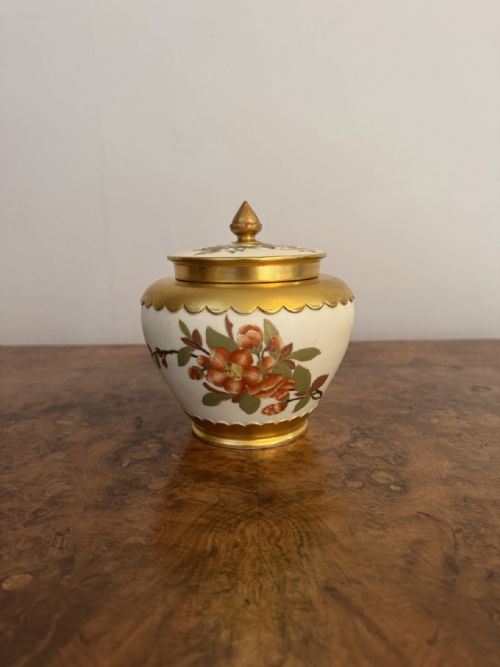
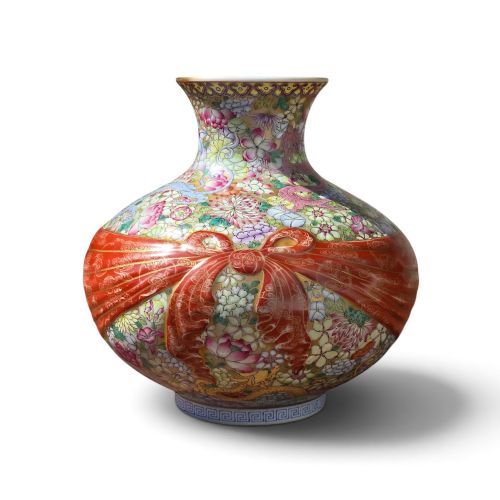
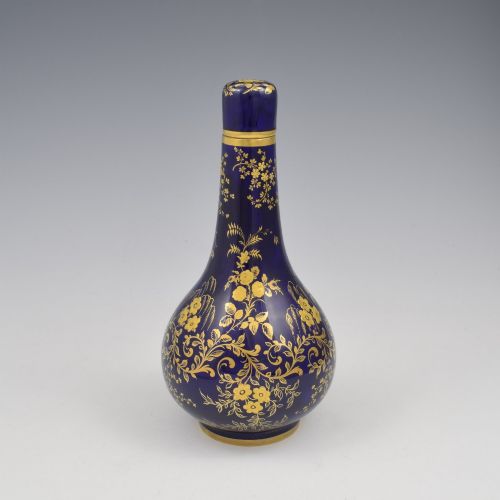
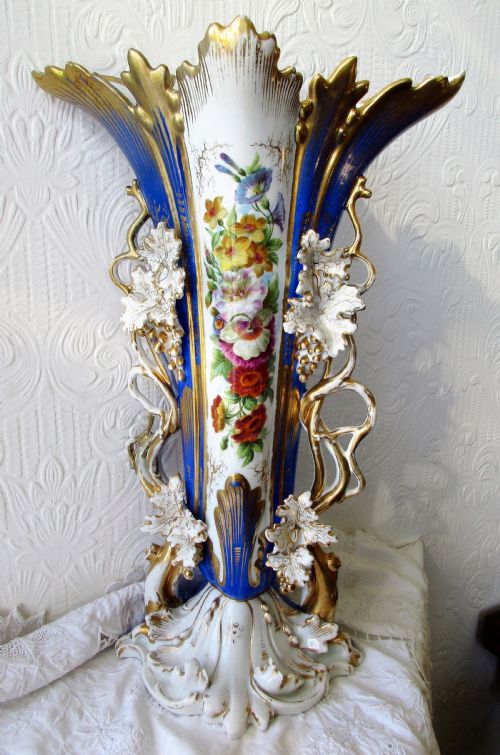
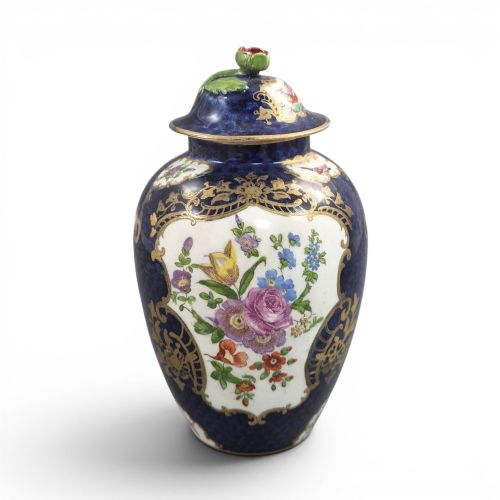
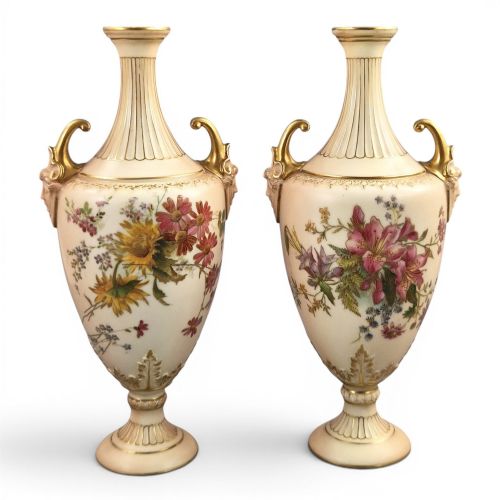
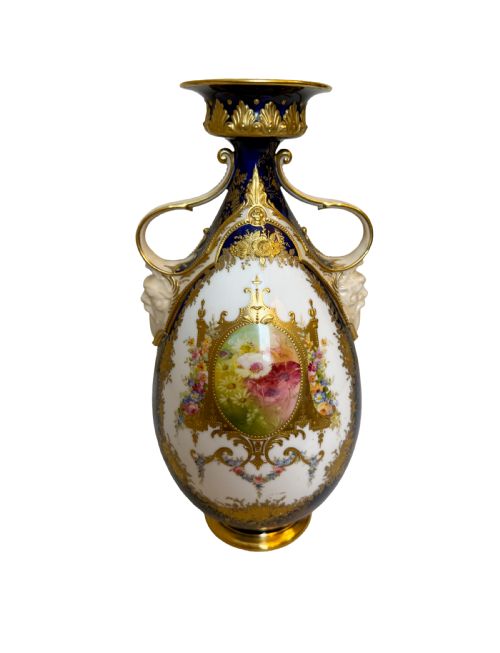
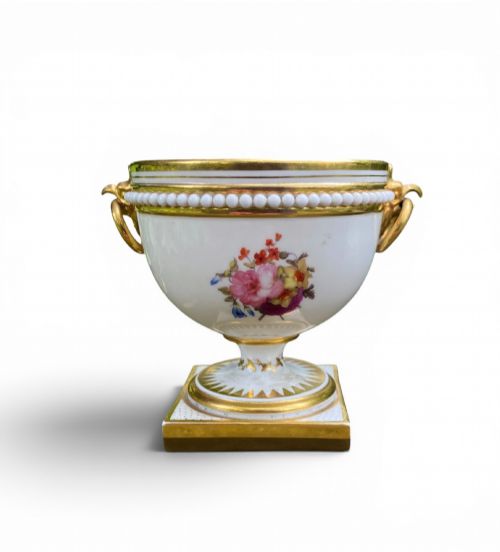
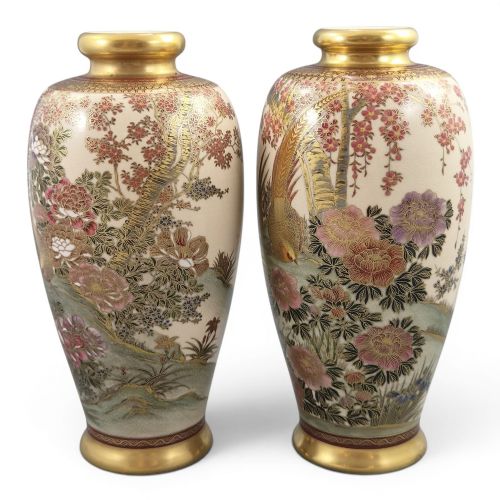
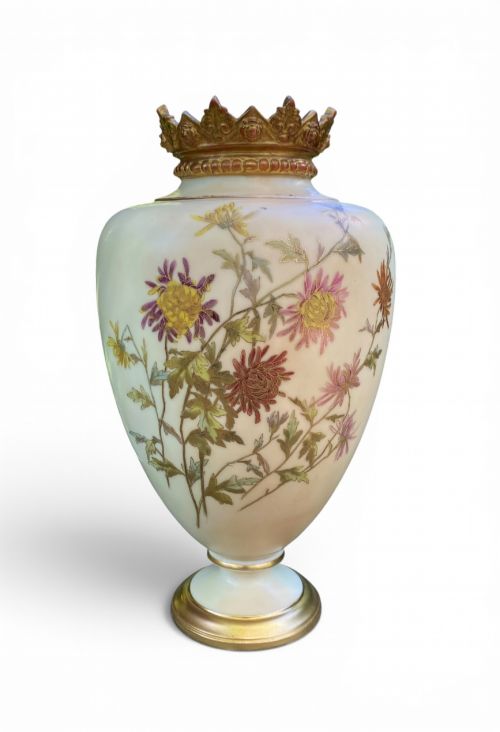
A gilded floral ceramic vase is a decorative vessel combining glazed earthenware or porcelain bodies with applied metallic highlights and painted blossom motifs. These pieces span production from the Georgian and Regency eras through the Victorian, Edwardian, and Meiji periods.
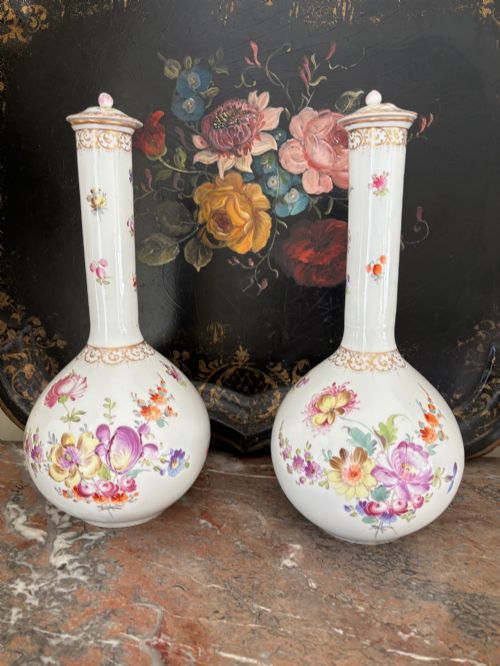
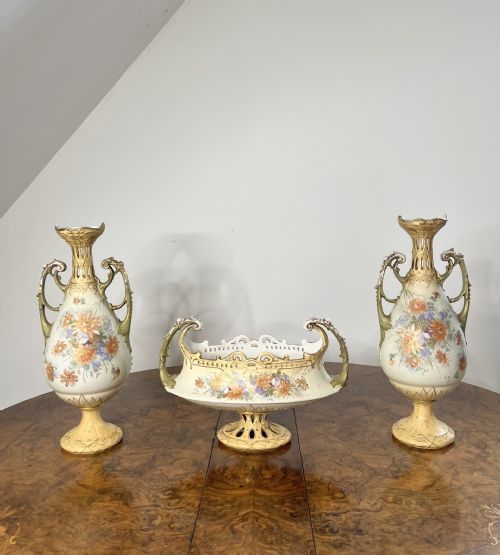
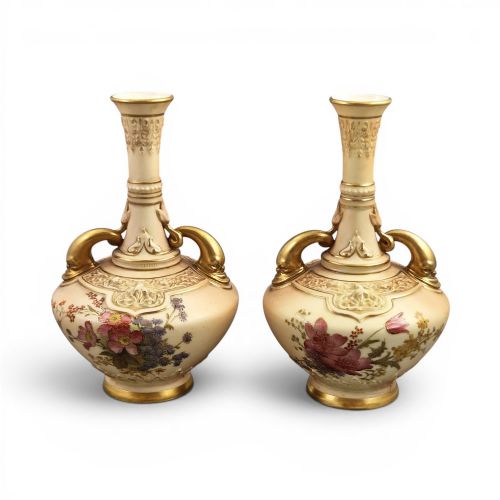
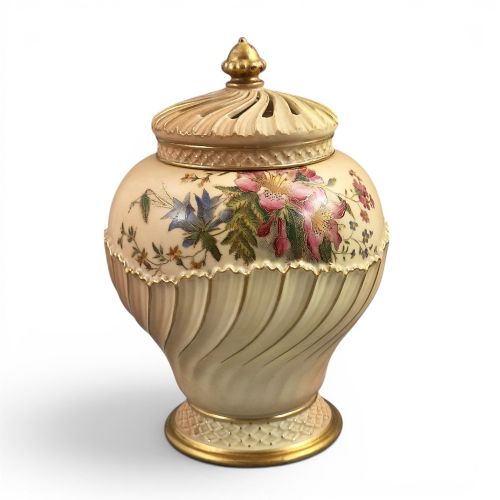
Buyers encounter diverse vessel forms, including campana urns, lidded potpourri jars, bulbous garniture sets, and slender-necked bottle vases. British factories such as Royal Worcester, Spode, and Coalport sit alongside continental European makers and Japanese export workshops.
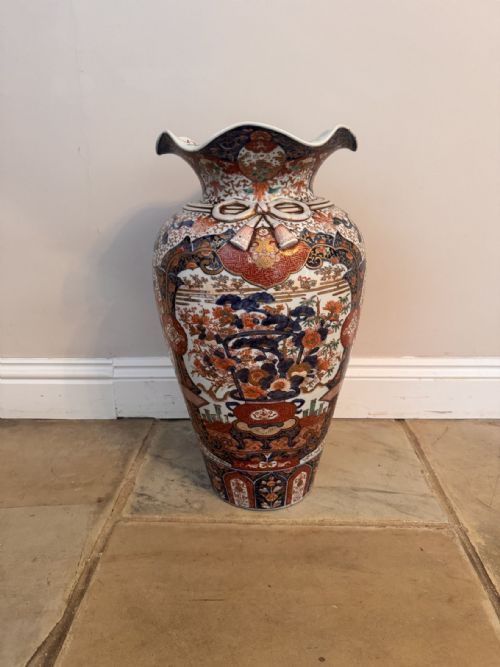
The aesthetic vocabulary shifts from classical revival shapes to ornate Rococo curves and Japanese Imari patterns. Hand-painted floral decoration remains the unifying element across both English porcelain and imported earthenware.
How They Were Made
Potters shaped porcelain, earthenware, and silicon china either by hand or using moulds to achieve forms ranging from amphorae to bulbous jars. Glazes were applied to seal the ceramic body before artists executed detailed hand-painted floral decoration.
Gold leaf, liquid gilding, and enamels were meticulously added to highlight rims, handles, and painted motifs, often requiring a secondary firing to fuse the metallic elements securely to the glazed surface.
Listings feature ceramics produced across eight distinct historical periods, spanning from the Georgian era to the early Showa period.
What Varies in Quality
Quality rests upon the precision of the hand-painted brushwork and the complexity of the ceramic form. Pieces produced by premier factories display finer botanical detailing and more sophisticated glazing techniques.
The application of gold leaf or gilding dictates the visual richness of the object, where thicker, burnished metal accents elevate the piece above standard factory output.
Royal Worcester·Sitzendorf·Derby Porcelain·Booths Silicon China·Royal Vienna·Royal Doulton·Manpei·Samson of Paris·Tunnicliffe·H and R Daniel·Coalport·Meissen·Crown Staffordshire·Royal Crown Derby·Spode·Old Paris·Tagawa·Hododa·Doulton Burslem
The Gilded Floral Ceramic Vase Glossary
- Porcelain
- A hard, white, translucent ceramic fired at high temperatures. It forms the refined body of many nineteenth-century display vessels.
- Gilding
- The application of gold leaf or gold paint to ceramic surfaces. This technique adds reflective metallic highlights to floral motifs and handles.
- Campana
- A bell-shaped urn or vase form popular in classical architecture and Regency ceramics. These vessels typically feature flared rims and pedestal bases.
- Garniture
- A set of matching vases or pots designed for symmetrical placement on a mantelpiece or sideboard. They often comprise three to five graduated pieces.
- Imari
- A traditional Japanese style of ceramic decoration characterised by deep cobalt blue, iron-red, and extensive gold details. These patterns were widely exported and emulated in Europe.
Gilded Floral Ceramic Vase: Frequently Asked Questions
What periods do these vases come from?
The listings span the Georgian, Regency, Victorian, and Edwardian eras, extending into the late nineteenth and early twentieth centuries.
Production also reaches into the Meiji and early Showa periods for Japanese export ceramics.
How were these vases used originally?
Many served as decorative garniture sets, mantelpiece centrepieces, or functional flower holders in period drawing rooms.
Lidded versions often functioned as potpourri jars to scent domestic interiors with dried botanical mixtures.
How do I identify a hand-painted piece?
Hand-painted ceramic vases show subtle brushstrokes and individual variations in floral motifs upon close inspection.
Factory marks and pattern numbers on the base often confirm the specific hand-finished production period.
How should I care for a gilded vase?
Keep delicate porcelain and earthenware vessels away from direct sunlight to preserve the original enamel colours.
Dust gently with a dry, soft cloth and avoid abrasive cleaning agents that might damage the surface gilding.