



Gilded Earthenware Urn
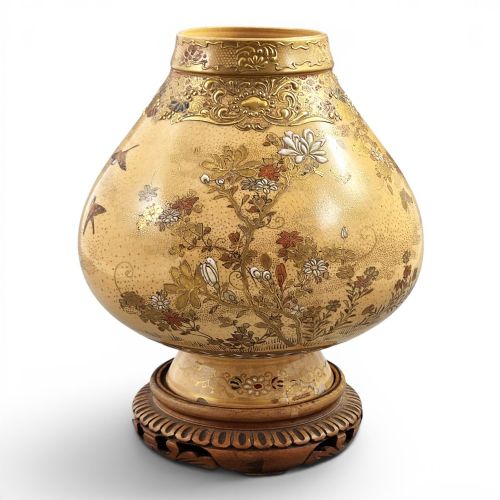
These gilded earthenware urn pieces bring intricate Meiji period Japanese Satsuma ceramic craftsmanship and European hand-painted decorative artistry into domestic spaces.
Gilded Earthenware Urn
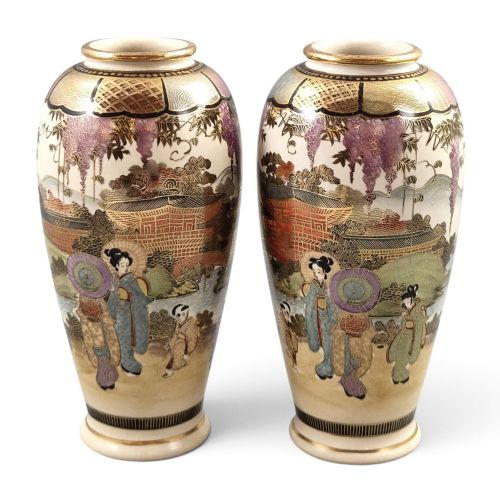
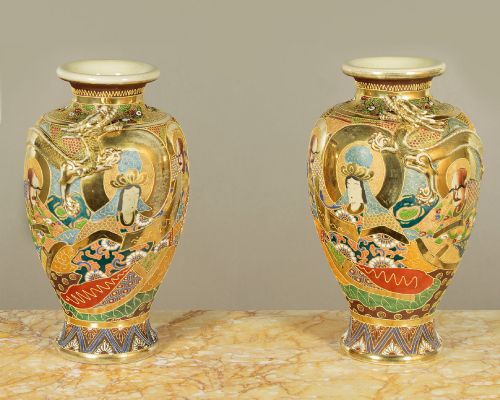
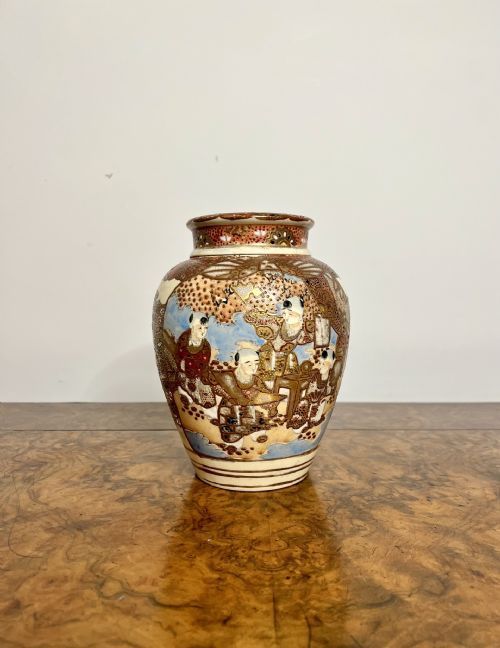
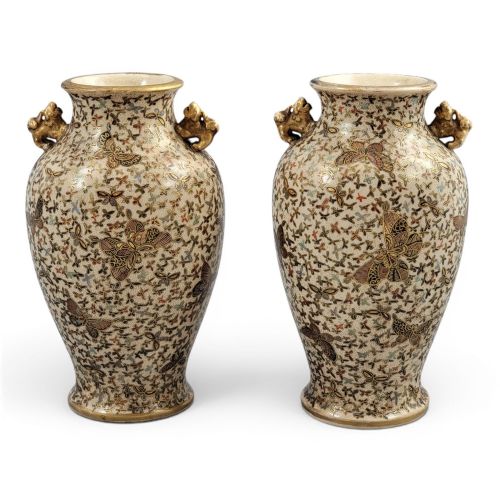
When you examine a gilded earthenware urn on this page, you are primarily looking at Japanese Satsuma ware from the Meiji period alongside select European ceramic forms. These vessels range from monumental lidded jars and ginger jars to slender decorative vases and incense burners.
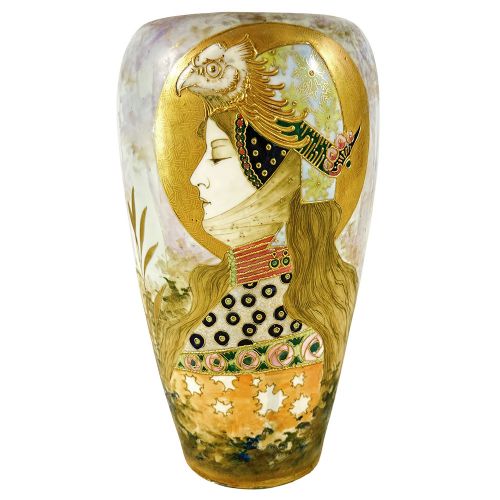
The Japanese examples dominate the selection, featuring traditional earthenware bodies decorated with detailed hand-painted figures, landscapes, and raised enamel work. European contributions from periods like Art Deco and Edwardian production sit alongside these Asian works, showing comparable hand-painted floral motifs and glazed surfaces.
Makers and workshops from Kyoto feature prominently among the listings, often displaying specific artist signatures or clan crests on the base. Buyers encounter both single statement pieces and matched pairs suited for prominent display on tables or mantels.
How they were made
The foundation of these objects is an absorbent earthenware body, typically fired and then painted with mineral pigments and enamel colours. Artisans applied fine gold leaf and gold gilt highlights over the painted scenes, outlining figures and borders to create rich surface reflection.
Techniques such as moriage were utilised to build up thick, raised dots and lines of slip before gilding, giving garments and floral elements a tactile, three-dimensional quality. Glaze seals the earthenware underneath, providing a smooth backdrop for the intricate hand-painted narratives.
Listings span the nineteenth century through the 1930s, uniting Japanese Meiji and Showa periods with European Art Nouveau and Art Deco designs.
What varies in quality
Quality in these vessels rests upon the precision of the hand-painted brushwork and the density of the gilding. Master workshops employed skilled artists whose rendering of facial expressions, robes, and natural landscapes shows remarkable clarity and minute detail.
The application of gold leaf and the complexity of raised enamel work further divide standard production from exhibition pieces. Heavier, more secure gilding and sophisticated compositional balance distinguish the top tier of makers from simpler commercial outputs.
Kinkōzan Workshop·Shozan·Hotoda·Chosei·Yamashu
The Gilded Earthenware Urn Glossary
- Satsuma
- A type of Japanese earthenware originating from Satsuma Province, traditionally characterised by a fine crackle glaze and elaborate polychrome and gilt decoration. Collectors prize pieces with clearly legible artist signatures and dense pictorial scenes.
- Moriage
- A ceramic technique where slip is piped onto the surface in raised dots or lines before firing and painting. This method creates a textured relief effect that catches the surrounding light.
- Koro
- A traditional Japanese incense burner fitted with a pierced cover to allow scented smoke to escape. These vessels frequently rest on small feet and display intricate surface painting.
- Gilt
- A thin layer of gold or gold-coloured material applied to the surface of the earthenware. It highlights specific motifs such as borders, robes, and background clouds.
Gilded Earthenware Urn: Frequently Asked Questions
What is Satsuma ware?
Satsuma ware is a distinct style of Japanese earthenware featuring an ivory-coloured crackle glaze painted with enamel and gold. It developed significantly during the Meiji period for both domestic use and export markets.
These ceramics are easily identified by their intricate figurative scenes, court ladies, and landscapes framed by elaborate gilded borders and geometric patterns.
How do I care for gilded earthenware?
These decorative vessels require gentle handling and should be kept away from direct sunlight and moisture. Dust them lightly with a dry, soft cloth rather than using liquid cleaners.
Because the gold leaf and enamel sit on top of the glaze, harsh rubbing or abrasive materials will damage the delicate hand-painted surface over time.
How do I date a Meiji period piece?
Dating relies on examining the style of the painted figures, the signature marks on the base, and the manufacturing characteristics of the earthenware body. The Meiji period spans from 1868 to 1912, a time when Japanese export ceramics reached high levels of technical refinement.
Many pieces carry specific artist signatures or workshop stamps that link them directly to documented Kyoto producers from the late nineteenth century.