


Vintage Satsuma Ware
Vintage satsuma ware brings intricate hand-painted pottery into your interior, defined by delicate enamel work and distinctive crackle glazes.
Vintage Satsuma Ware
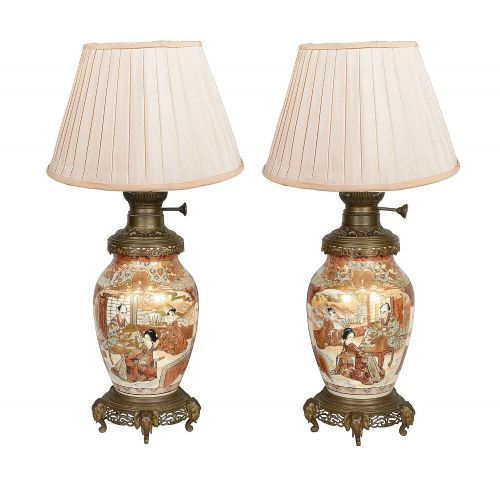
Vintage satsuma ware encompasses finely decorated Japanese ceramics produced from the nineteenth century into the twentieth century, taking forms such as vases, bowls, and tea sets. When you search for vintage satsuma ware, you encounter both nineteenth-century Meiji period pieces and later Edwardian and Taisho period examples. The selection ranges from miniature vases to monumental bowls and converted table lamps.
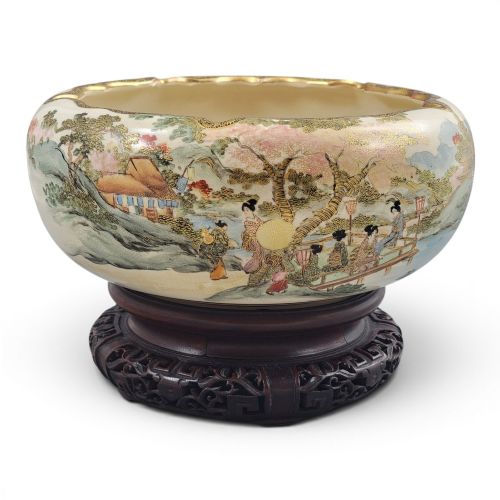
Vessels from the Meiji period frequently showcase detailed figural processions, immortals, and samurai scenes rendered in polychrome enamels. Kyoto and Tokyo makers dominate the production seen here, often signing their work with distinct artist ciphers. Decorative bowls and tea jars display the characteristic ivory-coloured earthenware body beneath fine craze lines.
Materials and construction
Potters shaped these objects from earthenware, applying a distinctive cream-coloured glaze that developed a network of fine crackles during firing. Artisans then painted intricate designs over the glaze using mineral enamels combined with generous applications of gold leaf. Certain decorative elements, particularly on lamps, incorporate brass mountings and fitted wooden or silk components.
Samurai battles and serene wisteria gardens share the same microscopic brushstrokes on these tiny miniature vases.
What distinguishes finer pieces
Quality rests in the precision of the brushwork and the density of the gilding across the earthenware surface. Master makers distinguish their output through finely controlled figural detail and legible signatures, whereas ordinary production relies on simpler floral motifs. The crispness of the enamel relief and the balance of the composition separate exceptional Meiji pieces from standard decorative wares.
Shizan·Chosei·Hakusan·Tokyo Taizan·Kinkozan·Hattori·Taniguchi
The Vintage Satsuma Ware Glossary
- Earthenware
- Porous ceramic pottery fired at lower temperatures, forming the structural body characteristic of satsuma ware. This material requires a glaze to hold liquids and accepts the delicate enamel painting surface.
- Enamel
- Vitreous coloured glass paste applied over the fired glaze and heated again to fuse with the ceramic. These pigments provide the vibrant reds, blues, and greens seen in figural scenes.
- Gold leaf
- Extremely thin sheets of beaten gold applied to highlight specific areas of the painted design. Master decorators utilise this metal to accent garments, borders, and backgrounds.
- Mon
- A Japanese heraldic badge or family crest used to identify clans and lineage. These crests frequently appear on higher-grade bowls and vases.
Vintage Satsuma Ware: Frequently Asked Questions
What is satsuma ware?
Satsuma ware is a type of Japanese pottery featuring an ivory-coloured, crackle-glazed earthenware body decorated with detailed enamels and gold leaf.
Production spans from nineteenth-century Meiji pieces to early twentieth-century examples, covering everything from miniature vases to tea sets and large decorative bowls.
How do I date satsuma ware?
Dating relies on stylistic markers, signatures, and historical periods such as the Meiji or Taisho eras. Nineteenth-century pieces often display denser figural work and artist signatures from renowned Kyoto workshops.
Later Edwardian and Taisho items show shifts in form and decorative palette while maintaining the traditional crackle glaze.
Can I use satsuma tea sets?
Most antique satsuma tea sets and wares are primarily intended for display rather than daily culinary use. The delicate enamel and gold leaf decorations are sensitive to modern detergents and abrasive cleaning.
Gentle dusting preserves the painted surface of these fragile earthenware pieces.
Why does satsuma ware have cracks?
The fine network of lines across the glaze is an intentional characteristic of the pottery, known as crazing. This occurs as the glaze cools and contracts at a different rate than the earthenware body beneath.
Artists often enhanced these natural craze lines with dark pigments to accentuate the aged appearance.