

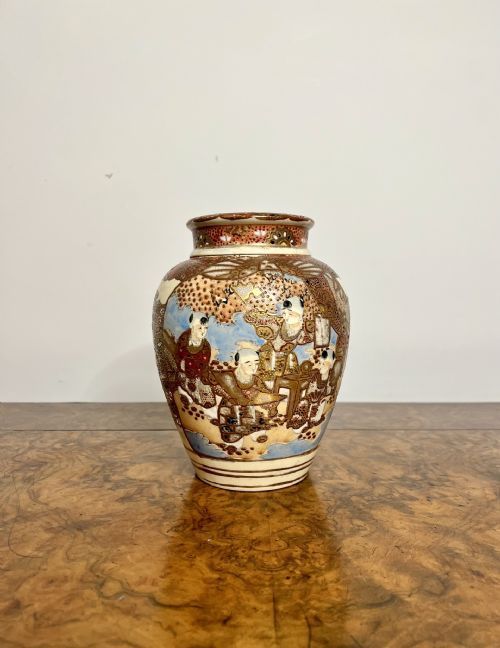
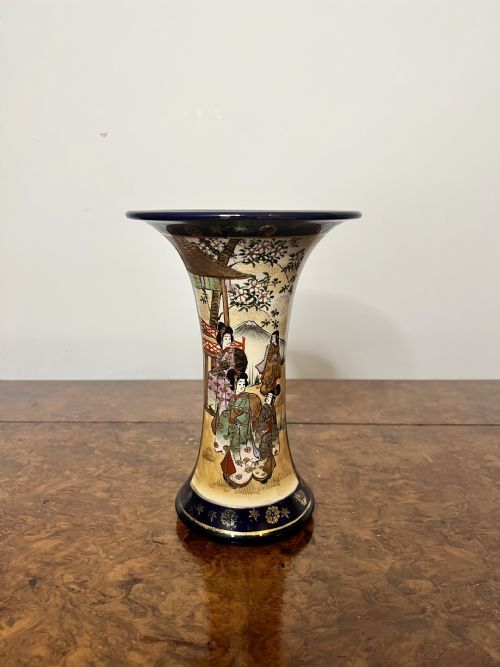


Satsuma Ceramic Vessel
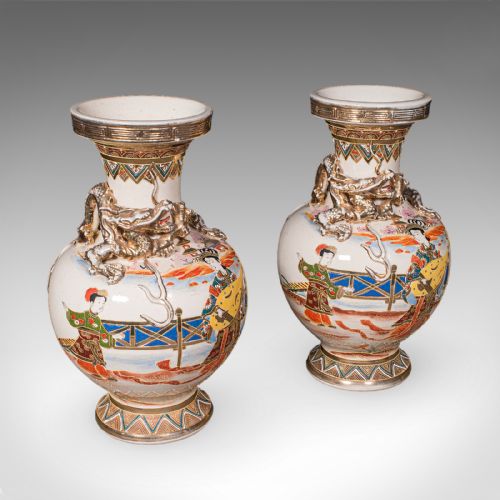
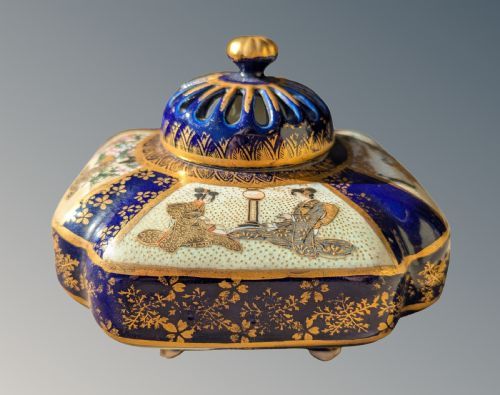
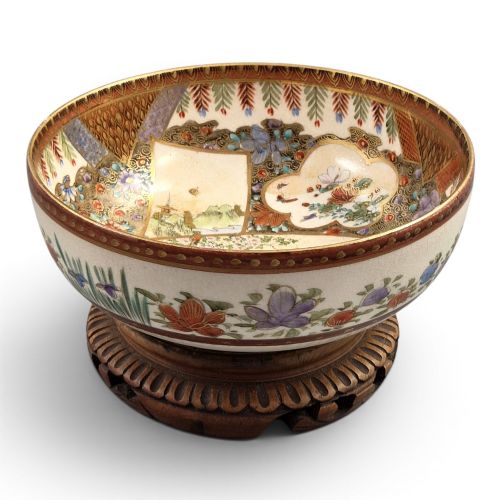
These pieces of satsuma ceramic vessel span the Meiji and Taisho periods, offering intricate hand-painted designs enriched with gold leaf.

Satsuma Ceramic Vessel
When searching for a satsuma ceramic vessel, buyers encounter an array of forms including vases, incense burners, tea caddies, bowls, and jars. These items originate predominantly from the Meiji period, extending into the Taisho and early Showa eras.
How they were made
The makers utilised earthenware and porcelain bodies as the foundation for their work. These surfaces were subsequently decorated with enamel paint, gold leaf, and extensive gilding to create intricate pictorial panels.
Techniques such as moriage were employed to build up raised relief details on the ceramic surface. Wood components occasionally appear in association with specific vessels, while bronze is utilised in forms like incense burners.
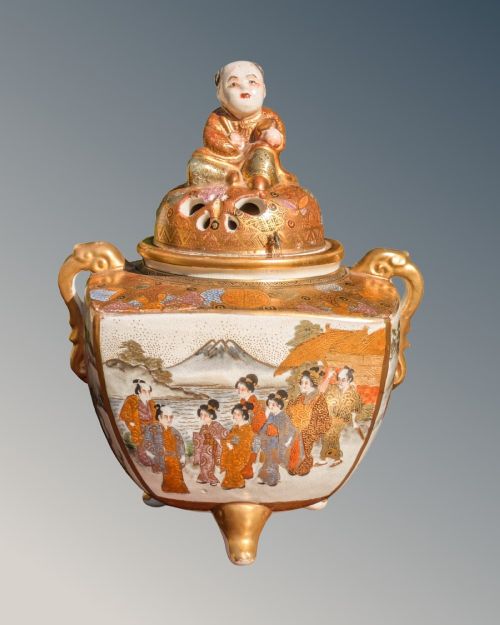
Elephants and guardian lions keep a watchful eye over the collection, appearing as handles and lid finials on the vessels.
What varies in quality
The standard of execution in painting and gilding marks the difference between average items and exceptional works. Master studios and signed pieces demonstrate a higher degree of precision in miniature figurative scenes and ornamental borders.
The application of heavy gold leaf and complex relief work alters the visual impact of a piece. Recognition of specific makers such as Kinkozan or Chosei often indicates superior craftsmanship within the tradition.
Kizan·Kinkozan·Kozan·Hotoda·Chosei·Kotobuki do·Tokyo Taizan·Shozan·Ippo
The Satsuma Ceramic Vessel Glossary
- Koro
- An incense burner, typically fitted with a pierced lid and often supported on feet. These vessels frequently incorporate shishi lion finials.
- Moriage
- A decorative technique involving the application of slip in raised dots or lines to create tactile relief. This method adds texture beneath the enamel and gilding.
- Natsume
- A small tea caddy traditionally used in Japanese tea ceremonies. The form is named after its resemblance to the fruit of the jujube tree.
- Shimazu Crest
- The heraldic mon of the Shimazu clan, displayed prominently on many Kyoto-Satsuma pieces. It consists of a cross within a circle.
- Shishi
- A mythical guardian lion or dog often modelled as a finial on the covers of incense burners. These figures symbolise protection and strength.
Satsuma Ceramic Vessel: Frequently Asked Questions
What is a satsuma ceramic vessel?
A satsuma ceramic vessel is a decorated Japanese earthenware or porcelain item characterised by intricate enamel and gilt painting. These pieces range from small miniature vases to large temple jars.
Most surviving examples date from the Meiji period, reflecting traditional Japanese artistic subjects like figures, landscapes, and samurai battles.
How do I identify a Meiji period piece?
Meiji period vessels are identified through stylistic markers such as dense enamel work, extensive gilding, and signature panels. The inclusion of specific family crests like the Shimazu mon also points to this era.
Many of the finer items bear artist signatures or studio marks from renowned Kyoto makers on the base.
Where were these vessels made?
These ceramics were produced in Japan, with many significant pieces originating from Kyoto workshops. Prominent studios in this region supplied both domestic markets and international collectors during the late nineteenth and early twentieth centuries.
Other notable production centres contributed distinct decorative styles, though Kyoto-Satsuma remains prominent among surviving antiques.
How should I care for antique satsuma?
Antique satsuma pieces require gentle handling to preserve their delicate enamel surfaces and gold leaf decoration. Dusting with a soft, dry cloth is usually sufficient for routine maintenance.
Keep these vessels away from direct sunlight and moisture to protect the integrity of the earthenware body and surface pigments.