


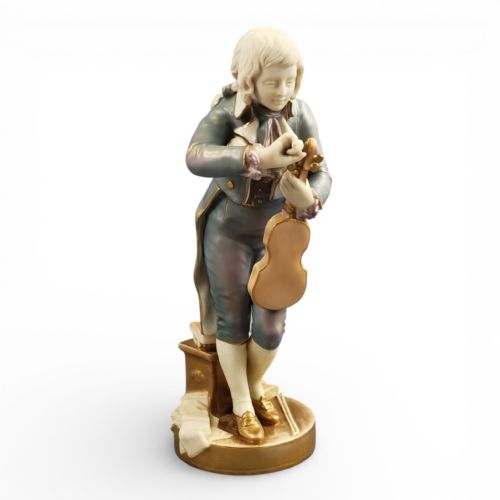

Gilded Ceramic Statue
These gilded ceramic statue pieces span European factories and Japanese studios, bringing metallic lustre to glazed earthenware and hard-paste porcelain figures.
Gilded Ceramic Statue
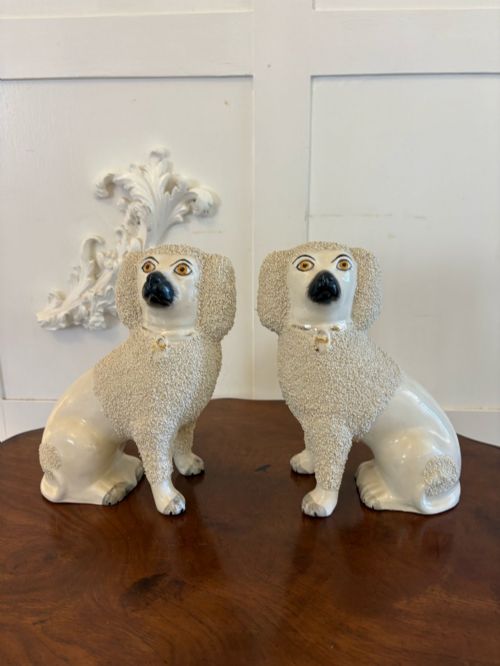
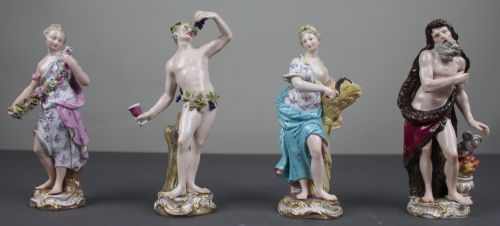
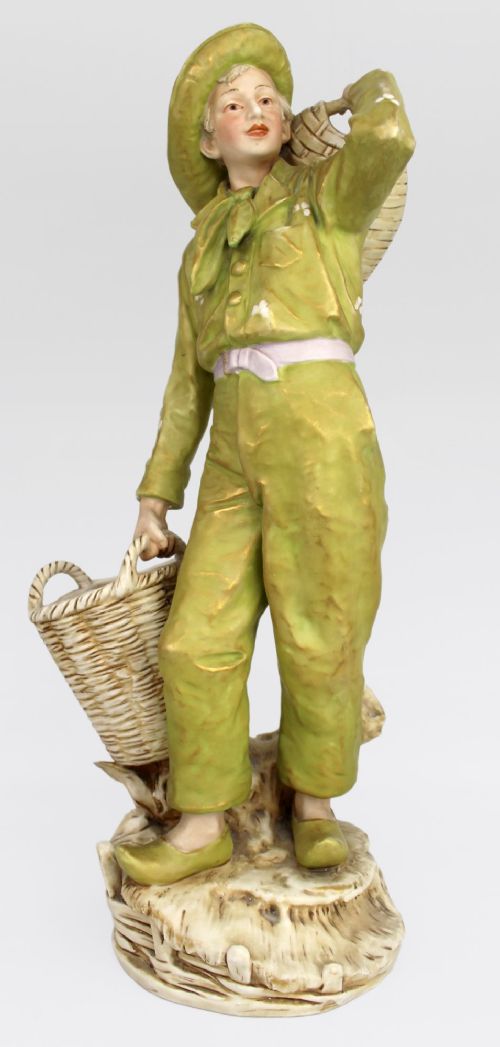
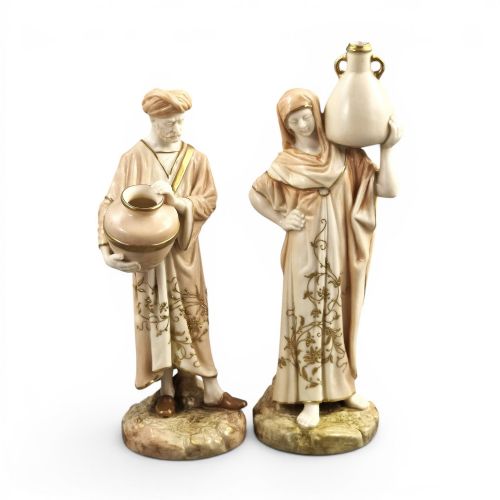
A gilded ceramic statue search brings together glazed porcelain and earthenware figures decorated with gold leaf, gilt, or gilding alongside enamel. These pieces take the form of human figurines, pairs of animals, and mythological groups.
The selection ranges from eighteenth-century European factory pieces to Meissen porcelain, Royal Worcester figures, and nineteenth-century Japanese Kutani and Satsuma okimono. Figures from the Victorian and Edwardian eras sit alongside earlier Georgian and Regency examples.
Most items you encounter belong to the nineteenth century, including Staffordshire animal figures, French Paris porcelain groups, and German porcelain models. Art Deco pieces from the twentieth century also appear with gilded highlights on ceramic bodies.
Materials and construction
Makers shaped hard-paste porcelain, earthenware, and soft-paste bodies before applying enamel paints and detailed glazes. Gold leaf or liquid gilt was added to specific surface areas, sometimes requiring a secondary firing to bond the metallic decoration.
Modelling involved pressing clay into moulds or hand-sculpting fine details, as seen in lace porcelain groups and intricate figurine hair and clothing. Surface enrichment combined hand-painting with metallic leaf application on figures and decorative pedestals.
Listings feature hard-paste porcelain, earthenware, and enamel materials across nineteenth-century and eighteenth-century periods.
Assessing the work
The execution of the gilding itself separates standard factory output from exceptional studio pieces, where gold leaf catches the light along defined drapery folds and decorative motifs rather than masking poor ceramic definition.
Royal Worcester·Meissen·Samson Paris·Makuzu Kozan II·James Hadley
The Gilded Ceramic Statue Glossary
- Hard-paste porcelain
- A dense, vitrified ceramic material composed of kaolin and petuntse fired at very high temperatures. It resists scratching and provides a durable base for fine enamel painting and gilding.
- Gilt
- A thin layer of gold applied to the surface of ceramic bodies for decorative effect. It adds metallic contrast to the underlying coloured glazes and enamel details.
- Okimono
- A Japanese carved or modelled display object designed for interior decoration. These figures often depict deities, historical figures, or animals with intricate surface decoration.
- Glaze
- A glassy coating fused to ceramic surfaces through firing. It seals the porous clay body and provides a smooth ground for subsequent enamel and gold decoration.
- Blanc de chine
- A French term for white Chinese porcelain that inspired European factories to produce unglazed or clear-glazed white figures. It highlights the purity of the ceramic form without relying on enamel colours.
Gilded Ceramic Statue: Frequently Asked Questions
What periods do these ceramic figures cover?
The pieces span from the eighteenth century through the Georgian and Regency eras into the Victorian and Edwardian periods. Twentieth-century Art Deco examples also feature among the selection.
Earlier pieces often originate from European porcelain factories, whilst late nineteenth-century items include Japanese Kutani and Satsuma works.
How are Japanese okimono different from European figures?
Japanese okimono represent traditional figures, deities, and animals created for display in domestic settings. They frequently employ specific regional styles such as Kutani or Satsuma wares.
European figures typically derive from factory traditions like Meissen or Derby, focusing on classical mythology, pastoral scenes, or portrait models.
Where should I display these porcelain statues?
Place the figures on stable, level surfaces inside enclosed cabinets to protect them from accidental knocks and airborne dust. Good interior lighting will highlight the metallic gilding and painted enamel details.
Ensure the display location experiences minimal temperature fluctuations to protect both the ceramic body and the historical glaze layers.