
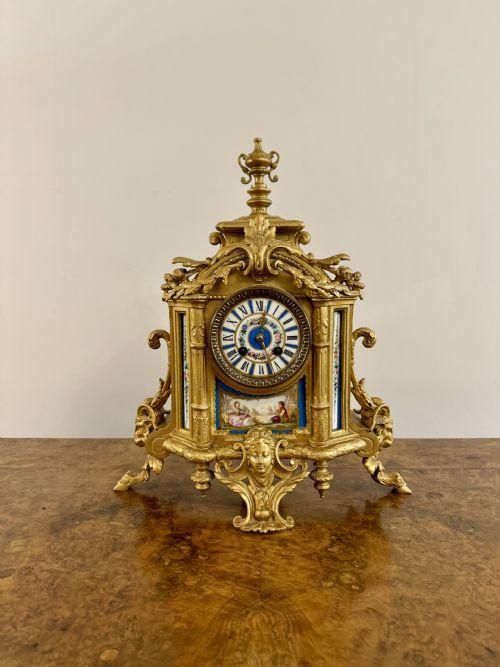


Gilded Bronze Shelf Clock
These gilded bronze shelf clock selections bring ornate French and Victorian metalwork and porcelain into a room.
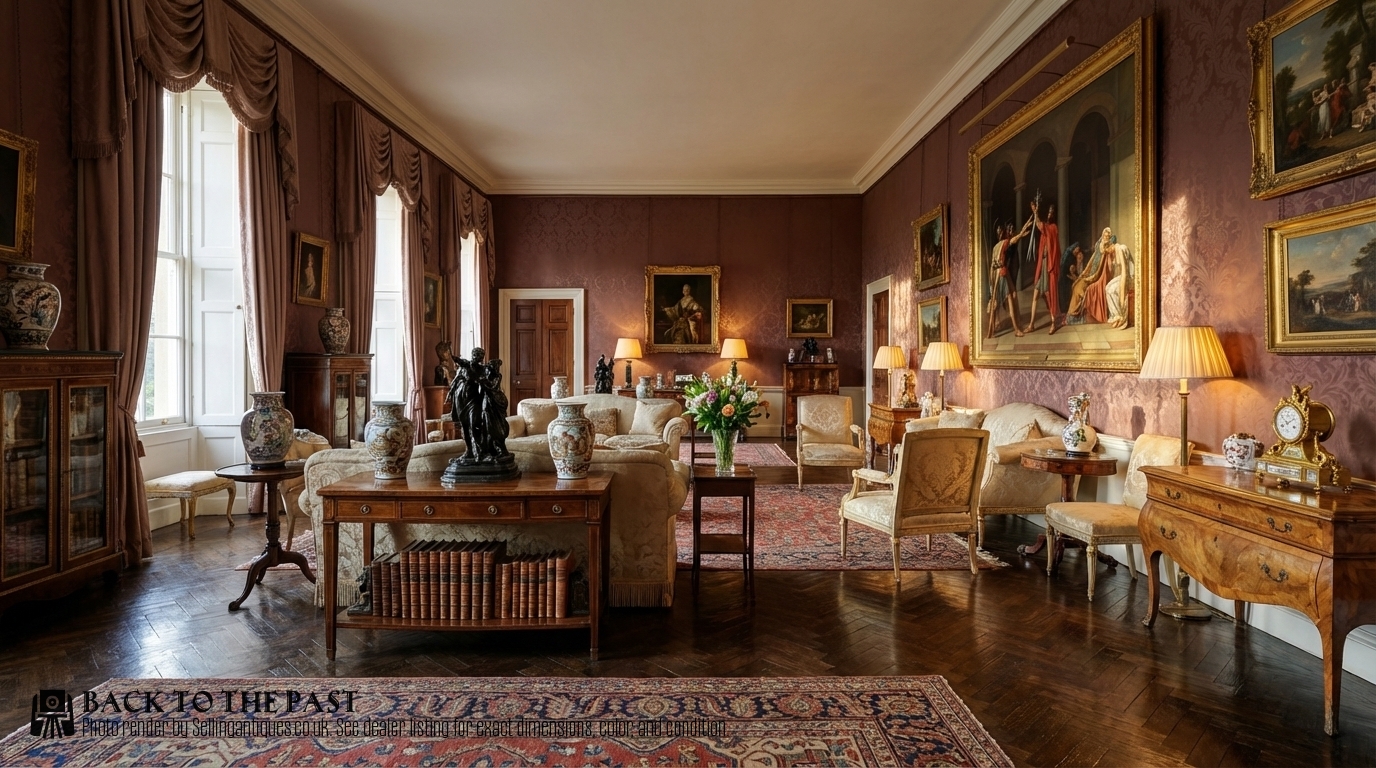
Gilded Bronze Shelf Clock
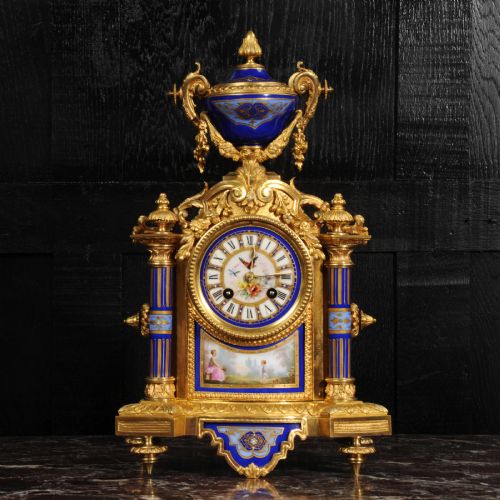
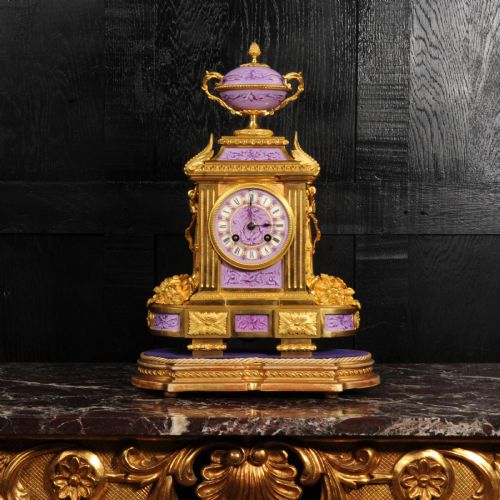
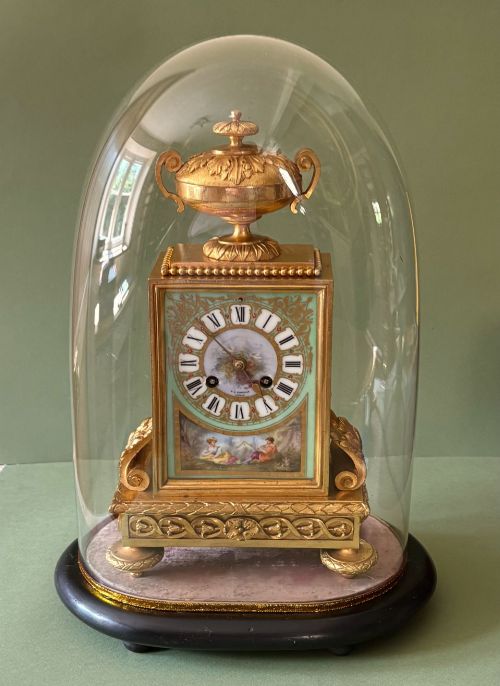
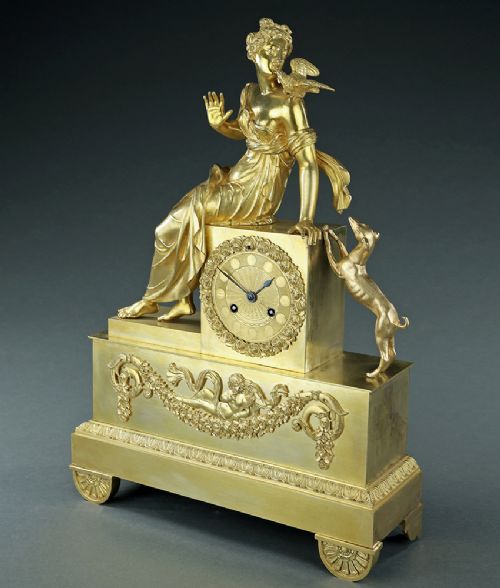
A gilded bronze shelf clock sits on mantels and surfaces, taking forms shaped by French Empire, Rococo Revival, and Louis XVI styles. These domestic timepieces serve as decorative centrepieces, often combining cast metal with painted porcelain panels and visible dial work.
The versions most common here date from the nineteenth century, particularly the decades around eighteen eighty and eighteen sixty. They originate largely from French workshops and Parisian makers, utilising solid ormolu, gilt bronze, and marble to create substantial architectural forms.
Materials and construction
Foundry work relied on casting bronze and brass before applying mercury gilding or surface ormolu to achieve a bright golden finish. These metal mounts surround glazed glass panels, enamel clock dials, and sections of Sevres porcelain.
Cases incorporate contrasting materials such as white, red, or pink marble and gilt metal to support eight day mechanical movements. Component parts assemble into figural, architectural, and four glass structures designed for domestic surfaces.
Several clocks feature tiny gilded metal doves perched near the dial, quietly watching the hours pass.
Evaluating quality in these clocks
The sharpness of the cast metal chasing separates finer models from simpler production. Crisp relief work in the foliage, scrolls, and figures indicates skilled hand finishing after the casting process.
The integration of porcelain plaques and the weight of the marble or bronze case define the piece. Superior examples maintain balanced proportions and harmonious mounts without excessive repetition in the decorative elements.
Japy Freres·Achille Brocot·Philippes Paris·Remond·JP Delettrez·Japy Fils·Philippe H Mourey·Bently and Beck London
The Gilded Bronze Shelf Clock Glossary
- Ormolu
- A gilded bronze technique utilising ground gold applied to a metal base. This finish gives nineteenth century clock cases their bright golden appearance.
- Sevres porcelain
- Fine ceramic panels painted with scenes or floral motifs and mounted into clock cases. These components appear frequently on French nineteenth century mantel pieces.
- Four glass clock
- A style featuring glass panels on all four sides to expose the mechanical movement. These designs emerged strongly during the Victorian period.
- Mantel clock
- A domestic timepiece built to stand on a shelf or fireplace mantel. The form includes heavy marble and metal structures driven by eight day movements.
Gilded Bronze Shelf Clock: Frequently Asked Questions
How do I wind my clock?
Most movements utilise a key inserted into winding holes on the enamel dial to tension the springs for the eight day duration.
Care should be taken not to overwind the mechanism during regular maintenance.
Where should I place a heavy marble clock?
These dense pieces require a sturdy surface such as a wooden mantel, sideboard, or sturdy shelf capable of supporting the combined weight of stone and metal.
Level surfaces ensure the pendulum swings evenly and the movement keeps accurate time.
How do I identify nineteenth century French styles?
Look for cast motifs like scrolling acanthus leaves, classical urns, and figural cupids characteristic of Rococo and Empire revivals.
Maker signatures stamped on the back plates often confirm the French origin and production date.
What maintenance do these movements need?
Mechanical clocks require periodic cleaning and oiling by a professional horologist to prevent wear on the brass gears.
Setting the beat accurately on a flat surface keeps the strike train functioning properly.