





Decorative Gilt Brass Clock
A decorative gilt brass clock brings nineteenth-century warmth to a mantelpiece, combining polished metal with enamel and porcelain details.
Decorative Gilt Brass Clock
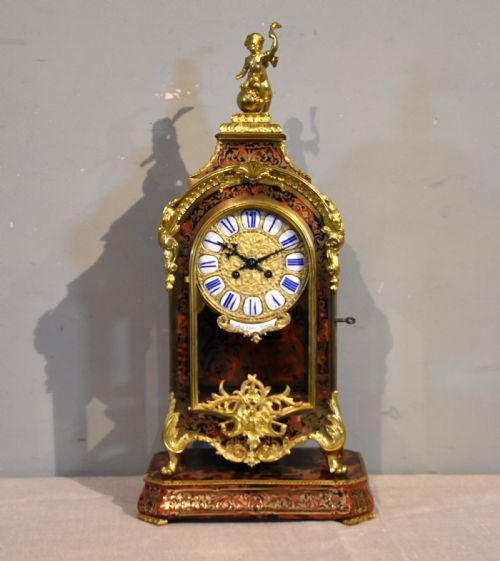
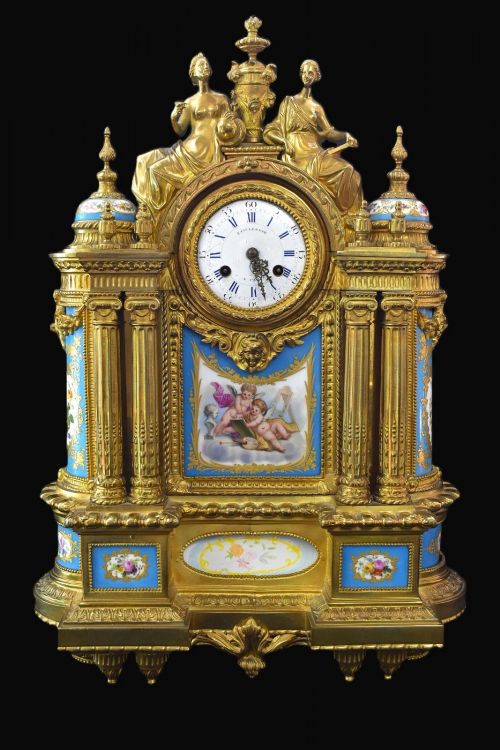
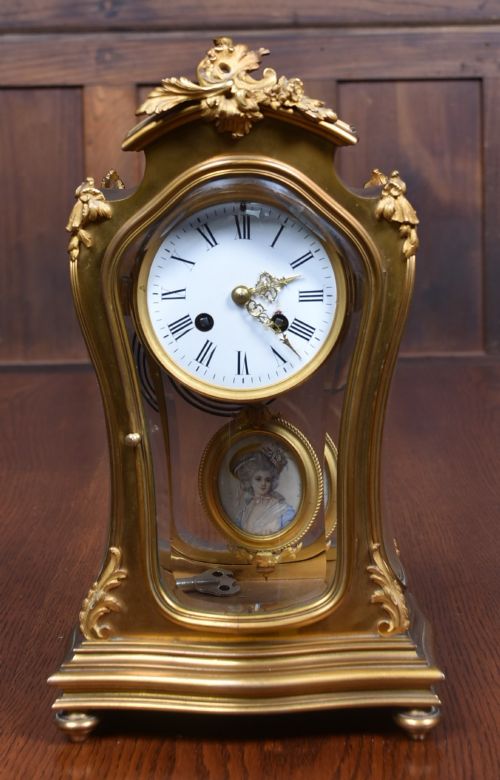
When you search for a decorative gilt brass clock, you encounter nineteenth-century production dominated by French mantel clocks, carriage clocks, and glass-cased crystal regulators. These pieces range from substantial Victorian or Napoleon III ormolu and bronze designs to smaller carriage clocks intended for travel or desk use.
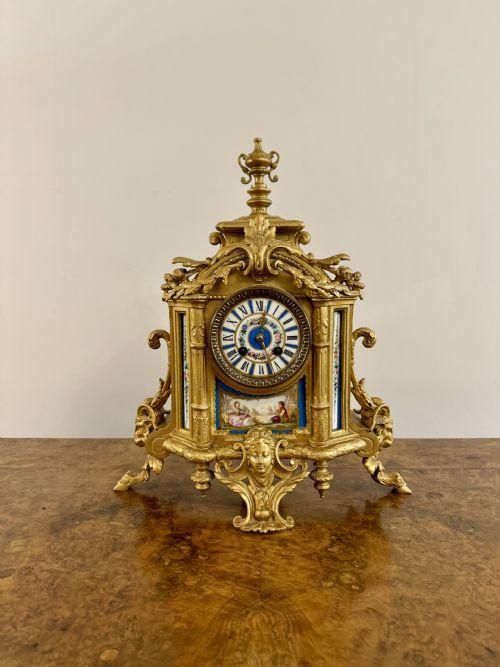
The domestic mantel clock serves as the most frequent form on this page, often styled in French Rococo, Louis XVI Revival, or Empire modes. Alongside these, carriage clocks with champlevé enamel or engraved brass cases appear regularly from the eighteen-eighties and eighteen-nineties.
Materials and construction
These items rely on brass, gilt bronze, or ormolu housings, frequently paired with porcelain panels from Sevres or hand-painted enamel dials. Smiths utilised fire-gilding or electroplating techniques to coat base metals, creating bright golden surfaces that resisted tarnishing.
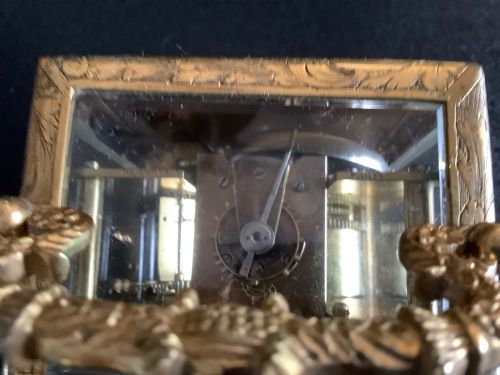
Many examples incorporate glass panels, notably in four-glass mantel clocks and crystal regulators, allowing visibility of the mechanical gear trains. Intricate cast ornamentation, chased bronze details, and champlevé enamel fillings complete the construction of the better pieces.
Listings feature brass, gilt bronze, and ormolu materials across nineteenth-century Victorian, Edwardian, and eighteenth-century periods.
Distinctions in craftsmanship
Quality reveals itself in the crispness of the cast bronze or brass ornamentation and the depth of the chasing. Superior examples display sharply defined scrollwork, figures, and foliage rather than soft, smoothed edges from worn moulds.
The standard of the movement and dial work further separates items. Hand-painted enamel miniatures, signed movements by known makers, and fully engraved carriage clock cases indicate higher original cost and superior workshop execution.
Etienne Lenoir·Le Roy Paris·Henri Jacot·Paul Garnier·John Bennett Cheapside London·James Murray London
The Decorative Gilt Brass Clock Glossary
- Ormolu
- A metallic technique involving the application of finely ground high-carat gold to a bronze or brass base. It gives the metal a rich, warm yellow lustre.
- Champlevé
- An enamelling method where troughs or cells are hollowed out of the metal surface and filled with vitreous enamel before firing. This technique creates colourful patterned panels on carriage and mantel clock cases.
- Carriage clock
- A portable spring-driven timepiece designed for travel during the nineteenth century. These clocks typically feature a rectangular brass case with glass panels and a folding handle on top.
- Crystal regulator
- A mantel clock housed in a glazed glass case that exposes the mechanical movement from multiple angles. They gained popularity during the late nineteenth century.
- Fusee
- A conical pulley used in mechanical clocks to maintain even power delivery as the mainspring unwinds. This mechanism improves timekeeping accuracy.
Decorative Gilt Brass Clock: Frequently Asked Questions
How do I wind a vintage clock?
Most spring-driven pieces require a specific winding key inserted into the dial holes to tension the mainsprings. Care must be taken not to overwind the mechanism.
Consult the specific movement type before turning the key, as striking trains and time trains wind independently and require different handling.
Where should I place a heavy mantel clock?
Position the piece on a stable, level surface such as a firm mantelpiece or a sturdy console table. Uneven placement stops the pendulum and halts the ticking.
Ensure the location avoids direct sunlight and moisture fluctuations to protect the enamel dials and gilt surfaces over time.
How do carriage clocks differ from mantel clocks?
Carriage clocks are smaller, portable units enclosed in brass and glass with built-in carrying handles. They utilise balance springs rather than pendulums, allowing them to function while moving.
Mantel clocks are larger decorative objects designed to remain stationary on a shelf, relying on a swinging pendulum for regulation.
What is a repeater mechanism?
A repeater is a complication that strikes the hours and quarters when a lever or button on the case is pressed. It allowed owners to check the time in the dark.
This feature appears frequently in fine nineteenth-century carriage clocks and indicates a higher grade of horological craftsmanship.