




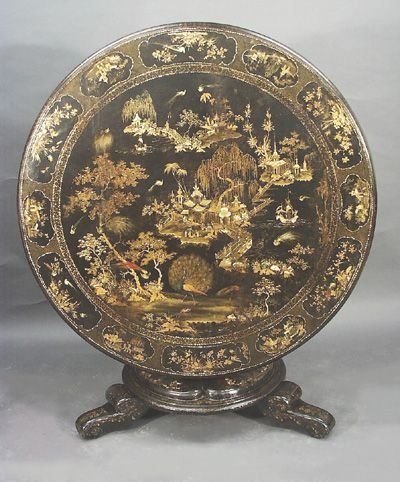
Gilded Black Tea Table
A gilded black tea table brings dark lacquer and bright metal leaf together to anchor a room with pattern and low surface.
Gilded Black Tea Table
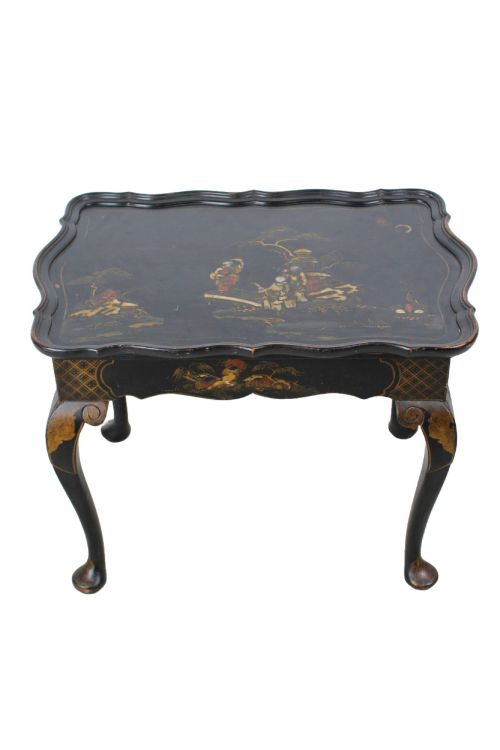
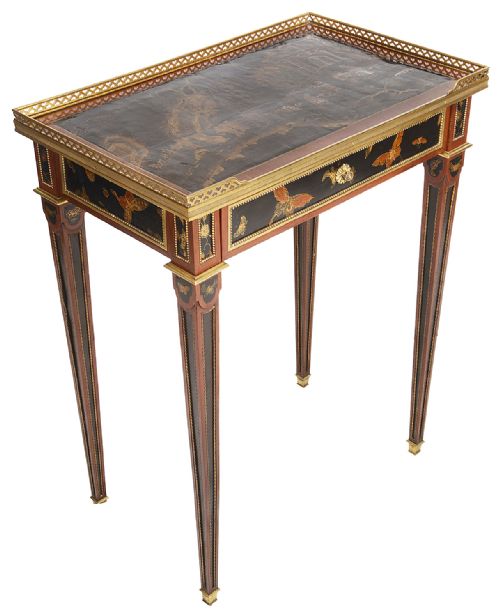
A gilded black tea table combines a dark painted or lacquered surface with gold leaf detailing, taking forms such as occasional tables, side tables, and coffee tables. You will frequently meet pieces finished in Chinoiserie styles, alongside occasional tables and tray tables.
The selection spans periods from the Georgian and Regency eras through the Victorian, Edwardian, and early twentieth century. Makers and manufacturers produced these in wood, papier-mâché, and tole, utilising distinct regional and period designs.
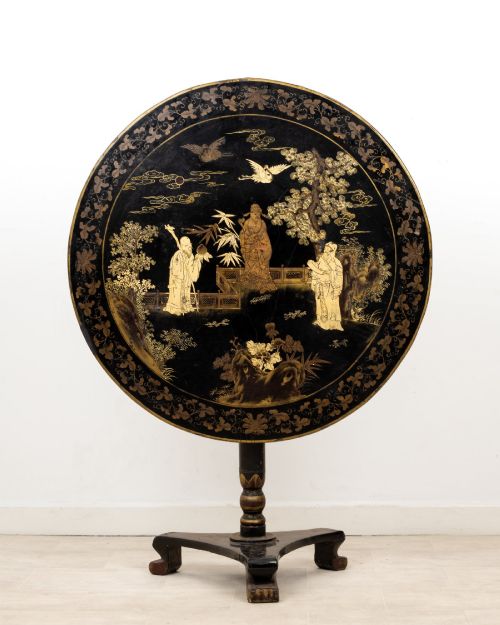
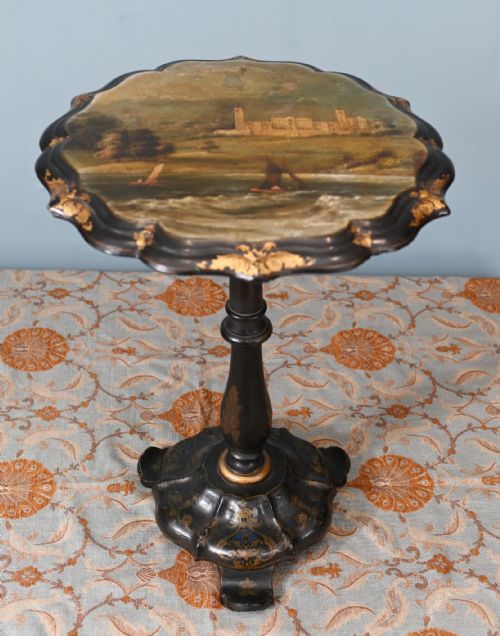
Forms range from tilt-top occasional tables to low coffee tables and trays mounted on stands. The black ground provides a stark contrast for the gilt ornament, drawing the eye to hand-painted motifs and figures.
How they were made
Makers utilised wood, papier-mâché, and tole as the structural basis for these tables, often applying an ebonised or black lacquer finish. Gold leaf and paint were then applied by hand to build up the intricate Chinoiserie and ornamental designs.
Papier-mâché surfaces required layers of paper and paste pressed into moulds, dried, and coated with dark varnish before the application of gilt. Wood structures employed standard joinery methods before receiving the painted and lacquered treatments characteristic of the style.
Listings feature wood, papier-mâché, and tole materials across Regency, Victorian, and Edwardian periods.
What varies in quality
The finesse of the hand-painted and gilded decoration separates standard production from finer examples. Precision in the brushwork and the depth of the lacquer finish indicate the skill of the workshop.
The integrity of the underlying material, whether papier-mâché or timber, dictates the overall sturdiness of the table. Original stands and mounts demonstrate greater preservation than later replacements.
Jennens & Bettridge·Henry Clay·Osbourne House
The Gilded Black Tea Table Glossary
- Chinoiserie
- European theatrical interpretation of Chinese and East Asian artistic motifs. This style dominates the ornamentation found on these dark surfaces.
- Papier-mâché
- Composite material made from paper pulp or layers of paper bound with glue. It provided a smooth, stable ground for black lacquer and gilt decoration.
- Ebonised
- Wood treated with a stain or finish to imitate ebony. It created the dark ground necessary for the gold leaf to stand out.
- Tole
- Painted or lacquered sheet metal used for trays and decorative objects. These were frequently placed upon folding or fixed stands to serve as tables.
- Japanned
- European imitation of Japanese and Asian lacquerwork. The technique involved layered varnish cured and polished to a deep sheen.
Gilded Black Tea Table: Frequently Asked Questions
How do I clean a black lacquer table?
Dust the surface gently with a soft, dry microfibre cloth to prevent scratching the delicate gold leaf and dark finish.
Avoid using harsh chemical polishes, water, or abrasive cleaners, as moisture can penetrate and lift the lacquer or paint.
Are tray tables stable enough for daily use?
Many examples feature removable trays resting on folding or fixed stands, which function well for serving and display.
Take care when moving them, particularly with papier-mâché or tole versions, to ensure the tray secures properly onto its base.
What is the difference between Japened and lacquered?
Japanning refers specifically to the European craft of imitating Asian lacquer using varnishes and heat curing on wood or metal.
True Asian lacquer employs the sap of the toxicodendron vernicifluum tree, though both methods produced the dark glossy surfaces seen here.
How do I date a Victorian black table?
Examine the construction methods, materials such as papier-mâché, and the specific style of the Chinoiserie motifs painted on the top.
Victorian pieces often combine mass-produced paper pulp bases with meticulous hand-gilding characteristic of mid-nineteenth-century British workshops.