




Black Lacquered Cocktail Table
A black lacquered cocktail table brings dark reflective surfaces and painted motifs into a room, offering a low surface for drinks and display.
Black Lacquered Cocktail Table
A black lacquered cocktail table is a low surface designed for living spaces, drawing on periods from the nineteenth century through the mid-twentieth century. When you search for a black lacquered cocktail table, you encounter low tables, tray tables, and occasional tables shaped by diverse design traditions.
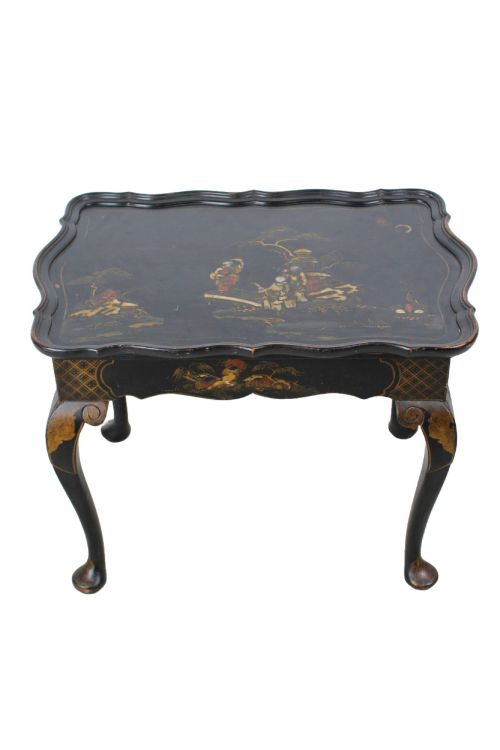
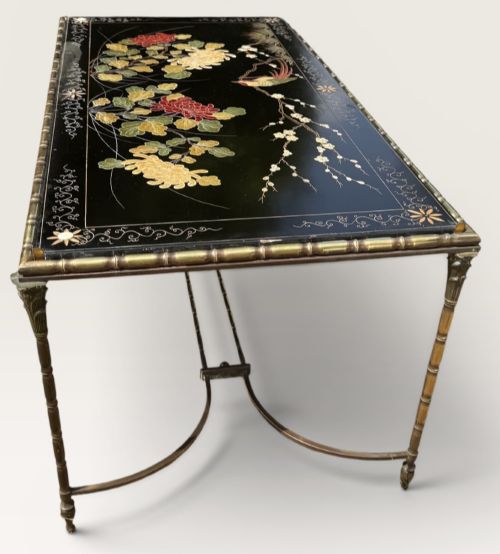
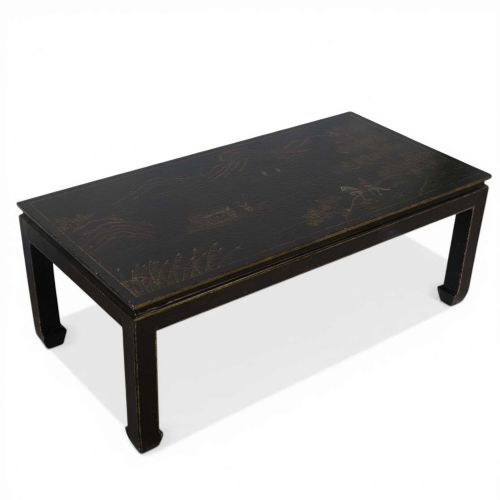
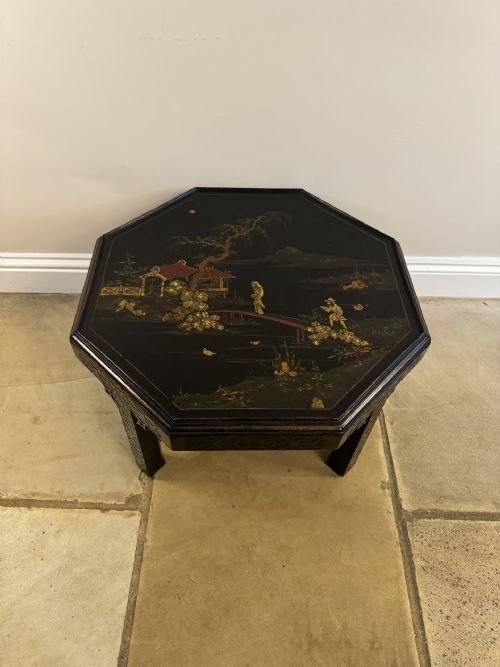
The selections on this page lean heavily into Chinoiserie and Edwardian aesthetics, alongside mid-century French interpretations and Regency styles. These pieces range from circular tray tables to rectangular coffee tables finished with painted scenes or raised relief detail.
Origins span English, French, and Chinese workshops, uniting diverse regional interpretations under a shared dark finish. Most examples rely on low proportions suited to placement before seating.
How they were made
Construction relies primarily on wood as a foundation, coated in layers of dark lacquer to create a deep, reflective surface. Artisans applied paint and gilt paint to build up decorative scenes, sometimes incorporating raised relief work.
Additional materials such as brass fittings and soapstone appear on specific pieces to accent the woodwork. The application of lacquer and gilt requires careful layering and curing to achieve a durable sheen.
Listings feature pieces spanning from the nineteenth century through the 1930s, incorporating wood, brass, and soapstone.
What varies in quality
Quality rests in the depth of the lacquer finish and the execution of the painted or raised relief decoration. Finer examples display precise hand-painted motifs and stable joinery across the wooden frame.
The integration of secondary materials like brass hardware and soapstone details further distinguishes standard production from more ambitious decorative work. The handling of corners, edges, and surface polish indicates the level of care taken during manufacture.
Maison Bagues
The Black Lacquered Cocktail Table Glossary
- Chinoiserie
- European interpretation of Chinese and East Asian artistic traditions, frequently featuring figures, landscapes, and pavilions rendered in paint and gilt on a dark ground. This style dominates many of the Edwardian and early twentieth-century pieces.
- Japanned
- European method of simulating Japanese lacquer work by applying layers of varnish and heat-curing the surface. It appears on English low tables decorated with painted scenes.
- Tray table
- A low table featuring a removable or fixed tray top with raised edges designed to prevent items from sliding off. These range from Edwardian examples to nineteenth-century models.
- Relief detail
- Ornamentation that projects outward from the flat background surface, created through moulding or building up layers of composition. Mid-century examples utilise this technique to add texture to scenes.
- Gilt paint
- A metallic paint mixture applied to highlight motifs and borders against the dark lacquer background. It catches the light and outlines decorative figures.
Black Lacquered Cocktail Table: Frequently Asked Questions
What is a black lacquered cocktail table?
A low table finished with dark lacquer, used primarily in living spaces for holding drinks and decorative objects.
These pieces draw on styles such as Chinoiserie, Regency, and Art Deco, utilising wood, paint, and gilt.
How were these tables used historically?
They functioned as low surfaces for serving refreshments or displaying decorative items in formal and informal rooms.
Tray top variants allowed the top section to be lifted and carried independently.
How do I style a black lacquered table?
The dark reflective surface works well paired with neutral seating or contrasted against lighter flooring and textiles.
Keep styling minimal to allow the painted scenes and gilt details to remain visible.
How do I identify the period of a table?
Period identification relies on examining construction methods, wood types, and stylistic indicators associated with Edwardian, Regency, or mid-century design.
Details like raised relief work and specific hardware help narrow down the date of manufacture.