
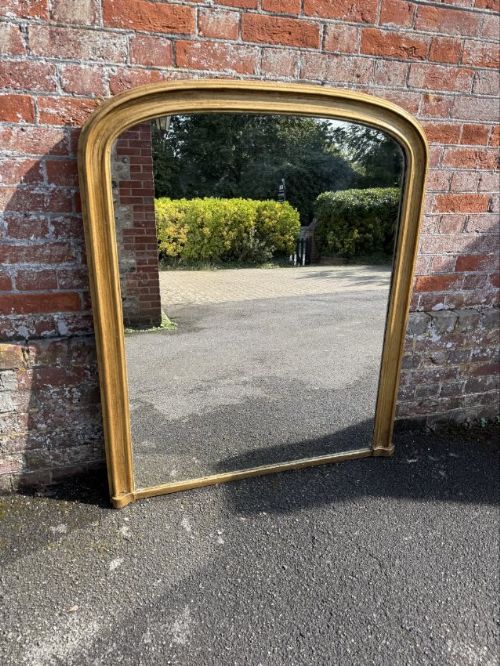

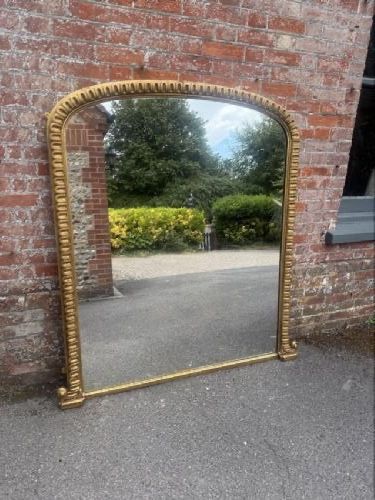
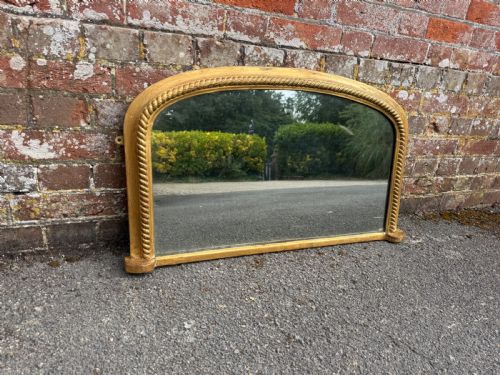
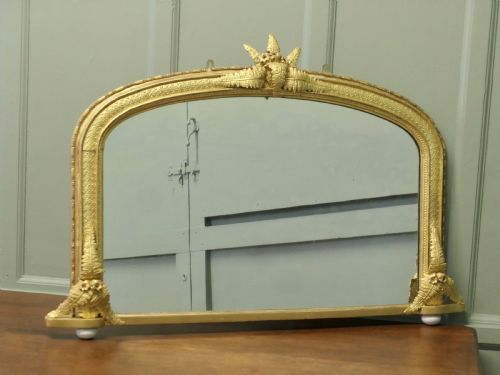
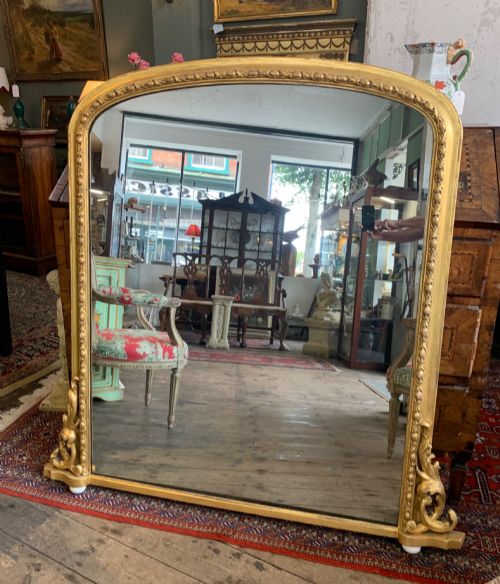
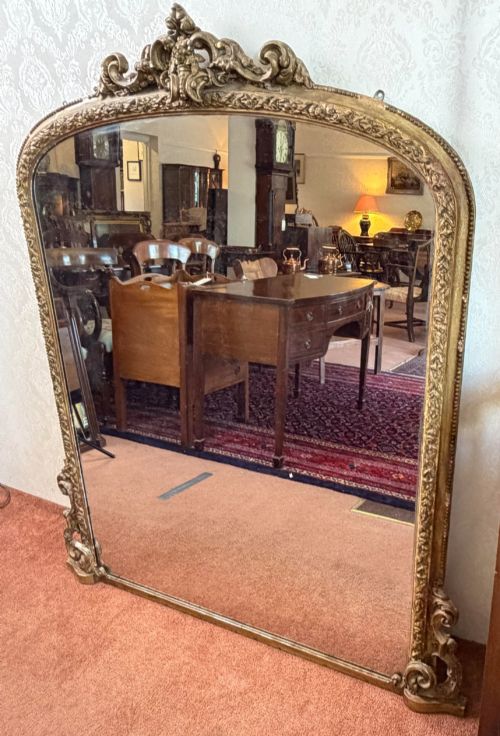
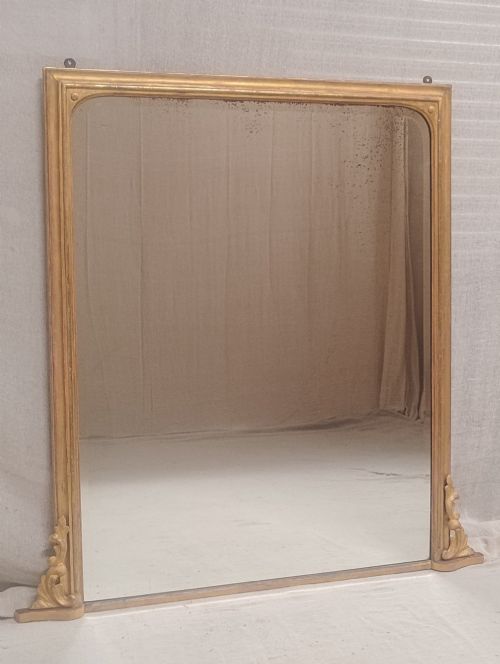
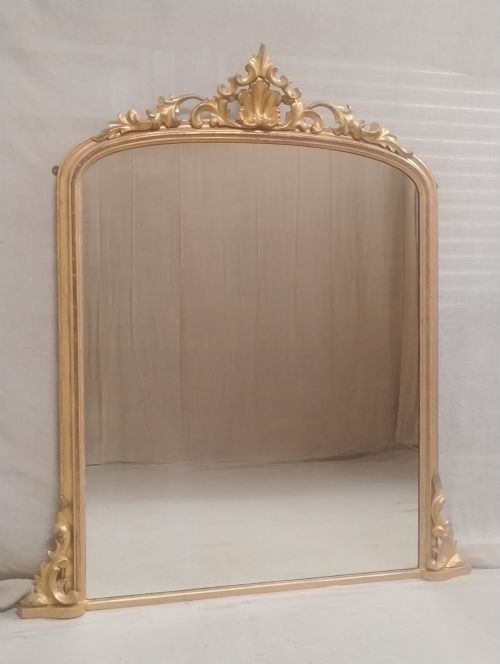


Gilded Arch Fireplace Mirror
These large nineteenth-century pieces designed to sit above a hearth reflect light and anchor a room.
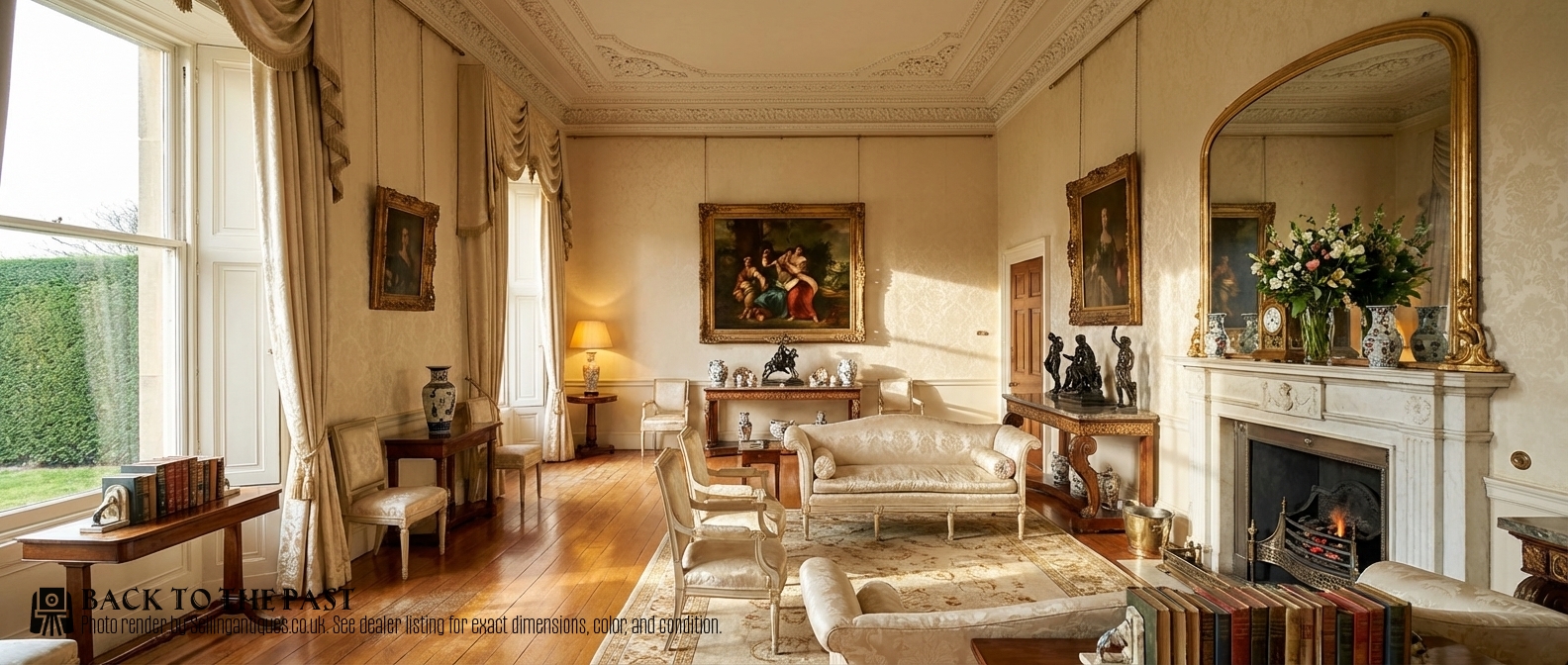
Gilded Arch Fireplace Mirror
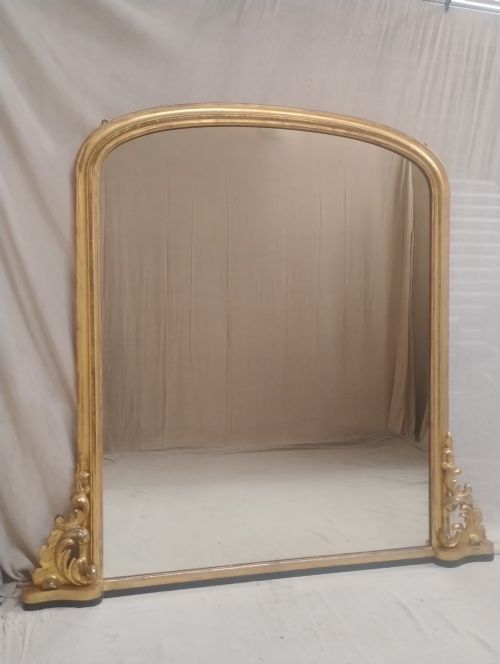
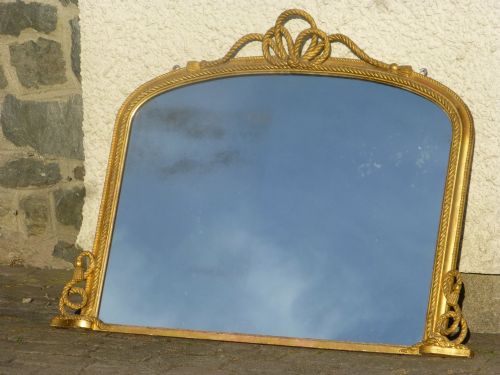
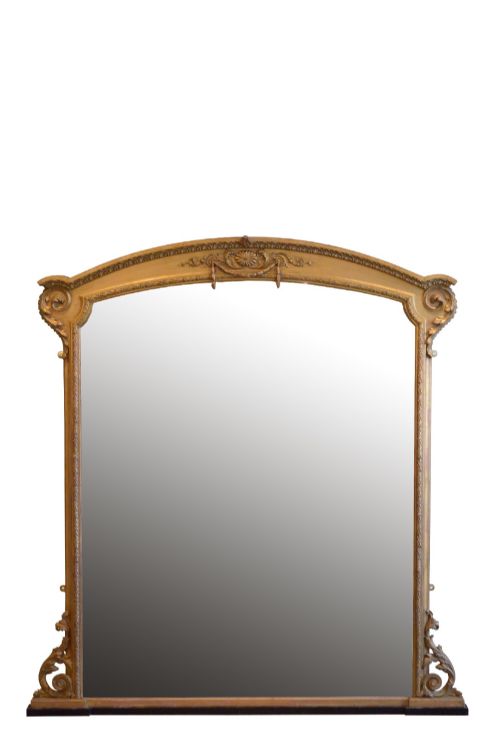
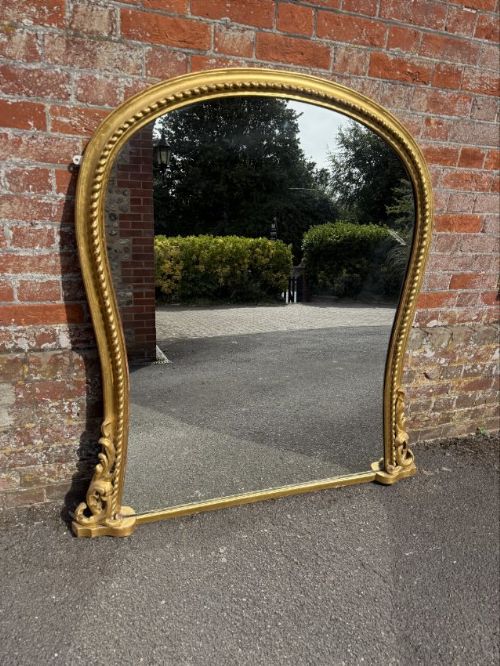
A gilded arch fireplace mirror is typically a large overmantle mirror designed to rest directly on a mantelpiece or hang upon the wall above a chimney breast. The listings here comprise nineteenth-century examples spanning the Victorian, Regency, and William IV periods, alongside French Chateau and Rococo Revival styles.
Most pieces take the form of an arched top overmantle mirror, built primarily to command substantial wall space in a principal reception room. The frequent inclusion of ribbed, rope twist, or hourglass frames points to distinct decorative turns within the Victorian era.
How they were made
Makers constructed the structural frames from carved wood, applying layers of gesso to build up intricate surface details and relief ornamentation. Plaster and composition mouldings frequently augment the wooden carcass to achieve deep scrolling and architectural profiles.
The decorative surfaces received applications of gold leaf or gilt finishes over the prepared ground, paired with traditional mirror glass plates set into the rebated frame.
Current listings feature pieces spanning the 1800s to 1900, dominated by Victorian examples in wood, gesso, and giltwood.
What varies in quality
The calibre of the hand-carved wood and the crispness of the gesso and composition mouldings determine the visual strength of the frame. Superior examples demonstrate finely defined rope twist, hourglass, or ribbed mouldings that retain their original spatial depth.
The application and retention of the gold leaf or period gilding govern the surface richness, alongside the preservation and clarity of the original mirror glass plate.
The Gilded Arch Fireplace Mirror Glossary
- Giltwood
- Wood that has been coated with gold leaf or a gold-coloured finish. This traditional surface treatment provides a warm reflective sheen across the frame.
- Overmantle
- A large mirror or painting specifically proportioned to hang on the wall above a fireplace mantel. These architectural fittings were central to nineteenth-century interior decoration.
- Gesso
- A plaster-like mixture applied to a wooden base to create a smooth surface for gilding or to build up low-relief ornamentation. It allows carvers to achieve sharp, intricate decorative details.
- Composition
- A moulded mixture of whiting, resin, linseed oil and glue pressed into shape while warm. Makers used this material to produce repetitive decorative details more rapidly than hand-carving.
- Cartouche
- An ornamental panel or tablet resembling a rolled-up scroll, often placed centrally on a frame. It frequently bears decorative carving or low relief.
Gilded Arch Fireplace Mirror: Frequently Asked Questions
Where should an overmantle mirror be placed?
These mirrors are traditionally positioned directly above a fireplace mantelpiece to reflect light and expand the visual space of a room. They can also be hung on principal walls in hallways or reception rooms as standalone statements.
Because of their substantial height and weight, they require secure wall fixings or stable placement directly onto a solid mantel shelf.
How do I identify a Victorian mirror?
Victorian examples in this selection often feature arched tops, substantial wood and gesso frames, and specific decorative details like rope twist or hourglass moulding. The construction methods reflect nineteenth-century joinery and framing techniques.
Stylistic influences range from early Victorian severity to later Rococo Revival curves and French Chateau aesthetics.
What is the difference between giltwood and gilded wood?
Giltwood specifically denotes timber that has been gilded using traditional leaf application over a gesso ground. Gilded wood is a broader descriptive term that can encompass any gold-toned metallic finish applied to a wooden substrate.
Both materials yield the luminous reflective quality characteristic of nineteenth-century decorative mirrors.
How do I care for antique mirror glass?
Keep antique glass clean by dusting gently with a dry, soft cloth to avoid disturbing the underlying plate or backing. Prevent moisture from seeping behind the silvering or into the gesso frame during cleaning.
Avoid using harsh chemical sprays or abrasive cleaners that can damage the historic gilding and surface patination.