

Gilded Accent Chairs
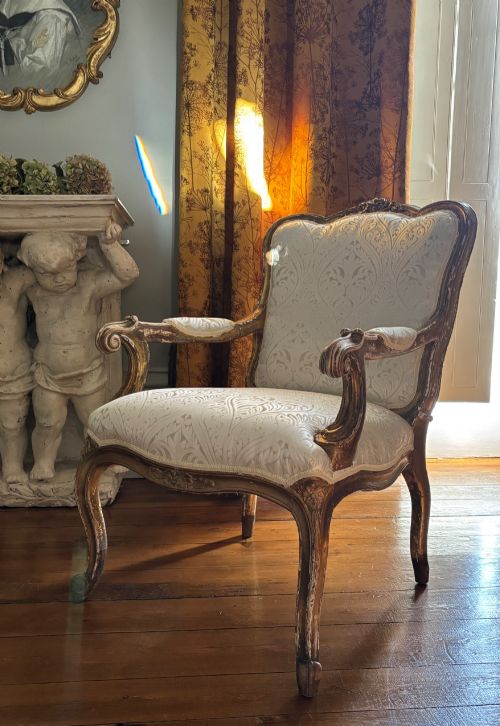
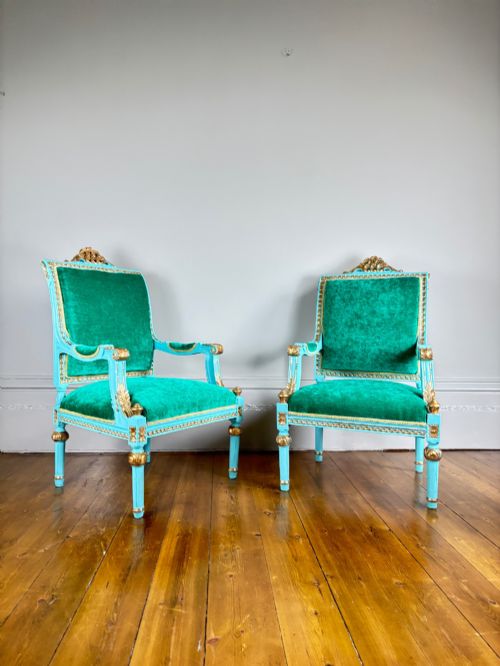
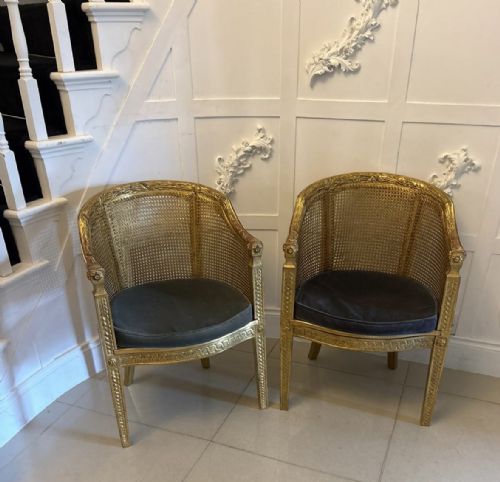
Gilded accent chairs bring striking metallic warmth and historic French or Italian flair to any room.
What gilded accent chairs are
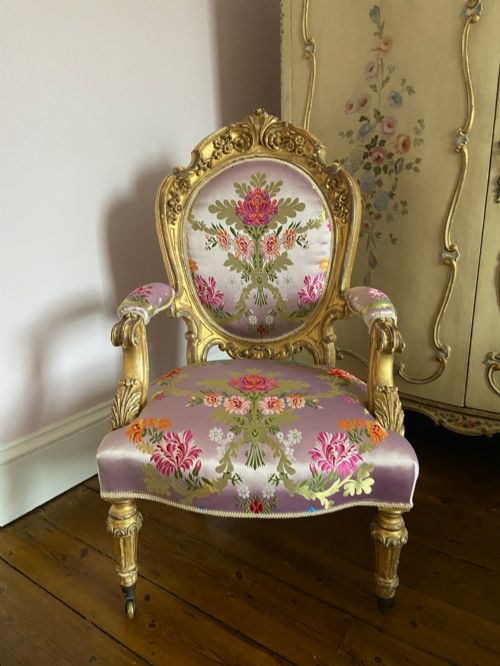
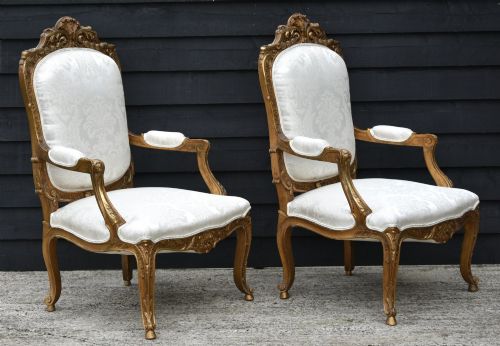
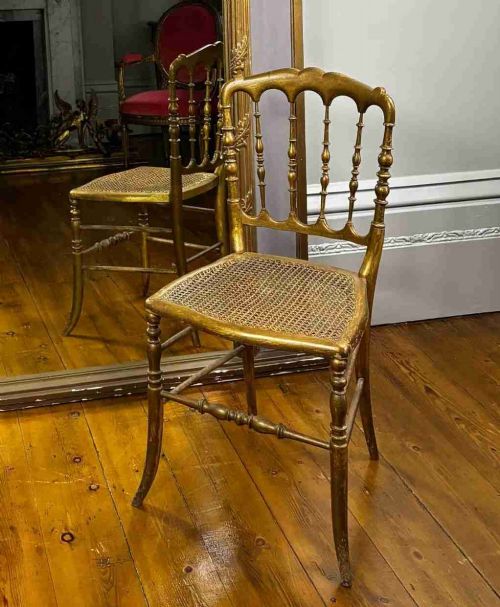
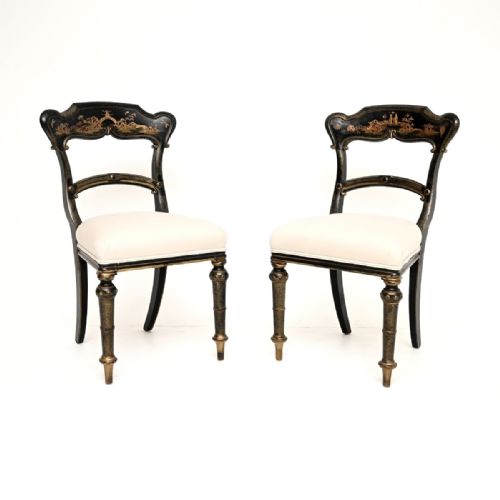
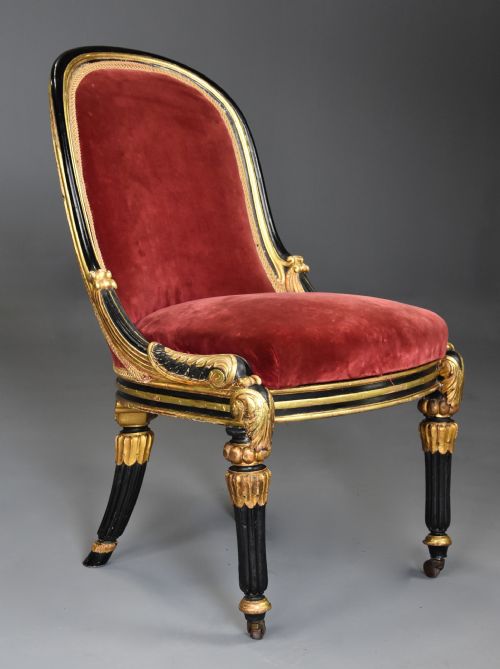
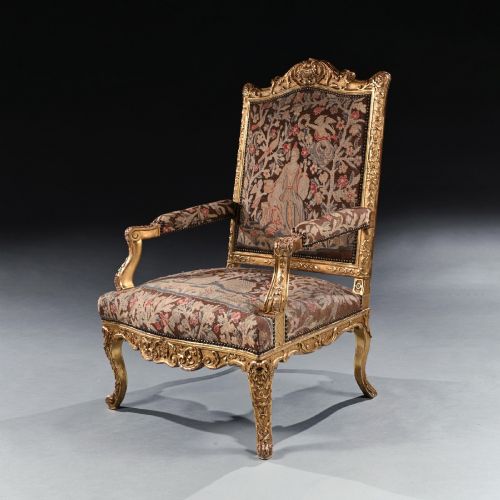
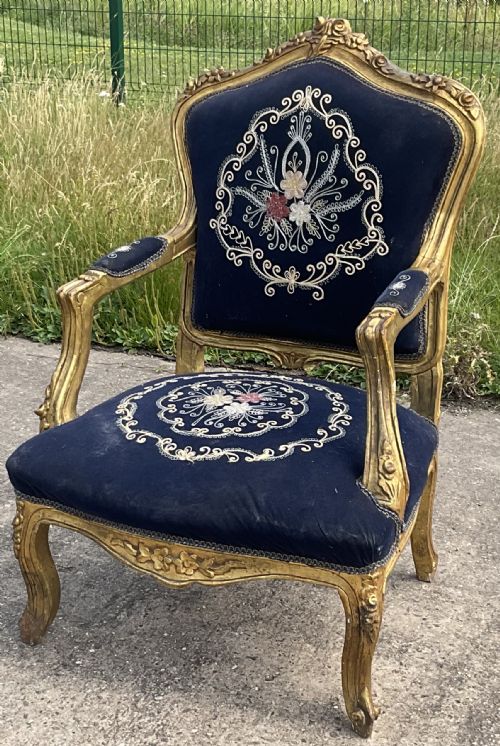
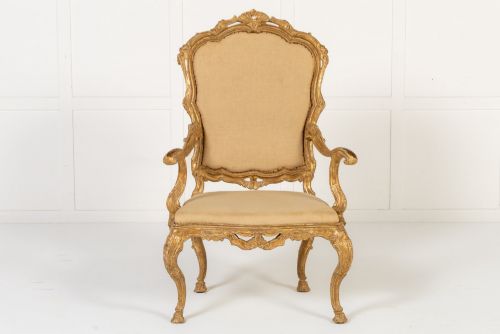
Gilded accent chairs are decorative seating options designed to catch the eye with their gleaming metallic finishes and elaborate frames. When buyers search for gilded accent chairs, they encounter statement seating originating from periods spanning the eighteenth century through to the early twentieth century.
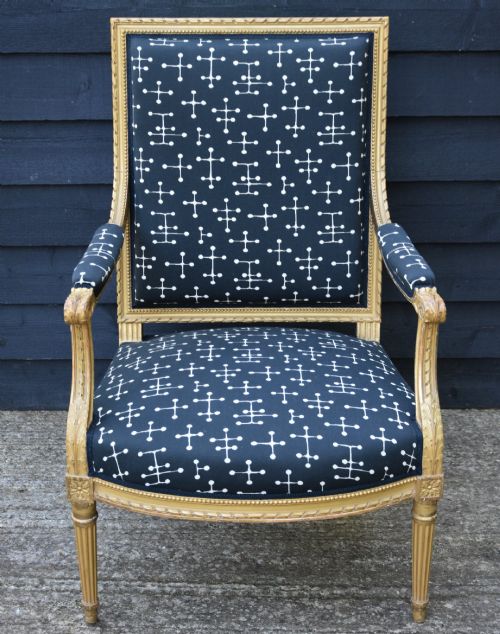
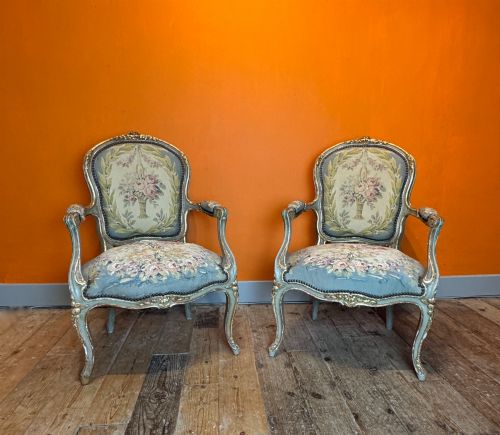
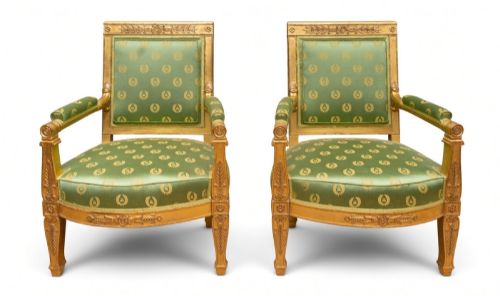
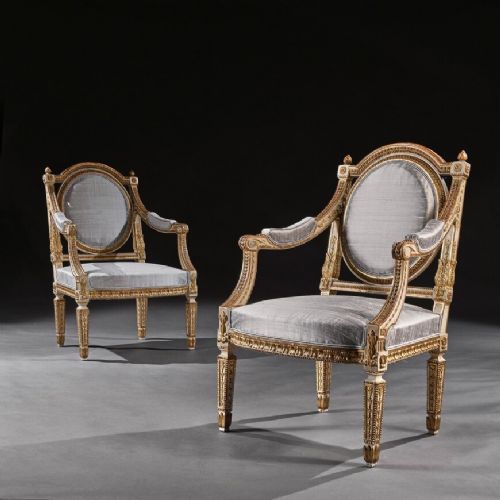
The pieces listed on this page encompass various iterations of this seating, predominantly featuring pairs of salon chairs, armchairs, and fauteils. These chairs draw heavily upon traditional design movements such as Louis XVI Revival, Napoleon III, and Italian Barocchetto.
Most examples found here hail from European traditions, specifically French and Italian workshops. Buyers are most likely to meet nineteenth-century interpretations alongside earlier eighteenth-century statements and later twentieth-century revivals.
How they were made
Makers constructed these frames using timber and wood, employing hand-carving techniques to shape elaborate structural details and ornamental motifs. This carved wood served as the foundation for the application of gold leaf or gilt finishes.
Upholstery completed the construction, utilising materials such as velvet, silk damask, fabric, and brass detailing. These tactile textiles offered a rich contrast to the reflective metallic surfaces of the carved frames.
Retail Price Guide 2026
Typical UK retail prices for gilded accent chairs, calculated from the Sellingantiques database of over a million retail prices indexed since 2003. This retail price guide relies exclusively on Sellingantiques data; no external sources or auction records are used, so the figures do not describe the wider market.
Listings feature periods spanning from the eighteenth century to 1920, utilising giltwood, velvet, silk damask, timber, and brass.
What varies in quality
Quality rests significantly upon the depth and finesse of the carved wood and the durability of the giltwood finish. Superior examples display crisp, hand-carved ornamentation that retains its intricate definition beneath layers of gilding.
The choice and execution of upholstery also distinguish finer pieces from simpler counterparts. The integration of high-grade textiles like silk damask elevates the visual authority of the seating.
The Gilded Accent Chairs Glossary
- Giltwood
- Timber that has been decorated with gold leaf or a gold-coloured metallic finish. This treatment gives the wooden frame its characteristic gleaming appearance.
- Fauteuil
- An open-armed armchair with upholstered back and arms, typically featuring exposed wooden framework. This French seating form often incorporates carved details.
- Barocchetto
- An Italian variation of the Rococo style characterised by dynamic curved lines and ornate decoration. Pieces from this movement display spirited asymmetry.
- Napoleon III
- A nineteenth-century French design style that frequently revived earlier historic aesthetics with eclectic interpretations. It draws heavily on opulent decoration.
- Silk damask
- A reversible figured fabric traditionally woven from silk, prized for its lustrous sheen and pattern definition. It provides a formal upholstery surface.
Frequently Asked Questions
How do I identify a Louis XVI style chair?
Louis XVI style chairs typically exhibit straight tapered legs, geometric framing, and neoclassical decorative motifs derived from ancient architectural forms. These elements contrast sharply with the curving lines of earlier Rococo designs.
Look for structural symmetry and crisp carvings along the crest rail and frame borders. These characteristics define the neoclassical revival pieces found in this category.
What is the difference between a salon chair and an armchair?
Salon chairs are generally lighter decorative seating intended for formal reception rooms, often possessing smaller proportions. Armchairs provide more substantial support with dedicated armrests for extended sitting.
Both forms appear frequently in gilded finishes to serve as visual focal points within a room. Their specific sizing dictates their placement in interior schemes.
Where should I place a gilded armchair?
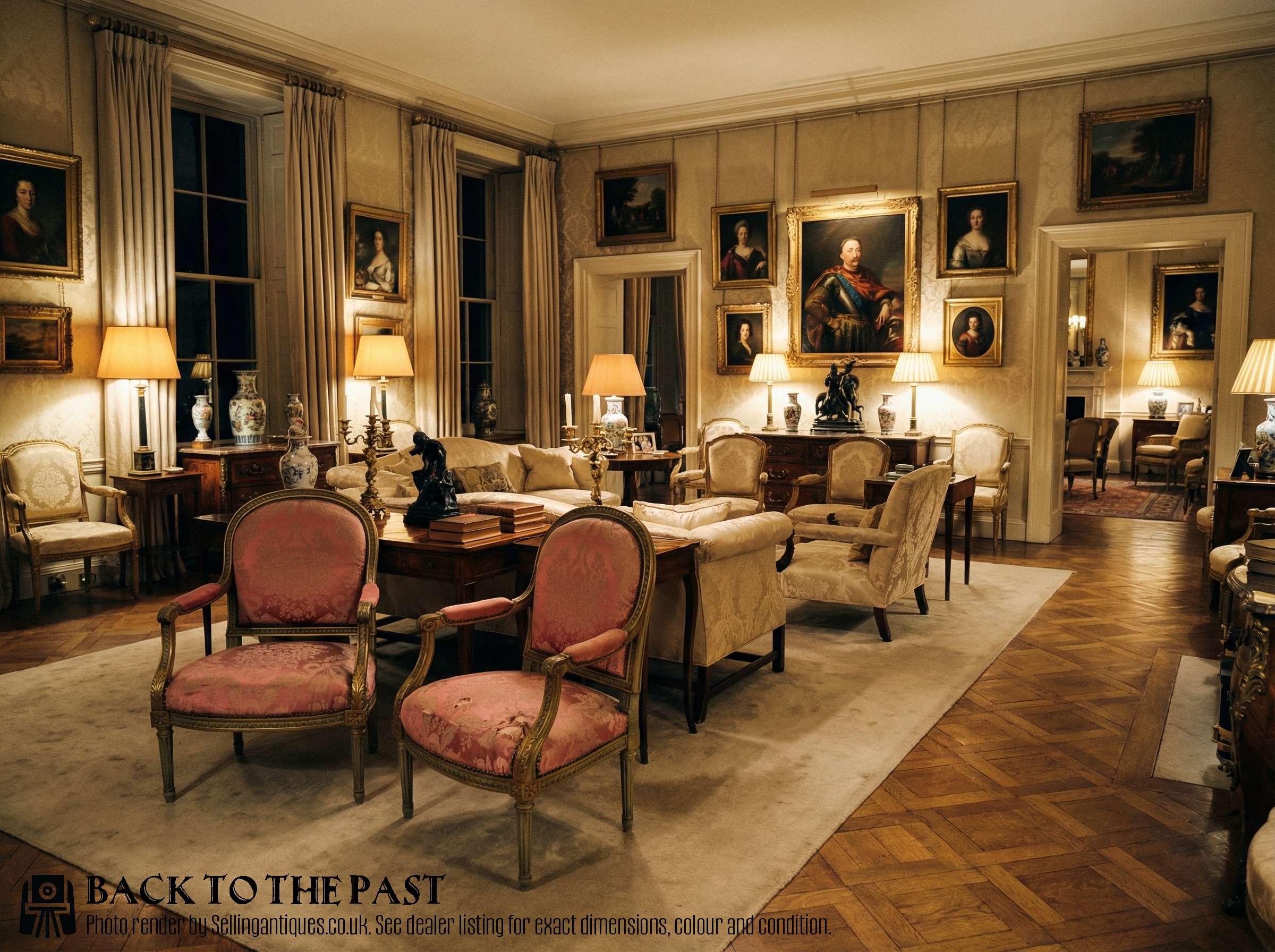
Gilded armchairs function effectively as statement pieces in living rooms, bedrooms, or grand hallways. Their reflective frames draw the eye and anchor an empty corner with historic character.
Pairing them with neutral surroundings allows the metallic finish and upholstery texture to stand out without competing for attention. They work well opposite a sofa or flanking a fireplace.
How do I care for antique giltwood?
Antique giltwood requires gentle maintenance using a soft, dry cloth to remove dust without disturbing the delicate metallic leaf surface. Avoid chemical cleaners and excessive moisture which can damage the historic finish.
Keep these chairs away from direct sunlight and fluctuating heat sources to preserve the underlying timber and prevent the gilding from flaking.