


Antique Italian Seating
When you search for antique italian seating, you encounter centuries of walnut, giltwood and painted forms built for stately rooms.
Antique Italian Seating
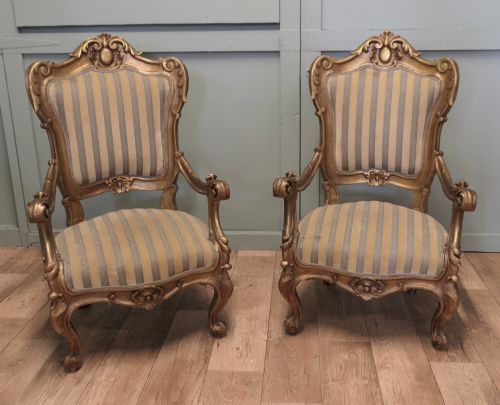
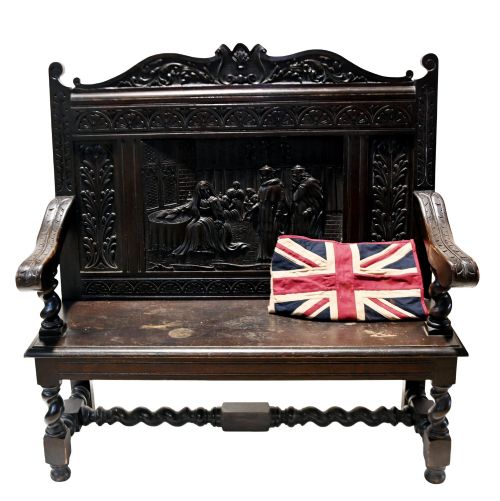
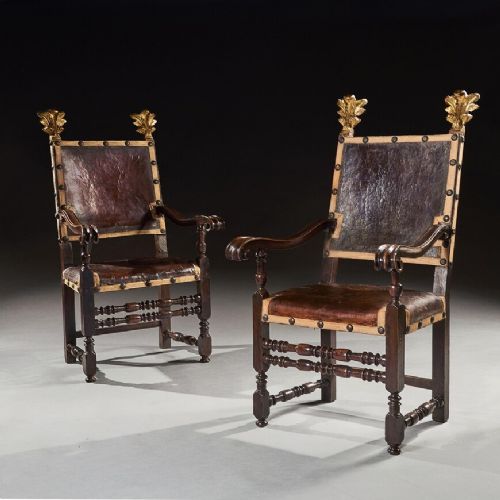
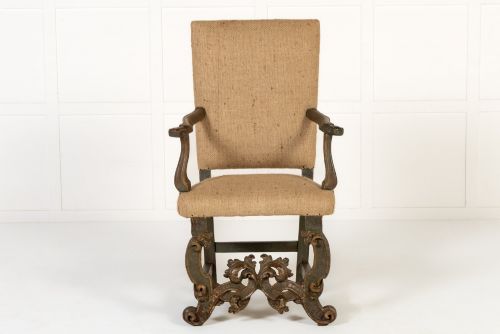
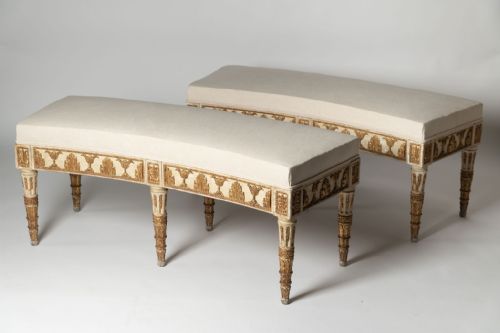
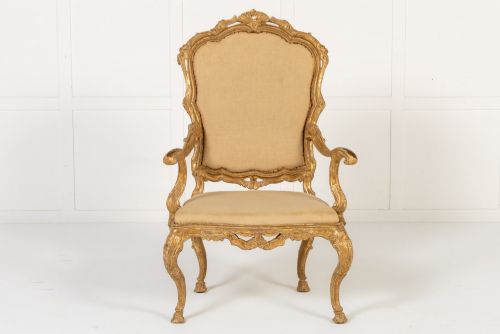
This collection of antique italian seating spans centuries of craftsmanship, ranging from seventeenth-century walnut armchairs to nineteenth-century painted settees and carved benches. Buyers frequently find robust walnut armchairs, ornate giltwood seating, and painted chairs that reflect regional Italian styles.
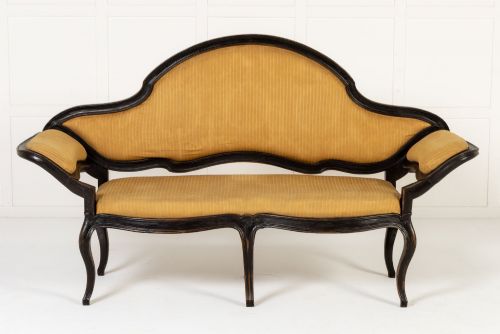
The assortment includes diverse forms such as hall benches, sgabello chairs, X-framed stools, and grand sofas. Pieces from the eighteenth century often display elaborate Rococo or Neoclassical carving, while nineteenth-century works frequently lean into Renaissance Revival aesthetics.
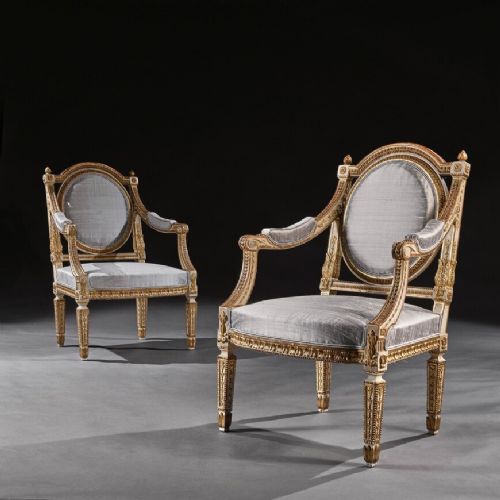
Originating from various Italian regions like Lombardy and Venice, these pieces bring distinct architectural presence into a room. Whether seeking a pair of parcel-gilt armchairs or a single carved walnut side chair, the selection emphasises rich wood and decorative paint.
Materials and construction methods
Walnut serves as the primary structural timber for many early pieces, prized for its durability and suitability for deep carving. Artisans also utilised oak and general hardwoods, frequently enhancing surfaces with parcel-gilt, gesso, and elaborate painted finishes.
Joinery methods rely on traditional techniques appropriate for each period, from sturdy peg construction on seventeenth-century chairs to intricate figural carving executed by master hands. Upholstered elements typically employ traditional fabric and leather secured with brass detailing.
Antique Italian Seating Retail Price Guide 2026
Typical asking prices for italian seating among the pieces listed under this phrase on Sellingantiques today, from the lower quarter to the upper quarter. They describe what is for sale here now, not the wider market.
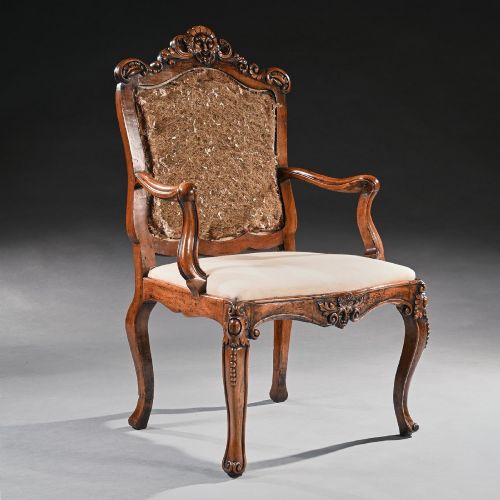
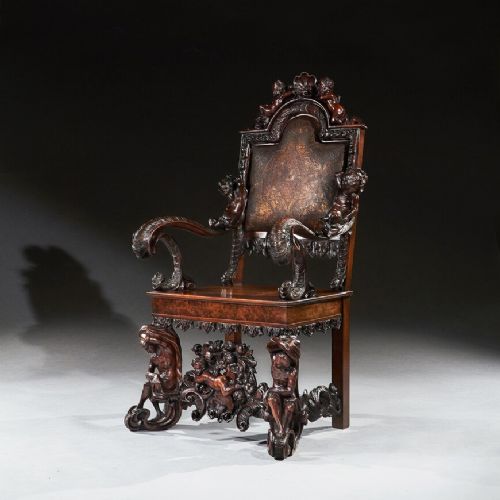
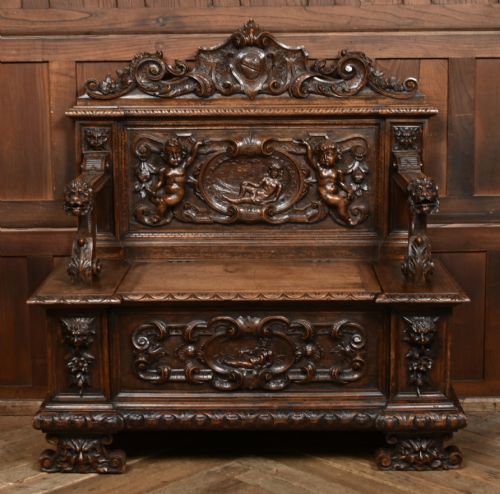
Several armchairs incorporate extravagantly carved head rails and figural corner details that watch over the room with stern dignity.
Distinctions in quality and execution
The depth and sharpness of the wood carving dictate much of the visual merit, distinguishing master workshops from standard production. Crisp detailing on acanthus leaves, figures, and gilt accents demonstrates superior artisan skill.
Original surface preservation heavily influences desirability, particularly where historic patinated walnut or authentic painted and gilded layers remain intact. Proportion and structural integrity also separate standard regional seating from exhibition-quality pieces.
Andrea Brustolon·White, Allom and Co·Zoffoli
The Antique Italian Seating Glossary
- Cassapanca
- A traditional Italian wooden bench featuring a storage box base and a high back. These pieces often incorporate panelled fronts and carved armrests.
- Sgabello
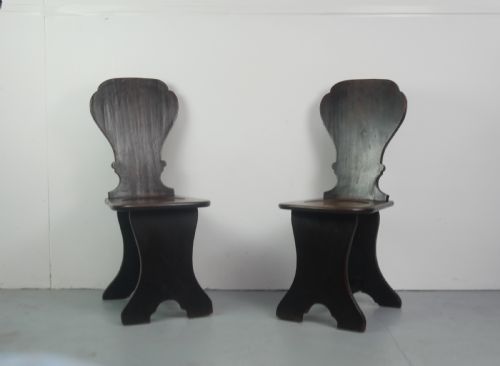
- A lightweight, wooden hall chair characterised by a high, shaped back and a seat supported by two solid board legs rather than four conventional posts.
- Giltwood
- Timber coated with a thin layer of gold leaf over a prepared gesso ground. This technique creates a luminous metallic finish popular on decorative seating.
- X-framed
- A structural form utilising intersecting curved or straight wooden members to form an X shape beneath the seat. This ancient chair design saw revival during various historical periods.
- Parcel-gilt
- A decorative treatment where only specific carved details or highlights are gilded, leaving the underlying wood visible elsewhere on the object.
Antique Italian Seating: Frequently Asked Questions
How do I identify seventeenth-century pieces?
Seventeenth-century chairs typically feature dense walnut construction, heavy turned elements, and minimal yet bold carving. Leather upholstery and iron or brass hardware often accompany these robust frames.
Construction methods from this era rely on pegged joints and substantial timber thicknesses. Comparing the patination and joinery helps distinguish genuine early examples from later revivals.
Where were sgabello chairs placed?
Sgabellos served primarily as ceremonial or hallway seating in grand Italian residences. Their narrow profiles allowed them to sit flat against walls when not in use.
Because they lack upholstered comfort, they functioned as formal accessories rather than lounging seats. Their elaborate carved backs displayed family crests or decorative motifs to incoming guests.
What is a cassapanca bench?
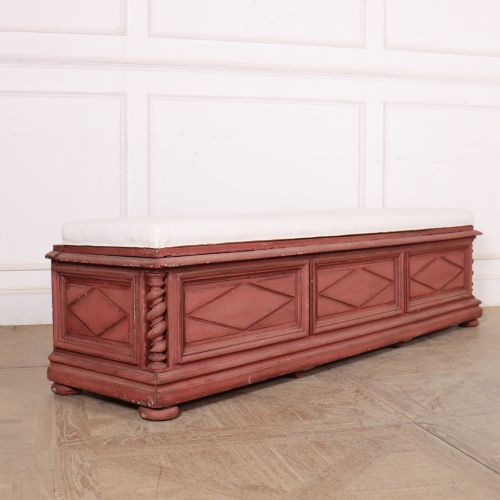
A cassapanca combines a storage chest with a seated bench, featuring a high back and integrated armrests. These substantial items anchored large hallways and main chambers.
The lidded base allowed households to store textiles, garments, or documents securely. Their monumental scale makes them prominent focal points in contemporary interiors.
How do I care for antique painted furniture?
Painted and gilded surfaces require gentle maintenance using dry microfibre cloths to remove dust. Avoid chemical cleaners and moisture, which can lift delicate gesso and paint layers.
Stable indoor humidity prevents the underlying wood from expanding and cracking the painted finish. Direct sunlight should also be avoided to prevent colours from fading over time.