

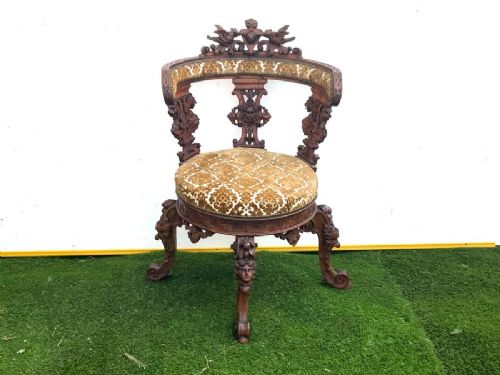
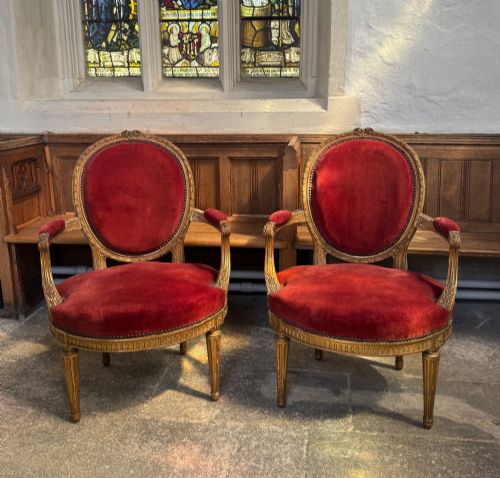
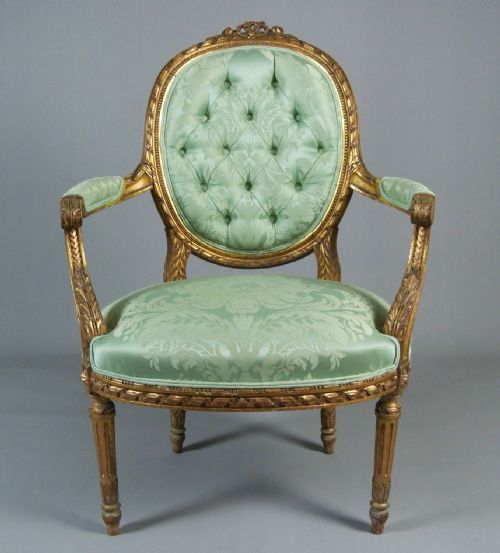
Gold Carved Armchair
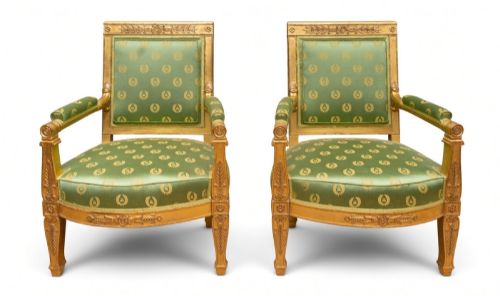
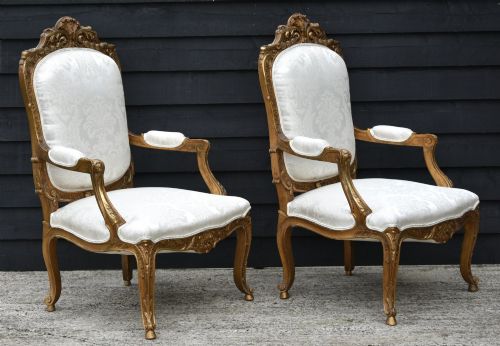
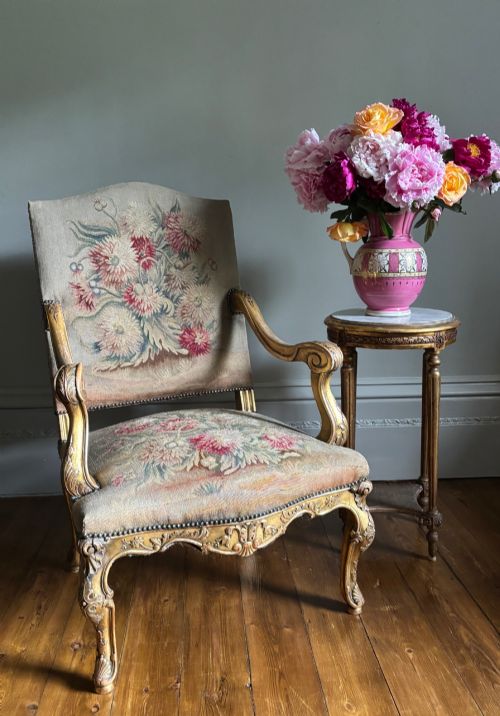
A gold carved armchair brings the gilded grandeur of eighteenth and nineteenth century European drawing rooms straight into a modern interior.
What these pieces are
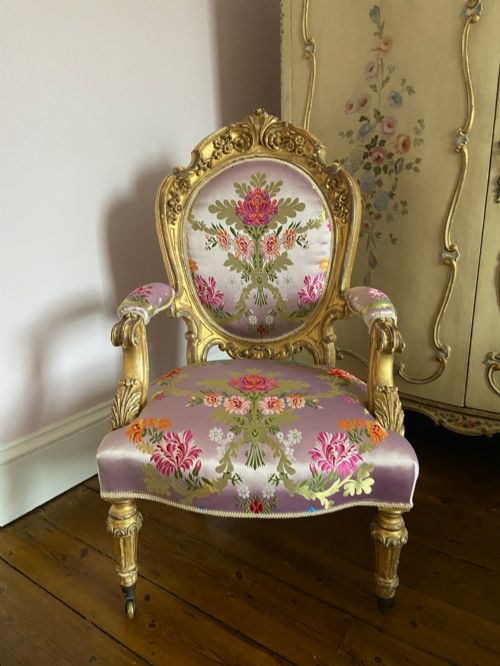
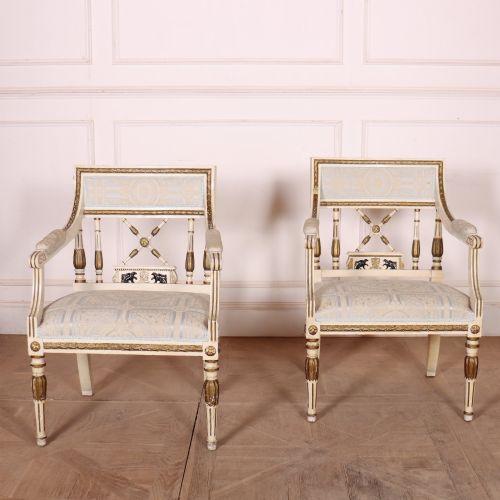
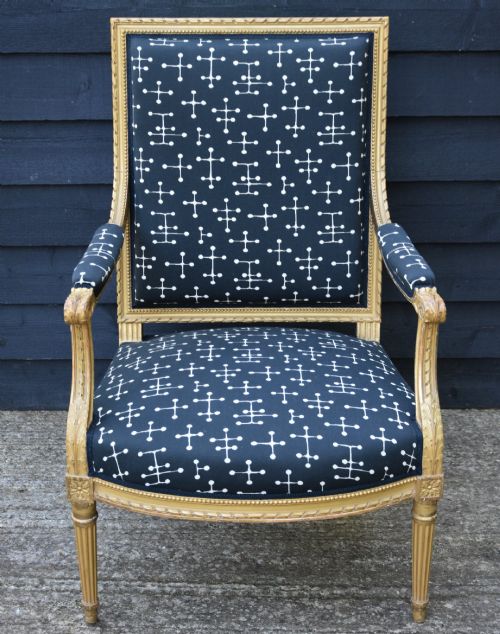
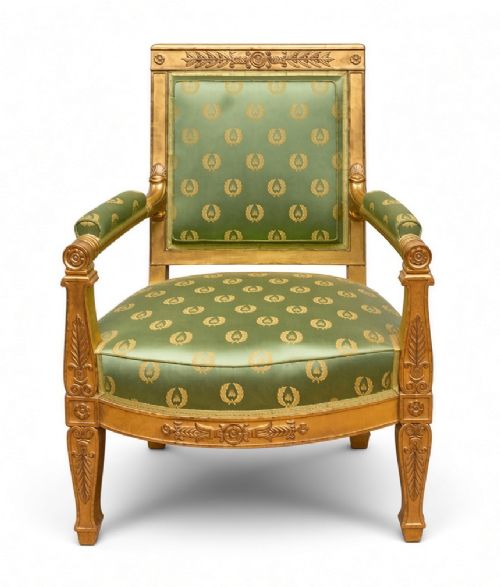
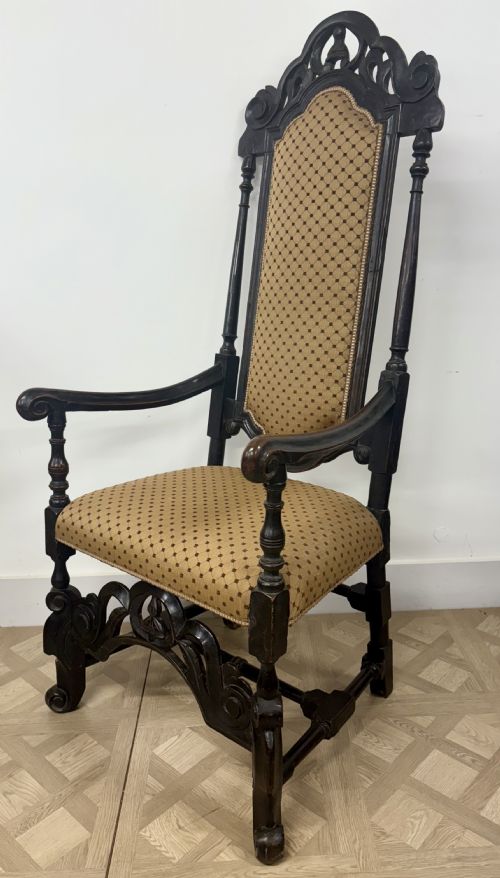
A gold carved armchair is a substantial seating form designed for formal reception rooms, appearing on this page primarily in eighteenth and nineteenth century European iterations. These seating pieces take the form of open armchairs, bergères, and fauteuils, reflecting courtly French and Italian aesthetic movements.
Forms span from large open armchairs to shaped bergères, showing deep historical roots in Baroque, Rococo, and neoclassical design. Each piece demonstrates the enduring appeal of gilded woodwork within domestic seating traditions.
How they were made
Carvers shaped structural frames from hardwoods such as beech and general timber, building the foundational skeleton before applying decorative embellishments. Artisans then applied gold leaf to the wood surfaces, often over a prepared ground layer, creating the characteristic giltwood finish.
Upholstery completed the seating, utilising traditional textiles like tapestry, linen, and various decorative fabrics secured with brass tacks. These materials combined structural joinery with skilled surface gilding and textile work to produce finished armchairs.
Retail Price Guide 2026
Typical UK retail prices for gold carved armchair, calculated from the Sellingantiques database of over a million retail prices indexed since 2003. This retail price guide relies exclusively on Sellingantiques data; no external sources or auction records are used, so the figures do not describe the wider market.
Current listings feature pieces spanning the eighteenth century through to nineteen hundred, including works from eighteen sixty.
What varies in quality
Quality reveals itself in the depth and crispness of the wood carving, where hand-tooled execution surpasses mechanical uniformity. The application and survival of the original gilding also determine the visual standing of each armchair.
Structural integrity of the beech or timber frame and the sympathetic choice of period-appropriate tapestry or linen upholstery further separate exceptional examples from standard revival pieces.
The Gold Carved Armchair Glossary
- Giltwood
- Wood covered with a thin layer of gold leaf. This finish defines the reflective surfaces of these armchairs.
- Fauteuil
- An open-armed dining or salon chair with upholstered arms and back. These French seats combine exposed wooden frames with padded comfort.
- Bergère
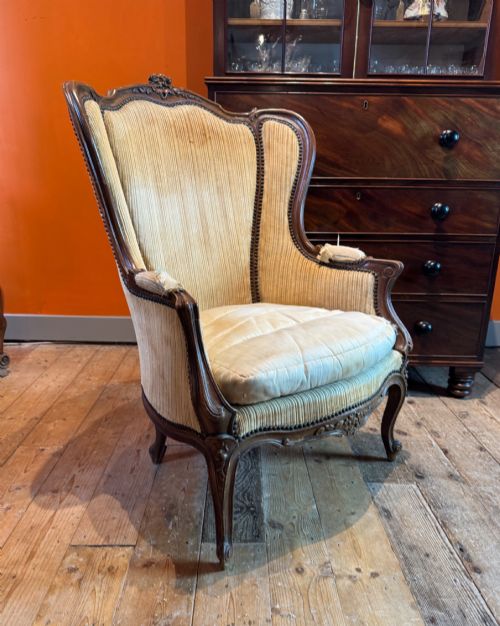
- An enclosed upholstered armchair with built-in upholstered sides. This form offers a more enclosed and restful seat than an open armchair.
- Régence
- A French transitional design style spanning the early eighteenth century. It bridges heavy Baroque forms and lighter Rococo curves.
- Brass tacks
- Small metal fastening pins used to secure textile edges to wooden frames. They provide both structural hold and a decorative border.
Frequently Asked Questions
What is a giltwood armchair?
A giltwood armchair is a wooden seat coated in gold leaf, designed for formal reception rooms during past centuries.
These pieces use beech or other timber frames adorned with carved details and finished in shimmering gold.
How do I identify a Régence style armchair?
Régence style armchairs show transitional design elements between Baroque heaviness and Rococo lightness, typically featuring curved lines and refined carving.
They emerged in early eighteenth-century France and saw revivals during the nineteenth century.
Where were these armchairs made?
These armchairs originated primarily in France and Italy during the eighteenth and nineteenth centuries.
European workshops produced them for elite residential interiors and salons.
How do I live with a gold carved armchair?
Place these armchairs in drawing rooms or studies where their gilded frames and textile upholstery remain protected from direct sunlight.
Pair them with complementary antique furniture to maintain a cohesive historical aesthetic.