





Italian Rococo Armchairs
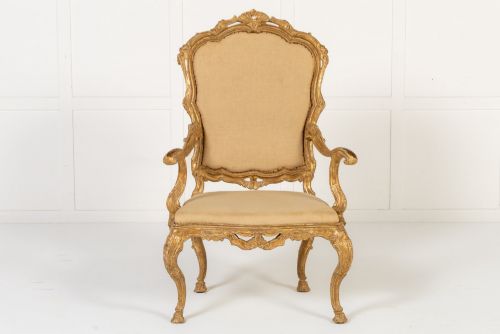
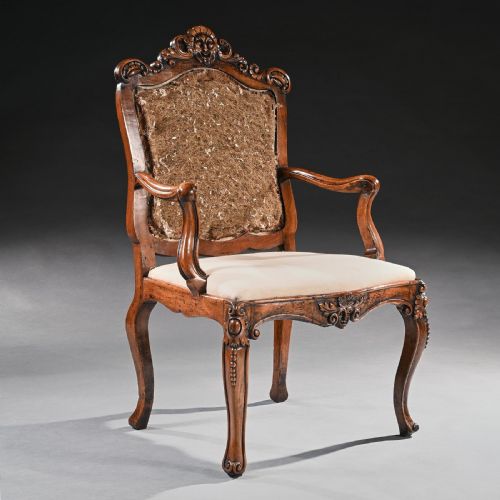
Italian rococo armchairs bring sculptural flourish and historic character to a room, offering grand carved frames in giltwood, walnut and paint.
Italian Rococo Armchairs
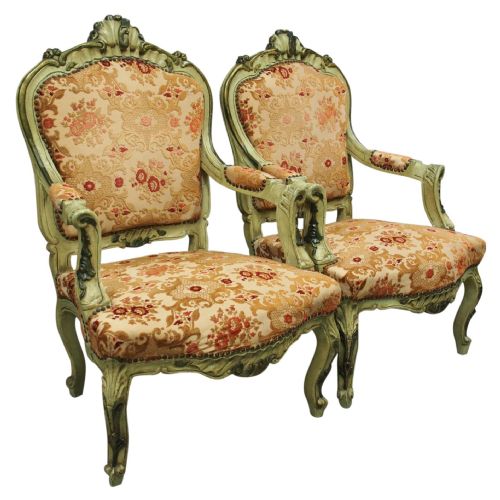
Italian rococo armchairs are ornamental seating pieces defined by flowing lines, asymmetric scrollwork and elaborate carved details. When searching for italian rococo armchairs, a buyer encounters authentic eighteenth-century examples alongside later nineteenth-century revivals and early twentieth-century interpretations.
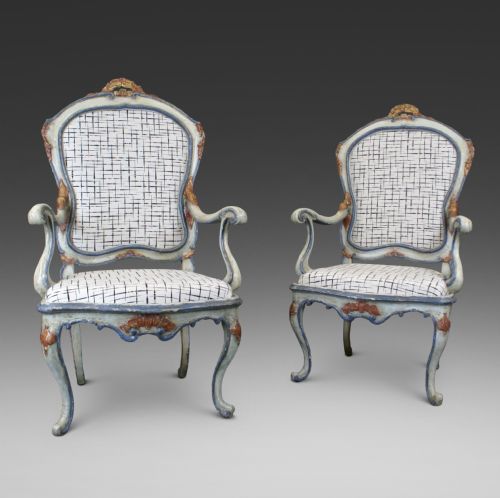
The forms span walnut high-back open armchairs, grand pairs in silver gilt and giltwood, and painted models upholstered in textile or needlework. Venetian gondola chairs also appear among these varieties, showing the regional breadth of the style.
How they were made
These armchairs rely on carved wood frames, primarily executed in walnut or softer timber prepared for surface treatments. Artisans shaped the structural members with deep relief carving, particularly along the head rails and arm supports.
Surfaces were finished with gesso before receiving layers of paint, silver leaf or gold gilding. Upholstery completed the piece, utilising traditional textiles and needlework fixed directly to the frame.
Venetian gondola chairs bring the romance of the canals indoors, offering a curving embrace that predates modern lounge seating by centuries.
What varies in quality
The standard of carving distinguishes the finest examples, with crisp, deeply undercut foliage and confident asymmetry setting superior frames apart from flatter, mechanical work. The fluidity of the scrollwork on the crest rail and legs reveals the hand of a skilled carver.
Original surface treatments also dictate the character and standing of a piece. Intact historic gilding or period paintwork holds greater distinction than later resurfacing or unsympathetic repainting.
The Italian Rococo Armchairs Glossary
- Giltwood
- Wood carved and covered with a thin layer of gold leaf. This finish reflects light and highlights the intricate relief work of the frame.
- Barocchetto
- The Italian variant of the rococo style. It describes furniture characterised by lighter proportions and playful, asymmetric ornamentation.
- Gesso
- A plaster-like mixture applied to wooden frames as a base for gilding or paint. It provides a smooth surface for detailed carving.
Italian Rococo Armchairs: Frequently Asked Questions
How do I identify genuine 18th-century pieces?
Examine the construction joints, tool marks on the timber, and the wear patterns on the gesso and gilding. Older frames show hand-cut joinery and natural ageing across the carved surfaces.
Compare the proportion of the carving and the weight of the wood against known period examples. Later revivals often feature heavier timber and mechanical tooling beneath the surface finish.
Where should I place these in a room?
These armchairs serve as focal points in a drawing room, library or large hallway. Their sculptural frames allow them to stand away from walls where the carved back can be appreciated.
Pair symmetrical chairs flanking a fireplace or console table to echo historic interior arrangements. Ensure adequate clearance around the carved arms and legs to prevent accidental impact.
How do I care for antique giltwood?
Dust the carved surfaces gently with a soft, dry brush to remove particles without disturbing the delicate gold leaf. Avoid liquid cleaners and modern polishes that can strip historic finishes.
Keep the chairs away from direct sunlight and steady heat sources to prevent the gesso and wood from cracking. Stable indoor humidity preserves the structural integrity of the carved frame.
What is the difference between rococo and Barocchetto?
Barocchetto is the specific regional Italian term for the rococo style that emerged during the eighteenth century. It combines heavy baroque massing with lighter, more playful decorative motifs.
Venetian and northern Italian variants often display greater exuberance in the carving and painted finishes compared to French counterparts. The scale and asymmetry remain defining traits of both terms.