




Italian Rococo Chair
An italian rococo chair brings sculptural 18th-century theatre and rich carved detail directly into a modern room.
Italian Rococo Chair
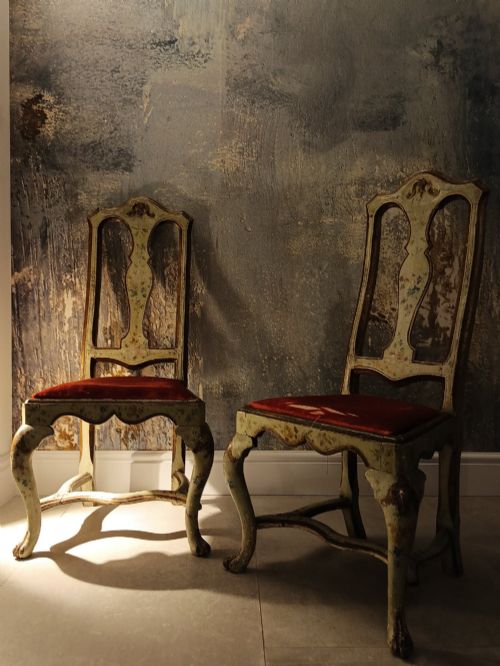
When you search for an italian rococo chair, you are looking at seating forms that span armchairs, side chairs, dining chairs, and occasional pieces originating from the eighteenth century onwards. The most frequent examples encountered on this page date to the eighteenth century, particularly the mid-eighteenth century, alongside later revivals from the nineteenth and early twentieth centuries.
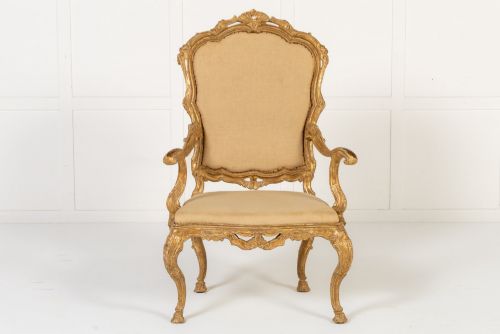
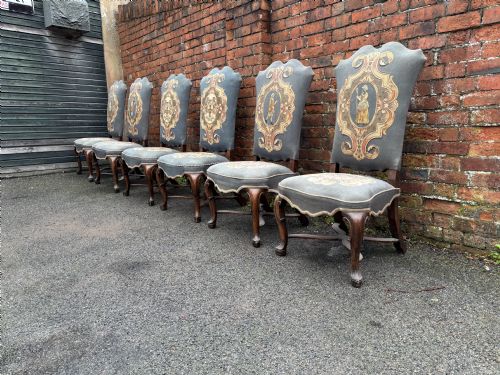
Forms vary from pairs of side chairs and sets of dining chairs to large-scale armchairs and specialised seating like Venetian gondola chairs and sedan chairs. Walnut and carved wood dominate the earlier periods, while later revival pieces often incorporate paint, gesso, and giltwood finishes.
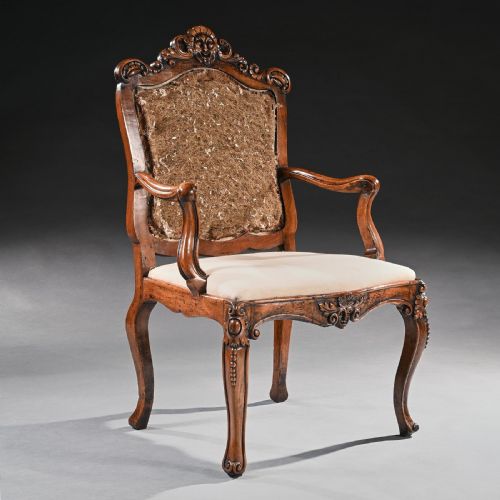
Regional variations such as Venetian rococo and Barocchetto styles appear alongside standard Italian rococo and Italian Baroque forms. These pieces offer strong decorative presence through high backs, carved head rails, and open arm configurations.
How They Were Made
Makers shaped these chairs primarily from solid walnut and other timbers, utilising hand carving techniques to achieve deep relief on head rails, frames, and cabriole legs. Wood surfaces frequently received layers of gesso, paint, or gilding in gold and silver leaf to create opulent reflective finishes.
Upholstery and seating surfaces relied on traditional textiles, fabrics, and needlework. These materials were secured to accommodate the sweeping, asymmetrical curves characteristic of the style.
Venetian chairmakers occasionally borrowed boat-building curves, resulting in seating as graceful as a canal gondola.
What Varies in Quality
The distinction between ordinary and exceptional examples rests in the depth and ambition of the carving. Chairs featuring extravagantly carved head rails and fully articulated open arms demonstrate superior craftsmanship compared to simpler regional side chairs.
The integrity of the original surface finishes, whether genuine period gilding, gesso, or historic paint, significantly elevates a piece. Structural scale also plays a role, with large-scale armchairs and matched sets commanding greater visual weight.
The Italian Rococo Chair Glossary
- Giltwood
- Wood that has been coated with gold leaf or silver leaf over a prepared gesso ground. This finish provides a luminous and decorative surface common on formal armchairs.
- Gesso
- A plaster-like mixture applied to wood frames to create a smooth surface for painting or gilding. It allows carvers to achieve sharp, crisp decorative details.
- Barocchetto
- The Italian variant of the rococo style, combining baroque mass with lighter, curved rococo ornamentation. It is frequently seen in mid-eighteenth-century seating.
- Gondola chair
- A distinctive seating form associated with Venice, characterised by a curved, enclosing backrest reminiscent of local watercraft. These pieces date to the eighteenth century.
- Head rail
- The upper horizontal member of a chair back. In finer examples, this area receives elaborate, high-relief carving.
Italian Rococo Chair: Frequently Asked Questions
Are these chairs comfortable for daily use?
Many of these chairs provide a surprisingly upright and supportive seat, though their historic frames require sensible care.
Upholstered armchairs and dining chairs function well in contemporary settings when placed away from heavy daily wear.
How do I identify an eighteenth-century piece?
Look closely at the construction methods, timber patination, and the crispness of the hand carving on the walnut or giltwood frame.
Eighteenth-century examples display natural material ageing and traditional joinery that distinguish them from later nineteenth-century revivals.
What is the difference between rococo and baroque?
Baroque seating tends to be heavier, straighter, and more symmetrical, emphasising grand scale and architectural presence.
Rococo design introduces asymmetric curves, playful S-scrolls, and lighter, more fluid forms across the frame.
Can I mix these chairs with modern furniture?
The sculptural carved wood and rich gilded or painted surfaces contrast effectively against clean, contemporary interior lines.
A single armchair or a pair of side chairs works well as a focal point in a modern room.