

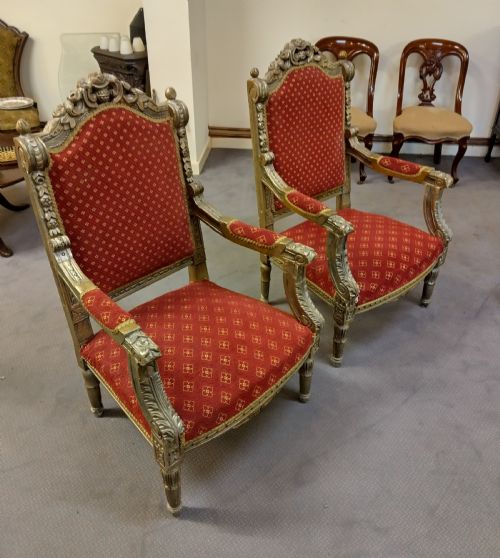


Ornate Gold Armchair
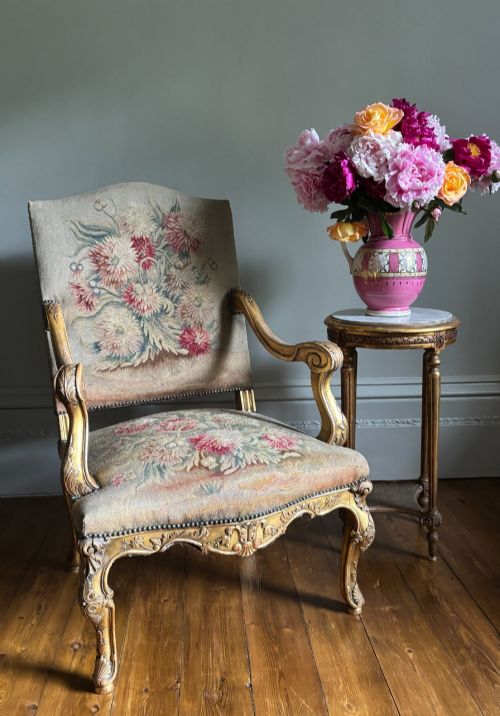
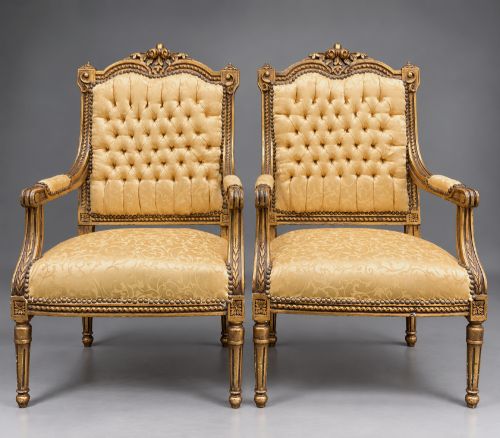
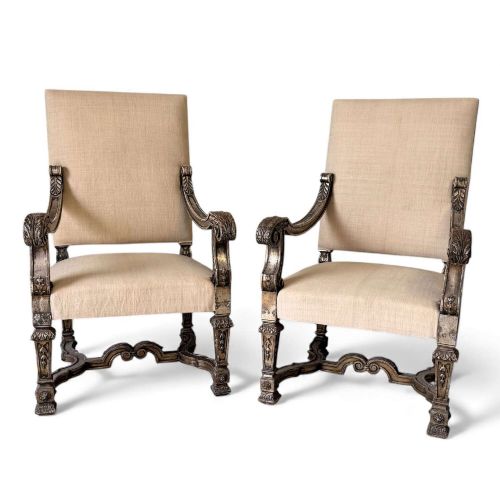
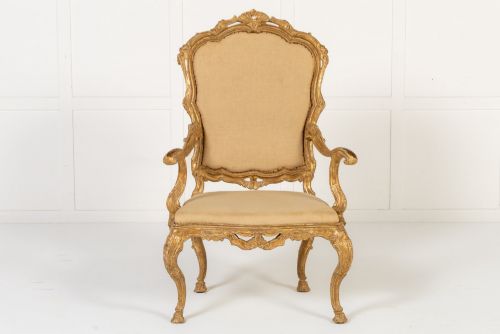
An ornate gold armchair brings monumental presence to a room, offering gilded surfaces and carved frames rooted in revival styles.
Ornate Gold Armchair
When you search for an ornate gold armchair, you encounter seating designed for formal reception rooms, reception halls, and grand salons. These substantial seats combine imposing scale with elaborate decorative programmes derived from historic European court aesthetics.
The versions most commonly met on this page date from the nineteenth century, spanning periods from the eighteen-fifties through nineteen-ten. They embrace revivals of French baroque, rococo, and louis styles, alongside Italian carved interpretations and nineteenth-century Napoleon III gilt pieces.
Forms range from large throne chairs and wingback armchairs to elbow chairs and salon seating. Many appear in matched pairs, featuring high backs, carved armrests, and substantial wooden frames finished in gilt.
Materials and construction methods
Makers constructed the structural frames from timber, utilising solid walnut or other sturdy woods to support the considerable weight and elaborate carving. Artisans then applied gold leaf or gilt finish across the timber surfaces to achieve a brilliant metallic appearance.
Upholstery materials recorded in the evidence include linen, damask, fabric, and woven tapestry fabric, alongside specialist coverings such as silk parrot design textiles. These traditional coverings were secured to large armchair frames designed for formal domestic interiors.
Ornate Gold Armchair Retail Price Guide 2026
Typical asking prices for ornate gold armchair among the pieces listed under this phrase on Sellingantiques today, from the lower quarter to the upper quarter. They describe what is for sale here now, not the wider market.
Listings feature eighteenth- and nineteenth-century pieces spanning French and Italian regional styles, utilising giltwood, solid walnut, and woven tapestry fabrics.
Distinguishing quality across examples
Quality separates pieces by the depth and precision of the carved details on the wooden frame. Superior examples display deeply undercut foliage, scrolls, and figural motifs executed by skilled hands, whereas simpler items rely on shallow surface moulding.
The application of gold leaf versus paint finishes marks a clear division in execution. Hand-applied leaf catches light with varied warmth and texture, distinguishing finer historic workshop output from basic gilt treatments.
The Ornate Gold Armchair Glossary
- Giltwood
- Wood that has been coated with thin sheets of gold leaf or gold powder. This surface treatment provides the characteristic metallic brilliance seen on nineteenth-century revival seating.
- Baroque Revival
- A nineteenth-century design movement emulating the grand, dramatic forms of the seventeenth-century baroque era. It favours heavy carving, dynamic movement, and theatrical scale.
- Rococo Revival
- A style drawing on eighteenth-century French design characterised by asymmetry, C-scrolls, and naturalistic shell or floral motifs. It creates lighter, more fluid decorative schemes than the baroque.
- Elbow chair
- A traditional term for an armchair featuring armrests designed to support the elbows. These chairs often served as conversational seating in formal nineteenth-century salons.
- Napoleon III
- A French design period spanning the mid to late nineteenth century that eclectically combined historical revival styles with opulent upholstery. It produced richly gilded and decorated seating for bourgeois and aristocratic interiors.
Ornate Gold Armchair: Frequently Asked Questions
What rooms suit an ornate gold armchair?
These large armchairs find a natural home in drawing rooms, formal sitting rooms, and spacious hallways where their scale and gilding can act as a focal point. They pair well with neutral walls and traditional architectural details that balance their heavy visual presence.
In modern interiors, a single gilt chair provides a deliberate contrast against minimalist surroundings. Their historic revival styles bring texture and architectural form to plain spaces without requiring a fully period-styled room.
How do I identify a nineteenth-century piece?
Nineteenth-century revival armchairs often exhibit mechanical tool marks on hidden structural timbers alongside traditional hand joinery. The gilding techniques and upholstery foundations also reflect nineteenth-century workshop practices.
Stylistic cues such as Napoleon III proportions or heavy baroque revival carving help narrow the date of manufacture. Comparing the wood density and joinery style provides further confirmation of the period.
Were these chairs used for daily seating?
Historic salon chairs and gilt armchairs were primarily intended for formal entertaining, reception rooms, and ceremonial display rather than casual lounging. Their upright backs and rigid armrests reflected nineteenth-century standards of formal posture.
Consequently, surviving examples often retain structural rigidity because they experienced lighter domestic use than ordinary household chairs. They functioned as much as sculptural furniture as places to sit.
How do baroque and rococo styles differ?
Baroque design emphasises symmetry, monumental scale, and dramatic, heavy ornamentation intended to project power and grandeur. Its forms are robust and tightly structured.
By contrast, rococo style introduces asymmetrical curves, playful plant motifs, and lighter C-scrolls. Rococo revival armchairs appear more fluid and whimsical compared to the stern symmetry of baroque pieces.