

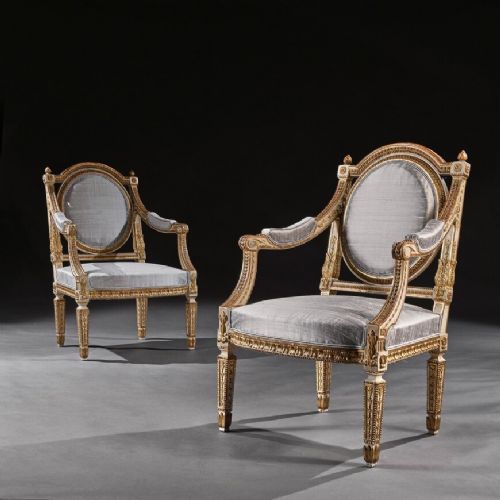
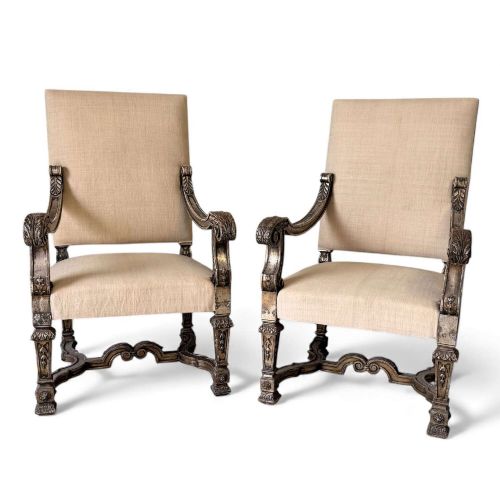
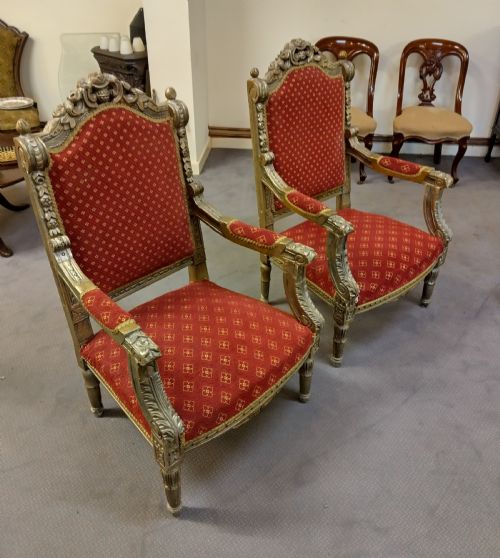
Gilt Open Armchair
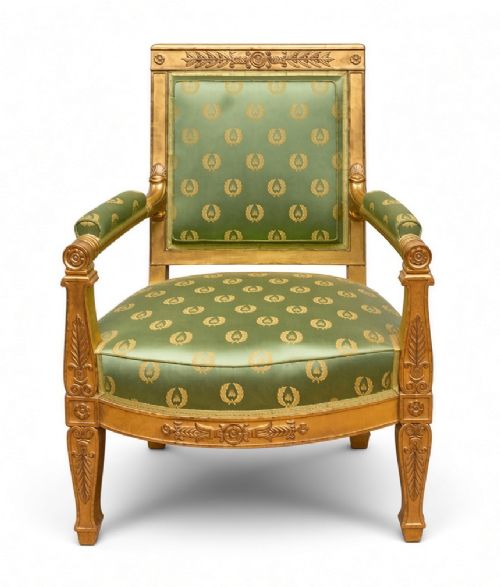
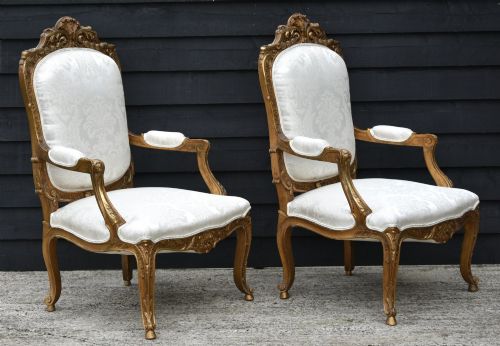
A gilt open armchair brings neoclassical or baroque elegance into a room through gilded woodwork and exposed structural frames.
Gilt Open Armchair
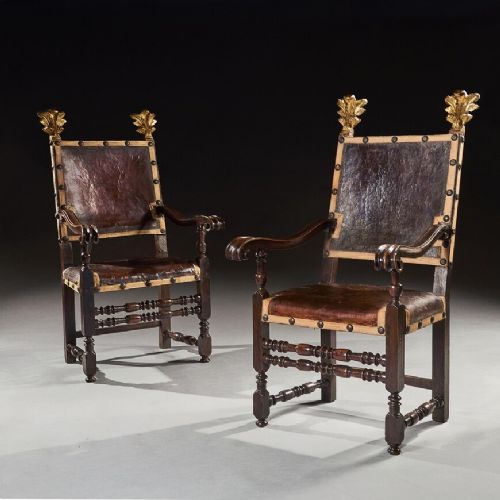
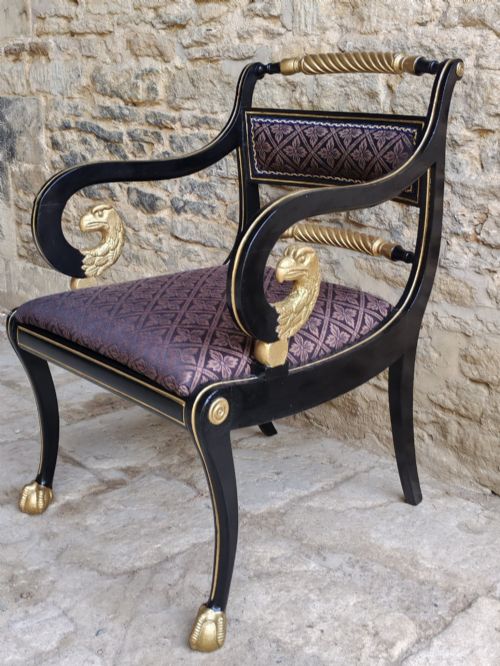
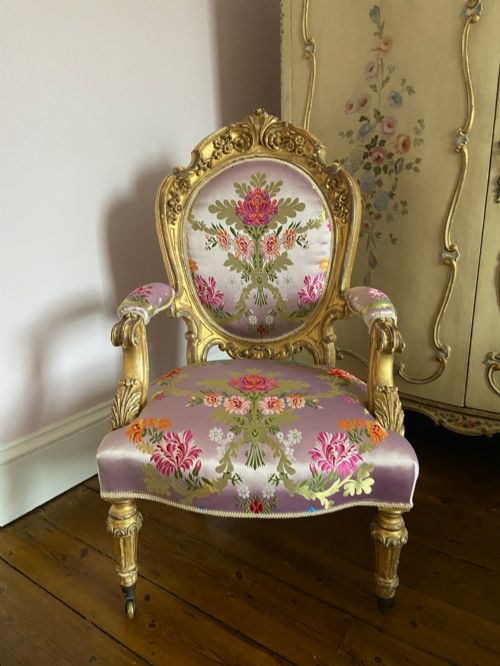
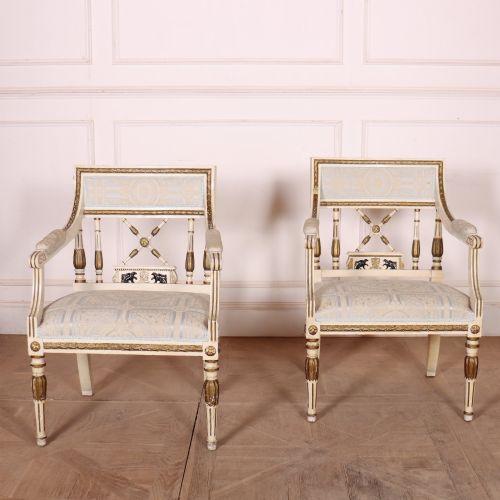
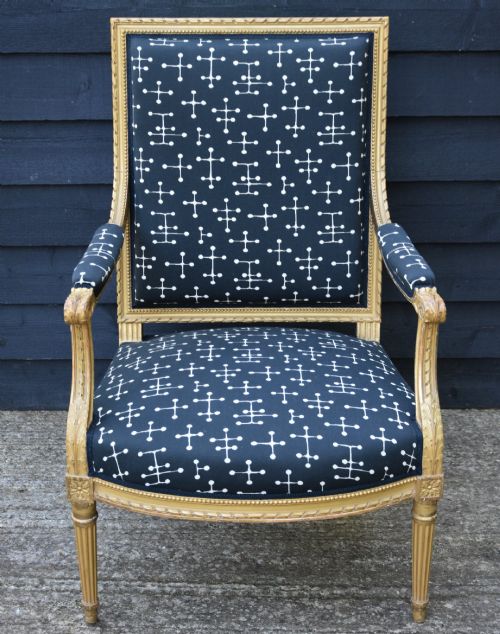
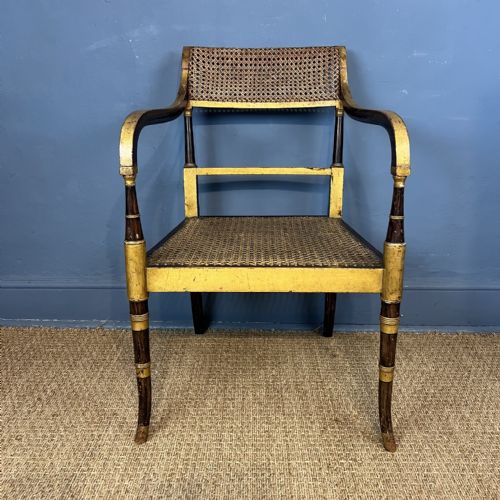
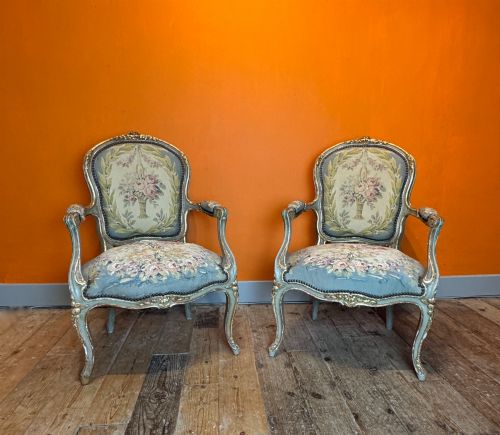
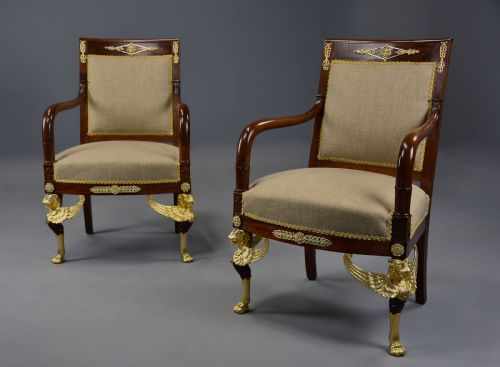
A gilt open armchair is a formal seating form characterised by open wooden arms and a gilded finish, originating in grand European salons and drawing rooms. The pieces appearing here span the seventeenth to the early twentieth centuries, drawing heavily on French and Italian stylistic traditions.
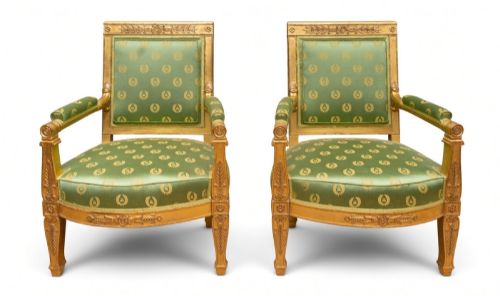
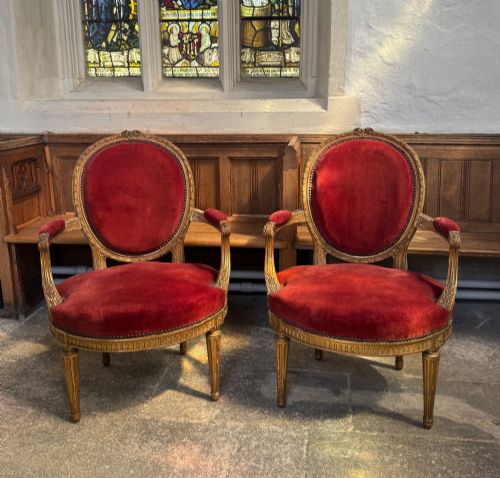
Most examples belong to revival periods, particularly Louis XVI, Baroque, and Regency styles, reflecting later makers' enduring appetite for continental design. Buyers encounter both single salon chairs and matched pairs, often upholstered in contemporary silk, velvet, or traditional tapestry.
Forms range from compact bedroom chairs and library seating to large throne chairs with substantial carved proportions. These seats were designed to be displayed against panelled walls as much as to be sat upon.
How they were made
Makers shaped the structural frames from timbers such as beech, walnut, mahogany, and satinwood, chosen for their ability to hold intricate hand-carved detailing. Carvers worked directly into the solid wood to produce foliate scrolls, fluted legs, and neoclassical motifs before surface preparation.
The decorative gold surface relies on the application of gold leaf over a prepared gesso base on giltwood pieces, or through parcel-gilt techniques that highlight specific carved elements against painted or polished wood. Metal elements like brass occasionally reinforce structural joints.
Upholstery completed the construction, utilising traditional stuff-over methods with horsehair or modern webbing beneath textile covers of silk, velvet, and patterned fabric secured with decorative brass tacks.
Listings feature gilt open armchairs spanning the seventeenth century through to the 1920s, incorporating beech, walnut, and silk fabric.
What varies in quality
The crispness and depth of the wood carving distinguish superior frames from simpler production pieces, particularly where acanthus leaves, ribbon twists, and fluting meet at the joints. Hand-carved depth creates sharper light play across the gilded surface than moulded composition ornaments.
The application of gold leaf determines the richness of the visual finish, with burnished metal catching light differently than painted metallic finishes or degraded layers. Original gilding shows authentic tonal variation acquired through age.
Proportion and structural integrity dictate the overall calibre of the seat, where balanced arm supports and tight joinery ensure the piece maintains its intended poise. Scale ranges from intimate proportions to heavy, architectural throne dimensions.
Jacob Desmalter·Blaise Maucuy·Gillows
The Gilt Open Armchair Glossary
- Giltwood
- Wood that has been coated with gold leaf applied over a fine plaster ground called gesso. This finish creates a warm, reflective surface characteristic of formal European seating.
- Fauteuil
- A French open-arm armchair with upholstered back and armrests, typically featuring an exposed wooden frame. These chairs originated in the seventeenth century for formal interior reception rooms.
- Parcel-gilt
- A decorative treatment where only specific carved details, mouldings, or motifs are gilded while the remaining wood surface is painted, stained, or polished. This technique creates a deliberate contrast between gold and timber.
- Bergère
- An enclosed armchair with upholstered sides and a loose seat cushion, offering a more enclosed sit than standard open models. They frequently appear in eighteenth-century French revival forms.
- Gesso
- A prepared mixture of chalk, gypsum, and glue used as a smooth base layer on wood before applying gold leaf. It allows carvers to achieve sharp definition beneath the metallic surface.
Gilt Open Armchair: Frequently Asked Questions
Where were gilt open armchairs placed originally?
These seats were designed for formal reception rooms, salons, and withdrawing spaces in grand residences. They were positioned around the perimeter of a room to be seen as decorative elements of the interior scheme.
When guests required seating, the chairs were moved inward for conversation or card games. Their gilded frames caught the candlelight of evening assemblies.
How do I distinguish 18th-century frames from later revivals?
Original eighteenth-century pieces exhibit tool marks from hand-working on the unexposed interior timbers, alongside natural oxidation of the underlying gesso. The construction relies on traditional joinery methods appropriate to the period of origin.
Nineteenth and twentieth-century revival pieces often display machine-tooled elements or standardised carving patterns. Stylistic clues also help, as makers of later periods frequently combined motifs from several reigns.
What is the difference between a fauteuil and a standard armchair?
A fauteuil specifically denotes a French-style armchair with upholstered back and seat, open wooden arms, and padded elbow rests. The exposed wood frame is typically carved and gilded or painted.
Standard English open armchairs of the same eras may utilise different structural proportions and regional joinery traditions. Both forms share the characteristic open space beneath the armrests.
How should I care for historic gilding?
Gilded surfaces require protection from direct sunlight and high humidity, which can cause the underlying gesso and gold leaf to crack or flake. Dusting should be done gently with a dry, soft brush rather than a cloth that might catch on edges.
Avoid liquid cleaners, polishes, or chemical sprays entirely, as they damage the delicate metallic leaf. Stable indoor environments preserve the surface finish best.