



19th Century Empire Chair
A 19th century empire chair brings monumental classical proportion and rich timber into a room, offering a commanding silhouette built for formal seating.
19th Century Empire Chair
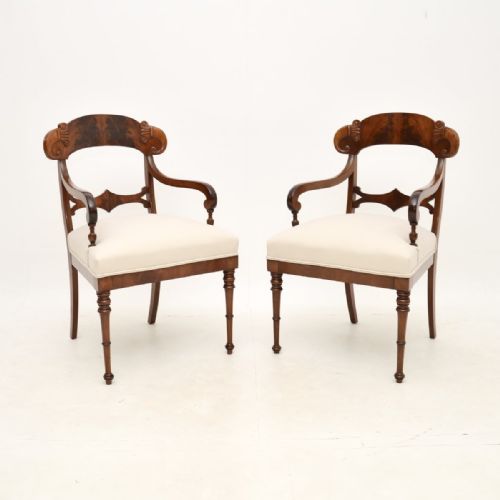
A 19th century empire chair embodies the neoclassical architectural influences of the period, drawing on French, Swedish, and Regency designs. Buyers most frequently encounter mahogany open armchairs and side chairs, often styled with the later revival aesthetic of the late nineteenth century.
Materials and construction methods
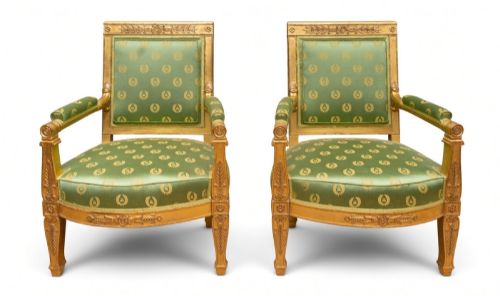
Makers utilised dense timbers like mahogany, walnut, and birch as the primary structural frame, occasionally employing giltwood or painted finishes for decorative impact. Construction relies on traditional joinery techniques suited to substantial open armchairs and side chairs.
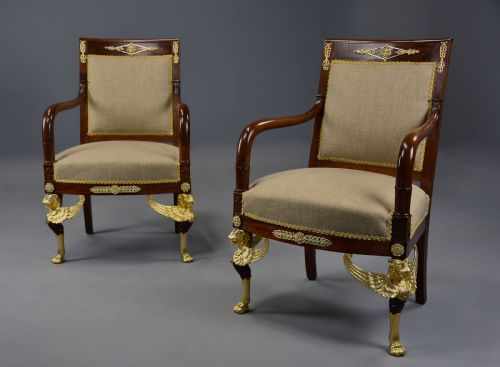
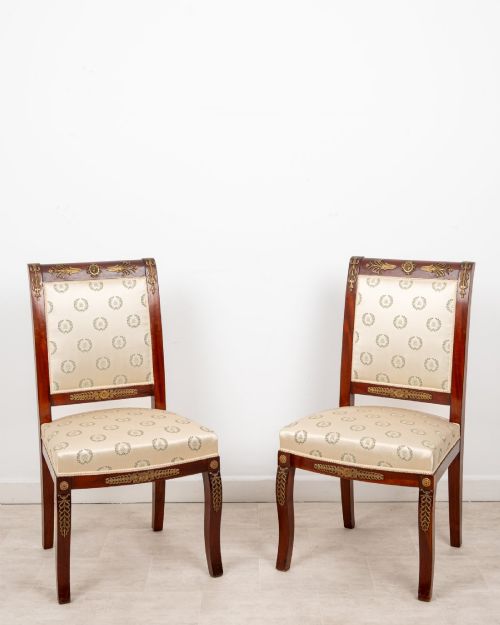
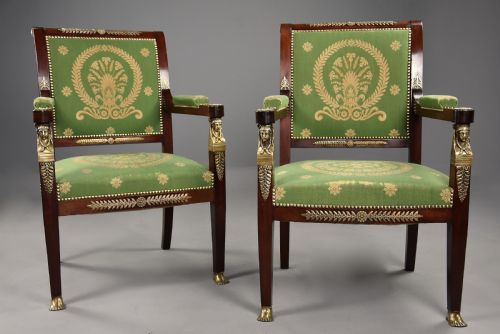
Cast bronze or brass ormolu mounts provide classical ornamentation along the arms and rails, while upholstery materials encompass contemporary fabric, leather, and traditional textile coverings.
Listings feature examples spanning from the early 1800s through to the 1900 revival period, predominantly constructed from mahogany with giltwood and ormolu details.
Distinguishing quality across examples
Quality separates through the crispness of carved wooden details and the precision of ormolu mount casting. Examples featuring integrated ormolu highlights and well-preserved giltwood surfaces demonstrate superior workshop output.
The integration of structural integrity in the frame relative to the upholstery condition dictates the overall standard. Pieces retaining unified proportions across arms, legs, and backrests sit at the higher tier of the range.
Jacob-Desmalter
The 19th Century Empire Chair Glossary
- Fauteuil
- An open-armed upholstered armchair originating in France, typically featuring exposed wooden framing. This form constitutes a primary seating option within the empire style.
- Ormolu
- Gilt bronze or brass ornamentation applied to furniture frames, depicting classical motifs. These metal mounts define the visual vocabulary of empire pieces.
- Directoire
- A transitional style bridging Louis XVI and Empire periods, characterised by austere classical lines. Pieces from this phase display restrained ornamentation.
- Giltwood
- Timber coated with a thin layer of gold leaf, used extensively for decorative frames. This finish creates a luminous surface on formal salon seating.
- Regency
- The British stylistic equivalent to continental empire design, prominent during the early nineteenth century. It shares classical proportions and heavy timber usage.
19th Century Empire Chair: Frequently Asked Questions
How do I identify an empire chair?
Look for monumental classical proportions, prominent use of mahogany or giltwood, and characteristic ormolu mounts. The silhouette often references ancient Roman or Greek architectural forms.
Open armchairs, known as fauteuils, frequently display scroll backs or square frames that distinguish them from later Victorian seating.
What is the difference between original and revival pieces?
Original pieces date from the early nineteenth century during the height of the Napoleonic era, whereas revival pieces generally date from the later decades of the 1800s. Revival models often incorporate similar French Empire motifs but reflect late-century manufacturing techniques.
Examining the timber ageing, joinery methods, and the crispness of the bronze mounts helps clarify the specific period of production.
Where were these chairs used historically?
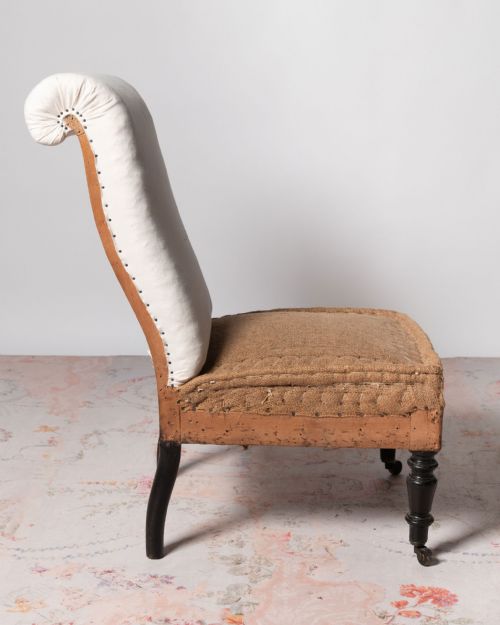
These seating forms served primarily in formal drawing rooms, libraries, and grand salons of continental residences. Desk chairs and slipper chairs were tailored for specific domestic or study environments.
Matching salon suites provided unified seating arrangements for entertaining guests in elite households.
How should I care for antique upholstery and wood?
Maintain the mahogany or walnut frames with appropriate furniture wax, avoiding harsh chemical cleaning agents on giltwood or painted surfaces. Protect ormolu mounts from excessive moisture to preserve the metallic finish.
Upholstered components benefit from professional textile cleaning and gentle brushing to maintain the integrity of the fabric.