


Gilded Empire Chair
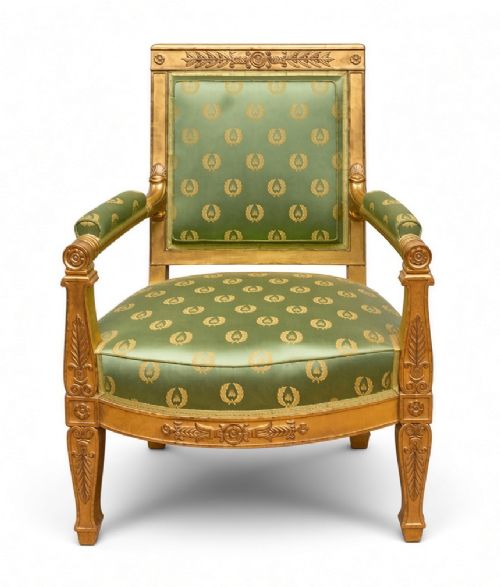
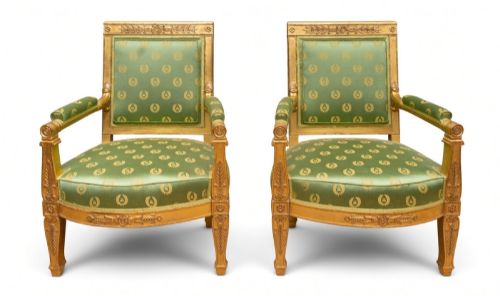
A gilded empire chair brings neoclassical grandeur into a room, offering striking gilt surfaces and classical proportions that command attention.
Gilded Empire Chair
A gilded empire chair is a seat designed in the classical taste, combining architectural lines with rich surface decoration. These pieces reflect the French Empire and Restauration periods alongside later revivals, bringing formal seating into domestic interiors.
Buyers browsing this selection will most frequently encounter armchairs, salon chairs, and occasional stools. The forms range from French fauteuils to Italian neoclassical armchairs and English regency revival pieces.
Origins span the nineteenth century and into the twentieth century, capturing both original period production and later interpretations. Each piece demonstrates the enduring influence of classical design on seating forms.
How a gilded empire chair was made
Construction relies primarily on hardwoods such as mahogany and general timber frames, which provide the structural integrity required for ornate seating forms. Carved details and applied gesso create the raised ornamentation necessary for subsequent surface gilding.
Giltwood finishes require meticulous application of gold leaf over prepared grounds, producing a luminous metallic sheen. Upholstery incorporates traditional textiles, silks, and contemporary fabrics secured to the wooden frames.
Listings feature pieces spanning the eighteenth century, nineteenth century, and twentieth century, executed in giltwood, mahogany, and silk.
What varies in quality
Quality rests in the crispness of the carved ornament and the depth of the gilding across the wooden frame. Superior examples display refined hand-carving and well-preserved gilt surfaces that retain their intended brilliance.
Construction methods and timber selection dictate the longevity and structural stability of each seat. Pieces attributed to documented makers or specific royal provenances exhibit a higher standard of joinery and artistic execution.
Jacob-Desmalter
The Gilded Empire Chair Glossary
- Giltwood
- Wood that has been coated with gold leaf or gold paint. This finish defines the reflective surface characteristic of classical seating.
- Fauteuil
- An open-armed upholstered armchair with exposed wooden arms. This French form appears frequently in classical and revival interiors.
- Restauration
- A stylistic period bridging the fall of the French Empire and the July Monarchy. Pieces from this era refine earlier neoclassical severity.
- Curule
- An ancient Roman stool shape characterised by two curved legs forming an X-form. This classical revival form provides compact, formal seating.
Gilded Empire Chair: Frequently Asked Questions
Where should I place a gilded empire chair?
These chairs function well as focal points in drawing rooms, formal reception spaces, or bedrooms. Their sculptural lines and metallic finishes allow them to stand independently against plain walls or complement traditional interior schemes.
Because of their decorative presence, they also serve effectively as occasional seating rather than heavy-use lounging chairs. Pairing them with complementary neoclassical or regency furniture enhances their historical context.
How do I distinguish original period pieces from later revivals?
Examination of the timber, joinery methods, and gesso application reveals the age of the construction. Nineteenth-century pieces typically show traditional hand-tooling marks and period-appropriate wear beneath the surface finishing.
Later twentieth-century revivals often utilise more uniform machine preparation and modern adhesives. Comparing the specific carved motifs against documented period examples helps clarify the date of manufacture.
What textiles suit a gilded empire chair?
Traditional upholstery choices include silk damasks, patterned fabrics, and woven textiles that reflect classical motifs. These materials echo the opulent interiors for which the original seating was designed.
Selecting appropriate period-style fabrics ensures the upholstery complements the luminous giltwood frame. Durable modern textiles can also be employed to balance historical accuracy with daily living requirements.
How do I maintain giltwood surfaces?
Giltwood requires gentle dusting with a soft, dry cloth to prevent the accumulation of abrasive particles. Avoid using liquid cleaners, polishes, or chemical solvents that can damage the delicate gold leaf layer.
Keeping the chairs away from direct sunlight and excessive humidity protects both the underlying gesso and the textile upholstery. Careful handling preserves the integrity of the metallic finish over time.