
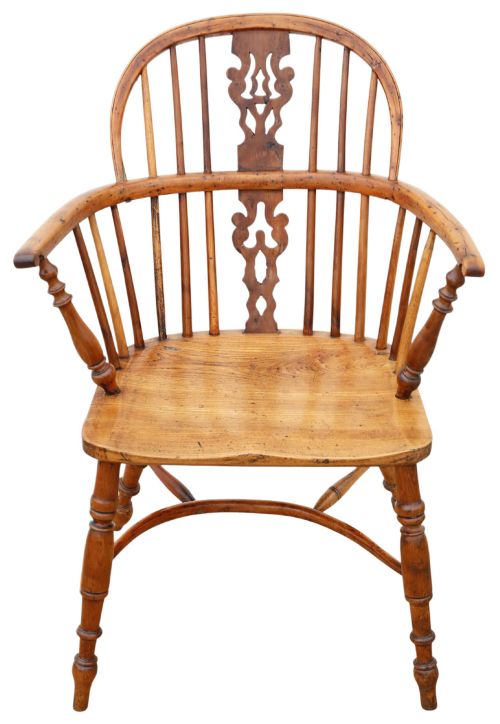


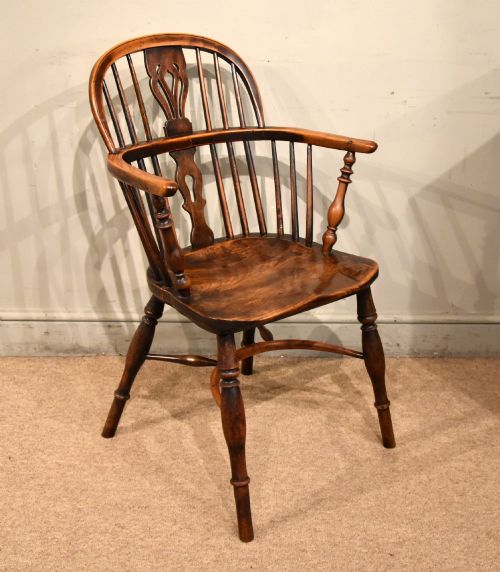
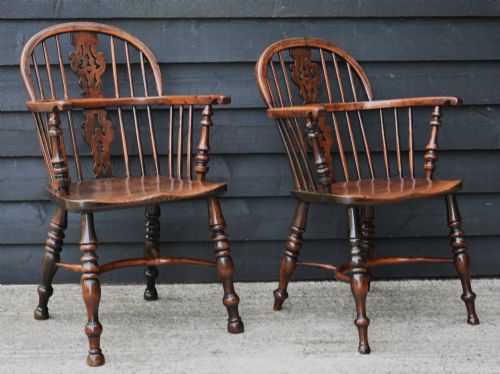
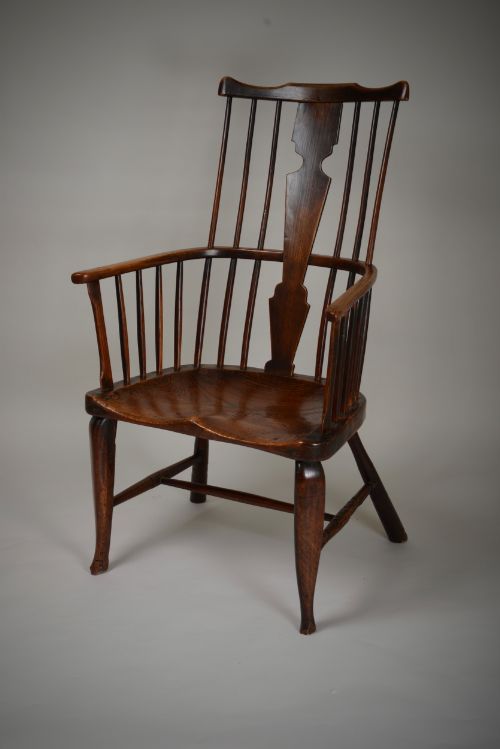
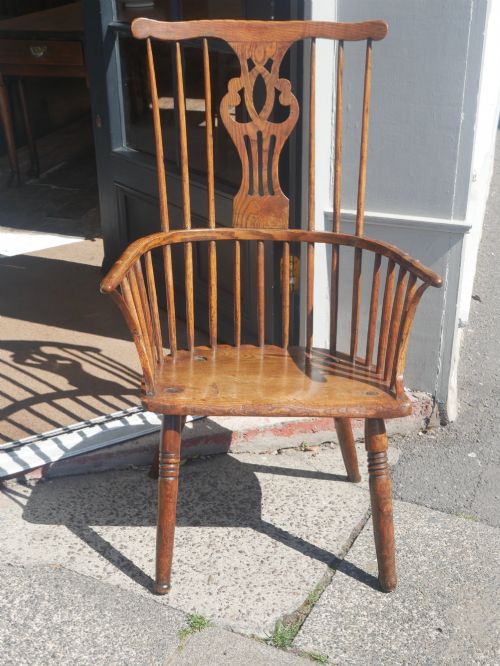
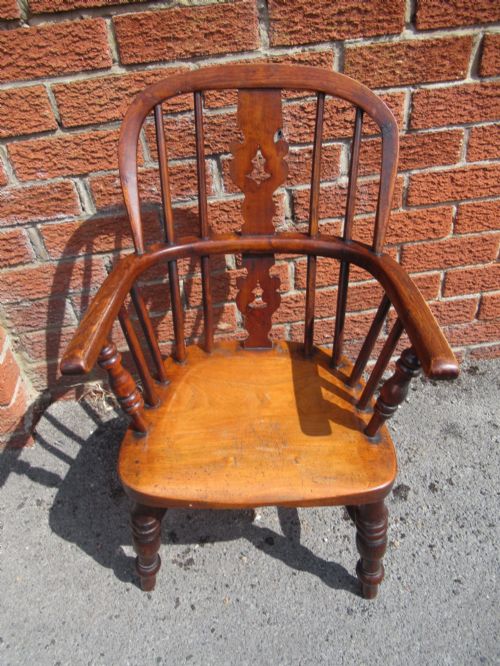
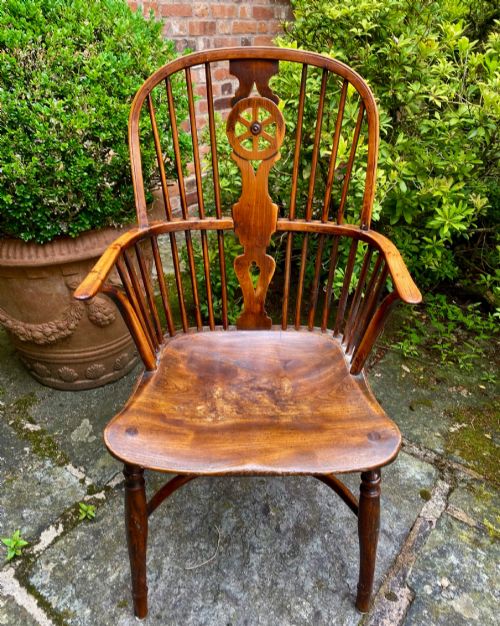
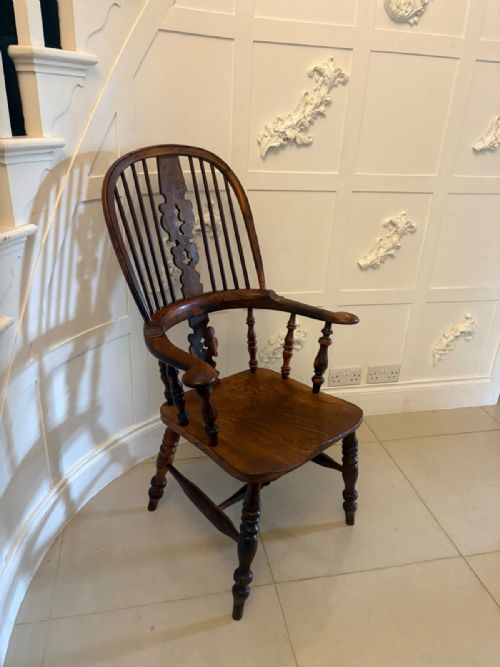
Georgian Yew Armchair
A georgian yew armchair brings tactile warmth and regional character into a room through figured timber and traditional spindle work.
Georgian Yew Armchair
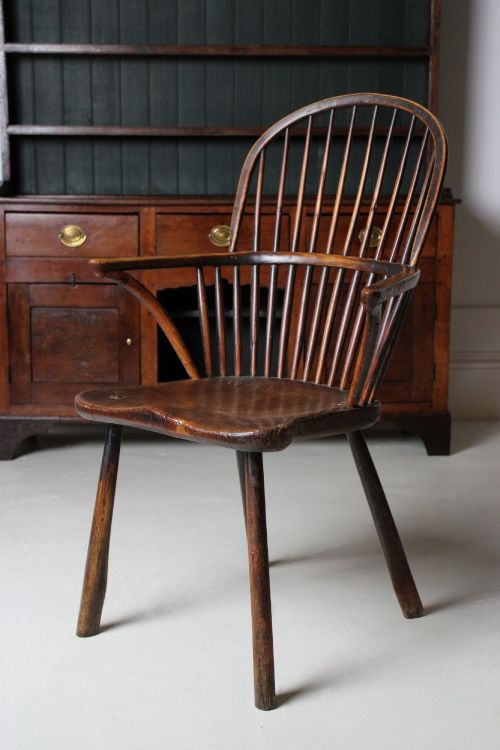
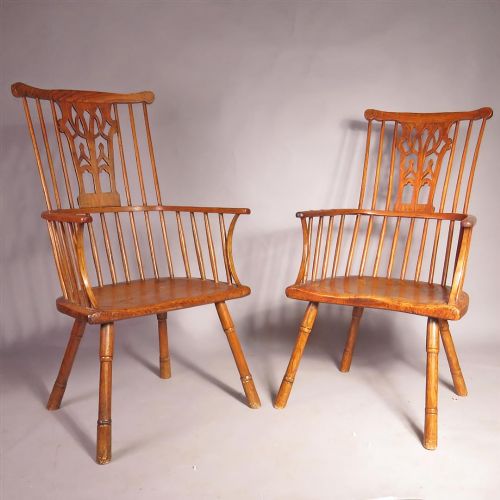
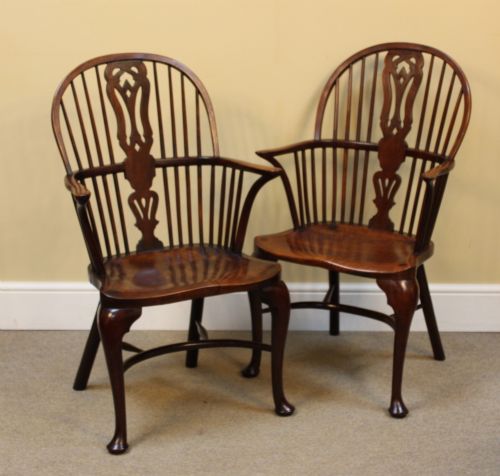
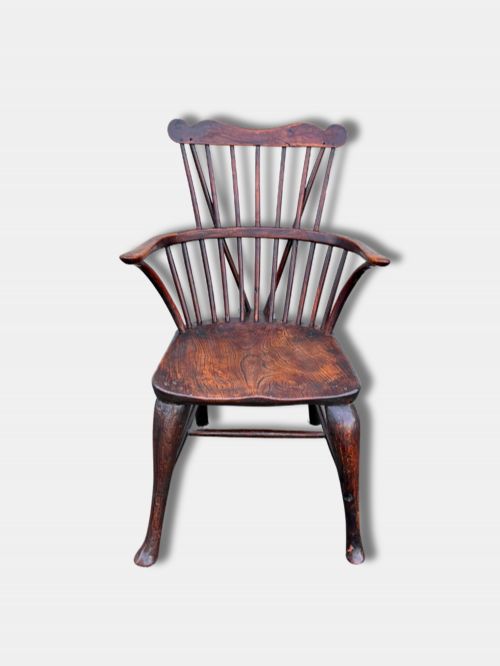
A georgian yew armchair takes the form of a Windsor chair or a regional carver, emerging mostly from the eighteenth and nineteenth centuries. These seating pieces appear as comb backs, hoop backs, low backs, and broad arm chairs built by English country makers.
The materials combine yew wood with elm seats, ash spindles, and occasional beech or fruitwood elements. Buyers find these chairs grouped in matched pairs or small sets as well as single library or desk seats.
Materials and construction
Makers shaped solid yew timber for frames and backs, contrasting the richly figured wood with sturdy elm for shaped seats. Spindles and armbows often incorporate ash, steam-bent to create flowing curves and tensioned joints.
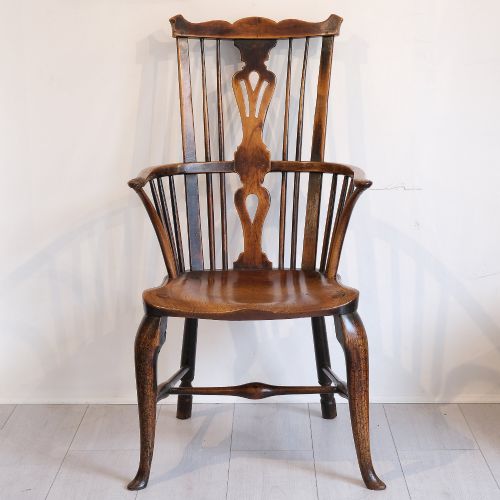
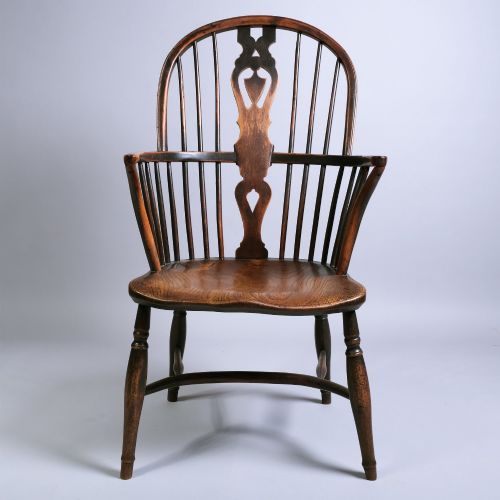
Joinery relies on traditional turned components, including crinoline stretchers and cabriole or tapered legs wedged directly into the seat board. Surface finishing enhances the natural grain and creates a timeworn patina over decades of use.
Georgian Yew Armchair Retail Price Guide 2026
Typical asking prices for georgian yew armchair among the pieces listed under this phrase on Sellingantiques today, from the lower quarter to the upper quarter. They describe what is for sale here now, not the wider market.
Some chairs retain the thumbprint marks of the maker deep inside the shaped wooden seat.
Judging quality
Quality rests in the intensity of the yew wood figuring and the crispness of the turned spindles and arm supports. Generous seat proportions and retained original height set superior examples apart from heavily restored or altered pieces.
A cohesive timber selection across the arms, legs, and back indicates careful workshop assembly. The survival of an uncompromised surface sheen and crisp detail on splats or comb pieces signal better regional craftsmanship.
John Brand of Sleaford·Rockley Maker·Worksop
The Georgian Yew Armchair Glossary
- Comb back
- A Windsor chair style where the upper spindles rise into a horizontal top rail resembling the spine of a comb. This form provides distinct upper back support.
- Crinoline stretcher
- An arched underframe connecting the legs of a Windsor chair that adds structural rigidity. It frequently takes a curved hoop shape reminiscent of a crinoline skirt.
- Broad arm
- A chair arm widened into a flat paddle shape designed for writing or resting objects. These wide wooden arms form a prominent regional feature.
- Thames Valley
- An English region known for distinctive eighteenth century Windsor chair production using yew and elm. Pieces from this area often display refined turnings and cabriole legs.
- Vernacular
- Objects made by regional craftspeople following local traditions rather than metropolitan design dictates. This style prioritises functional domestic utility.
Georgian Yew Armchair: Frequently Asked Questions
What is a georgian yew armchair?
A georgian yew armchair is a traditional wooden seating piece built with a solid elm seat, turned spindles, and figured yew timber components. These chairs belong to the Windsor and regional vernacular traditions of the eighteenth and nineteenth centuries.
Makers constructed them using a combination of steam-bent wood and sturdy joinery, producing durable seating for country houses and rural homes.
How were they used?
These armchairs served as sturdy seating around dining tables, near firesides, or beside writing desks in country homes. Their robust construction suited daily domestic life across generations.
The wide armrests and supportive back spindles made them comfortable reading and writing chairs in studies and libraries.
How do I live with one?
Place a georgian yew armchair away from direct heat sources and strong sunlight to protect the timber and its natural patina. Regular dusting with a dry cloth keeps the surface clean without stripping the finish.
Pair the chair with a simple wooden table or let it stand alone as a sculptural accent in a hallway or corner.
How do I tell periods apart?
Eighteenth century examples often display refined cabriole legs, Thames Valley characteristics, and delicate comb back structures. Nineteenth century versions tend to show heavier hoop backs and simpler turned underframes.
Examining the turning profiles, timber selection, and construction wear helps separate earlier vernacular chairs from later regional reproductions.