

Georgian Wooden Wine Cooler
A Georgian wooden wine cooler keeps bottles chilled at table while showing the finest cabinet-making of the eighteenth and nineteenth centuries.
Georgian Wooden Wine Cooler
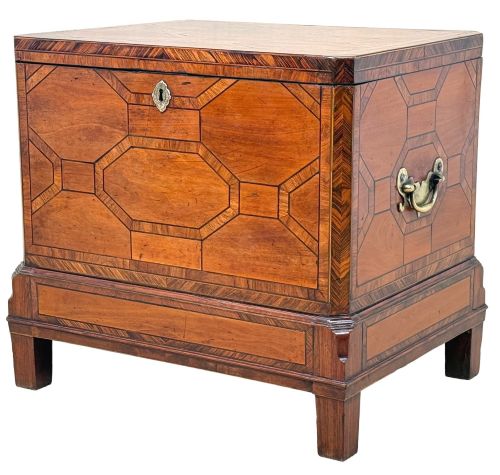
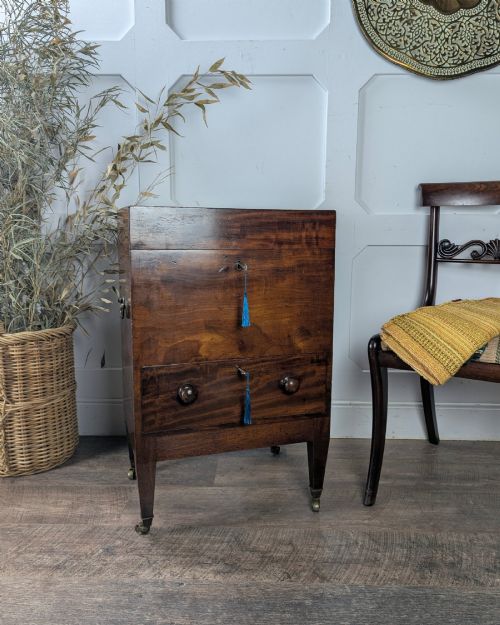
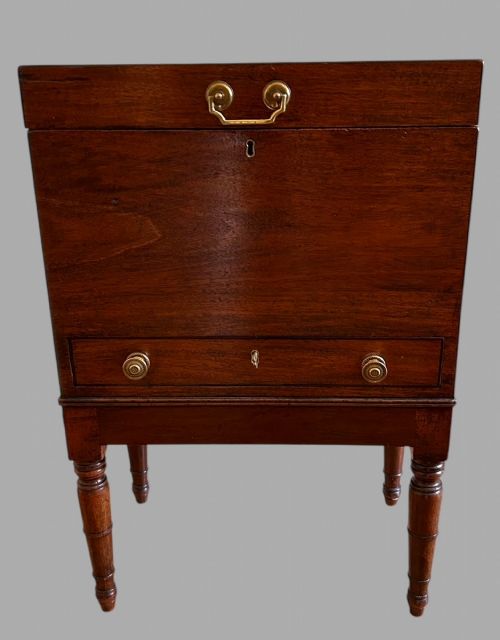
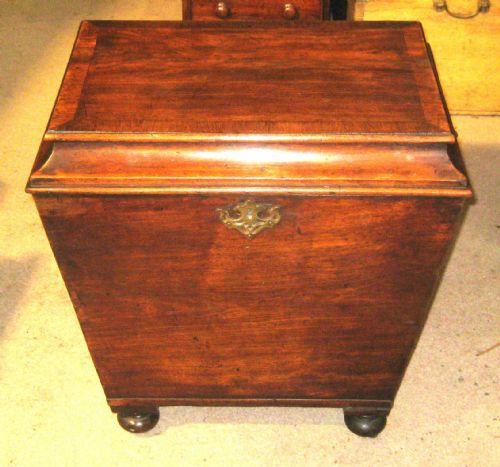
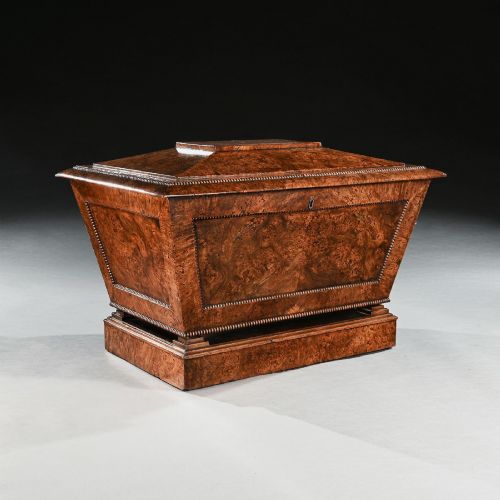
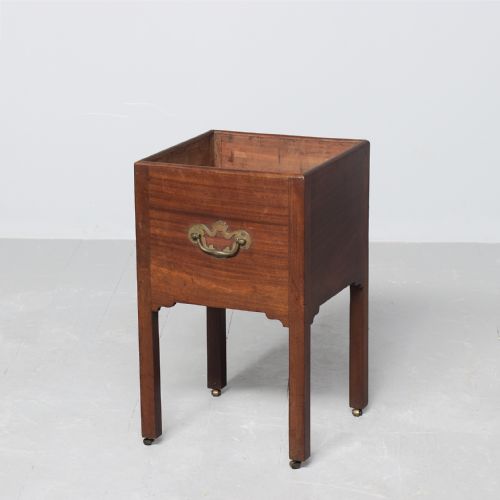
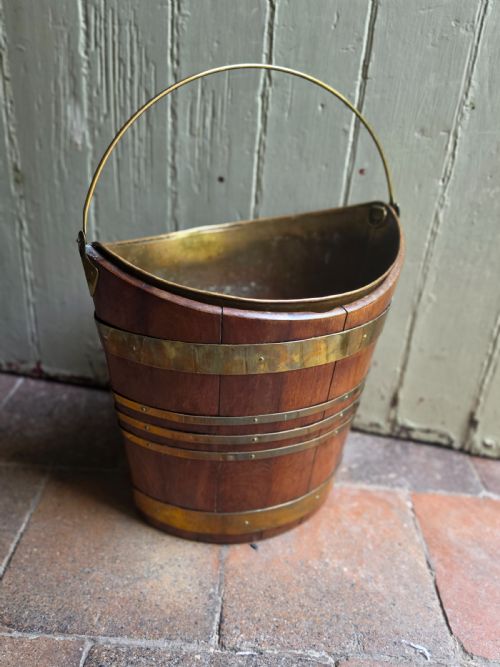
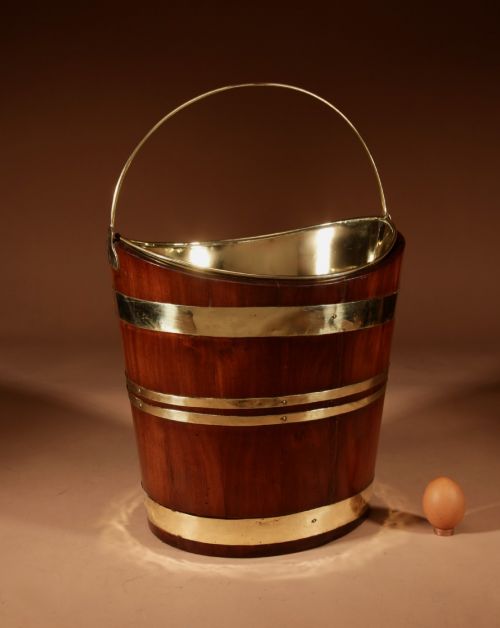
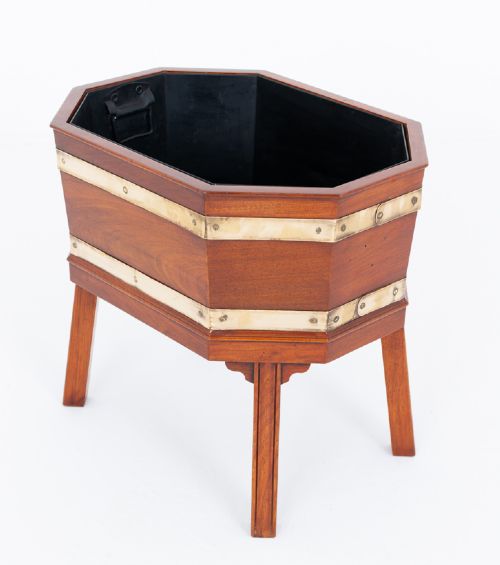
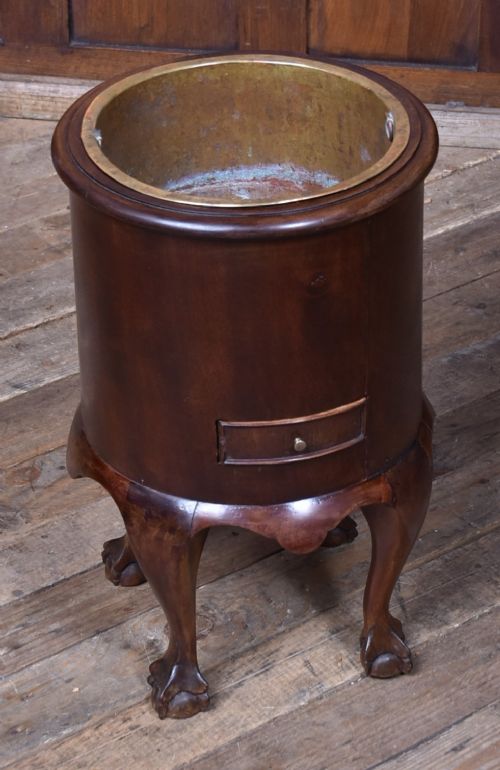
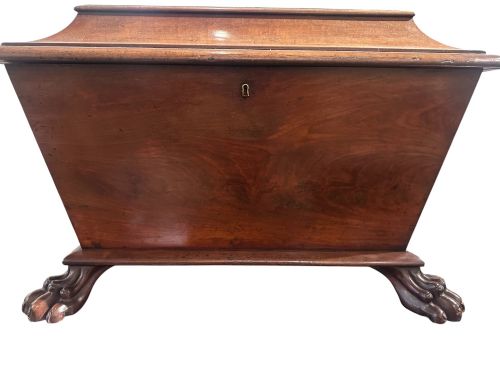
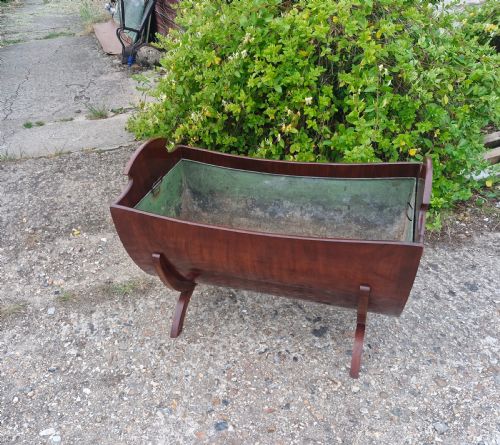
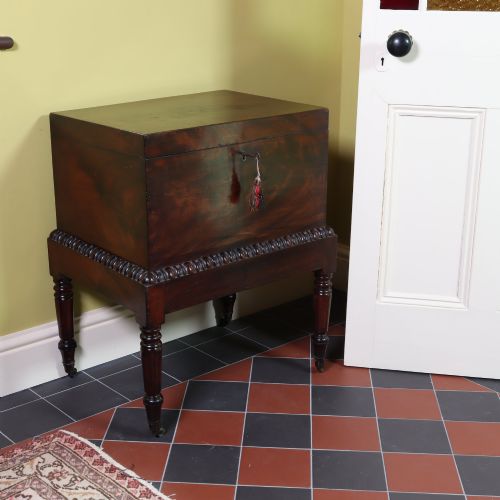
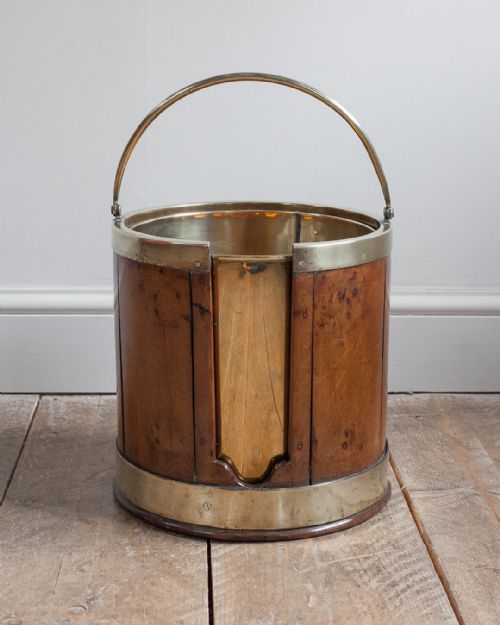
A georgian wooden wine cooler takes several distinct forms, most commonly appearing as a sarcophagus cellarette, a boat-shaped peat bucket, or a standing box on legs.
The pieces on this page span the Georgian, Regency, and Victorian periods, with materials ranging from solid mahogany to satinwood, walnut, and pollard oak.
Makers designed these vessels to sit beneath sideboards or beside dining tables, lined internally with lead, zinc, or brass to hold ice and bottles safely.
Materials and Construction
Cabinet-makers selected dense timbers such as flame mahogany, satinwood, and walnut, often applying elaborate marquetry or brass banding for structural reinforcement and visual contrast.
Internal waterproofing relied on fitted metal liners in brass, zinc, or lead, soldered to protect the surrounding wooden framing from moisture and melting ice.
Irish hunting day cellarettes provided portable refreshment during field sports, ensuring no participant went thirsty far from the dining room.
Craftsmanship and Proportion
Superior examples display exceptional figure in the timber grain, such as matched flame mahogany veneers or intricate boxwood and rosewood inlay.
The fineness of the brass mounts, original ring handles, and the integrity of the internal metal liner distinguish standard utilitarian pieces from high-status furniture.
Gillingtons
The Georgian Wooden Wine Cooler Glossary
- Cellarette
- A lockable container used for storing wine bottles in the dining room. These vessels stood on the floor or on dedicated stands.
- Sarcophagus
- A monumental container shape resembling a stone coffin, tapering slightly towards the base with a hinged lid. Regency makers favoured this classical silhouette for large wine coolers.
- Peat Bucket
- A stave-built wooden bucket fitted with a metal liner, originally intended for hearth fuel but frequently adapted for chilling wine. They often feature brass bands and swing handles.
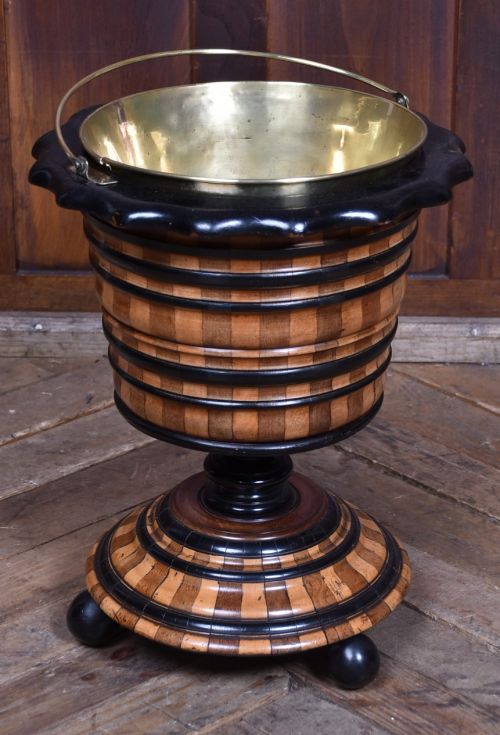
- Teestoof
- A Dutch warming stove or container used to keep liquids or food warm at table. These pieces incorporate metal linings similar to English coolers.
Georgian Wooden Wine Cooler: Frequently Asked Questions
What is a georgian wooden wine cooler used for today?
These vessels serve as decorative storage units or plant stands in modern interiors, holding magazines, logs, or large houseplants instead of bottles and ice.
Their substantial timber forms and metal linings make them practical receptacles for items that require a sturdy, waterproof container.
How do I tell a Regency cooler from a Georgian one?
Georgian pieces often display simpler rectangular or oval box shapes, sometimes with tambour shutters or plain brass banding.
Regency examples tend to adopt heavier classical motifs, including the sarcophagus form, carved paw feet, and bolder use of pollard oak or gilt bronze mounts.
Did these coolers always have metal liners?
Authentic dining coolers required an internal lining of lead, zinc, or brass to contain melting ice and water without damaging the external wooden structure.
Many surviving pieces retain these original metal inserts, though some have been removed or replaced during centuries of domestic use.
Where did these coolers sit in a dining room?
Dining arrangements placed these heavy vessels directly on the floor beneath the sideboard or tucked into a corner near the dining table.
Servants accessed the bottles during meals, transferring wine to decanters as guests required refills throughout the evening.