
Georgian Wooden Credenza
A georgian wooden credenza brings solid timber furniture into a room, offering practical storage through sideboards, dressers, and cabinets.
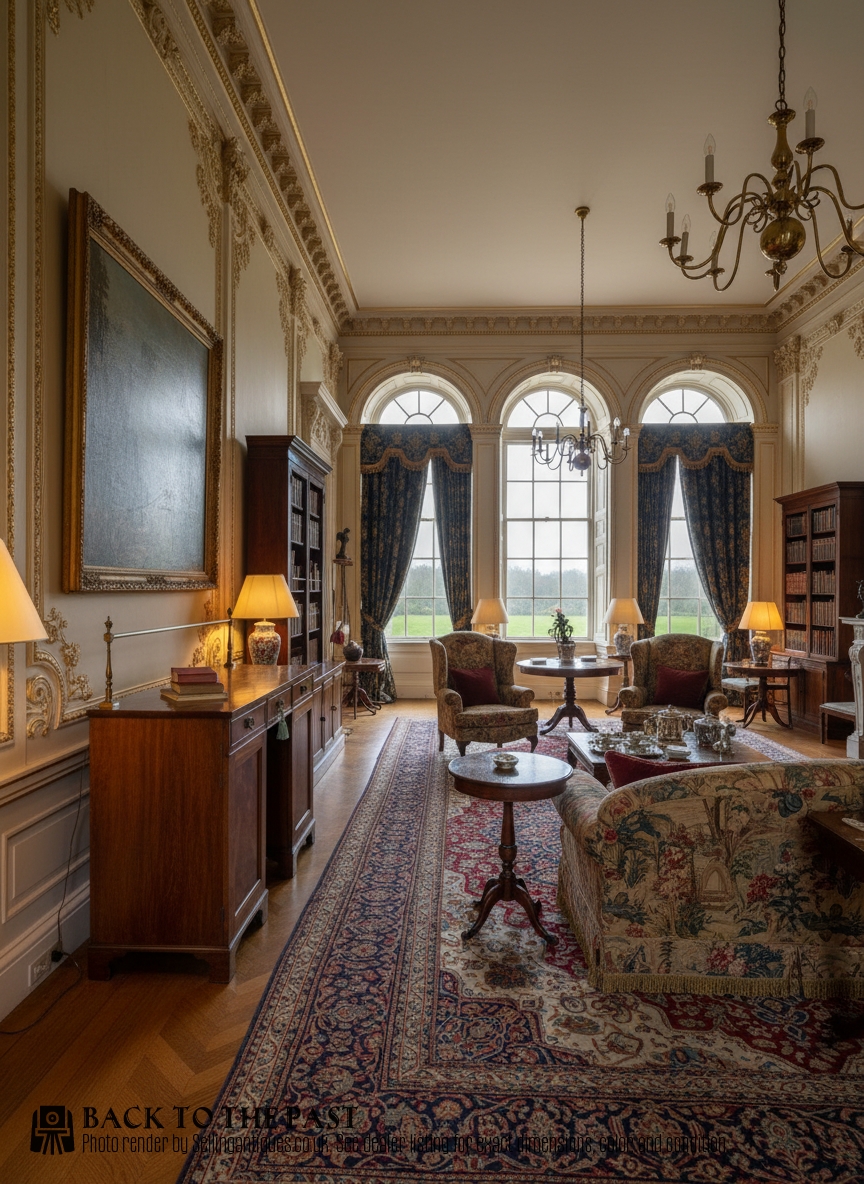
Georgian Wooden Credenza
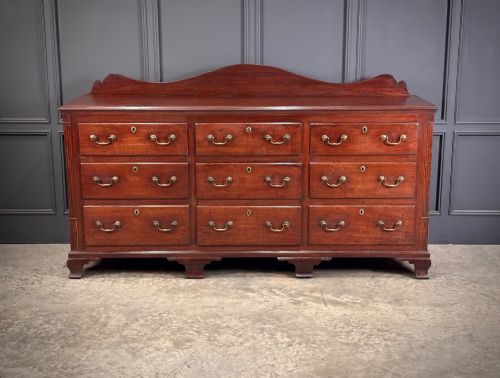
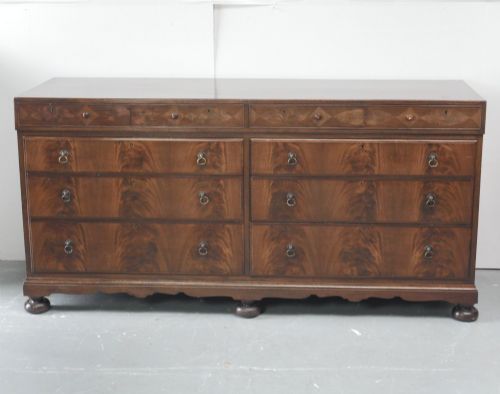
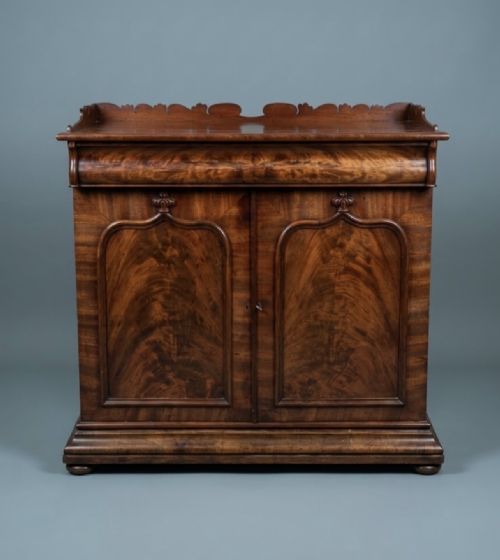
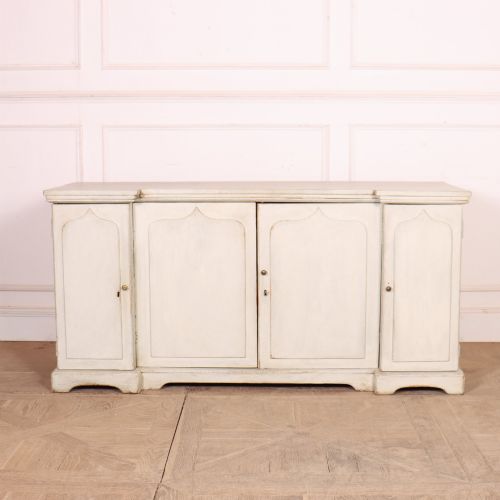
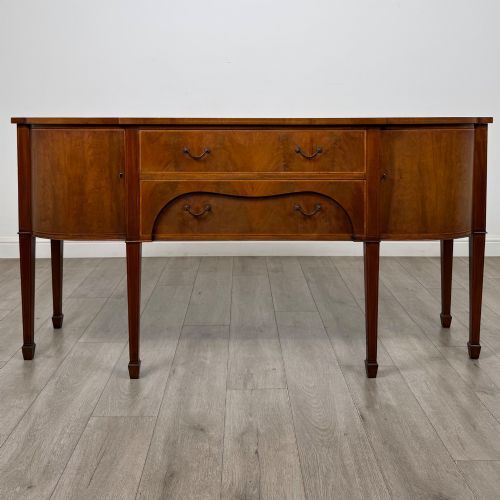
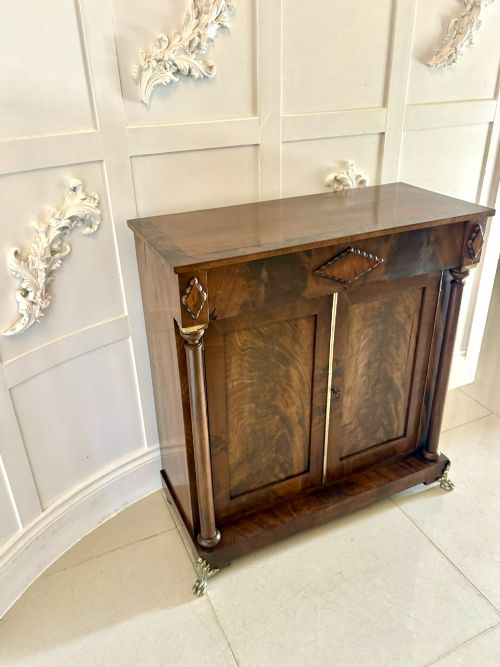
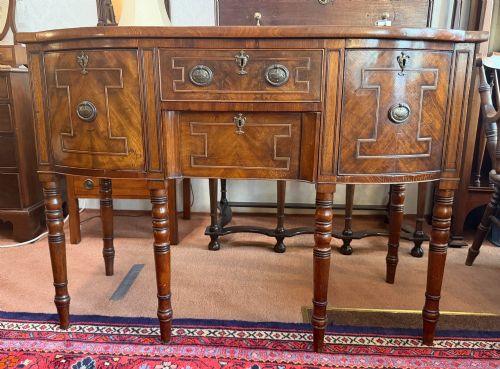
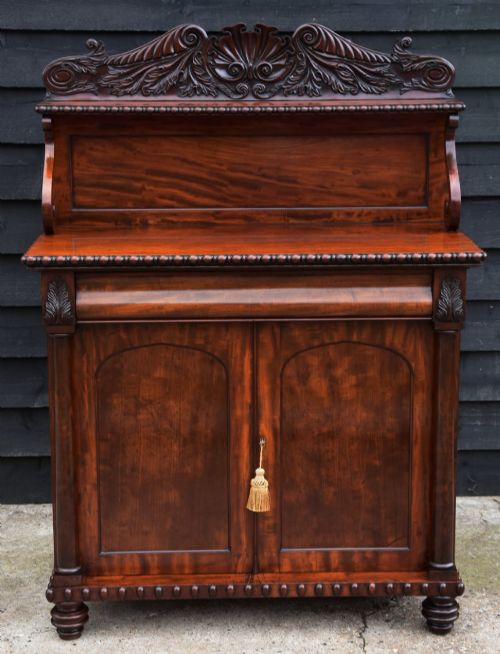
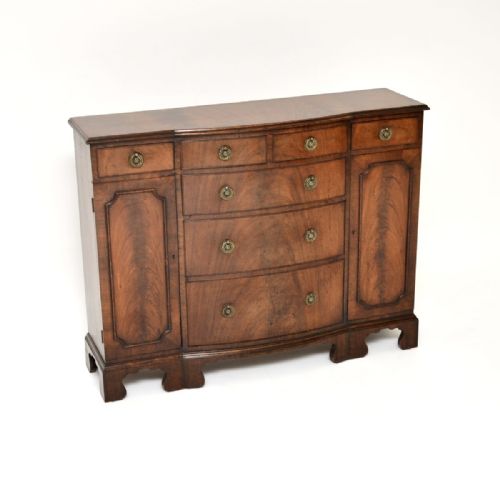
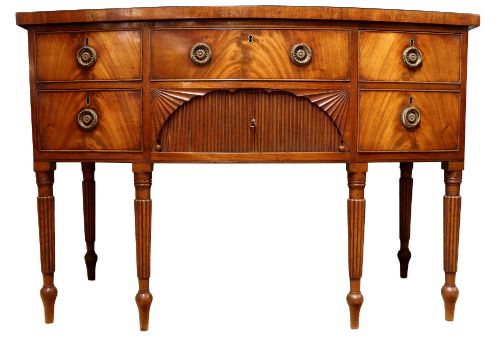
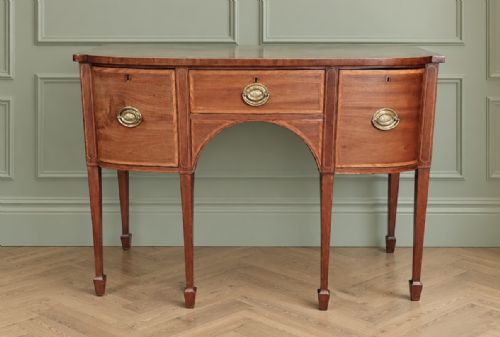
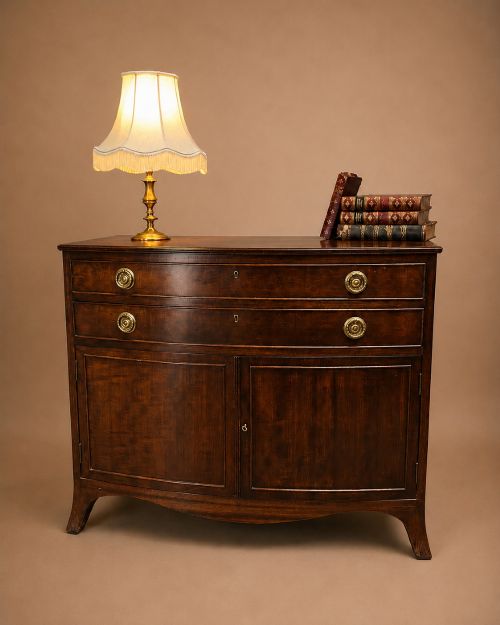
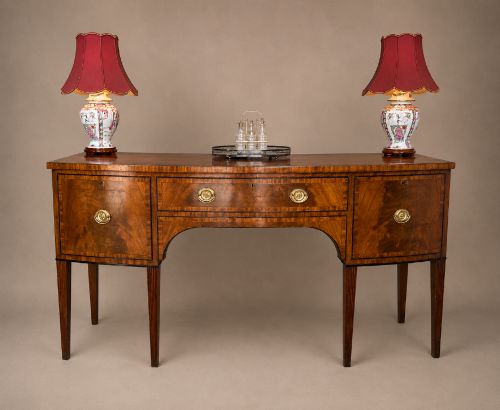
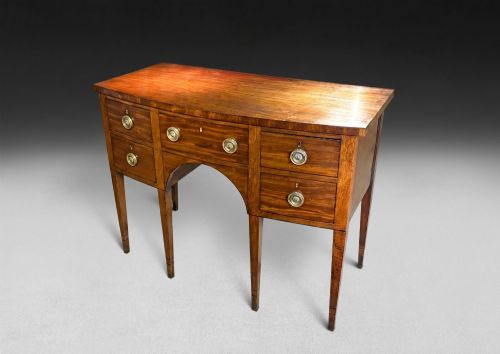
When buyers search for a georgian wooden credenza, they encounter a selection of sideboards, side cabinets, dresser bases, and chests of drawers spanning the Georgian, Regency, and 18th Century periods. These forms serve dining rooms and living spaces, providing surface area and enclosed storage through cupboards and drawers.
The versions met most frequently on this page include mahogany sideboards from the George III era, along with oak dresser bases and later revival pieces from the 19th and early 20th centuries. Makers and workshops constructed these items to anchor a room, combining architectural presence with everyday utility.
Materials and construction methods
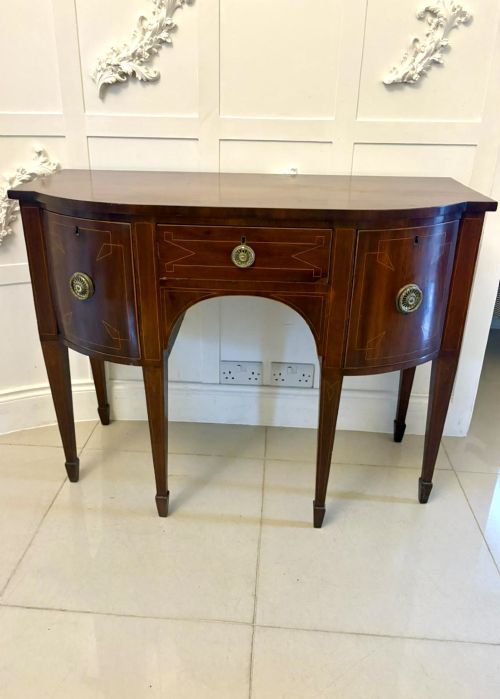
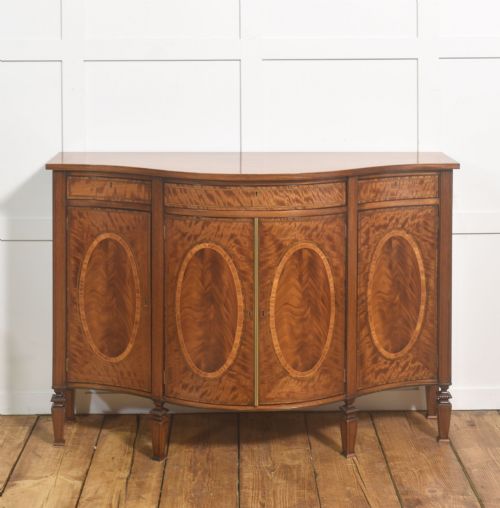
Cabinet makers relied predominantly on mahogany, flame mahogany, and oak as the structural timbers for these pieces, often selecting figured varieties for visible surfaces. Workshops utilised boxwood and satinwood for delicate inlay work, adding contrasting geometric and floral motifs.
Secondary elements incorporated brass for handles, key escutcheons, and gallery rails, while paint occasionally finished regional pine or secondary timbers. Construction followed traditional joinery techniques, mounting doors on hinges and housing drawers within solid carcases.
One surviving piece proudly carries the Strawberry Hill Gothic label, bringing Horace Walpole's eccentric architectural enthusiasm straight to the dining room.
Factors separating tiers of quality
The distinction between standard examples and superior pieces rests on the choice of timber and the precision of the cabinet work. Highly figured mahogany and carefully matched flame veneers demonstrate superior selection by the maker, whereas plain grain indicates simpler production.
Execution of decorative details such as stringing, satinwood inlay, and brass hardware dictates the refinement of the object. Sharp moulding profiles and tightly fitted drawer joints separate workshop pieces from mass-produced later revivals.
Whytock and Reid
The Georgian Wooden Credenza Glossary
- Serpentine sideboard
- A storage cabinet featuring a front with a concave centre flanked by convex curves, typical of late 18th century design. This shape requires advanced timber bending and joinery skills.
- Dresser base
- A lower cabinet structure containing drawers and cupboards beneath a flat top, originating from country houses. These pieces often lack the upper rack shelves.
- Chiffonier
- A compact sideboard or cabinet equipped with enclosed shelves below, popular during the Regency and Victorian eras. They serve smaller entertaining spaces.
- Inlay
- A decorative technique inserting contrasting woods like satinwood or boxwood into a recessed timber surface. It creates geometric borders and classical motifs.
- Breakfront
- A cabinet design where the central section projects forward from the flanking wings. This configuration breaks the linear monotony of long dining room furniture.
Georgian Wooden Credenza: Frequently Asked Questions
What is a georgian wooden credenza used for?
These forms function as sideboards, dresser bases, and cabinets designed for storing tableware, linens, and dining room essentials. The flat top surface also provides space for serving food or displaying decorative objects.
In modern interiors, they adapt easily to living rooms and hallways to supply concealed storage while anchoring the room's decorative scheme.
How do I tell a George III piece from a later revival?
Original pieces from the George III period display authentic 18th century timber patination, hand-cut joinery, and period-appropriate brass hardware. Construction methods reveal the working practices of contemporary cabinet makers.
Revival pieces from the 19th or 20th centuries often utilise machine-cut elements and standardised fittings, even when replicating earlier Sheraton or Georgian styles.
Which woods appear most often in these listings?
Mahogany and oak form the vast majority of the inventory, spanning formal dining furniture and country vernacular pieces. Flame mahogany veneer frequently decorates the front drawers and doors of finer examples.
Accents of boxwood and satinwood provide linear stringing and contrasting details, while brass supplies handles and key plates.
How should I care for an antique wooden sideboard?
Maintain the timber by keeping the piece away from direct heat sources and strong sunlight, which can dry out and fade the polish. Regular dusting with a soft, dry cloth preserves the historical finish.
Applying a traditional beeswax polish occasionally helps nourish the wood surface without building up excessive residue.