






Georgian Pedestal Buffet Table
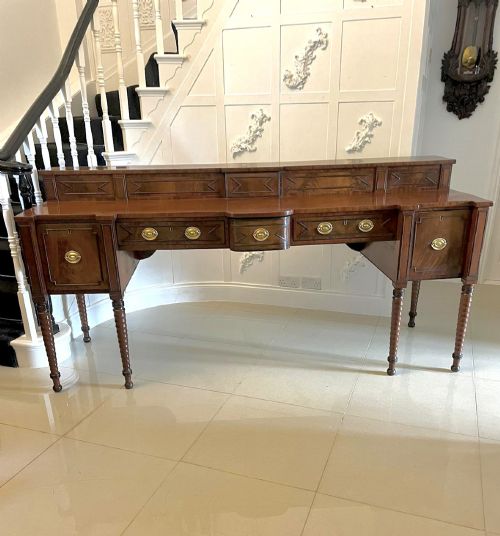
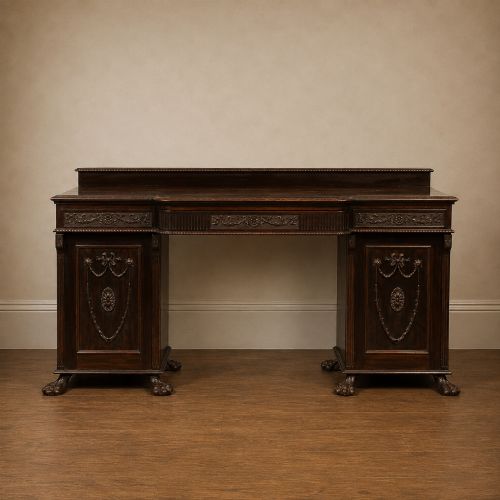
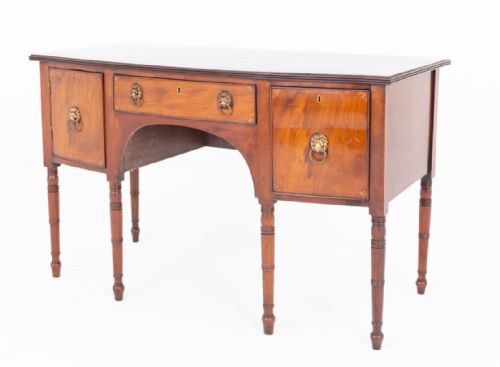
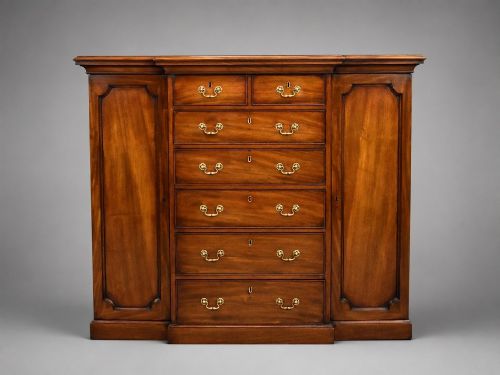
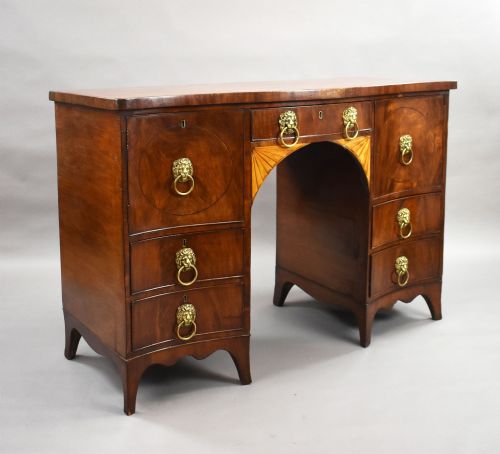
These georgian pedestal buffet table pieces are dining room and serving furniture built from rich timbers to anchor a formal interior.
Georgian Pedestal Buffet Table
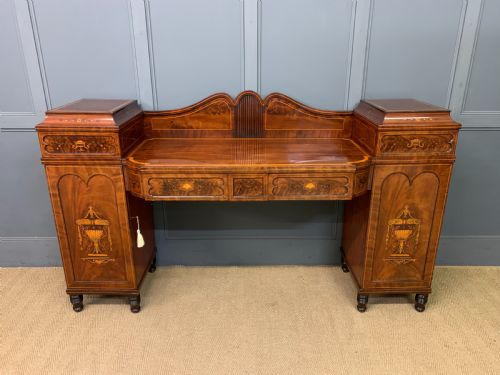
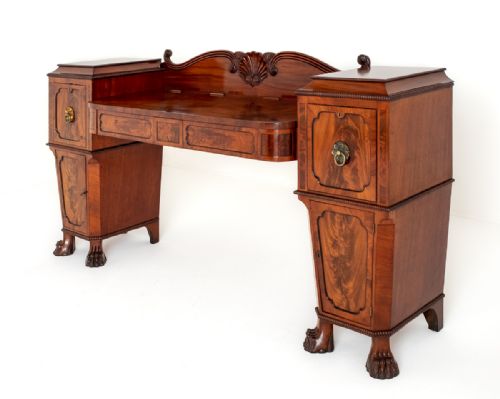
A georgian pedestal buffet table search reveals large dining room sideboards, servers, and dumb waiters designed for heavy service and display. These items originate across the Georgian, Regency, and Victorian eras, often taking the form of breakfront carcasses or pedestal arrangements flanked by enclosed cupboards.
The version most commonly encountered on this page is the mahogany sideboard, frequently featuring brass galleries or inlaid boxwood and satinwood details. Pieces range from grand Scottish stage-back variants to compact occasional servers and multi-tiered dumb waiters.
Materials and construction methods
Makers utilised solid mahogany and flame mahogany veneers over secondary timbers, often accentuating the surfaces with contrasting boxwood and satinwood inlay. Timber selection governed the visual weight of the furniture, particularly when figuring displayed deep natural grain.
Metal fittings such as brass galleries, handles, and castors were integrated to support practical dining tasks. Structural joinery accommodated substantial weight while supporting curved bow-front and breakfront shapes.
Georgian Pedestal Buffet Table Retail Price Guide 2026
Typical asking prices for georgian pedestal buffet table among the pieces listed under this phrase on Sellingantiques today, from the lower quarter to the upper quarter. They describe what is for sale here now, not the wider market.
Dumb waiters provided a silent assistant at the dinner table, holding plates when conversation turned too private for servants.
Distinctions in construction and finish
Quality rests in the selection of timber veneers and the precision of the wood inlay, where symmetrical flame mahogany indicates higher workshops. Finely cast brass galleries and robust structural joinery distinguish superior dining furniture from standard utilitarian pieces.
Proportion and execution of carved details, such as paw feet or reeded legs, separate refined examples from later revival items. The integration of original hardware further elevates the standing of a sideboard or dumb waiter.
Gillows·H Mower & Stephenson
The Georgian Pedestal Buffet Table Glossary
- Pedestal sideboard
- A dining room storage form featuring central serving space flanked by distinct structural pedestals or cupboards. These units often incorporate internal cellarets for wine storage.
- Dumb waiter
- A multi-tiered freestanding stand with revolving or fixed shelves utilised for serving food without domestic staff present. Examples often feature folding sides or graduated circular trays.
- Flame mahogany
- A veneer cut from timber where the branch meets the trunk, producing a distinctive flickering flame pattern. This material appeared on prominent surfaces of high-status furniture.
- Brass gallery
- A decorative metal rail mounted to the rear upper surface of a sideboard to prevent serving dishes from sliding. These fittings range from simple pierced brass bands to elaborate spindle structures.
- Stage-back
- A raised tier at the rear of a sideboard designed to display plate and serving silver. This architectural addition is particularly characteristic of Scottish dining furniture.
Georgian Pedestal Buffet Table: Frequently Asked Questions
What is a pedestal sideboard?
A pedestal sideboard is a large dining room storage piece consisting of central serving surfaces flanked by independent cupboards or pedestals.
These structures frequently incorporate interior compartments for bottles and storage, standing on solid feet or bases.
How do dumb waiters function?
Dumb waiters operate as multi-tiered serving stands placed beside dining tables to hold dishes and silverware.
Many examples feature graduated revolving trays or folding sides to accommodate different dining spaces.
Where were these pieces used?
These items belonged in formal dining rooms and country house settings where large meals required extensive serving and storage space.
Sideboards held food and plate, while dumb waiters provided accessible shelving near the dining table.
How do I spot brass galleries?
Brass galleries sit along the top rear edge of sideboards as decorative and functional metal rails.
They prevented serving dishes from falling backward and added a bright metallic contrast to dark mahogany surfaces.