
Inlaid Wood Dining Buffet
An inlaid wood dining buffet brings solid timber and contrasting stringing into a formal dining room, offering deep storage and a broad serving surface.
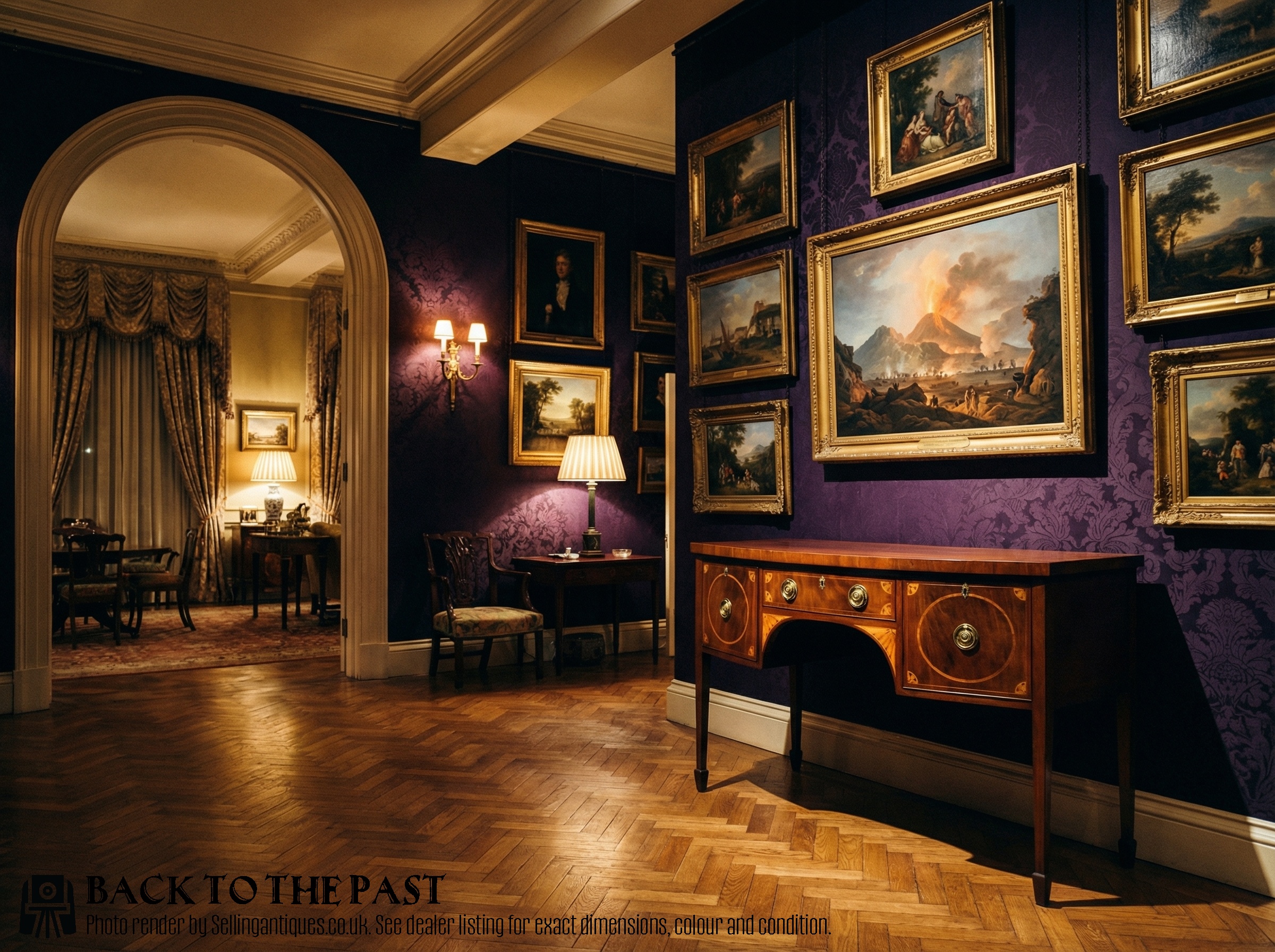
Inlaid Wood Dining Buffet
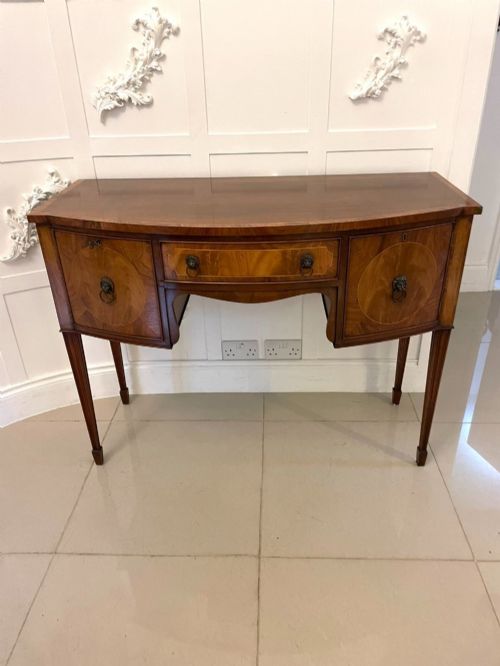
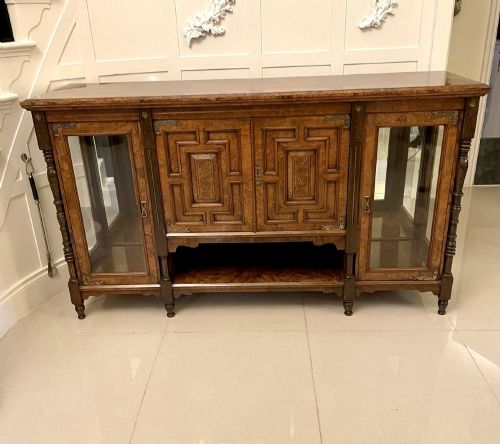
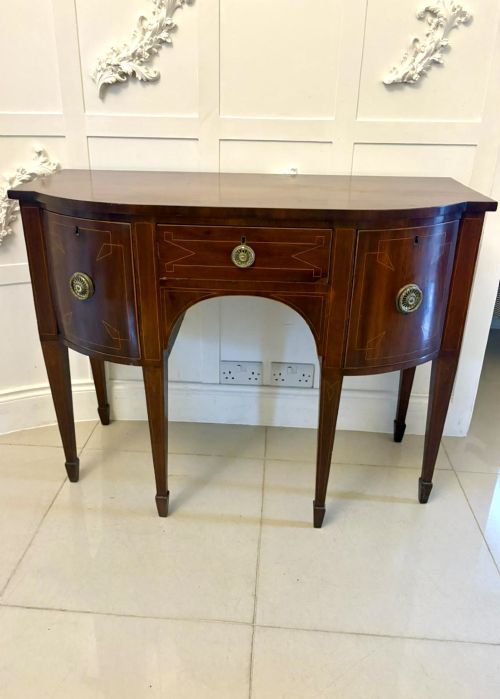
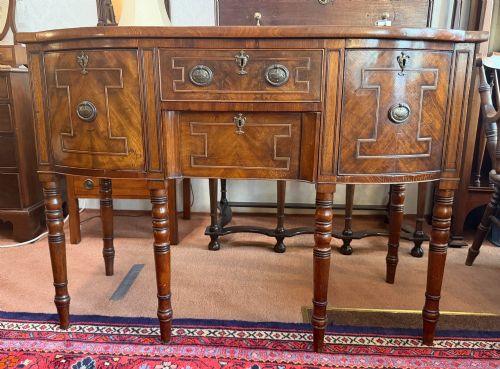
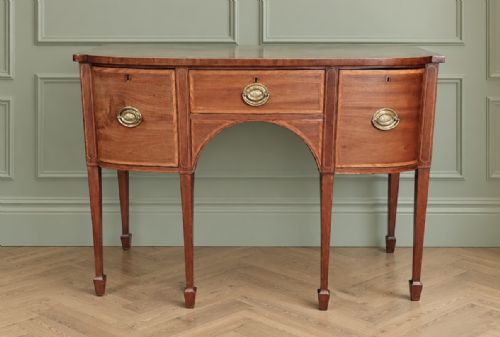
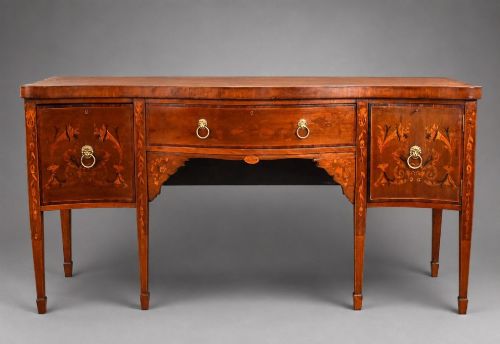
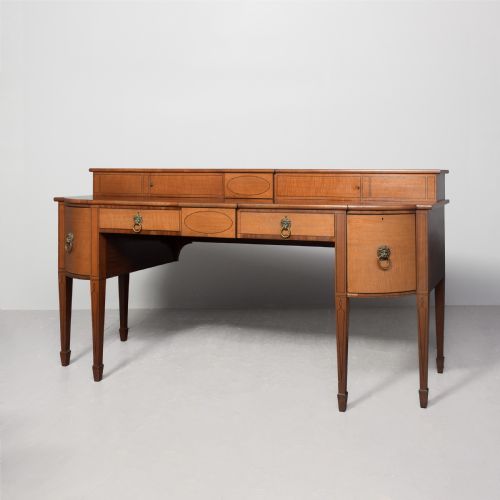
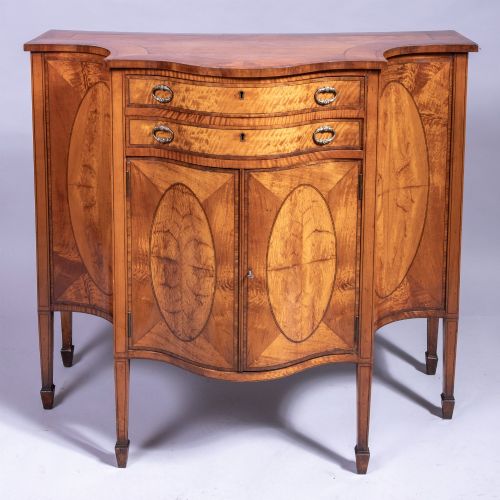
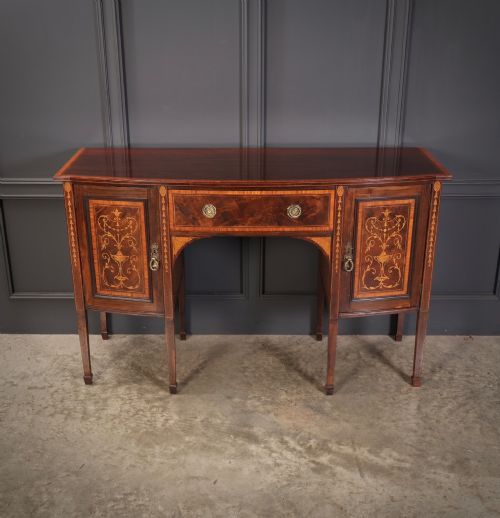
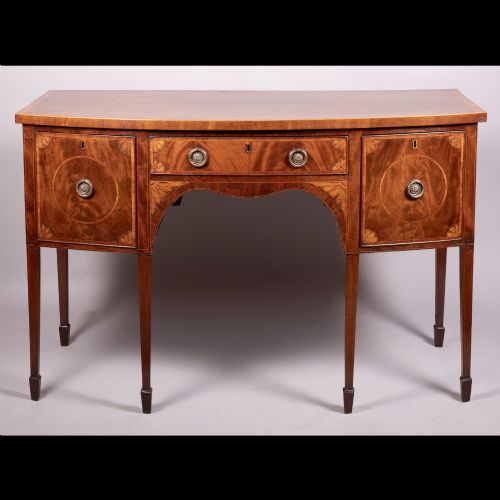
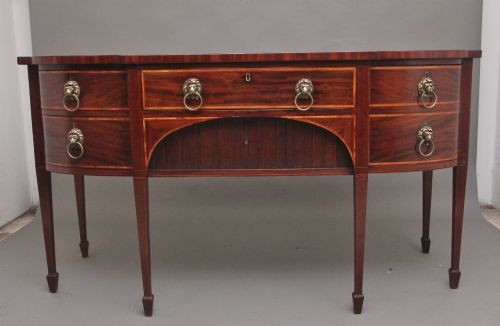
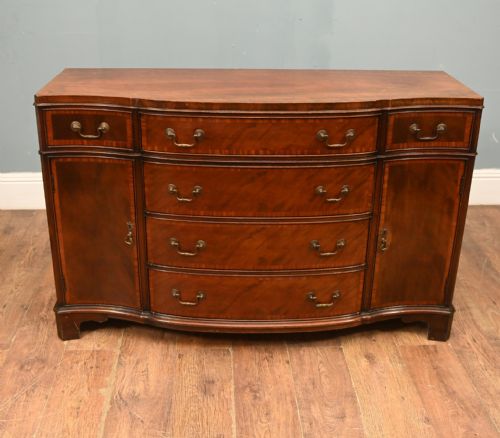
An inlaid wood dining buffet serves as a substantial storage and serving piece in a dining space, taking forms such as bow-fronts, breakfronts, and serpentine shapes. The pieces meeting this search phrase span Georgian, Regency, and Edwardian periods, alongside later revival pieces.
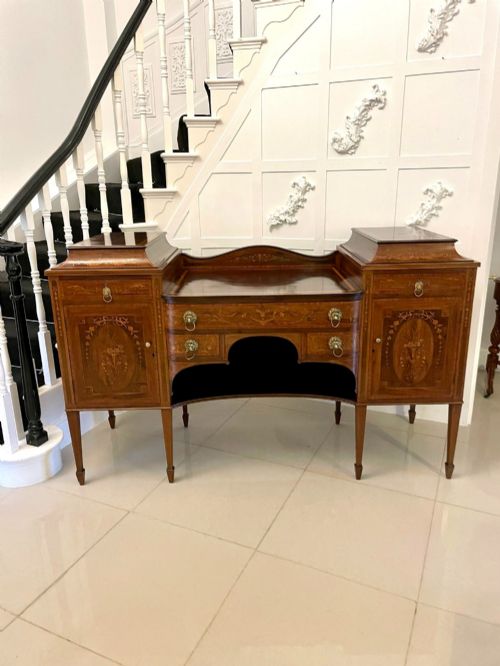
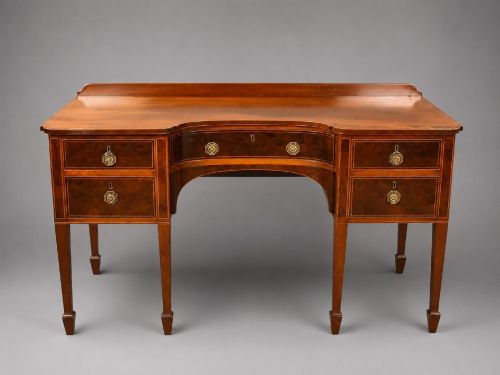
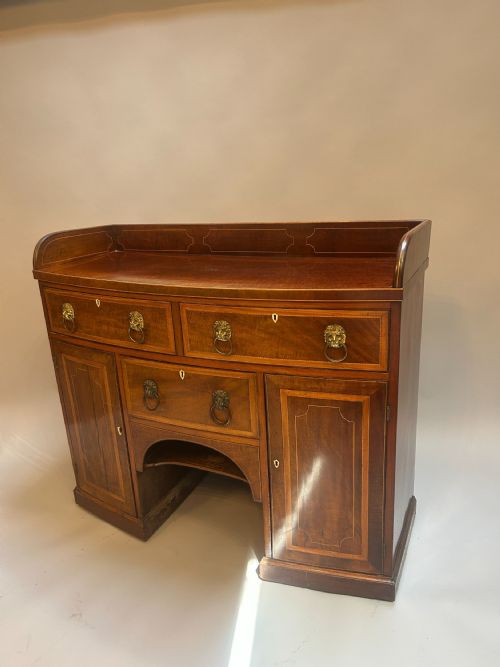
The most common examples on this page are mahogany sideboards and servers finished with boxwood or satinwood inlay, often featuring linear stringing or pictorial marquetry. Makers and workshops from London and regional centres produced these items for formal dining rooms across the eighteenth and nineteenth centuries.
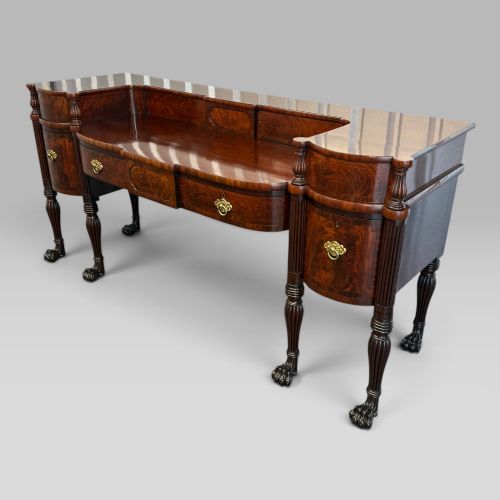
Buyers encounter formats ranging from compact pedestals to large stage-back and breakfront designs equipped with multiple drawers and cupboards. These pieces combine practical storage for silver and linen with decorative cabinet-making.
Materials and Construction
Cabinet-makers relied heavily on solid mahogany and flame mahogany veneers applied to secondary woods, providing rich grain patterns across the primary surfaces. Boxwood and satinwood were cut into fine strips and geometric motifs to create contrasting borders and centre medallions.
Inlay techniques required precise hand-cutting of recesses in the base wood to receive dark and light veneers, secured with traditional animal glues. Structural integrity came from dovetailed drawer construction and solid timber framing, often incorporating brass hardware and castors.
Some nineteenth-century sideboards hide deep cellarette drawers originally designed to keep wine bottles cool on ice.
Markers of Quality
Quality rests on the depth of the timber figuring and the precision of the inlay work, where crisp, tight joints between contrasting woods indicate skilled hand labour. Simple linear stringing differs significantly from complex figurative marquetry requiring numerous distinct wood species.
Proportion and structural balance separate standard production from finer workshop output, particularly in shaped fronts like serpentine and bow-front designs. Original hardware, well-fitted drawers, and intact timber patination add substantially to the integrity of a piece.
Hewetsons London
The Inlaid Wood Dining Buffet Glossary
- Inlay
- A technique where pieces of contrasting timber, such as boxwood or satinwood, are set flush into a recess on the primary wood surface to form a decorative pattern.
- Marquetry
- Detailed pictorial or geometric veneer work assembled from various wood types to cover larger surface areas on cabinet doors and drawer fronts.
- Bow-Front
- A convex, curved cabinet front that projects outward at the centre, requiring specialised bending and shaping of the timber.
- Serpentine
- A horizontally undulating front design featuring a convex centre flanked by concave curves, demanding high joinery skill.
- Breakfront
- A cabinet front where the central section projects forward from the flanking outer sections, creating architectural depth.
Inlaid Wood Dining Buffet: Frequently Asked Questions
What is the difference between a buffet and a sideboard?
Historically, sideboards and buffets served similar functions in dining rooms for holding food, silver, and linen.
Over time, specific regional styles and cabinet heights emerged, though many terms overlap in antique listings.
How do I identify a Georgian inlaid buffet?
Georgian pieces typically display hand-cut boxwood stringing, flame mahogany veneers, and traditional dovetailed drawer construction without modern fixings.
Proportions remain balanced, often featuring tapered legs or lion paw feet depending on the exact sub-period.
Where should I place a large breakfront buffet?
These substantial items require a dedicated wall in a dining room or spacious hallway with adequate clearance for opening cupboard doors and drawers.
Keep them away from direct heat sources and strong sunlight to protect the mahogany veneer and delicate inlay.
What maintenance do antique wood surfaces need?
Dust regularly with a dry, soft cloth and apply traditional beeswax occasionally to nourish the antique timber finish.
Avoid silicone-based polishes and maintain consistent room humidity to prevent veneer lifting or wood cracking.