

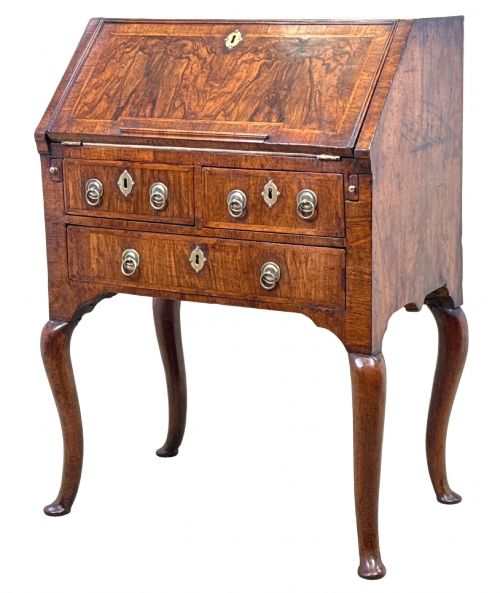
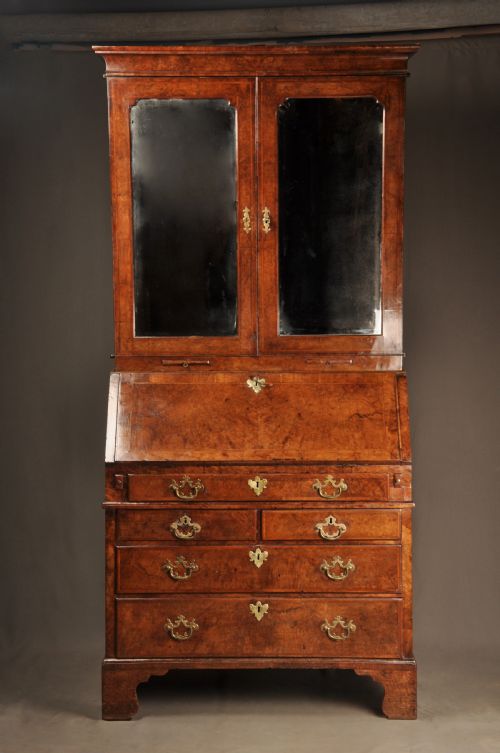
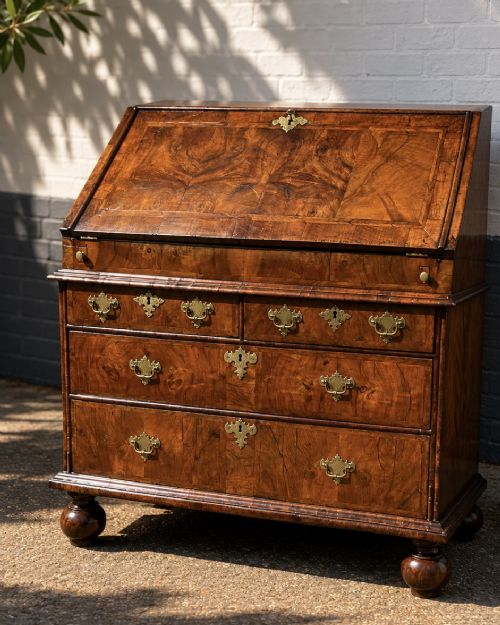
Georgian Walnut Secretary Desk
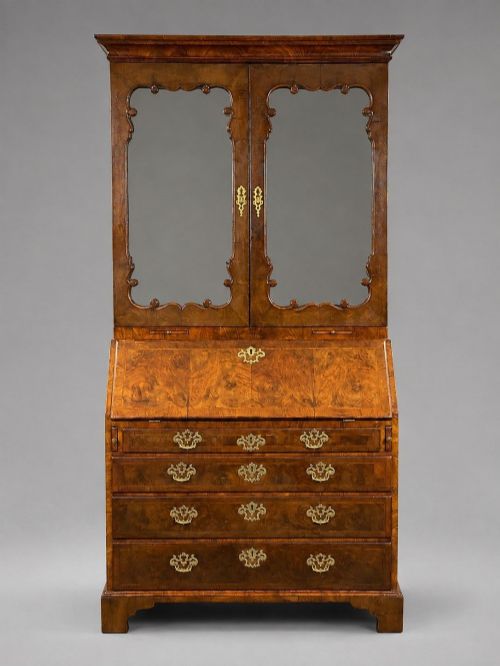
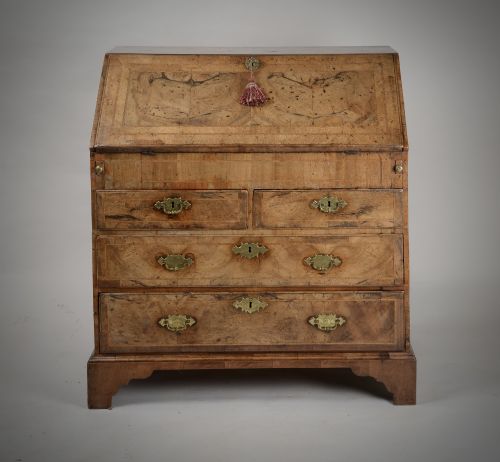
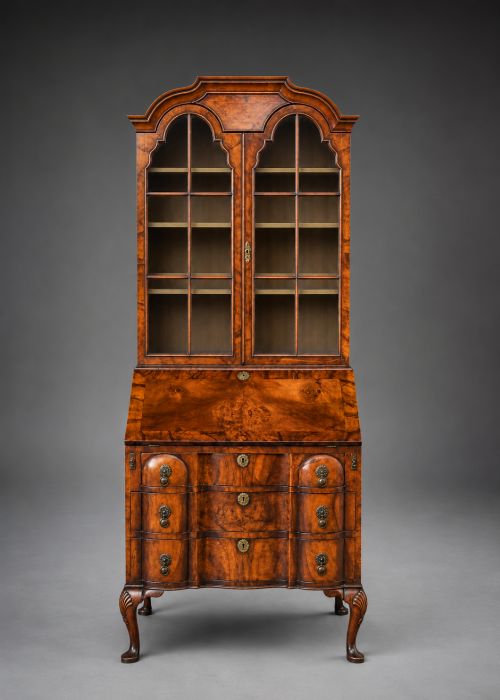
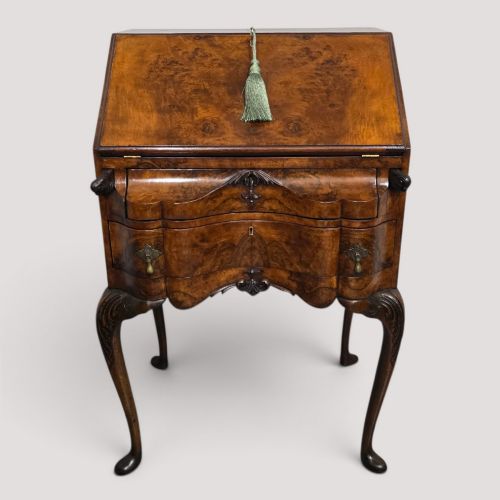
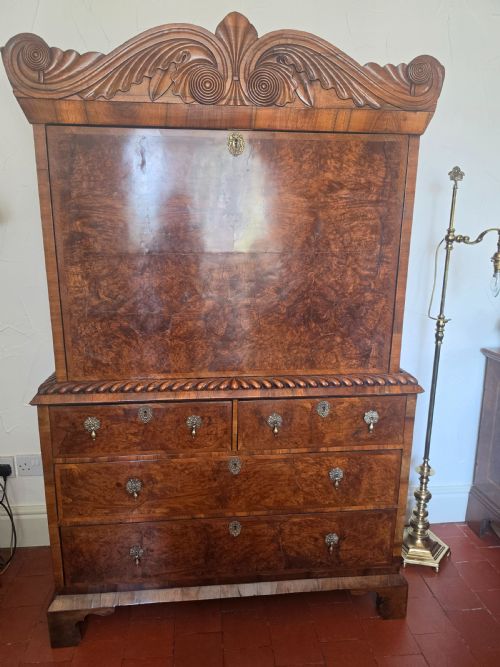
These are a georgian walnut secretary desk, combining fitted writing interiors and concealed drawers in figured timber for serious domestic correspondence.
Georgian Walnut Secretary Desk
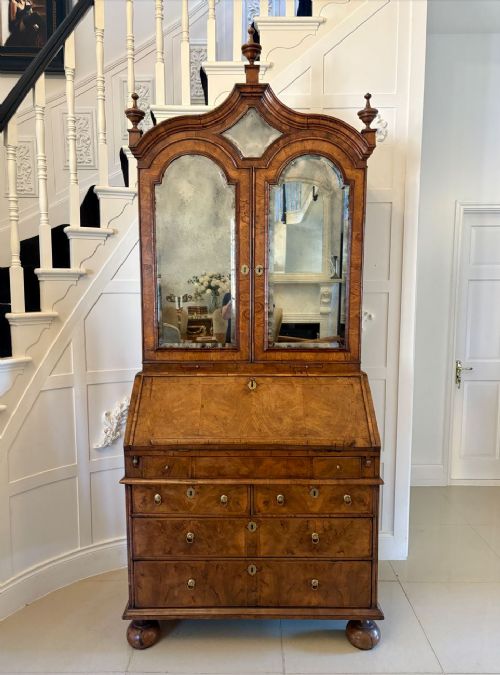
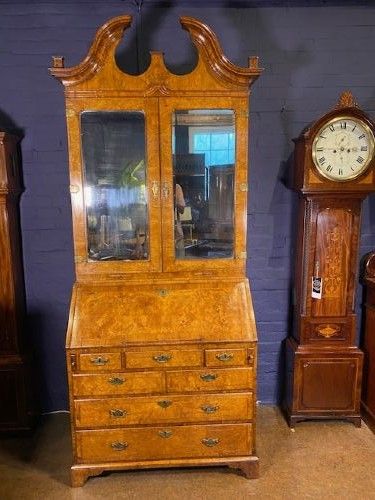
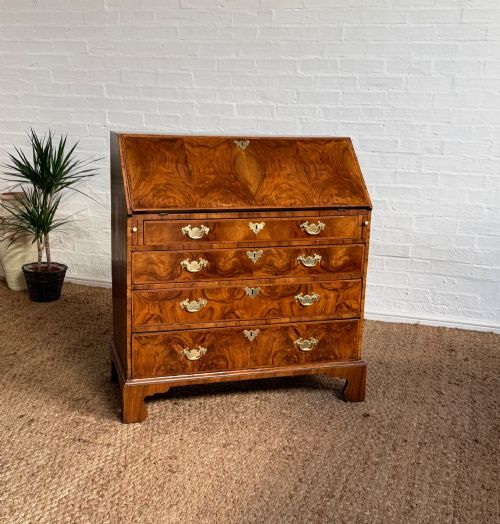
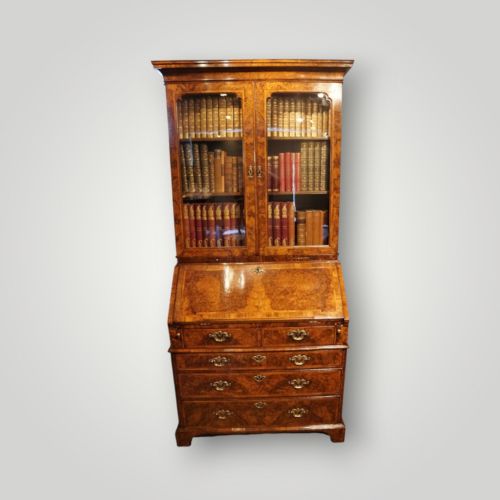
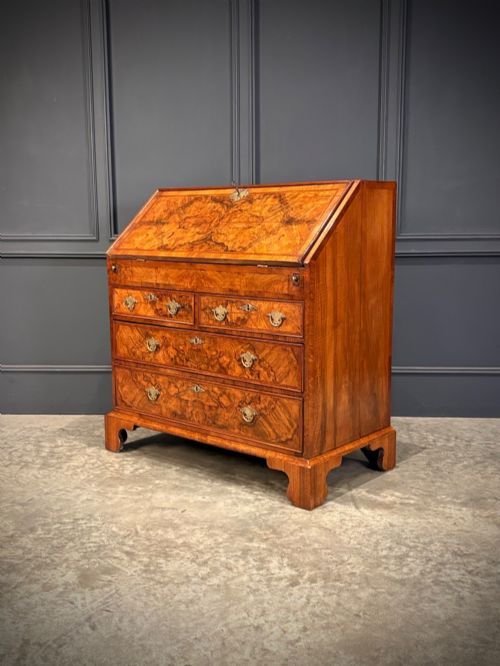
A georgian walnut secretary desk encompasses fall-front bureaux, bureau bookcases with glazed upper sections, and escritoires dating primarily from the eighteenth century. Pieces emerge from the Queen Anne, George I, and George II periods, alongside later nineteenth-century interpretations and Edwardian reproductions.
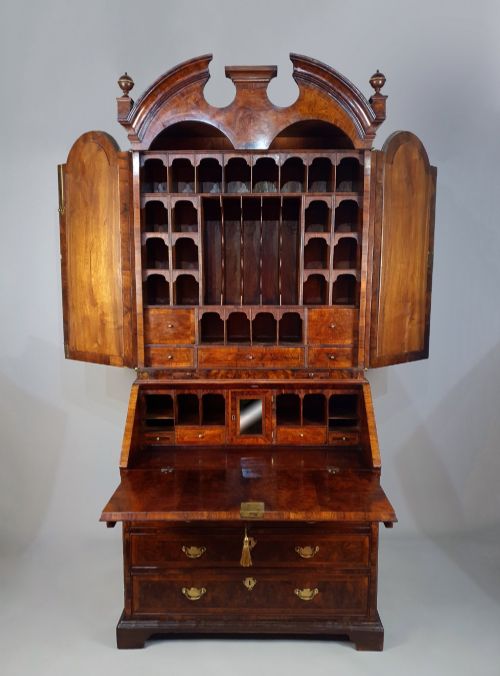
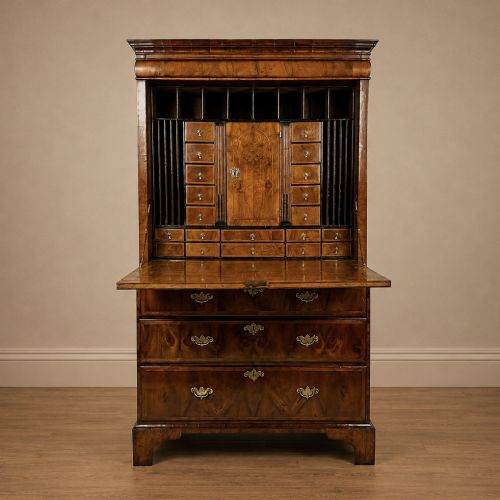
Buyers encounter compact bureau tables on stands as well as tall architectural bookcases built in separate sections. Many examples include fitted interior compartments, pigeonholes, and candle slides designed for residential writing tasks.
Judging execution
Quality rests in the choice of timber figures, where burr walnut veneer and figured grain patterns create lively optical depth across the fall front and drawer fronts. Grain continuity across opening sections demonstrates the joiner's skill.
The refinement of internal pigeonholes, secret compartments, and original brass handles separates standard production from exceptional examples. The survival of original patination on the timber surface dictates the visual integrity of the piece.
Several examples retain secret compartments hidden behind removable interior pigeonholes for storing private papers.
The Georgian Walnut Secretary Desk Glossary
- Bureau bookcase
- A writing cabinet featuring a fall-front desk base beneath a glazed upper shelving unit. This combined form housed both books and correspondence materials.
- Fall front
- A hinged writing flap that pulls down to form a horizontal desk surface. It conceals pigeonholes and small drawers when closed.
- Burr walnut
- Timber sliced from walnut tree growths that produces swirling, highly decorative grain patterns. Cabinetmakers applied this veneer to primary visible surfaces.
- Featherbanding
- Narrow bandings of inlaid wood veneer arranged in a herringbone pattern around drawer perimeters. This technique frames the primary walnut surfaces.
- Escritoire
- A tall writing cabinet equipped with a drop-down writing flap and internal drawers. The term describes early cabinet forms pre-dating standard bureau names.
Georgian Walnut Secretary Desk: Frequently Asked Questions
What is a bureau bookcase?
A bureau bookcase combines a lower writing desk with a drop front and an upper glass-fronted cabinet for displaying books. These tall pieces served as combined libraries and writing stations in eighteenth-century homes.
Lower sections contain fitted interior drawers and pigeonholes behind the writing flap. Upper sections house adjustable shelving enclosed by glazed doors.
How do I identify a George I desk?
George I desks display distinct walnut veneers, herring-bone featherbanding, and compact proportions typical of the early eighteenth century. They frequently utilise brass drop handles and bracket feet.
Interiors often feature stepped drawer arrangements and central well compartments. The timber shows warm figuring without later nineteenth-century machine finishes.
Where were these desks used?
Owners placed these writing cabinets in parlours, private libraries, and withdrawing rooms for managing personal correspondence and household accounts. The fall-front design kept writing materials concealed when not in use.
Candle slides positioned beneath upper bookcases provided illumination for evening writing tasks. Taller bureau bookcases functioned as permanent architectural fixtures within domestic interiors.
What is featherbanding?
Featherbanding is a decorative inlay technique using small diagonal strips of contrasting veneer arranged in a V-shape. Cabinetmakers placed these borders around drawer fronts and fall-front panels.
This detail adds geometric framing to figured walnut surfaces. Its presence indicates careful hand-work characteristic of early eighteenth-century construction.