

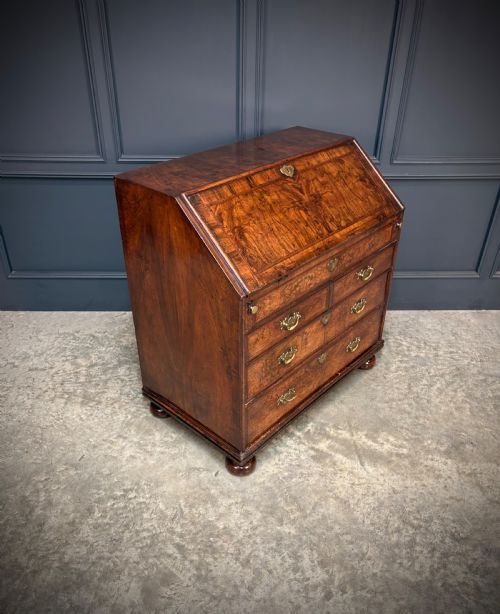


Walnut Slant Top Bureau
A walnut slant top bureau is a writing cabinet with a sloping fall-front lid that conceals a fitted interior of drawers and pigeonholes.
Walnut Slant Top Bureau
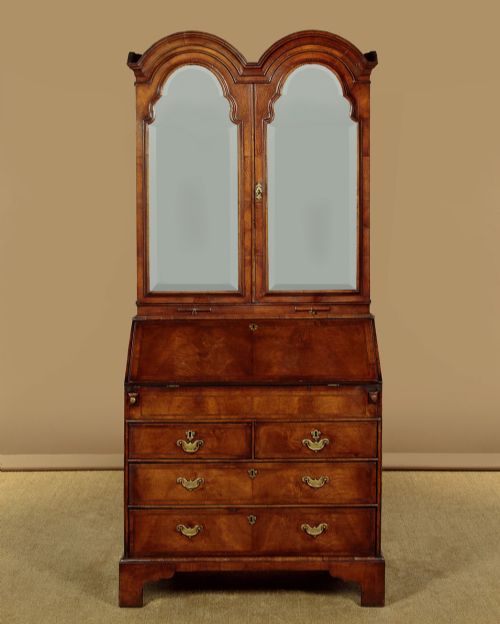
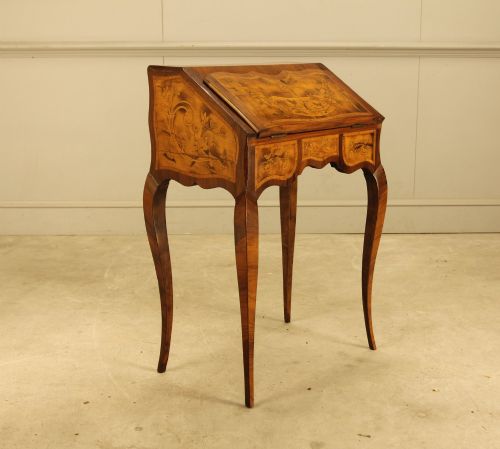
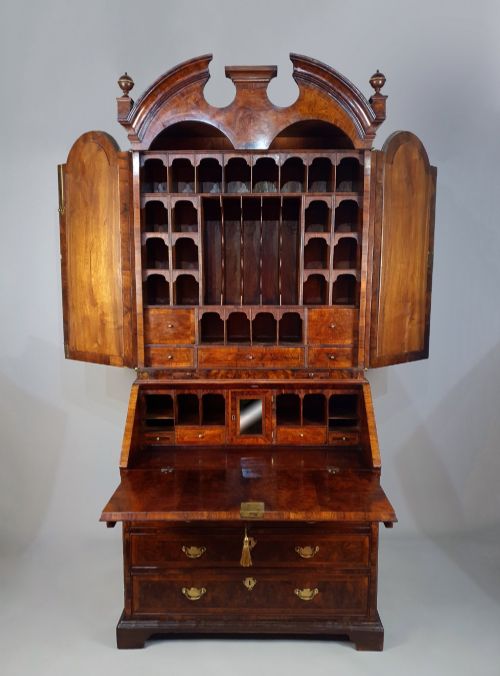
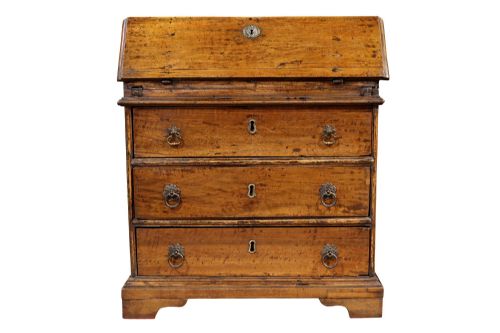
A walnut slant top bureau serves as a private writing desk, taking the form of a cabinet where the hinged flap lets down to form a writing surface. These pieces appear in forms ranging from compact writing desks to tall bureau bookcases and bureau cabinets across multiple periods.
The walnut slant top bureau includes early examples from the seventeenth and eighteenth centuries, alongside later nineteenth century pieces, Victorian items, and Edwardian desks. Buyers encounter bureau bookcases with glazed tops, compact Davenport desks, and larger writing bureaux.
Origin and style vary from early English solid walnut and veneered pieces to Dutch marquetry examples and later revival pieces. The selection spans George I, George II, and Queen Anne periods, alongside William and Mary and Victorian iterations.
How they were made
Cabinet makers utilised walnut and burr walnut veneers applied to secondary timbers, alongside solid walnut and oak carcases. Figured timbers such as satinwood frequently appear in the fitted interiors behind the fall-front lids.
Construction involved dovetail joints for internal drawers and herringbone inlay for surface decoration. Metalwork comprises brass handles and escutcheons, complemented on early pieces by original ironwork and candle slides.
The listings show bureau forms spanning the seventeenth century through to the Edwardian era, constructed in walnut, burr walnut, oak, and satinwood.
What varies in quality
Quality rests in the choice and matching of burr or figured walnut veneers across the fall-front and drawer fronts, alongside the complexity of the internal fittings. Early examples demonstrate superior timber selection and cabinet work compared to later revival pieces.
The integrity of the original hardware, including brass handles, ironwork, and internal secret compartments, distinguishes finer examples. The preservation of original surface finishes and timber patination also separates standard production from superior pieces.
The Walnut Slant Top Bureau Glossary
- Burr walnut
- A veneer taken from the burl growth of a walnut tree, yielding swirling patterns of grain. This timber was favoured by cabinet makers for high-status bureau fronts.
- Fall-front
- The hinged sloping lid of a bureau that opens downward to provide a writing surface. It conceals the pigeonholes and small drawers of the interior.
- Herringbone inlay
- A narrow band of contrasting veneer laid in a V-shaped pattern resembling a fish skeleton. It frames the drawer fronts and bureau flaps of early pieces.
- Bureau bookcase
- A writing bureau surmounted by a glazed or panelled cabinet for books. These tall two-part pieces date predominantly from the eighteenth century.
- Candle slide
- A pull-out wooden board mounted beneath the bookcase doors to hold candles for illumination. They slide back into the carcase when not in use.
Walnut Slant Top Bureau: Frequently Asked Questions
What is a walnut slant top bureau?
A walnut slant top bureau is a writing desk featuring a hinged, sloping lid that pulls down to reveal small drawers and pigeonholes. Below this writing flap, storage drawers provide space for papers and personal items.
These pieces range from compact Davenport desks to large bureau bookcases with glazed upper sections. Walnut and burr walnut veneers predominate across the various periods.
How do I date an antique bureau?
Dating relies on timber construction methods, handle hardware, and overall stylistic details. Early eighteenth-century pieces often feature feather banding, herringbone inlay, and original ironwork.
Later Victorian and Edwardian examples utilise machine-sawn veneers and different internal layouts. Comparing the secondary woods inside the drawers also helps establish the period of manufacture.
Were these desks used for writing?
Bureaux served as the primary desks for correspondence and estate management in domestic interiors. The sloping lid provided a comfortable surface for writing while keeping documents private when closed.
The fitted interior held inkstands, quills, and stationery, while secret compartments secured valuable papers and currency.
What is a Davenport desk?
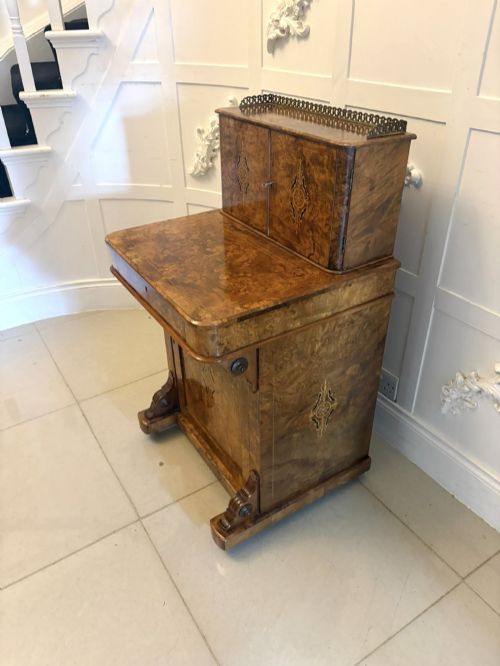
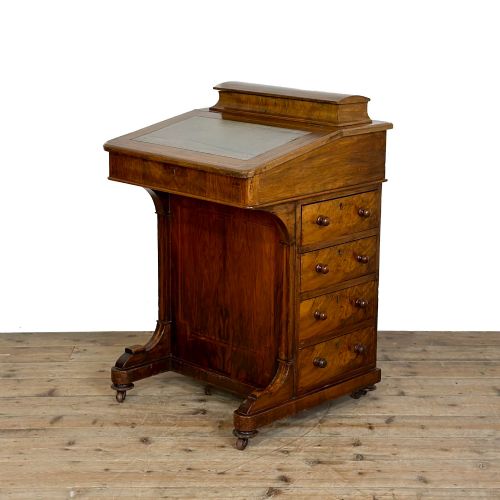
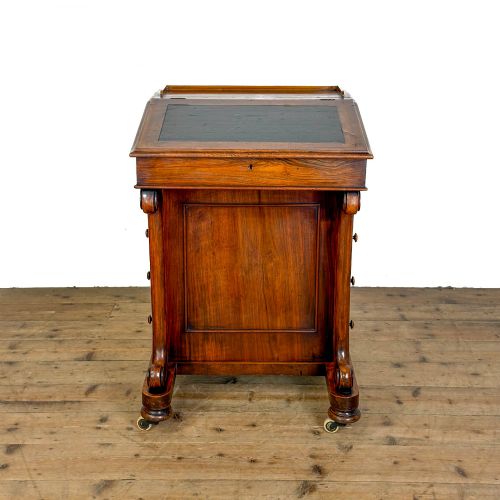
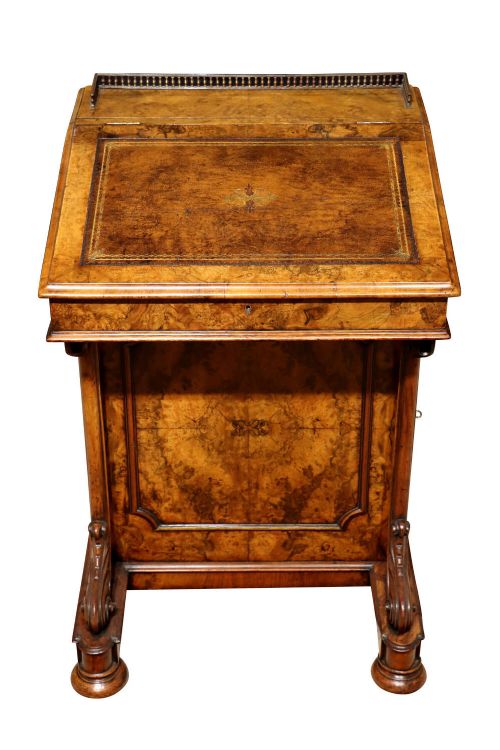
A Davenport is a compact form of desk featuring a slant top writing lid above a pedestal of drawers. They emerged during the nineteenth century in Victorian and Edwardian households.
Many examples incorporate burr walnut veneers, inlaid marquetry, and side drawers accessed from a seated position. Their smaller footprint suited boudoirs and drawing rooms.
How should I care for antique walnut?
Antique walnut furniture requires placement away from direct sunlight and heat sources to prevent timber splitting. Maintaining stable room humidity protects the fragile veneers from lifting off the carcase.
Occasional application of appropriate wax polish preserves the surface sheen and nourishes the aged wood without building up heavy residues.