
Georgian Vanity Glass
A georgian vanity glass brings practical elegance to a dressing room, offering clear reflection and period proportion.
Georgian Vanity Glass
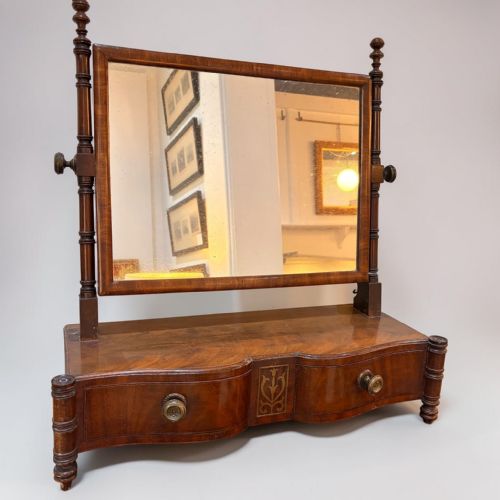
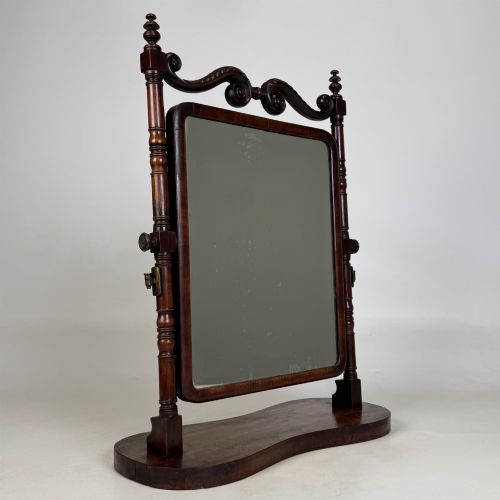
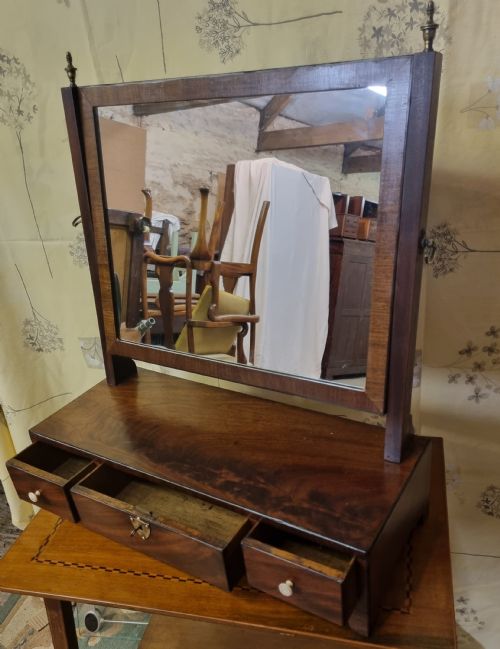
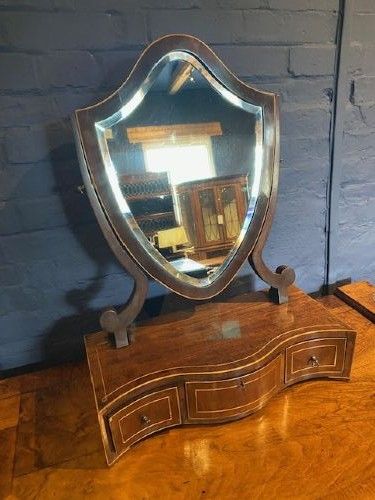
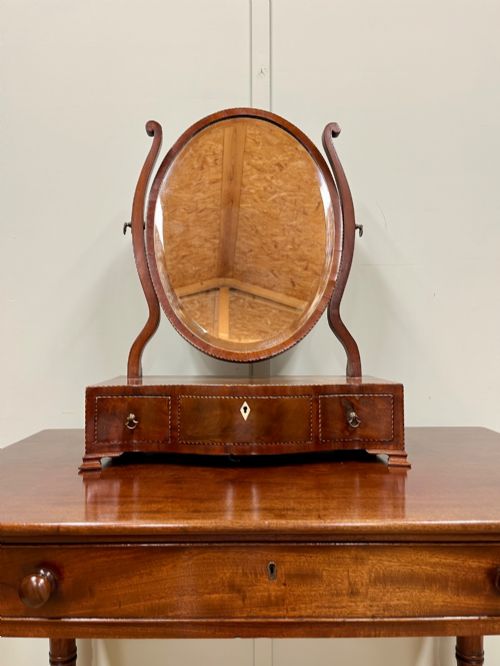
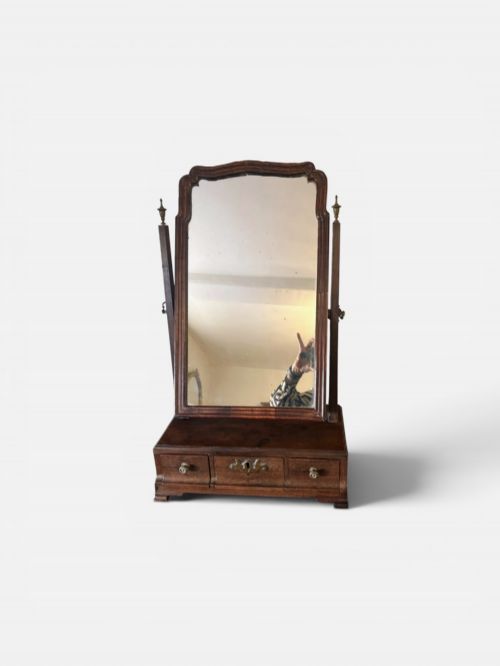
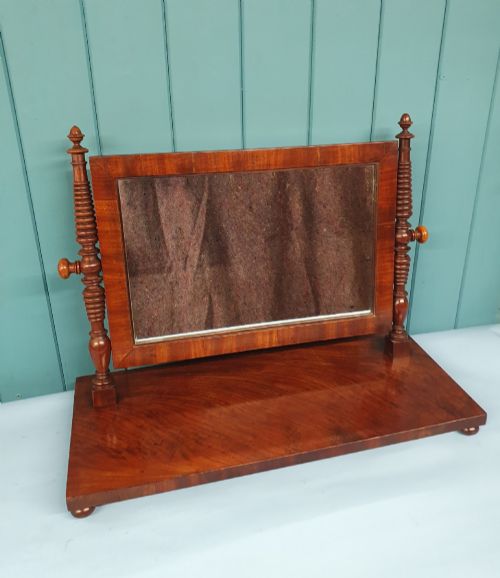
A georgian vanity glass encompasses dressing table mirrors, toilet mirrors, and swing mirrors designed for personal grooming. These pieces sit on chests or tables, allowing the user to adjust the angle of the glass via side pivots.
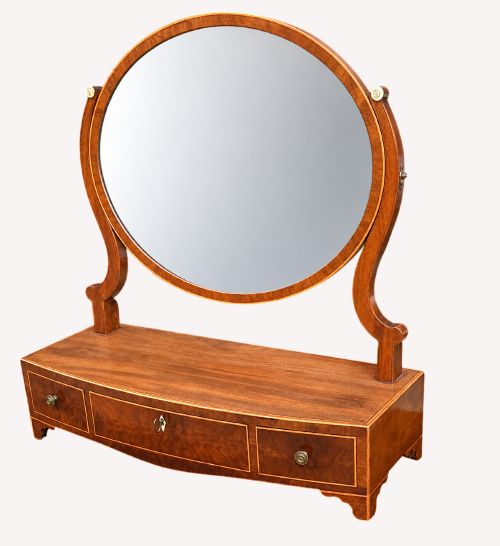
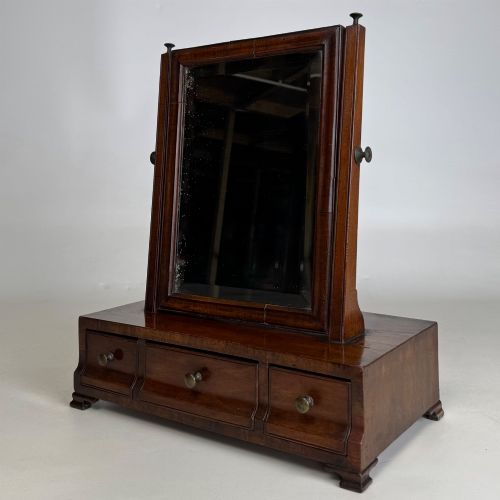
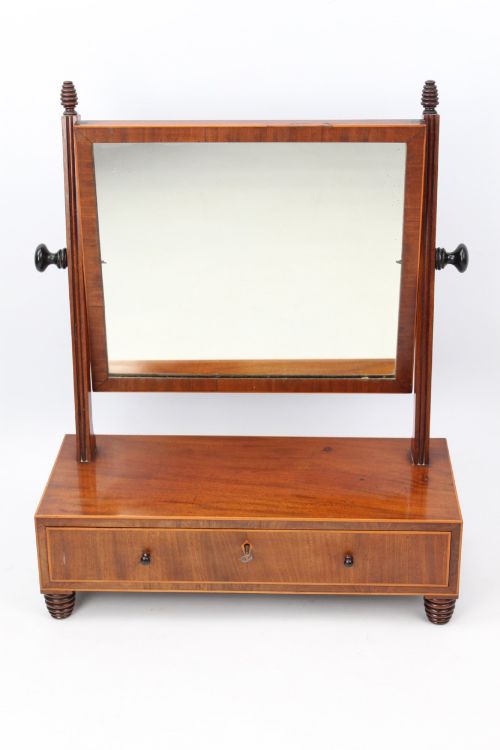
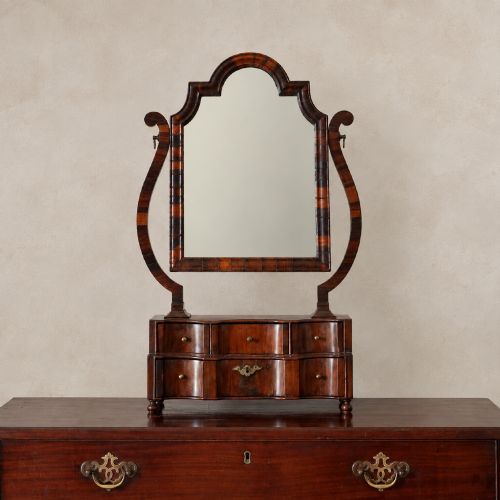
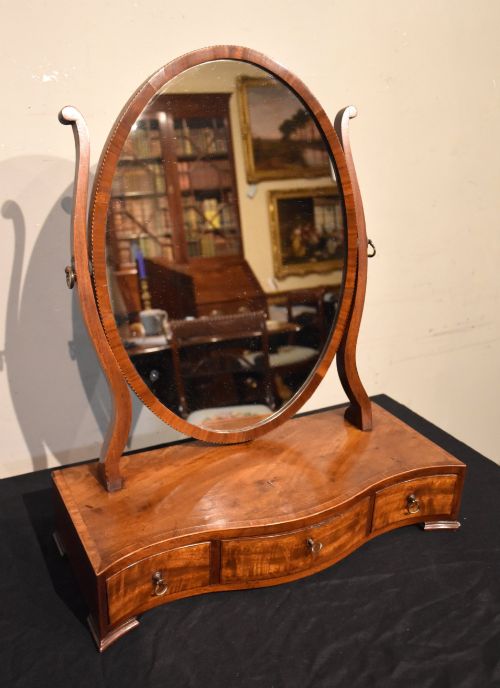
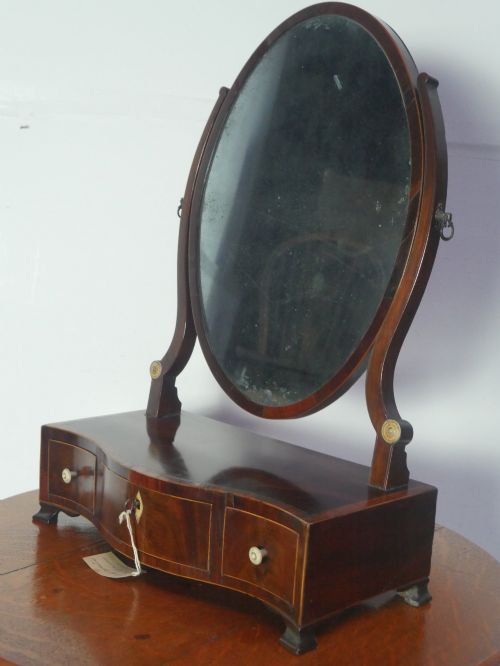
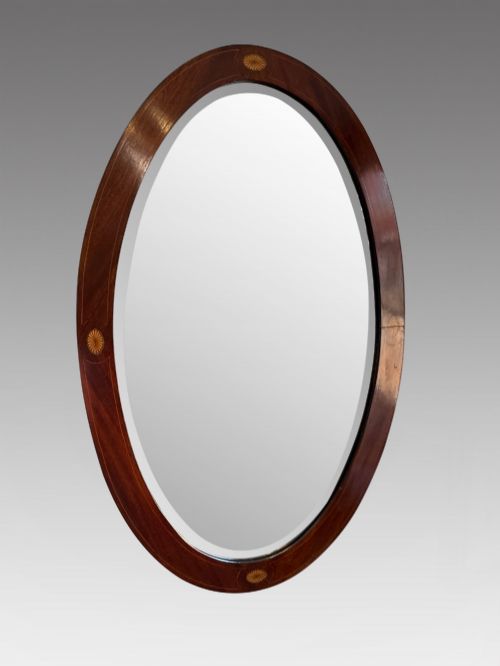
The selections encountered most frequently on this page feature mahogany frames, often incorporating small box bases fitted with drawers. Examples span the eighteenth century into the regency period, displaying upright or horizontal mirror plates in rectangular and oval shapes.
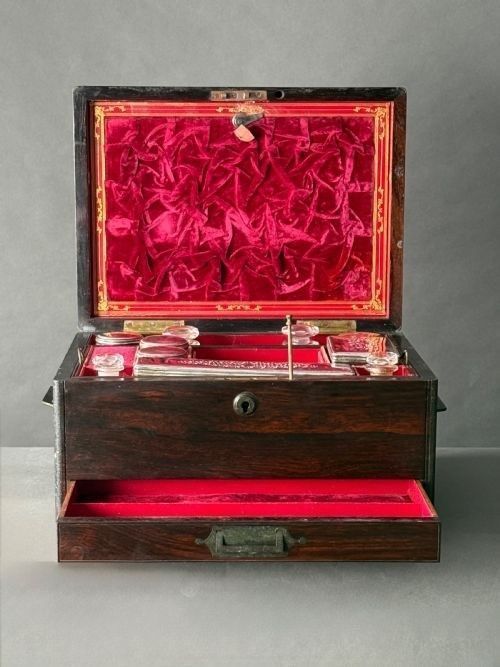
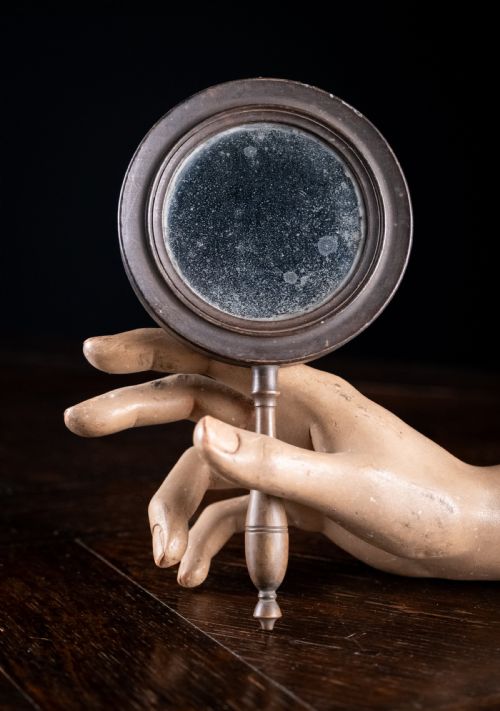
Variations include portable hand mirrors and larger dressing boxes with fitted interiors. Walnut and burr walnut versions also appear alongside the dominant mahogany stock, reflecting the materials favoured by period cabinet makers.
How they were made
Cabinet makers constructed frames primarily from solid mahogany and walnut, occasionally employing crossbanding, stringing, and marquetry in satinwood or other decorative timbers. Brass hardware, including finials, arm pivots, and escutcheons, secures the swing mechanism and decorates the small drawers set into the base plinths.
Mirror glass of the period was cast or blown before being silvered, resulting in subtle surface variations and depth compared to modern plate glass. Backboards typically consist of softwoods secured with handmade nails or traditional tongue and groove joints.
Listings feature eighteenth-century and nineteenth-century pieces in mahogany, walnut, and brass, spanning forms from wall mirrors to tabletop swing designs.
What varies in quality
The proportion between the mirror frame and the support box dictates the visual balance of the piece. Superior examples exhibit harmonious dimensions, delicate scrolling uprights, and finely dovetailed drawer construction within the base.
The integrity of the timber and the retention of original mirror glass and brass hardware elevate a piece. Secondary woods used for drawer linings and backboards provide insight into regional workshop practices and the original tier of production.
The Georgian Vanity Glass Glossary
- Toilet mirror
- A smaller portable mirror designed to sit upon a dressing table or chest of drawers. These typically incorporate a box base with small compartments for cosmetics and jewellery.
- Swing mirror
- A mirror plate mounted on pivots between two upright arms, allowing the glass to tilt. This mechanism forms the core functional element of most dressing table mirrors.
- Crossbanding
- A border technique where narrow strips of veneer are laid perpendicular to the grain of the main panel. This decorative framing appears frequently on high-quality mahogany and walnut surfaces.
- Serpentine front
- A curved furniture front featuring a convex centre flanked by concave sides. This rhythmic shaping requires skilled carpentry and appears on select dressing mirror drawer bases.
- Parcel-gilt
- Partially gilded woodwork where gold leaf highlights specific carved details such as bezels or mouldings. This finish contrasts against dark polished mahogany or walnut.
Georgian Vanity Glass: Frequently Asked Questions
How do I date a georgian vanity glass?
Dating relies on examining the construction methods of the drawer box, the thickness and bevel of the mirror glass, and the timber selection. Secondary woods and handle types offer further clues to the decade of manufacture.
Early eighteenth-century examples often feature walnut with shaped plates, while later georgian and regency pieces lean towards mahogany with rectilinear or oval frames and refined brass mounts.
Were these mirrors meant to be fixed down?
These mirrors were designed as portable items resting freely on tables rather than being permanently attached to furniture. Their weight kept them stable during daily use.
This mobility allowed owners to position the glass near windows or move it between rooms as daylight shifted.
How should I clean the original glass?
Original mirror glass requires gentle cleaning with a soft microfibre cloth and mild, non-ammonia-based solutions applied to the cloth rather than directly to the surface. Care prevents moisture seeping behind the silvering.
Harsh chemical cleaners strip historical patination and damage the edges where the silvering has naturally thinned over centuries.
What is the difference between a toilet mirror and a dressing mirror?
The terms are often used interchangeably in historical and trade contexts to describe tabletop looking glasses. Both provide upper-body reflection for grooming.
Strictly speaking, toilet mirrors historically referenced pieces placed on a toilet table, which functioned as early dressing desks equipped with washing and cosmetic gear.